

Nuts and seeds, leafy green vegetables, legumes, whole grains, some fish, and dark chocolate are the main dietary sources of magnesium. Adults should aim for roughly 310 to 420 mg daily depending on age and sex, and getting there through food beats reaching for a supplement bottle first.
TL;DR:
- Leafy greens, seeds, nuts, legumes, and whole grains provide the majority of dietary magnesium, with supplements being unnecessary for most people.
- Pumpkin seeds, chia and hemp seeds, almonds, and high-cacao dark chocolate rank highest in magnesium content per serving.
- Achieving the recommended intake (around 310 to 420 mg daily) can be easily done with common food combinations like oats with seeds and a spinach and bean salad.
- Absorption of magnesium can be hindered by phytates in raw grains and seeds, so soaking or sprouting improves mineral uptake.
- Athletes or heavy sweaters may need targeted supplementation, which should be guided by their training load and specific needs, not diet alone.
Table of Contents
- What Has Magnesium? The Main Food Categories
- The Foods With the Most Magnesium, Ranked
- How Much Magnesium Is in a Real Serving?
- How to Actually Increase Your Magnesium Intake
- Who’s Behind This Guide
- Why Food-First Beats Supplement-First
- Where Nutribliss Fits Into Your Magnesium Plan
- Sources
What Has Magnesium? The Main Food Categories
Magnesium sits at the center of chlorophyll, the molecule that makes plants green. That’s the biological reason leafy vegetables like spinach, Swiss chard, and collard greens carry meaningful amounts. Every mouthful of dark greens is essentially eating a mineral that plants use to capture sunlight.
Seeds and nuts concentrate magnesium even further because it’s stored in the plant embryo, the part designed to fuel new growth. That’s why pumpkin seeds, almonds, and cashews punch so far above fruits or refined grains. Oils and heavily processed foods, by contrast, strip out the germ and bran during refining, which is exactly where the magnesium lives. This is why white bread and white rice barely register on any nutrient chart.
Legumes and whole grains land in the middle. Black beans, lentils, and oats deliver steady, moderate amounts across the week rather than one big hit, which makes them useful staples rather than headline foods. Animal sources trail behind. Fish like mackerel and halibut provide some magnesium, but nowhere near what seeds or greens offer per serving. Dairy and meat are largely poor sources.
One overlooked contributor: drinking water. In regions with hard water, tap water can add a modest but real amount to daily totals, something bottled-water drinkers miss entirely.
The broad pattern across food categories:
- Leafy greens: spinach, chard, collard greens (chlorophyll-based)
- Seeds and nuts: pumpkin seeds, chia, hemp, almonds, cashews (concentrated in the germ)
- Legumes: black beans, lentils, edamame (steady, moderate contributors)
- Whole grains: oats, quinoa, brown rice (lost when refined)
- Fish: mackerel, halibut (modest, intermediate source)
- Water: hard tap water in some regions (variable, easy to overlook)
Government and academic nutrient surveys consistently show vegetables, grains, and nuts supplying the bulk of dietary magnesium, while refined foods contribute almost none.
The Foods With the Most Magnesium, Ranked
Some foods deliver so much magnesium per serving that they’re worth building meals around. Here’s how the USDA’s nutrient data ranks the standouts, from highest concentration to solid contributors.
- Pumpkin seeds. The single densest common food source. A small handful roasted and salted works as a snack or a salad topper.
- Chia and hemp seeds. Easy to stir into oatmeal, smoothies, or yogurt without changing the flavor much.
- Almonds. Portable, shelf-stable, and one of the easiest ways to snack your way toward the RDA.
- Dark chocolate (70% cacao or higher). This one surprises people. A square or two of high-cacao chocolate carries a real dose of magnesium, not just antioxidants.
- Cooked spinach. Cooking shrinks the volume dramatically, so a cup of cooked spinach packs far more magnesium than the same volume raw.
- Tofu. Especially tofu set with calcium sulfate or magnesium-based coagulants, which boosts the mineral content beyond what soybeans alone provide.
- Black beans. A reliable, inexpensive source that fits into rice bowls, soups, and tacos without effort.
- Edamame. A snackable legume that rivals some nuts for magnesium per serving.
- Cashews. Slightly behind almonds but still a strong contributor, especially in trail mixes.
A word of caution: some foods have reputations they haven’t earned. Bananas get credited as a magnesium powerhouse constantly, but they’re actually a modest source, better known for potassium. Potatoes and other starchy tubers fall into the same trap. If you’re building a diet around magnesium, don’t let fruit and root vegetables carry weight they can’t hold.
How Much Magnesium Is in a Real Serving?
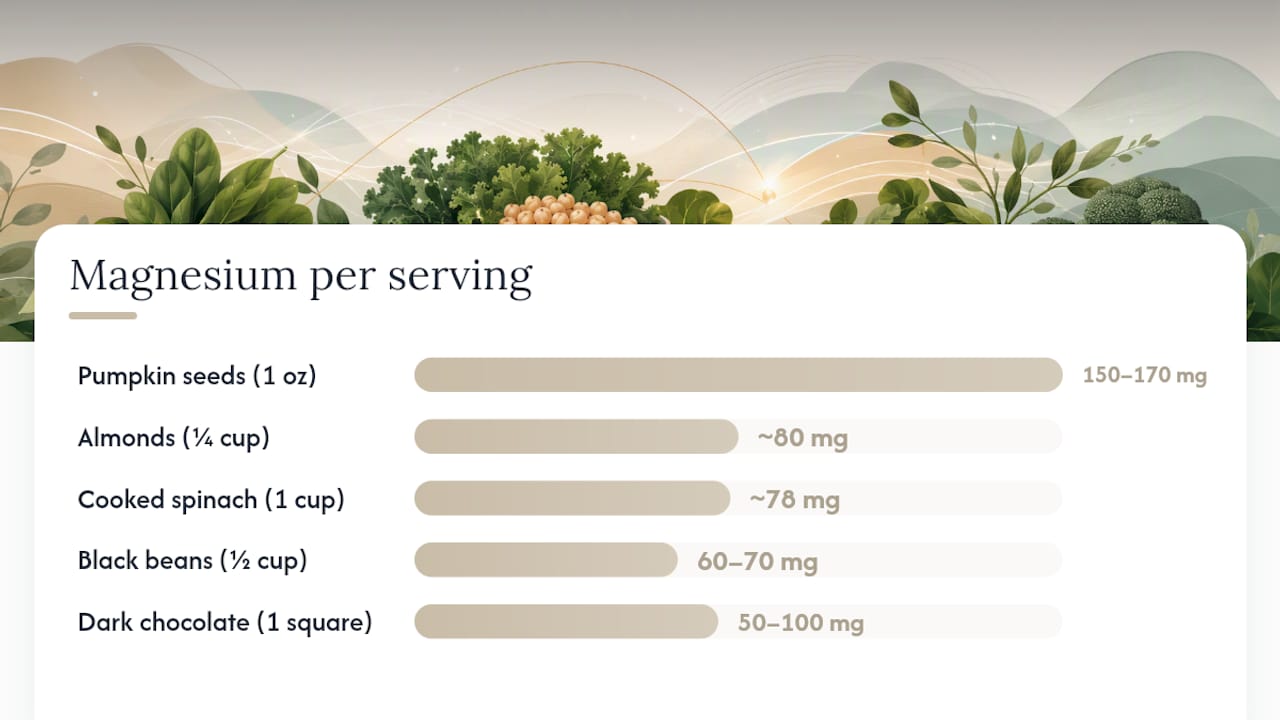
Numbers on a nutrition label mean little until you attach them to a plate. Here’s what actual servings look like:
- 1 ounce pumpkin seeds: approximately 150 to 170 mg
- 1/4 cup almonds: approximately 80 mg
- 1 cup cooked spinach: approximately 78 mg
- 1/2 cup black beans: approximately 60 to 70 mg
- 1 square (about 1 ounce) dark chocolate, 70%+: approximately 50 to 100 mg depending on brand and size
- 1/2 cup tofu: approximately 35 to 50 mg
Stack a few of these together and the RDA stops feeling abstract. A breakfast of oatmeal with chia seeds and almonds, a lunch salad with cooked spinach and black beans, and an afternoon square of dark chocolate can realistically land between 300 and 400 mg without a single supplement capsule.
Statistic: Despite how achievable that math looks on paper, many U.S. adults consistently fall short of the recommended intake, largely because refined grains and processed snacks have replaced whole-food staples in the average diet.
Treat every number above as a range, not gospel. Nutrient databases vary by growing conditions, soil, and preparation method, so absorption itself swings widely, roughly 25% to 75% depending on what else is on your plate.
How to Actually Increase Your Magnesium Intake
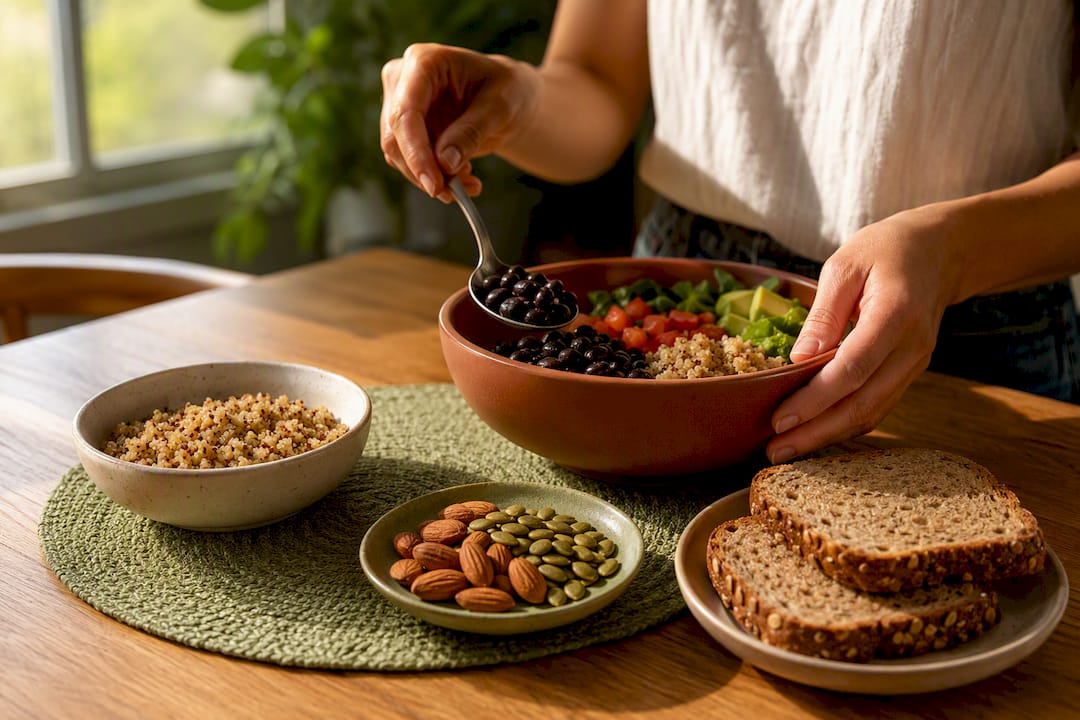
The fastest wins are swaps, not additions. Trade white rice for quinoa, white bread for whole grain, and a handful of chips for a handful of almonds or pumpkin seeds. Add black beans to a taco night you were already planning. None of this requires a diet overhaul.
Absorption matters as much as intake. High-phytate foods, think raw whole grains and some seeds, can bind magnesium and reduce how much your body actually uses. Soaking beans and grains before cooking, or choosing sprouted versions, cuts phytate levels and improves uptake. Excessive zinc supplementation can also interfere, so it’s worth checking labels if you’re taking multiple mineral supplements at once.
Practical tactics for raising intake:
- Swap refined grains for whole grains at least once a day
- Add a handful of seeds or nuts to breakfast or a midday snack
- Work legumes into two or three meals a week
- Soak or sprout grains and legumes when possible to reduce phytate binding
Supplements have a place, but the Tolerable Upper Intake Level for supplemental magnesium sits at 350 mg per day, separate from food sources, which the kidneys handle without much trouble. Supplementation makes more sense during pregnancy, in cases of malabsorption, or for people training at high volume who sweat out minerals faster than they can eat them back. If you’re weighing forms and doses, a guide like how to choose a magnesium supplement walks through the decision in more detail.
Pro Tip: Athletes and heavy sweaters often burn through magnesium faster than a normal diet replaces it. If your training load has picked up, a recovery formula can bridge the gap between meals, and #nutribliss has resources built specifically around that need.
Who’s Behind This Guide
This guide was written by GAURAV… Nutribliss maintains a library of resources on magnesium for active people, including deep dives on magnesium for athletes and magnesium absorption forms for readers who want to go further than food alone… The goal here isn’t to sell you on supplements first. It’s to make sure you understand your food options before deciding whether you need anything else.
Why Food-First Beats Supplement-First
Most magnesium content online skips straight to supplement brands and skips the boring part: what’s actually on your plate. That’s backwards. Food gives you a nutrient matrix, fiber, potassium, other trace minerals, that a capsule can’t replicate, and the research backs that food-first framing directly.
Here’s what conventional advice gets wrong: it treats the RDA like a number to hit with a pill, when it’s really a target to hit with a fork. Once you see that pumpkin seeds outperform almost anything in a supplement aisle, the priority shifts. Fix the diet first. Notice where phytates or excessive processed food might be blocking absorption. Only then does it make sense to ask whether a targeted formula fills a real gap, not an imagined one.
What people underestimate most is how much a handful of seeds or a cup of cooked spinach moves the needle. You don’t need to overhaul your diet. You need three or four smart swaps repeated consistently, which beats a sporadic supplement habit every time.
— GAURAV
Where Nutribliss Fits Into Your Magnesium Plan
Nutribliss exists for the gap food alone sometimes can’t close, especially for athletes and heavy trainers whose sweat losses outpace what a typical week of meals replaces. Rather than guessing at forms and doses on your own, Nutribliss offers formulated products with transparent ingredient lists built around real training and recovery demands.

If you’ve read through the food lists above and still feel short on magnesium most weeks, especially during heavy training blocks, that’s exactly the scenario supplementation is meant for. Recovery and mineral supplements are designed to complement the meal swaps covered here, not replace them. Readers curious about specific forms can also check the guide on magnesium glycinate for a well-tolerated option often recommended alongside dietary changes. Browse the full product lineup at Nutribliss and see which formula lines up with your training load and current diet.
This article is general information, not a substitute for advice from a qualified doctor. Consult a qualified healthcare professional about your own circumstances before acting on anything here.
Sources
- Magnesium - Consumer (Office of Dietary Supplements, NIH)
- Abridged list ordered by magnesium content (USDA/NAL)
- Magnesium (Linus Pauling Institute)