

TL;DR:
- Choosing the right magnesium supplement based on your symptoms is essential for effectiveness and safety. Third-party certifications ensure product quality, while starting at a low dose minimizes gastrointestinal side effects. Magnesium glycinate is the preferred form for sleep, anxiety, and muscle recovery, with a safety limit of 350 mg daily.
Magnesium supplementation is defined as the practice of taking isolated magnesium compounds to fill gaps that diet alone cannot reliably cover. Knowing how to choose the right magnesium supplement matters because the wrong form can cause digestive distress, deliver poor absorption, or simply miss your health goal entirely. The safe upper limit for supplemental magnesium is 350 mg per day, a threshold set to prevent gastrointestinal side effects like nausea and diarrhea. Third-party certifications from bodies like USP, NSF, and ConsumerLab are the clearest signal that a product delivers what its label promises. This guide walks you through every decision point so you can pick with confidence.
What are the different types of magnesium supplements?
The form of magnesium you take determines where it works in your body and how well your gut tolerates it. Glycinate, malate, and threonate have higher bioavailability and better tolerance compared to magnesium oxide or sulfate. That gap in absorption is not trivial. A low-bioavailability form like oxide may deliver a high elemental magnesium number on the label while actually raising blood levels very little.

Here is how the most common forms break down by use case:
| Form | Primary use | Absorption | Notes |
|---|---|---|---|
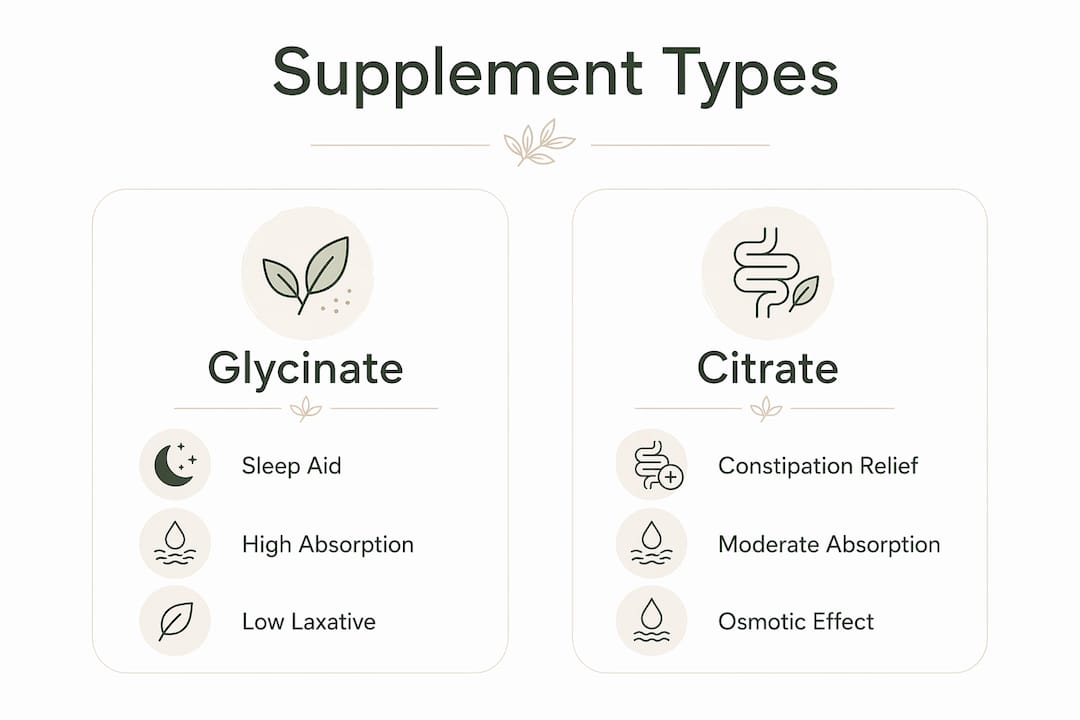
| Glycinate (bisglycinate) | Sleep, anxiety, muscle recovery | High | Low laxative effect; well tolerated |
| Citrate | Constipation, general use | Moderate to high | Osmotic effect; loose stools at high doses |
| Malate | Fatigue, fibromyalgia | High | Supports energy metabolism |
| Threonate | Cognitive function | High (brain) | Crosses blood-brain barrier |
| Oxide | Constipation (short term) | Low | High elemental Mg; poor absorption |
| Taurate | Heart health, blood pressure | Moderate | Combines Mg with taurine |
| Orotate | Athletic performance | Moderate | Used in cardiac rehabilitation research |
Magnesium glycinate is favored for its calming effects and low laxative impact, making it the preferred choice for insomnia and anxiety relief. A clinical study found that magnesium bisglycinate at 250 mg per day taken for 28 days significantly improved insomnia severity in 155 adults without causing GI side effects. That result matters because it shows a specific dose and form can deliver measurable sleep benefits without the gut complaints that drive people to quit supplementing.
Magnesium citrate works well for occasional constipation due to its osmotic laxative effect, but it can cause loose stools at higher doses. If regularity is not your goal, citrate is not the best magnesium to take daily for long-term use. Matching the form to your symptom is the single most effective selection strategy available.
Pro Tip: If you want to learn more about the clinical evidence behind one of the most well-studied forms, the magnesium glycinate guide at Nutribliss covers trial data and dosing protocols in detail.
How to assess your personal health needs before choosing
Your symptoms are the starting point for any magnesium selection decision. A person dealing with chronic muscle cramps has different needs than someone managing stress-related insomnia or low energy. Matching supplement form to specific symptoms maximizes effectiveness far better than picking the most popular product on a shelf.
Start by asking yourself these questions:
- Sleep and anxiety: Magnesium glycinate or threonate are the strongest options here.
- Muscle cramps or post-workout recovery: Glycinate and malate both support muscle function.
- Digestive sluggishness: Citrate works as a gentle, short-term solution.
- Mental clarity and focus: Threonate is the only form with documented ability to cross the blood-brain barrier.
- General daily wellness: A well-absorbed chelated form like glycinate or malate covers most needs.
Medical conditions change the equation significantly. People with kidney disease must use caution because magnesium toxicity risk rises sharply when kidneys cannot clear excess magnesium efficiently. Medical supervision is not optional in that case. Certain medications, including some antibiotics and diuretics, also interact with magnesium absorption, so checking with a healthcare provider before starting is the right move.
Dietary magnesium comes packaged with fiber, vitamins, and complementary minerals that supplements cannot replicate. Supplements fill a gap. They do not replace a diet built around leafy greens, nuts, seeds, and whole grains. For a deeper look at how dietary and supplemental magnesium differ at the biochemical level, the science-backed guide at Nutribliss explains the distinction clearly.
What dosage and safety considerations should you know?
The 350 mg per day upper limit applies specifically to supplemental magnesium, not total dietary intake. Exceeding it consistently raises the risk of diarrhea, nausea, and abdominal cramping. Most adults do not need to push anywhere near that ceiling to see benefits.
A practical approach to starting supplementation looks like this:
- Start at half your target dose. If your goal is 200 mg per day, begin at 100 mg.
- Hold that dose for 3–5 days. Let your gut adjust before increasing.
- Increase gradually. Add 50 mg every 3–5 days until you reach your target.
- Split doses if needed. Taking magnesium twice daily with meals reduces GI load.
- Stop and reassess if side effects appear. Loose stools are the most common signal to back down.
Titration by starting with half the dose and increasing every 3–5 days is the standard clinical strategy to minimize GI side effects, especially with forms like magnesium citrate. This approach works because it gives the intestinal lining time to adapt rather than flooding it with an osmotic load all at once.
Note: People with kidney disease, heart conditions, or those taking prescription medications should consult a physician before starting any magnesium supplement. Magnesium toxicity, while rare in healthy adults, can be serious in those with impaired kidney function.
Pro Tip: Taking magnesium with food slows absorption slightly but significantly reduces the chance of nausea. Evening dosing with dinner also aligns with magnesium’s natural relaxation effects, which can support better sleep.
How to identify high-quality magnesium supplements
Label claims are not regulated the same way prescription drugs are, so quality verification falls on you. Third-party certifications from USP, NSF, or ConsumerLab confirm that a product contains what it claims and is free from harmful contaminants. A product without any certification is not automatically bad, but you have no independent verification of its accuracy.
Key quality markers to check on any label:
- Elemental magnesium content listed clearly. The compound weight and the elemental magnesium weight are different numbers. Look for elemental magnesium specifically.
- No proprietary blends that hide individual amounts. Blends that list “magnesium complex 500 mg” without breaking down each form tell you nothing useful.
- Minimal fillers and binders. A short ingredient list with recognizable excipients is a positive sign.
- Form of magnesium named explicitly. “Magnesium” alone on a label usually means oxide, the lowest-bioavailability option.
Buffered magnesium supplements combine magnesium oxide with chelated forms to raise elemental magnesium content, but this approach can affect absorption and digestion unpredictably. A pure chelated form like glycinate or malate delivers more consistent results. For a thorough breakdown of how to read supplement labels and evaluate certifications, the third-party testing guide at Nutribliss is worth reading before you buy.
The format of the supplement, whether capsule, tablet, powder, or liquid, matters less than the form of magnesium inside it. Chemical type and dosage drive outcomes more than delivery format. That said, the best magnesium powder option works well for people who struggle to swallow capsules or want to mix supplements into a morning drink.
How to incorporate magnesium supplements into your routine
A structured approach prevents the most common mistakes: starting too high, picking the wrong form, and abandoning supplementation after one bad experience.
- Assess your primary need. Sleep, energy, digestion, and cognition each point to a different form.
- Choose the appropriate form. Use the table in the first section as your reference.
- Verify quality. Check for USP, NSF, or ConsumerLab certification before purchasing.
- Determine your starting dose. Begin at half your target and titrate up over 1–2 weeks.
- Take it with food. Meals buffer GI effects and improve tolerability.
- Monitor your response. Track sleep quality, muscle comfort, and digestion for the first two weeks.
- Adjust or consult. If side effects persist or benefits plateau, revisit form and dose with a healthcare provider.
Pro Tip: Keep a simple log for the first 14 days. Note dose, timing, and how you feel each morning. Patterns become obvious quickly, and you will have useful data if you need to discuss results with a doctor.
Magnesium supplementation works best as part of a broader wellness routine that includes magnesium-rich foods. Spinach, pumpkin seeds, almonds, and black beans are among the highest dietary sources. Supplements close the gap. They do not replace the foundation.
Key takeaways
The most effective way to choose a magnesium supplement is to match the chemical form to your specific symptom, verify quality through third-party certification, and start at a low dose before titrating up to tolerance.
| Point | Details |
|---|---|
| Match form to symptom | Glycinate for sleep and anxiety; citrate for constipation; threonate for cognitive support. |
| Respect the 350 mg limit | Stay at or below 350 mg of supplemental magnesium daily to avoid GI side effects. |
| Verify third-party certification | Look for USP, NSF, or ConsumerLab seals to confirm label accuracy and purity. |
| Titrate your dose | Start at half your target dose and increase every 3–5 days to find your personal tolerance. |
| Diet comes first | Supplements fill gaps. Build your foundation with magnesium-rich whole foods. |
What I have learned after years of watching people pick the wrong magnesium
The most common mistake I see is buying the cheapest bottle without checking the form. Magnesium oxide dominates the low-price market because it packs a high elemental magnesium number onto the label. The problem is that most of it passes through without being absorbed. People take it for weeks, feel nothing, and conclude that magnesium supplements do not work for them. They do work. The wrong form just does not.
The second mistake is ignoring third-party testing. The supplement industry is not as tightly regulated as pharmaceuticals. A certification seal from USP or NSF is not marketing. It is independent verification that the product contains what it claims. Skipping that check is a real risk, not a theoretical one.
My honest advice: spend five minutes reading the label before you spend money. Check the form, check the elemental magnesium content, and check for a certification seal. If the label hides amounts inside a proprietary blend, put it back. Transparency is not a premium feature. It is the baseline standard you should demand from any supplement you put in your body.
Magnesium-rich foods like pumpkin seeds, dark leafy greens, and almonds should still anchor your intake. Supplements are a tool, not a substitute. Use them precisely, not habitually.
— GAURAV
Nutribliss magnesium supplements worth knowing about
Nutribliss builds its supplement line around transparent formulations with clearly labeled elemental magnesium content and no hidden blends. The focus on well-absorbed forms like magnesium glycinate reflects the same evidence-based principles covered throughout this article.

If you are ready to put this guide into practice, the Nutribliss supplements collection includes magnesium options formulated for sleep support, muscle recovery, and daily wellness. Each product lists its form and elemental content clearly so you can apply everything you have read here directly to your purchase decision. For readers who want to go deeper on the science, the Nutribliss science page explains the research principles behind every formulation. Follow #nutribliss to stay current on new product releases and wellness content.
FAQ
What is the best magnesium to take for sleep?
Magnesium glycinate (bisglycinate) is the best magnesium to take for sleep. A clinical study found that 250 mg per day for 28 days significantly improved insomnia severity without causing GI side effects.
How do I know if a magnesium supplement is high quality?
Look for third-party certification from USP, NSF, or ConsumerLab, and confirm the label lists elemental magnesium content separately from compound weight. Avoid products that hide amounts inside proprietary blends.
What is the safe daily limit for supplemental magnesium?
The safe upper intake limit for supplemental magnesium is 350 mg per day. Exceeding this amount consistently increases the risk of diarrhea, nausea, and abdominal discomfort.
Is magnesium powder better than tablets or capsules?
The best magnesium powder, tablet, or capsule depends on personal preference, not effectiveness. The form of magnesium inside the product matters far more than the delivery format.
Can people with kidney disease take magnesium supplements?
People with kidney disease face a higher risk of magnesium toxicity because impaired kidneys cannot clear excess magnesium efficiently. Medical supervision is required before starting any magnesium supplement in this case.