

TL;DR:
- Magnesium supports over 300 bodily functions, including muscle, nerve, bone, and heart health. Choosing the right supplement depends on your health goal, with bioavailability being more important than the elemental magnesium percentage.
Magnesium is defined as an essential mineral that supports over 300 enzymatic reactions in the body, including muscle contraction, nerve signaling, bone density, and cardiovascular function. Knowing how to choose a magnesium supplement correctly depends on matching the right form to your specific health goal, whether that is better sleep, easier digestion, more energy, or reduced muscle cramps. About 50% of Americans do not meet magnesium requirements through diet alone. That gap makes supplementation a practical tool, not just a trend. The tolerable upper limit for supplemental magnesium is 350 mg per day for most adults, beyond which side effects like diarrhea and nausea become likely.
How to choose a magnesium supplement by type
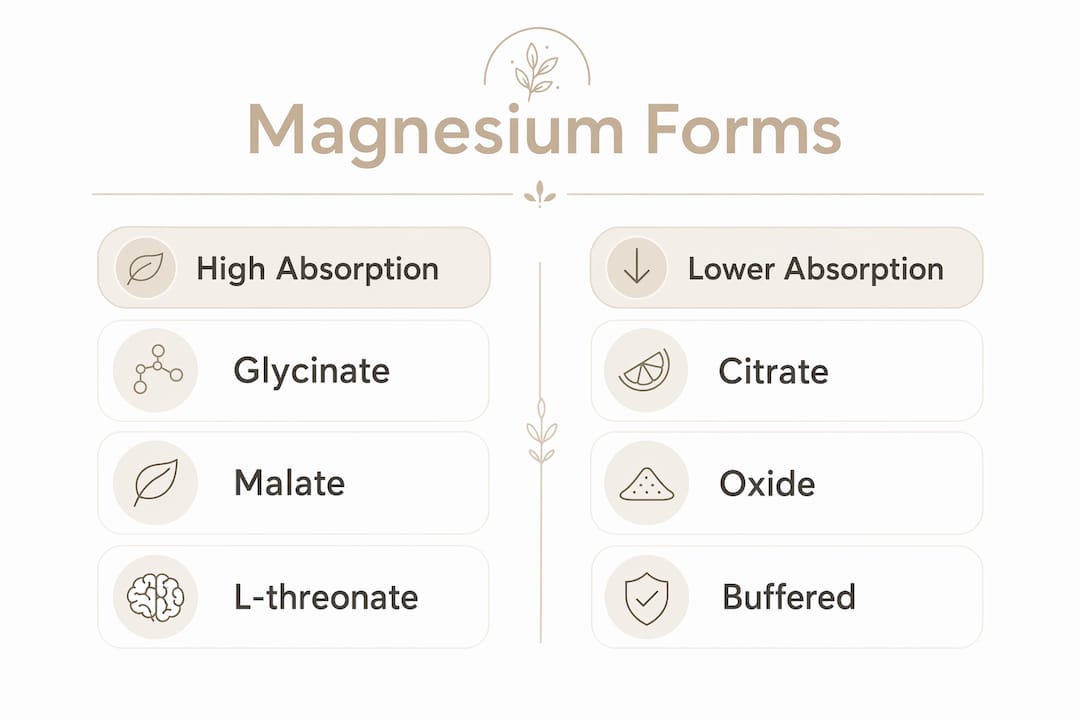
The form of magnesium you take determines how well your body absorbs it and what health benefit you actually get. Bioavailability is more critical than the raw elemental magnesium percentage on the label. Two supplements can list the same milligram count but deliver very different results in your body.

Magnesium glycinate
Magnesium glycinate is a chelated form that absorbs well and sits gently on the stomach. It promotes calmness and supports better sleep, making it the most widely recommended form for people dealing with anxiety, stress, or insomnia. If you want a deeper look at why this form stands out, the science behind glycinate is worth reading before you buy.
Magnesium citrate
Magnesium citrate acts as an osmotic laxative, drawing water into the intestines to relieve constipation. It works fast and absorbs reasonably well, but it carries a higher risk of loose stools than chelated forms. It is not the best choice for daily long-term use if your goal is general wellness rather than digestive relief.
Magnesium malate
Magnesium malate supports energy production because malate is directly involved in mitochondrial ATP synthesis. People dealing with chronic fatigue or musculoskeletal complaints often respond well to this form. It is a strong pick if your primary concern is daytime energy or muscle recovery after exercise.
Magnesium L-threonate
Magnesium L-threonate crosses the blood-brain barrier, which most other forms cannot do. Early research points to potential benefits for memory, mood, and cognitive function. This makes it the most targeted option for brain health, though it tends to cost more than other forms.
Magnesium oxide
Magnesium oxide contains about 60% elemental magnesium by weight, but only around 4% of that is actually absorbed. That low bioavailability makes it a poor choice for correcting a deficiency or supporting sleep. Its main practical use is occasional constipation relief, where the laxative effect is the point rather than systemic absorption.
| Form | Best use | Absorption |
|---|---|---|
| Glycinate | Sleep, anxiety, stress | High |
| Citrate | Constipation relief | Moderate |
| Malate | Energy, muscle support | Moderate to high |
| L-threonate | Cognitive function | Targeted (brain) |
| Oxide | Occasional constipation | Very low (~4%) |
Pro Tip: Buffered magnesium glycinate combines chelated glycinate with a small amount of oxide to raise elemental magnesium content without sacrificing tolerability. Studies show it produces higher serum magnesium exposure than standard glycinate alone.
How to assess your personal needs before buying
Choosing the right magnesium supplement starts with identifying your primary health goal. The form that works for your neighbor’s sleep problems may do nothing for your muscle cramps. A symptom-focused approach cuts through the noise faster than any marketing claim.
- Identify your main goal. Sleep and anxiety point toward glycinate. Constipation points toward citrate. Fatigue and muscle soreness point toward malate. Cognitive support points toward L-threonate.
- Estimate your dietary intake. Foods like spinach, pumpkin seeds, black beans, and almonds are high in magnesium. If you eat these regularly, your supplemental needs are lower. If your diet is heavily processed, your gap is likely larger.
- Check your medications. Proton pump inhibitors and diuretics can interfere with magnesium absorption or deplete your levels over time. If you take either, talk to your doctor before adding a supplement.
- Start with a moderate dose. Beginning at 100–200 mg per day lets your body adjust. You can increase gradually toward the 350 mg upper limit based on how you feel.
- Split your dose. Taking the full daily amount at once increases the risk of stomach upset. Dividing doses and taking them with food improves both absorption and tolerance.
Pro Tip: Elemental magnesium is the amount your body can actually use, not the total weight of the compound. A label reading “500 mg magnesium glycinate” may only deliver 50–70 mg of elemental magnesium. Always check the elemental amount listed in the Supplement Facts panel.
For a full breakdown of why supplementing makes sense and how to build a routine around it, the complete magnesium supplement guide at Nutribliss covers the science in plain language.
What are the safety risks and side effects to know?
Magnesium supplements are generally safe for healthy adults, but specific risks apply depending on your dose, form, and health status. Knowing these before you buy prevents unpleasant surprises.
The most common side effects are digestive: diarrhea, nausea, and abdominal cramping. These are most likely with oxide and citrate forms, and with doses taken all at once on an empty stomach. Staying within the 350 mg per day upper limit for supplemental magnesium keeps most adults in a safe range.
People with kidney disease face a higher risk. Healthy kidneys filter excess magnesium efficiently. Impaired kidneys cannot, which can lead to magnesium buildup and serious complications. Anyone with chronic kidney disease should consult a doctor before starting any magnesium supplement.
Key safety points to review before purchasing:
- Kidney function: Impaired kidneys cannot clear excess magnesium. Medical clearance is required.
- Medication interactions: PPIs and diuretics reduce magnesium levels. Antibiotics like tetracyclines and quinolones can bind to magnesium and reduce drug absorption.
- Third-party testing: Magnesium supplements are not FDA-approved before going to market. Look for USP, NSF International, or ConsumerLab certification logos to confirm purity and label accuracy.
- Pregnancy and nursing: Consult a healthcare provider before supplementing during pregnancy.
Always consult a healthcare provider before starting magnesium supplementation if you take prescription medications, have a chronic health condition, or are pregnant.
How to read a magnesium supplement label
Most people scan the front of the bottle and miss the information that actually matters. The Supplement Facts panel on the back tells you what you are really getting.
The most important number is the elemental magnesium amount, listed in milligrams per serving. This is the actual mineral your body uses. The total compound weight (for example, 500 mg of magnesium glycinate) is always higher than the elemental amount. A product listing only the compound weight without specifying elemental magnesium is a red flag.
What to check on every label:
- Form of magnesium: The specific compound name (glycinate, citrate, malate, oxide, L-threonate) tells you the form and predicts its likely use and absorption.
- Elemental magnesium per serving: This is the number that matters for dosing.
- Serving size: Some products list a serving as 2 or 4 capsules. The elemental amount shown applies to that full serving.
- Third-party certification logos: USP, NSF International, and ConsumerLab seals confirm independent testing for purity and potency.
- Dosage form: Capsules are convenient and portable. Powders allow flexible dosing and often absorb quickly. Liquids suit people who have trouble swallowing pills.
Price is a real signal of quality, but not a guarantee. A certified product at a mid-range price point beats an uncertified premium product every time. The certification is the proof. The price is just a number.
For a detailed look at how glycinate specifically supports muscle recovery and sleep, the guide to glycinate for athletes at Nutribliss is a useful next read.
Key Takeaways
Choosing the best magnesium supplement requires matching the specific form to your health goal, confirming the elemental magnesium dose, and selecting a product with third-party certification.
| Point | Details |
|---|---|
| Match form to goal | Use glycinate for sleep, citrate for constipation, malate for energy, and L-threonate for cognition. |
| Check elemental magnesium | Always read the Supplement Facts panel for elemental magnesium, not just total compound weight. |
| Stay within safe limits | Keep supplemental magnesium at or below 350 mg per day to avoid digestive side effects. |
| Prioritize certified products | Choose supplements with USP, NSF, or ConsumerLab seals since the FDA does not pre-approve supplements. |
| Split doses and take with food | Dividing your daily dose and taking it with meals improves absorption and reduces stomach upset. |
My honest take on picking magnesium after years of seeing people get it wrong
Most people walk into a supplement store, grab the bottle with the highest milligram number, and assume bigger means better. That is the single most common mistake I see. Magnesium oxide at 400 mg elemental content sounds impressive until you realize your body absorbs almost none of it.
The form matters more than the dose. I default to glycinate for nearly everyone who asks me where to start, especially if sleep quality or daily stress is the concern. It absorbs well, it does not cause the digestive drama that citrate can, and the research behind it is solid. For people who are active and dealing with muscle fatigue, I point them toward malate. For anyone with a specific cognitive goal, L-threonate is worth the higher price.
What I tell people consistently: supplements fill gaps in your diet. They do not replace a nutrient-dense plate. If your magnesium intake from food is already reasonable, you may need far less supplemental magnesium than the label suggests. Start low, observe how you feel after two weeks, and adjust from there.
The third-party certification issue is non-negotiable for me. The FDA does not review supplements before they hit shelves. A USP or NSF seal is not a marketing badge. It is the only independent confirmation that what is on the label is actually in the capsule. I would not buy a magnesium supplement without one.
— GAURAV
Nutribliss magnesium supplements: quality you can verify
Selecting a magnesium supplement is only half the decision. The other half is trusting what is actually inside the capsule.

Nutribliss formulates its magnesium supplement line with third-party testing at the core of every product. Each formula is built around bioavailable forms, transparent elemental magnesium labeling, and dosing designed to stay within safe clinical guidelines. The science behind every Nutribliss product is published and accessible, so you are not taking anyone’s word for it. Whether your goal is better sleep, muscle recovery, or daily mineral support, the Nutribliss range gives you a verified starting point. Use #nutribliss to share your experience and connect with others on the same path.
FAQ
What is the best magnesium to take daily?
Magnesium glycinate is the best magnesium to take daily for most adults because it absorbs well, is gentle on the stomach, and supports sleep and stress relief without causing digestive issues.
How much magnesium should I take per day?
The tolerable upper limit for supplemental magnesium is 350 mg per day for most adults. Staying at or below this amount prevents common side effects like diarrhea and nausea.
What is the difference between magnesium glycinate and magnesium citrate?
Magnesium glycinate is a chelated form best suited for sleep and anxiety, while magnesium citrate works primarily as an osmotic laxative for constipation relief. Glycinate is better for long-term daily use.
Does the form of magnesium on the label really matter?
Yes. Forms like oxide have very low absorption (around 4%), while glycinate and malate absorb significantly better. The form determines both the health benefit and how well your body actually uses the mineral.
Should I consult a doctor before taking magnesium supplements?
Consulting a doctor is necessary if you take proton pump inhibitors, diuretics, or have kidney disease, since these conditions directly affect how your body processes magnesium.