

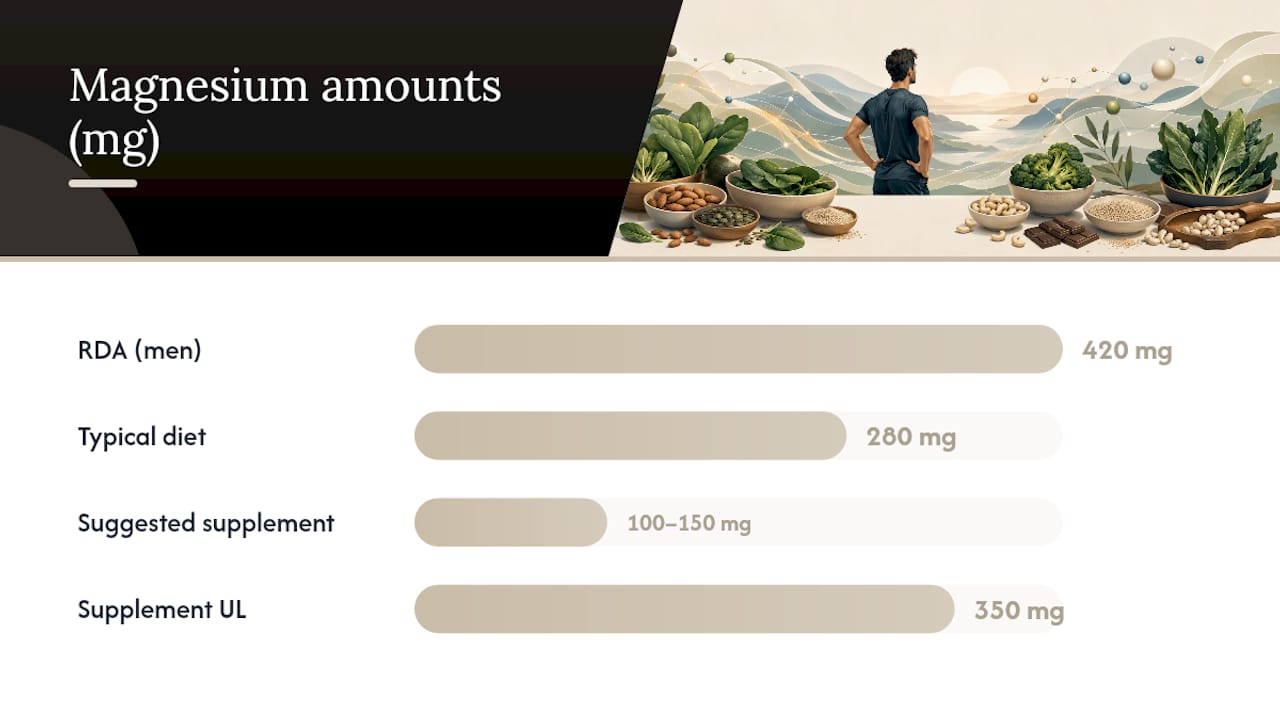
The RDA for adult men is about 400 milligrams a day between ages 19 and 30, and slightly higher from age 31 on. That number covers magnesium from food and supplements combined. If you’re using a standalone magnesium supplement, keep it under the 350 mg tolerable upper intake level, which applies only to supplements and medications, not food. The smartest approach: get as close to the RDA through food as you can, and use a supplement to close the gap, not replace the plate.
TL;DR:
- Most men can meet their magnesium needs through a diet containing foods like pumpkin seeds, almonds, spinach, and black beans without exceeding the supplement UL of 350 mg per day.
- Supplement doses should be carefully calculated to fill only the gap left by diet, with a maximum of around 150 mg of elemental magnesium to avoid toxicity.
- Blood tests often fail to detect magnesium deficiency because serum levels represent less than 1% of total body stores, so symptoms and risk factors are more reliable indications.
- Men with conditions like gastrointestinal disease, diabetes, or heavy alcohol use may need higher magnesium intake, but should consult a healthcare professional before supplementing.
- Overcorrection by high-dose supplements without dietary adjustment can be risky, as excess magnesium from supplements can cause side effects such as diarrhea, low blood pressure, or more severe toxicity.
Table of Contents
- How Much Magnesium per Day for a Man, and What the Numbers Mean
- Best Foods to Hit 400 to 420 mg of Magnesium Without Supplements
- When to Take a Magnesium Supplement and How Much Is Safe
- Signs of Low Magnesium and Why Blood Tests Can Miss It
- Magnesium Toxicity: How Much Is Too Much
- How to Track Your Actual Magnesium Intake Day to Day
- Nutribliss’s Take: Food First, Supplements Second
- What Men Consistently Get Wrong About Magnesium
- Close the Gap With a Magnesium Supplement Built for Real Diets
- Sources
How Much Magnesium per Day for a Man, and What the Numbers Mean
Three terms show up on every label and government chart, and mixing them up is where most confusion starts. RDA (Recommended Dietary Allowance) is the average daily amount that meets the needs of nearly all healthy people in a specific group. DV (Daily Value) is the simplified number food and supplement labels use, generally set at 420 mg for adults, so a label claiming “50% DV” is telling you it delivers roughly 210 mg. UL (Tolerable Upper Intake Level) is the ceiling for supplemental magnesium, set at 350 mg/day, above which side effects and toxicity risk climb.
The age split matters more than most men realize:
- Ages 19 to 30: 400 mg/day
- Ages 31 and older: 420 mg/day
- Supplement UL (all adults): 350 mg/day, applying to pills, powders, and magnesium-containing medications like some antacids and laxatives
Notice the RDA counts everything you eat and drink, plus whatever you supplement. The UL is narrower. It’s not a daily total limit. It’s a ceiling specifically for the concentrated, isolated magnesium in a bottle, because your gut absorbs and regulates food-based magnesium differently than a bolus dose from a capsule, according to the NIH Office of Dietary Supplements.
Clinical circumstances shift these targets. Men with poorly controlled type 2 diabetes, chronic GI conditions, or heavy alcohol use often need more than the standard RDA to maintain normal levels, since those conditions increase magnesium loss or block absorption. A doctor may also raise the target temporarily if bloodwork or symptoms point to depletion. The RDA is a population average, not a personal prescription carved in stone.
Best Foods to Hit 400 to 420 mg of Magnesium Without Supplements
Whole foods remain the most reliable way to hit your number, and Harvard Health backs a food-first strategy because a handful of common foods can supply most of a day’s requirement without any risk of overshooting the supplement UL.
Here’s what a realistic day of eating actually contains, gram for gram:
- Pumpkin seeds (1 oz): roughly 150 mg
- Almonds (1 oz, about 23 nuts): roughly 80 mg
- Spinach, cooked (1/2 cup): roughly 78 mg
- Black beans, cooked (1/2 cup): roughly 60 mg
- Whole wheat bread (2 slices): roughly 46 mg
- Dark chocolate, 70 to 85% cacao (1 oz): roughly 65 mg
- Peanut butter (2 tablespoons): roughly 49 mg
- Avocado (1 medium): roughly 58 mg
Stack three or four of those in a single day and you’re already past 300 mg before you’ve thought about a supplement.
Try building around one of these patterns:
A Mediterranean-style day: oatmeal with almonds and a banana for breakfast, a spinach and chickpea salad with olive oil for lunch, grilled salmon with quinoa and roasted pumpkin seeds for dinner. That combination lands close to 420 mg without much effort.

A plant-forward day: a smoothie with spinach and peanut butter, a black bean burrito bowl for lunch, and a stir-fry with edamame and brown rice for dinner pushes total intake into the 400 to 440 mg range.
An athlete-focused day: Greek yogurt with pumpkin seeds and dark chocolate shavings for breakfast, a turkey and avocado sandwich on whole wheat for lunch, and a post-workout dinner of halibut with baked potato and steamed spinach comfortably clears 400 mg while also supplying protein for recovery.
Food sources carry an advantage supplements can’t replicate: they arrive packaged with potassium, fiber, and other cofactors that support how your body uses magnesium in the first place. The tradeoff is absorption variability. High-phytate foods like whole grains and legumes, along with excess calcium or zinc intake, can modestly reduce how much magnesium your gut actually pulls out of a meal. That’s rarely enough to derail a well-rounded diet, but it’s worth knowing if your meals lean heavily on one food group.
When to Take a Magnesium Supplement and How Much Is Safe
Supplementation makes sense in three scenarios: a diagnosed deficiency confirmed by a clinician, a pattern of consistently low dietary intake you can’t fix through food alone, or a clinical risk factor like GI disease or heavy alcohol use that impairs absorption. Harvard Health frames it the same way: supplements matter most when deficiency is diagnosed or something is actively interfering with absorption, not as a default add-on for every man’s routine.
If you’re already eating a magnesium-conscious diet, a supplement should fill a gap, not stack on top of an already sufficient intake.
Common supplement forms and how they behave:
- Magnesium glycinate — bound to the amino acid glycine, generally the gentlest on digestion and a common pick for men focused on sleep or muscle recovery without GI upset.
- Magnesium citrate — well absorbed and widely available, but its mild laxative effect makes it better suited to men who don’t mind (or want) that side effect.
- Magnesium oxide — high elemental magnesium by weight on the label, but absorbed less efficiently than glycinate or citrate, so the number on the bottle overstates what your body actually uses.
- Magnesium chloride — found in some topical and oral products, reasonably well absorbed, often used by men who prefer a liquid or spray format.
Doing the math matters here. Say your typical diet supplies about 280 mg of magnesium a day from food. You’re short of the 420 mg RDA by 140 mg. A supplement dose in that range, say 100 to 150 mg of elemental magnesium, closes the gap without coming anywhere near the 350 mg supplement UL. The mistake men make is reasoning from the RDA instead of the UL, assuming they can supplement up to 420 mg. You can’t. The UL caps supplemental intake at 350 mg regardless of how much your diet is already supplying.
Pro Tip: Split your supplement dose into two smaller servings, morning and evening, instead of one large dose. Practitioners commonly recommend this because it reduces the loose stools and stomach discomfort that a single large dose of citrate or oxide can trigger, and it may improve how much your body actually absorbs.
Medication interactions deserve real attention. Magnesium supplements can reduce the absorption of certain antibiotics (tetracyclines and fluoroquinolones), bisphosphonates used for bone density, and some diuretics. Men on blood pressure medication or diabetes drugs should also check with a pharmacist, since magnesium can amplify certain effects. If you take any prescription medication daily, ask your doctor before adding a magnesium supplement rather than assuming it’s automatically safe to combine.
Signs of Low Magnesium and Why Blood Tests Can Miss It
Early deficiency signs are easy to write off as ordinary fatigue: muscle cramps, especially in the calves or feet, general tiredness, loss of appetite, and mild nausea. Left unaddressed, more serious symptoms can develop, including numbness or tingling, muscle spasms, personality changes, abnormal heart rhythms, and in severe cases, seizures, according to MedlinePlus.
Certain groups face meaningfully higher risk of running low:
- Men with gastrointestinal diseases like Crohn’s disease or celiac disease, which impair absorption
- Men with type 2 diabetes, since higher blood sugar increases magnesium loss through urine
- Older adults, who absorb less magnesium from the gut and excrete more through the kidneys
- Men with chronic heavy alcohol use, which depletes magnesium through multiple mechanisms
- Anyone on long-term diuretics, proton pump inhibitors, or certain other medications that increase magnesium excretion
Here’s the part that trips up a lot of men trying to self-diagnose: a normal blood test doesn’t rule out deficiency. Serum magnesium reflects less than 1% of your body’s total magnesium stores, and levels can look normal even when your bones and soft tissue are running low. A clinical review on serum magnesium testing confirms this is a genuine limitation, which is why clinicians weigh symptoms and medical history alongside any lab result rather than trusting the number alone.
If you’re experiencing persistent muscle cramps, unexplained fatigue, or heart palpitations, that combination is worth bringing to a doctor even with a “normal” magnesium reading. They may order additional testing or simply evaluate your risk factors directly.
Magnesium Toxicity: How Much Is Too Much
Toxicity from food alone is close to nonexistent. Your kidneys efficiently clear excess dietary magnesium in a healthy person, and there’s no realistic amount of spinach or almonds that will push you into dangerous territory. The real risk sits almost entirely with supplements and magnesium-containing medications like laxatives and antacids.
Early signs of excess supplemental intake include:
- Diarrhea and abdominal cramping
- Nausea
- Low blood pressure
More severe reactions are rare but documented. Case reports describe serious toxicity, including irregular heartbeat, muscle weakness, and cardiac arrest, tied to very large doses, often exceeding 5,000 mg/day, almost always from laxative or antacid overuse rather than a standard supplement bottle. Men with impaired kidney function face substantially higher risk at much lower doses, because damaged kidneys can’t clear excess magnesium the way healthy ones do.
A few practical safety habits go a long way: always check the “elemental magnesium” figure on a label rather than the total compound weight, avoid combining a magnesium supplement with a separate multivitamin or electrolyte product that also contains magnesium without adding up the totals, and talk to a doctor before supplementing if you have any degree of kidney disease.
How to Track Your Actual Magnesium Intake Day to Day
Supplement labels list two numbers that matter: the compound weight (like “magnesium glycinate 500 mg”) and the elemental magnesium, which is the actual usable amount your body absorbs. A 500 mg glycinate capsule might only contain around 100 mg of elemental magnesium. That’s the number to count toward your daily total, not the 500 mg headline figure on the front of the bottle.
Here’s a simple way to get an accurate read on your intake:
- Download a food tracking app like Cronometer, which lists micronutrient totals including magnesium per logged food.
- Log every meal for one full week, being honest about portion sizes rather than estimating.
- Add your supplement’s elemental magnesium dose to each day’s food total.
- Compare your weekly average against the 400 to 420 mg RDA target for your age.
- Adjust food choices or supplement dose based on where you’re consistently falling short.
Worked example: a day with a spinach salad (78 mg), a handful of almonds (80 mg), a black bean bowl (60 mg), and whole grain toast (46 mg) totals 264 mg from food. Adding a 150 mg elemental magnesium glycinate supplement brings the day to 414 mg, right in the target range and well under the 350 mg supplement UL.
Pro Tip: Log your intake for one week each quarter instead of every day. A quarterly check-in catches slow drift in your eating habits without turning meals into a math homework assignment.
Small daily habits beat obsessive tracking. Keep a bag of pumpkin seeds at your desk, add spinach to one meal a day, and you’ll close most of the gap before a supplement even enters the picture.
Nutribliss’s Take: Food First, Supplements Second
Nutribliss builds its supplement guidance around a simple principle: food should do most of the work, and supplements should fill the specific gap your diet leaves behind. That’s the same framework echoed throughout this piece and it’s the honest answer for most men reading this, not a marketing angle.
A few resources worth bookmarking:
- A practical breakdown of reaching your magnesium target through food instead of pills
- A form-by-form comparison for choosing the right supplement if diet alone isn’t enough
This piece was written under Nutribliss’s editorial standards by Gaurav, drawing on the same government and clinical sources cited throughout. #nutribliss exists because we’d rather men understand the actual numbers than guess at them. If you have kidney disease, take prescription medication, or suspect a real deficiency, talk to a healthcare provider before adding any supplement to your routine.
What Men Consistently Get Wrong About Magnesium
The biggest mistake I see isn’t ignorance about magnesium, it’s overcorrection. Men read one alarming statistic about widespread deficiency and jump straight to a high-dose supplement, skipping the food math entirely. That’s backwards. The RDA of 400 to 420 mg is genuinely achievable through a normal diet with a little intention, and doing it that way avoids the 350 mg supplement ceiling altogether.
Conventional advice also underplays the testing problem. Men assume a normal blood magnesium level clears them of any concern, when the science says otherwise. Trust your symptoms and your diet quality over a single lab number.
If I had to give one instruction: track your food for one week before you buy anything. Most men are closer to the target than they think, and the ones who aren’t usually need 100 to 150 mg of supplemental magnesium, not a maximum dose.
— GAURAV
Close the Gap With a Magnesium Supplement Built for Real Diets
Some magnesium supplement formulas are designed for the scenario this article walks through: a diet that gets you most of the way to 400 or 420 mg, with a supplement built to close the remaining gap rather than replace your meals. That’s a different starting point than most supplement brands take, since a lot of products are formulated to be your primary magnesium source instead of a targeted top-off.

If your weekly food tracking shows you consistently landing 100 to 150 mg short of your RDA, browse the Nutribliss supplement collection for a form that fits your tolerance and goals, whether that’s a gentler glycinate for daily use or an electrolyte formula that combines magnesium with other minerals athletes lose through sweat. Check the elemental magnesium listed on each product page, do the math against your food intake, and pick a dose that keeps your supplemental total under 350 mg.
This article is general information, not a substitute for advice from a qualified doctor. Consult a qualified healthcare professional about your own circumstances before acting on anything here.
Sources
For readers who want to verify any number in this article directly: the NIH Office of Dietary Supplements publishes the official RDA and UL figures used throughout. Harvard Health offers practical, food-first framing for daily intake. MedlinePlus covers deficiency symptoms and the real limits of blood testing.
- Magnesium - Health Professional Fact Sheet
- What can magnesium do for you and how much do you need?
- Magnesium — MedlinePlus