

TL;DR:
- Magnesium glycinate offers superior absorption and fewer gastrointestinal issues compared to other forms. It effectively improves sleep, muscle relaxation, and stress regulation with consistent use over several weeks. People with kidney problems or specific health conditions should consult a doctor before supplementation.
If you’ve spent any time browsing supplement aisles or reading wellness articles, you’ve probably noticed that magnesium comes in a dozen different forms and wondered which one actually matters. The answer depends heavily on what you want it to do. For people focused on better sleep, muscle relaxation, and stress reduction, the case for why take magnesium glycinate over other forms is genuinely compelling. It’s not just marketing. There’s a real biochemical reason this form sits at the top of most recommendations, and understanding it will help you make a smarter decision before you spend a dime.
Table of Contents
- Key takeaways
- Why take magnesium glycinate instead of other forms
- Core health benefits of magnesium glycinate
- Dosage, safety, and who should be cautious
- How to get the most from magnesium glycinate
- My honest take on magnesium glycinate
- Support your sleep goals with Nutribliss
- FAQ
Key takeaways
| Point | Details |
|---|---|
| Glycinate absorbs better | The chelated glycine form improves absorption and causes far fewer digestive side effects than oxide or citrate. |
| Sleep benefits are real but gradual | Clinical trials show meaningful insomnia reduction, but consistent use over weeks is required to see results. |
| Dosage has a ceiling | The tolerable upper limit for supplemental magnesium is 350 mg per day; more is not better. |
| Kidney health matters | People with impaired kidney function should consult a doctor before starting any magnesium supplement. |
| Timing and consistency drive results | Taking magnesium glycinate 1 to 2 hours before bed, every night, produces the strongest sleep and relaxation outcomes. |
Why take magnesium glycinate instead of other forms
Magnesium is not optional for your body. It participates in over 300 enzymatic reactions spanning sleep regulation, muscle contraction, and stress response. The problem is that not all magnesium supplements deliver that magnesium to your cells with the same efficiency.
How the glycinate form is different
Magnesium glycinate is a chelated compound, meaning the magnesium is bonded to glycine, an amino acid. That bond is the key difference. When you swallow magnesium oxide, for example, only a fraction survives the digestive process intact. When you swallow magnesium glycinate, the glycine molecule escorts the magnesium through the intestinal wall far more effectively. The result is better absorption with much less leftover magnesium sitting in your gut and causing the diarrhea that turns so many people off of magnesium supplements entirely.
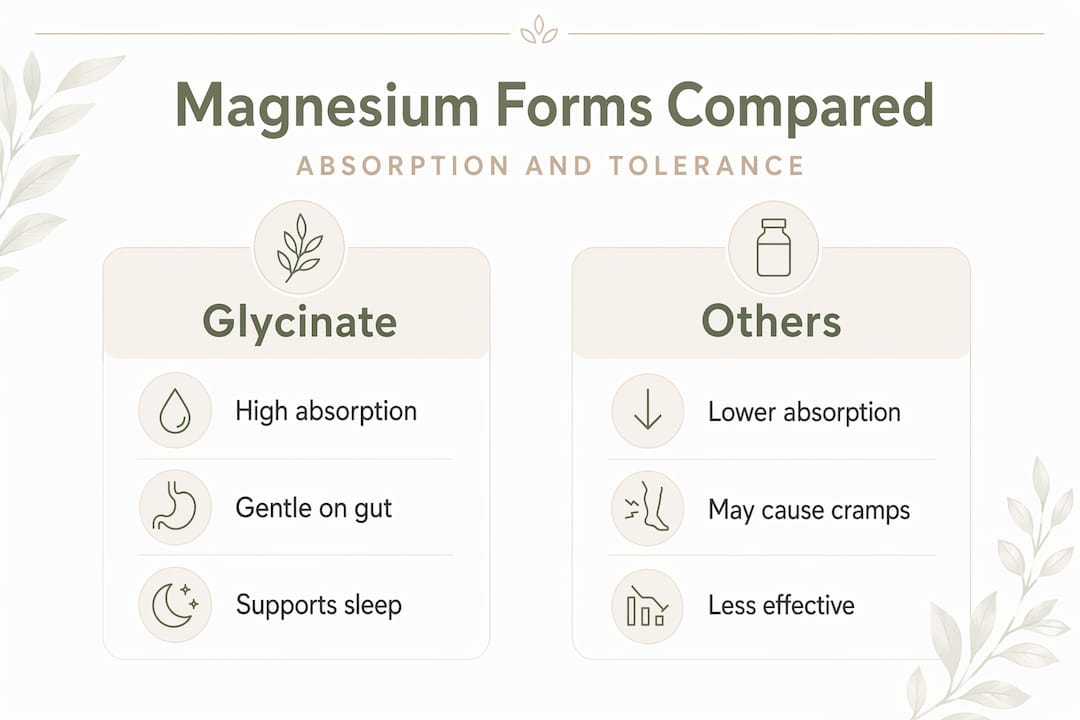
Chelated glycinate form is well-documented to have better absorption and minimal gastrointestinal irritation compared to citrate or oxide forms. That gentler profile makes it practical for daily, long-term use in a way other forms simply are not.
Comparison of common magnesium forms
| Form | Absorption | GI Tolerance | Best For |
|---|---|---|---|
| Magnesium glycinate | High | Excellent | Sleep, anxiety, muscle relaxation |
| Magnesium citrate | Moderate to high | Moderate | Constipation, general use |
| Magnesium oxide | Low | Poor | Short-term supplementation only |
| Magnesium malate | Moderate | Good | Energy, muscle soreness |
Glycine also brings its own benefits. It’s a calming amino acid that lowers body temperature and carries inhibitory signals in the nervous system, which means you’re getting magnesium’s sleep effects and glycine’s sleep effects at the same time. That synergy is a real magnesium glycinate advantage over forms that use neutral or laxative-effect counterparts.
Pro Tip: If you’ve tried magnesium before and quit because of stomach upset, magnesium glycinate is almost certainly the form you should have been taking. Switch before concluding that magnesium doesn’t work for you.
Core health benefits of magnesium glycinate
Understanding what the research actually says, versus what supplement marketing implies, will set realistic and useful expectations. For a deeper breakdown, the Nutribliss guide to magnesium glycinate covers the full spectrum of evidence.
Sleep quality improvement
The clearest and best-supported reason people take this supplement is sleep. A 2025 randomized controlled trial found that 250 mg of magnesium bisglycinate daily reduced insomnia severity scores by 3.9 points versus 2.3 points in the placebo group over four weeks. That’s a statistically significant difference. It won’t knock you out the way a sedative would, but it genuinely improves sleep quality when used consistently.
The reason magnesium for sleep support works comes down to two mechanisms. Magnesium activates GABA receptors, the brain’s primary “calm down” signaling pathway. It also regulates melatonin production. Combine that with glycine’s body-temperature-lowering effect and you have a supplement that targets sleep from multiple angles without leaving you groggy in the morning.
Muscle relaxation and cramp relief
Magnesium plays a direct role in muscle contraction and relaxation by counteracting calcium’s muscle-tightening effect. That’s the basis for its reputation as a muscle supplement. The nuance worth knowing: evidence on muscle cramps is mixed depending on cramp type. A Cochrane review found little support for treating idiopathic cramps, but nocturnal leg cramps show more consistent improvement. If your cramps happen at night, this supplement has a stronger case.

Stress and anxiety reduction
Research suggests magnesium glycinate for anxiety works through the same GABA pathway that benefits sleep. Low magnesium is associated with heightened stress reactivity, and restoring adequate levels helps regulate the hypothalamic-pituitary-adrenal axis, which is your body’s primary stress control center. The result isn’t sedation. It’s a calmer baseline. Many people report that after two to three weeks of consistent use, situations that previously triggered strong stress responses feel more manageable.
“Magnesium should be considered an adjunct and not a cure when it comes to sleep and muscle health. It works best as part of a larger sleep hygiene and lifestyle approach, not as a standalone fix.” — Harvard Health
The benefits of magnesium glycinate listed here are consistent across the literature, but the strength of the effect varies by person. Baseline deficiency plays a big role. If you’re already getting adequate magnesium from food, supplementing may produce subtler improvements than it would for someone who is genuinely depleted.
- Sleep quality scores improve meaningfully in deficient individuals over four weeks of consistent supplementation
- Nocturnal muscle cramps respond better to magnesium than daytime or exercise-induced cramps
- Anxiety and stress reactivity reduce through GABA and HPA axis modulation
- Digestive regularity may improve as a secondary benefit of adequate magnesium levels
- Morning alertness can improve indirectly through better sleep architecture
Dosage, safety, and who should be cautious
Magnesium glycinate dosage guidelines are fairly well established, but a common mistake is treating more as better. It’s not. The tolerable upper limit for supplemental magnesium in adults is 350 mg per day. Exceeding this doesn’t improve benefits. It primarily increases the risk of gastrointestinal side effects, including nausea and loose stools, even with the glycinate form.
For sleep and relaxation, most clinical protocols use 200 to 400 mg of elemental magnesium daily, with the lower end appropriate for general maintenance and the higher end used short-term for acute sleep issues. Keep in mind that total daily magnesium includes dietary sources, so if your diet includes nuts, seeds, leafy greens, and whole grains, your supplement dose should reflect that.
Who needs to be especially careful:
- People with kidney disease. Magnesium is cleared through the kidneys. With impaired kidney function, magnesium can accumulate to toxic levels even at supplemental doses that are safe for healthy adults. Always consult a physician first.
- People on diuretics or antibiotics. Diuretics affect magnesium levels directly, and some antibiotics interact with magnesium absorption. The interaction isn’t always dangerous, but it needs monitoring.
- People with low blood pressure. Magnesium has mild blood-pressure-lowering effects. If you already run on the low side, taking large doses may amplify that effect.
- Pregnant or nursing individuals. Magnesium requirements change during pregnancy, and supplementation should be directed by a healthcare provider rather than a general supplement label.
Pro Tip: Track your total magnesium intake from food and supplements together using a free nutrition app for one week before settling on a dose. Most people are surprised to find they’re getting 150 to 250 mg from food alone.
The side effects unique to magnesium glycinate are minimal. Because glycine improves absorption at the intestinal level, very little magnesium ends up unabsorbed in the colon where it would cause diarrhea. That’s why magnesium glycinate is less likely to cause GI distress. For people who have had bad experiences with other magnesium forms, that distinction matters a great deal.
How to get the most from magnesium glycinate
Is magnesium glycinate effective? The research says yes, with one important qualifier: consistency and timing matter more than most people realize. Taking it sporadically won’t produce the sleep or muscle benefits you’re looking for. Think of it like physical training. The adaptations are cumulative.
Taking magnesium glycinate one to two hours before bedtime is the most widely recommended approach for sleep and relaxation benefits. Taking it with a small meal or snack improves tolerance further, even though GI issues are rare with this form.
Here’s a practical framework for building it into your routine:
- Start at a lower dose. Begin with 200 mg elemental magnesium and assess after two weeks before increasing.
- Take it at the same time every night. Your body’s circadian biology responds better to consistent supplement timing than random intake.
- Track your baseline first. Before you start, log your sleep quality on a 1 to 10 scale for one week. Without a baseline, you’ll have no way to know if it’s working.
- Don’t expect overnight results. Most benefits of magnesium glycinate for sleep appear after one to four weeks of daily consistent use. Short-term use misses the accumulation effect.
- Pair it with good sleep hygiene. Reducing screen time before bed, keeping a consistent wake time, and cooling your bedroom will amplify what the supplement does on its own.
Dietary sources of magnesium worth including alongside your supplement: dark chocolate, pumpkin seeds, almonds, black beans, and spinach. These won’t replace supplementation if you’re deficient, but they support overall mineral balance and reduce the gap your supplement needs to fill. You can also check the science-backed reasoning for supplementing magnesium if you want a complete picture of dietary context.
My honest take on magnesium glycinate
I’ve seen a lot of people cycle through magnesium supplements, give up after two weeks because nothing happened, and then spend three times as much on sleep aids that carry real dependency risks. That pattern frustrates me because the research on this supplement, while not dramatic, is genuinely useful.
In my experience, the biggest mistake isn’t choosing the wrong magnesium form. It’s expecting too much too fast. The 2025 trial that showed meaningful insomnia score reductions required four weeks of consistent daily use. Most people quit at two. And without tracking their sleep quality before starting, they have no reference point for whether subtle improvements are occurring at all.
The second thing I’d push back on is the idea that this supplement replaces anything. It’s not a sedative. It’s not a cure for chronic anxiety. What it is is a foundational mineral that most adults are mildly deficient in without realizing it, and restoring adequate levels removes a bottleneck that affects multiple body systems at once.
My practical advice: commit to 30 days, track your sleep and muscle symptoms week by week, take it at the same time each night, and don’t adjust dose or abandon ship before that window closes. Most people who do this report noticeable improvement. Most people who don’t, miss results that were quietly building.
— GAURAV
Support your sleep goals with Nutribliss

If the research has convinced you that magnesium glycinate belongs in your daily routine, the next step is finding a form you’ll actually trust and stay consistent with. Nutribliss offers a magnesium glycinate supplement formulated to the clinical dosage range discussed in this article, using the chelated bisglycinate form for maximum absorption and minimal GI impact. Browse the full Nutribliss supplements collection to find products that match your sleep, recovery, and stress goals. For a deeper look at the science driving every formula, visit the Nutribliss superfoods science page. Use #nutribliss when you share your results.
FAQ
What is the main reason to take magnesium glycinate?
Magnesium glycinate is taken primarily for sleep support, muscle relaxation, and stress reduction. Its chelated form absorbs better and causes fewer GI side effects than other magnesium forms.
Why is magnesium glycinate better than magnesium oxide?
Magnesium glycinate has significantly higher bioavailability and almost no laxative effect compared to magnesium oxide. Glycine also adds its own calming properties, making it more effective for sleep and relaxation goals.
How long does it take for magnesium glycinate to work?
Most people notice sleep and relaxation benefits after one to four weeks of consistent daily use. Taking it sporadically will delay or prevent those results from appearing.
What is the right magnesium glycinate dosage for sleep?
Most clinical protocols use 200 to 400 mg of elemental magnesium daily, taken one to two hours before bedtime. Stay within the 350 mg supplemental upper limit unless directed otherwise by a physician.
Can everyone safely take magnesium glycinate?
Most healthy adults can take it safely, but people with kidney disease, those on diuretics, and pregnant individuals should consult a doctor first. Impaired kidney function raises the risk of magnesium accumulation.