

TL;DR:
- A full spectrum magnesium supplement combines multiple magnesium compounds like glycinate, malate, and citrate to support various physiological systems simultaneously. It is essential to verify elemental magnesium content on the Supplement Facts panel because compound weight claims can be misleading and significantly overstate actual mineral amounts received. Starting with 100 to 150 mg of elemental magnesium daily, gradually increasing, and choosing forms aligned with your health goals optimize effectiveness and tolerability.
A full spectrum magnesium supplement is a multi-form product that delivers several distinct magnesium compounds in a single serving, designed to support muscle recovery, sleep, stress relief, and cardiovascular health simultaneously. Unlike single-form products that rely on magnesium oxide or citrate alone, multi-form blends combine compounds like glycinate, malate, taurinate, and citrate to target different physiological systems at once. Products like Equilife Full Spectrum Magnesium and BIOptimizers Magnesium Breakthrough have popularized this category by stacking five to seven forms in one capsule. The core premise is sound: different forms absorb through different pathways and serve different tissues, so a well-formulated magnesium mineral blend can address a broader range of deficiency symptoms than any single compound can.
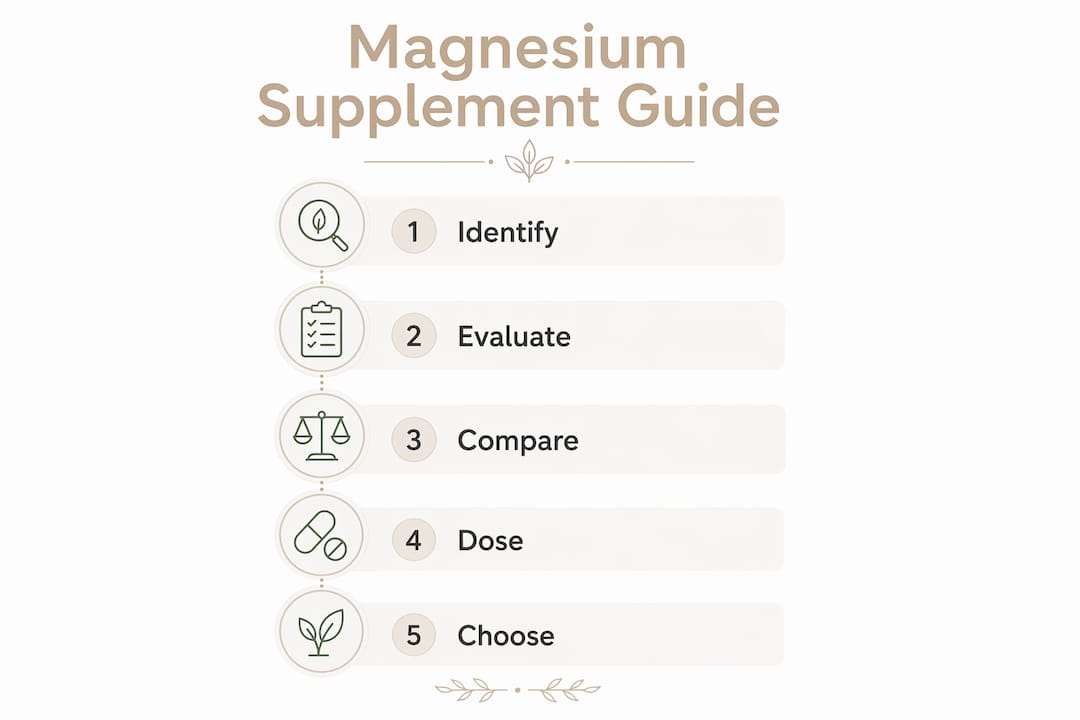
What is a full spectrum magnesium supplement?
The term “full spectrum” is a marketing descriptor, not a regulated industry classification. The recognized technical framework refers to these products as multi-form magnesium blends or polyform magnesium supplements. Understanding that distinction matters because it tells you exactly what to verify on the label before you buy.
Each magnesium compound pairs the mineral with a different carrier molecule, and that carrier determines where in the body the magnesium is most active. Magnesium glycinate pairs magnesium with glycine, an amino acid with calming properties, making it the preferred form for sleep support and stress reduction. Magnesium bisglycinate is considered best tolerated and favored for calming and muscular benefits, which is why it appears in nearly every premium blend. Magnesium malate pairs the mineral with malic acid, a compound involved in ATP production, making it the go-to form for energy and muscle recovery. Magnesium taurate combines magnesium with taurine, an amino acid that supports heart rhythm and vascular tone. Magnesium citrate is the most widely available form and offers decent bioavailability, though it carries a stronger laxative effect at higher doses.
The logic behind combining these forms is that no single compound can efficiently serve all four systems: nervous, muscular, cardiovascular, and digestive. A blend that includes glycinate for the nervous system, malate for muscles, and taurate for the heart delivers targeted support across the board.

| Magnesium form | Primary benefit | GI tolerance | Best for |
|---|---|---|---|
| Glycinate / Bisglycinate | Sleep, stress, calm | Excellent | Anxiety, insomnia |
| Malate | Energy, muscle recovery | Good | Athletes, fatigue |
| Taurate | Heart health, blood pressure | Good | Cardiovascular support |
| Citrate | Digestion, general use | Moderate | Constipation, general deficiency |
| Oxide | General use | Poor | Not recommended as primary form |
Pro Tip: If you are new to magnesium supplementation, start with a blend that leads with glycinate or bisglycinate. These forms are the least likely to cause GI distress while you build tolerance to higher elemental doses.
How to read magnesium supplement labels accurately
Label literacy is the single most underrated skill in supplement buying, and magnesium labels are among the most frequently misread. The core confusion is between compound weight and elemental magnesium. Compound weight is the total mass of the magnesium salt (for example, magnesium glycinate weighs about 172 mg per molecule). Elemental magnesium is the actual mineral content within that compound, which is only about 14% of magnesium glycinate by weight.
A 2026 NAD ruling required a brand to stop claiming “200 mg magnesium per serving” when the actual elemental magnesium was only 22 mg. That gap between 200 mg and 22 mg is not a rounding error. It is a tenfold difference in what your body actually receives. This ruling signals that regulators are paying closer attention to compound weight claims, but the burden of verification still falls on you as the buyer.
Multi-form blends may state high total milligram amounts but underdeliver elemental magnesium if only compound weight is counted. Experts recommend computing elemental magnesium per serving for real efficacy rather than trusting total blend weight. The Supplement Facts panel is where this number must appear, and it is the only figure that counts.
Here is how to read a magnesium label correctly in 2026:
- Find the Supplement Facts panel, not the front label or marketing copy.
- Locate the line that reads “Magnesium” and check the amount listed in milligrams. This should be elemental magnesium.
- If the label lists only the compound name (e.g., “Magnesium Glycinate 500 mg”), calculate elemental content or look for a parenthetical disclosure.
- Add up elemental magnesium across all forms if the product uses a proprietary blend.
- Cross-check the total elemental dose against the recommended daily intake (310 to 420 mg for adults, depending on age and sex).
- Look for third-party testing badges from NSF International, USP, or Informed Sport to verify label accuracy.
- Ignore claims like “70+ minerals” unless the Supplement Facts panel dose-quantifies each mineral individually.
Activation Products’ Restore, for example, markets a 70+ minerals claim, but the facts panel quantifies only five components including 207 mg magnesium per serving. That is a legitimate dose, but the headline claim creates a false impression of breadth. Learning to read supplement labels accurately takes ten minutes and saves you from buying products that look impressive but underdeliver.
Dosing strategies and safety for magnesium blends
Starting at 100 to 150 mg of elemental magnesium per day with food is the recommended approach for most adults beginning a new supplement. Starting at a low dose and increasing slowly produces the most effective and tolerated outcomes, according to safety summaries from VerifiedSupps. This is not overly cautious advice. GI tolerance is the primary limiting factor for magnesium supplementation, and pushing too high too fast is the number one reason people quit.
Practical dosing guidelines to follow:
- Begin with 100 to 150 mg elemental magnesium daily, taken with a meal to slow absorption and reduce GI irritation.
- Increase by 50 mg increments every five to seven days until you reach your target dose or notice loose stools.
- Split your total daily dose into two servings (morning and evening) rather than taking it all at once.
- Take your evening dose 30 to 60 minutes before bed if sleep support is a primary goal, since glycinate and taurate forms have calming effects.
- Avoid taking calcium and magnesium simultaneously at high doses. Dietitians note that calcium contracts muscles while magnesium relaxes them, and the two minerals compete for the same absorption pathways.
Pro Tip: If you experience diarrhea or cramping, do not stop magnesium entirely. Drop your dose by 50 mg, switch to a glycinate-dominant product, and take it with a larger meal. Most GI issues resolve with these adjustments rather than requiring discontinuation.
The tolerable upper intake level for supplemental magnesium is 350 mg elemental per day for adults, set by the National Institutes of Health. Exceeding this threshold increases the risk of hypermagnesemia, particularly in individuals with impaired kidney function. Anyone with chronic kidney disease, heart block, or who takes medications like antibiotics or bisphosphonates should consult a physician before starting any magnesium supplement. For healthy adults, the risk of toxicity from food and standard supplement doses is low, but multi-form blends can add up quickly if you are not tracking elemental totals across all your products.
Comparing popular full spectrum magnesium formulations
The market for the best magnesium supplements has expanded significantly, and not all “full spectrum” products are built the same way. Here is how three leading formulations compare on the metrics that actually matter.
| Product | Forms included | Elemental Mg per serving | Third-party tested | Notable features |
|---|---|---|---|---|
| BIOptimizers Magnesium Breakthrough | 7 forms (glycinate, malate, citrate, taurate, orotate, sucrosomial, bisglycinate) | ~500 mg compound / ~100 mg elemental | Yes | Broadest form range; premium price point |
| Equilife Full Spectrum Magnesium | 3 forms (glycinate, malate, citrate) | ~150 mg elemental | Yes | Cleaner label; fewer forms but well-dosed |
| Activation Products Restore | 70+ minerals claimed; 5 quantified | 207 mg elemental magnesium | Not disclosed | Liquid format; high magnesium dose per serving |
BIOptimizers Magnesium Breakthrough leads on form diversity with seven distinct compounds, but its elemental magnesium per serving is modest relative to the total compound weight listed. Equilife’s product takes a leaner approach with three well-dosed forms, which makes label verification straightforward. Activation Products Restore delivers a solid elemental dose in liquid form, though its “70+ minerals” headline is a marketing claim rather than a dose-quantified promise.
The phrase “full spectrum” can mean a blend of seven magnesium forms or a product that includes trace minerals alongside magnesium. These are fundamentally different products. A science-backed approach to selecting a magnesium mineral blend means prioritizing confirmed elemental dose and bioavailable forms over the number of ingredients on the front label. Premium positioning does not automatically mean better outcomes. A three-form product with 200 mg of confirmed elemental magnesium will outperform a seven-form product delivering only 80 mg elemental if your goal is correcting a deficiency.
For magnesium for muscle recovery specifically, look for products that lead with malate and bisglycinate, confirm at least 150 mg elemental magnesium per serving, and carry a third-party testing badge. Those three criteria filter out the majority of overhyped options on the market.
Key takeaways
A full spectrum magnesium supplement delivers real results only when the elemental magnesium dose is confirmed on the Supplement Facts panel, the forms match your health goals, and dosing is titrated gradually to maintain GI tolerance.
| Point | Details |
|---|---|
| Elemental dose is what counts | Always verify elemental magnesium on the Supplement Facts panel, not compound weight or front-label claims. |
| Match forms to your goals | Use glycinate for sleep and stress, malate for muscle recovery, and taurate for cardiovascular support. |
| Start low and increase slowly | Begin at 100 to 150 mg elemental per day with food to minimize GI side effects. |
| Separate calcium and magnesium | Take these two minerals at different times of day to prevent absorption competition. |
| Ignore unquantified mineral claims | “70+ minerals” means nothing without individual dose disclosures on the Supplement Facts panel. |
Why I think most people are buying magnesium wrong
After spending years reviewing supplement formulations and watching the magnesium category grow into one of the most crowded shelves in wellness retail, the pattern I see most often is this: people buy based on the number of forms listed on the front label and never open the Supplement Facts panel. A product with seven forms sounds more thorough than one with three. But if those seven forms deliver a combined 80 mg of elemental magnesium, you are paying a premium for marketing, not mineral content.
The 2026 NAD ruling on compound weight claims is a turning point. Regulators are finally catching up to what label-literate buyers have known for years: the milligrams on the front of the bottle are often compound weight, not elemental magnesium. That gap can be tenfold. Until labeling standards tighten further, the Supplement Facts panel is your only reliable source of truth.
My practical advice: pick a product with two to four well-dosed forms, confirm the elemental magnesium per serving, and start at a dose your gut can handle. Track how you feel over four weeks. Adjust the dose or form before you switch products entirely. Most GI issues with magnesium are a dose and form problem, not a product problem. If you are building a supplement stack, check your calcium and magnesium timing before assuming your magnesium is not working.
Join the conversation at #nutribliss and share what has worked for you. The community feedback on real-world dosing is often more useful than any single product review.
— GAURAV
Explore Nutribliss magnesium supplements
Nutribliss formulates its magnesium products with confirmed elemental dosing, third-party testing, and form selection grounded in absorption science rather than label marketing. Every product in the Nutribliss lineup discloses elemental magnesium per serving on the Supplement Facts panel, so you know exactly what you are getting.

Whether your goal is muscle recovery after training, better sleep, or daily stress management, the Nutribliss supplements collection includes options built for each use case. For a deeper look at the research behind the formulations, the science behind superfoods page walks through the evidence supporting each ingredient choice. Quality, transparency, and real elemental doses are the standard at Nutribliss.
FAQ
What is a full spectrum magnesium supplement?
A full spectrum magnesium supplement is a multi-form product that combines several magnesium compounds, such as glycinate, malate, citrate, and taurate, in a single serving to support multiple body systems simultaneously. The term is a marketing descriptor, not a regulated classification, so always verify the elemental magnesium content on the Supplement Facts panel.
How much elemental magnesium should I take daily?
Most adults benefit from 200 to 350 mg of elemental magnesium per day from supplements, with the tolerable upper intake level set at 350 mg. Start at 100 to 150 mg with food and increase gradually to reduce GI side effects.
Which magnesium form is best for muscle recovery?
Magnesium malate is the preferred form for muscle recovery because malic acid plays a direct role in ATP energy production. Pairing it with bisglycinate improves overall absorption and reduces post-exercise muscle soreness.
Can I take magnesium and calcium together?
Taking high doses of calcium and magnesium at the same time reduces absorption efficiency for both minerals. Dietitians recommend separating them by at least two hours for better uptake.
How do I know if a magnesium label is accurate?
Check the Supplement Facts panel for a line labeled “Magnesium” with a milligram amount. This should represent elemental magnesium. A 2026 NAD ruling confirmed that compound weight claims without elemental disclosure are misleading, so look for third-party testing badges from NSF International or USP to verify label accuracy.