

TL;DR:
- Magnesium citrate functions as both a laxative and a magnesium supplement, mainly used for short-term relief and bowel prep. It works by drawing water into the intestines, which softens stool and stimulates bowel movements within hours. Long-term use is discouraged due to risks of electrolyte imbalance, dependence, and masking underlying health issues.
Magnesium citrate is defined as a magnesium salt of citric acid that functions as both an osmotic laxative and a dietary magnesium supplement. Most people take it for short-term constipation relief, but it also delivers a meaningful dose of absorbable magnesium for general health. Its dual role sets it apart from other magnesium forms, which typically serve only one purpose. Understanding why people take magnesium citrate, and when it makes sense to use it, helps you get real results without misusing a supplement that carries genuine precautions.
Why take magnesium citrate: the core mechanism explained
Magnesium citrate works by pulling water into the intestines through osmosis. That water softens stool and triggers muscle contractions in the bowel wall, which moves things along. The result is a bowel movement within 30 minutes to 6 hours after taking it, making it one of the faster-acting laxative options available without a prescription. That speed is the main reason doctors use it before colonoscopies and surgeries.

The osmotic mechanism also explains why hydration matters so much when you take it. Water is being drawn from your body into your intestines. If you are already low on fluids, that shift can cause cramps, bloating, and mild dehydration. The osmotic effect also makes it unsuitable for people with kidney disease, bowel obstruction, or chronic diarrhea, since those conditions change how the body handles fluid and electrolyte shifts.
Beyond the laxative effect, magnesium citrate delivers absorbable magnesium into your bloodstream. Its bioavailability ranges roughly 35–70%, which is significantly better than magnesium oxide, a cheaper form commonly found in low-cost supplements. That absorption advantage makes it a practical choice when you need both bowel relief and a magnesium boost at the same time.
Pro Tip: Take magnesium citrate on an empty stomach with a full 8-ounce glass of water. That combination maximizes the osmotic effect and reduces your risk of cramping.
Key contraindications to know before taking magnesium citrate:
- Kidney disease: Impaired kidneys cannot clear excess magnesium, raising toxicity risk.
- Bowel obstruction: Stimulating a blocked bowel can cause serious harm.
- Chronic diarrhea: Adding an osmotic laxative worsens fluid and electrolyte loss.
- Certain heart conditions: Magnesium affects cardiac rhythm; check with a doctor first.
What are the main reasons people take magnesium citrate?
The most common reason is short-term constipation relief. Travel, dietary changes, low fiber intake, and slow bowel transit all cause temporary constipation, and magnesium citrate resolves it faster than fiber supplements or stool softeners. It does not require days of buildup to work. That speed makes it the go-to choice when you need relief tonight, not next week.
Medical bowel preparation is the second major use. Gastroenterologists and surgeons rely on magnesium citrate for bowel prep before colonoscopies and abdominal procedures because it clears the colon quickly and completely. In this context, it is used under direct medical supervision with specific dosing instructions, not as a self-directed supplement.
The third reason is magnesium supplementation for people who need a moderate magnesium boost and can tolerate its laxative effect. People with low dietary magnesium intake, athletes with high sweat losses, and those recovering from illness sometimes use magnesium citrate as a short-term bridge. For ongoing daily supplementation, though, its laxative properties become a liability rather than a benefit.
Common reasons people choose magnesium citrate:
- Occasional constipation: Fast relief without a prescription, typically within hours.
- Travel constipation: Disrupted routines and dehydration make travel a common trigger.
- Pre-procedure bowel prep: Medically directed use before colonoscopies or surgeries.
- Short-term magnesium top-up: When dietary intake drops and a quick correction is needed.
- Slow-transit constipation: When stool moves too slowly through the colon and needs osmotic help.
Magnesium citrate is not a cure for chronic constipation. Lifestyle changes like increasing fiber, drinking more water, and exercising regularly address the root causes. Relying on magnesium citrate regularly to stay regular means the underlying problem is not being fixed.
How does magnesium citrate compare to other magnesium forms?
Not all magnesium supplements do the same job. The form of magnesium determines how it is absorbed, where it acts in the body, and what side effects you can expect. Choosing the right form depends on your actual health goal.
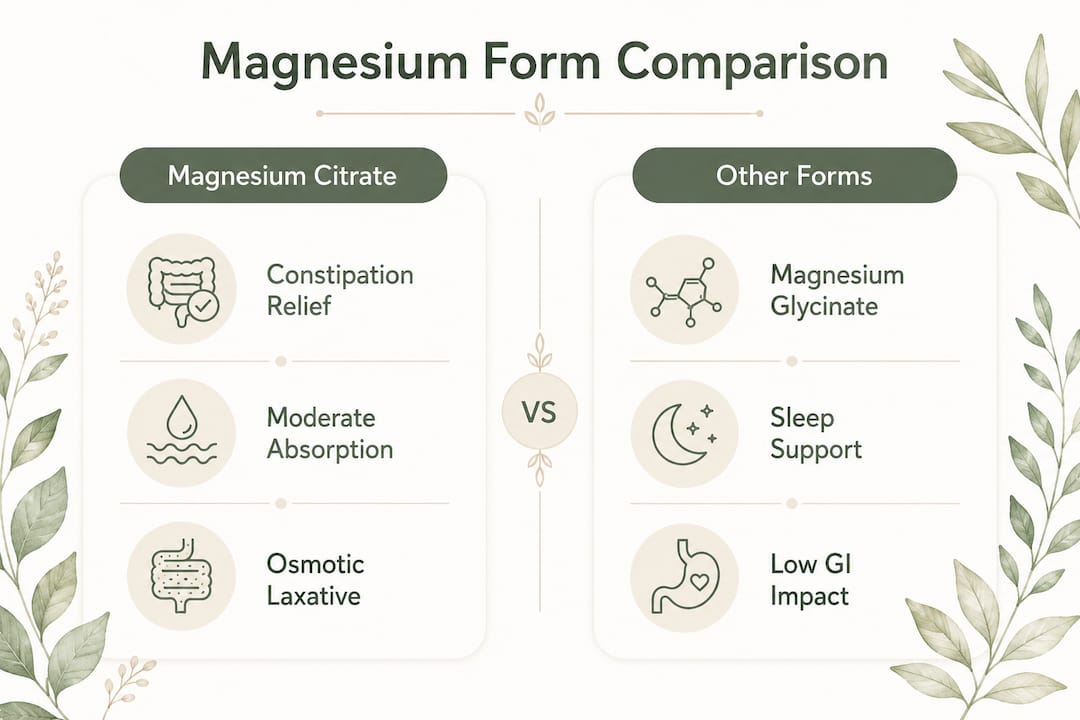
| Magnesium form | Primary use | GI impact | Best for |
|---|---|---|---|
| Magnesium citrate | Constipation relief, moderate supplementation | Moderate laxative effect | Short-term bowel regulation |
| Magnesium glycinate | Sleep, anxiety, muscle relaxation | Gentle, minimal laxative effect | Daily supplementation |
| Magnesium oxide | Low-cost supplementation | Strong laxative effect, low absorption | Occasional constipation only |
| Magnesium malate | Energy, muscle soreness | Mild GI effect | Athletic recovery |
Magnesium glycinate is the preferred form for sleep support and anxiety because the glycine molecule has its own calming properties and the compound is gentle on the digestive system. If you are looking to improve sleep quality or reduce stress, a magnesium glycinate supplement is a better fit than citrate. Citrate’s laxative effect at higher doses makes it impractical as a nightly sleep supplement for most people.
Magnesium oxide has the lowest bioavailability of the common forms, which means most of it passes through your gut unabsorbed. That unabsorbed magnesium draws water into the colon, producing a strong laxative effect. It is cheap, but you get very little systemic magnesium from it. Magnesium citrate sits in the middle: better absorbed than oxide, more laxative than glycinate.
Pro Tip: If you want to supplement magnesium daily without the laxative effect, use magnesium glycinate. Reserve magnesium citrate for the times you need quick bowel relief or a short-term magnesium correction.
For a full breakdown of which form fits your specific health goals, the 2026 magnesium supplement guide at Nutribliss covers absorption rates, dosing, and use cases in detail.
What are the safety guidelines and dosage recommendations?
The standard dose for constipation relief is 200–400 mg of elemental magnesium, typically taken at bedtime. That dose produces a bowel movement by morning for most people. Higher doses increase the laxative effect but also raise the risk of cramping, loose stools, and dehydration. Staying within the recommended range is the practical way to get the benefit without the discomfort.
Magnesium citrate side effects include loose stools, bloating, abdominal cramps, and mild dehydration. These effects are usually short-lived and tied to dose. They are also more likely when you take the supplement without enough water. Drinking a full glass of water with each dose is not optional; it is the step that determines whether the experience is comfortable or miserable.
Long-term daily use carries real risks that casual users often overlook:
- Electrolyte imbalance: Repeated osmotic shifts deplete sodium, potassium, and chloride alongside magnesium.
- Dependence: The bowel can become reliant on osmotic stimulation and lose its natural motility over time.
- Masking underlying conditions: Chronic constipation can signal motility disorders, thyroid dysfunction, or medication side effects that need medical attention.
- Kidney stress: People with reduced kidney function cannot excrete excess magnesium efficiently, raising the risk of hypermagnesemia.
- Drug interactions: Magnesium can reduce absorption of certain antibiotics, bisphosphonates, and thyroid medications when taken at the same time.
Long-term daily use is discouraged unless a healthcare provider supervises it. If you find yourself reaching for magnesium citrate more than once or twice a week, that pattern deserves a conversation with a doctor. Recurring constipation is a symptom, not a standalone problem.
The Cleveland Clinic positions magnesium citrate as a bowel regulation utility rather than a systemic magnesium maintenance supplement. That framing is accurate and worth keeping in mind when you are deciding which magnesium product belongs in your daily routine.
Key Takeaways
Magnesium citrate is an effective short-term osmotic laxative with moderate magnesium absorption, but it is not the right choice for daily supplementation or long-term bowel management.
| Point | Details |
|---|---|
| Dual-purpose supplement | Magnesium citrate acts as both an osmotic laxative and an absorbable magnesium source. |
| Fast-acting relief | It produces a bowel movement within 30 minutes to 6 hours, making it ideal for short-term use. |
| Not for daily use | Long-term reliance risks electrolyte imbalance, dependence, and masking underlying conditions. |
| Form matters | Magnesium glycinate suits daily supplementation; citrate is best reserved for bowel regulation. |
| Hydration is non-negotiable | Always take magnesium citrate with a full glass of water to prevent cramping and dehydration. |
The honest case for using magnesium citrate correctly
I have seen a lot of people treat magnesium citrate like a daily multivitamin, and that is where things go wrong. It is a tool with a specific job: short-term bowel relief and occasional magnesium correction. When you use it for that job, it works well. When you use it every day to hit your magnesium targets, you are fighting your gut instead of supporting it.
The misconception I run into most often is that more magnesium citrate means more magnesium benefit. The reality is the opposite. At higher doses or with daily use, the laxative effect dominates, and you end up losing electrolytes faster than you are gaining magnesium. The gut simply cannot absorb what it is simultaneously trying to expel.
My honest advice: if you want magnesium for sleep, stress, or muscle recovery, use a chelated form like glycinate. If you need quick constipation relief, magnesium citrate is one of the best over-the-counter options available. Keep those two roles separate, and you will get the most out of both. You can learn more about why supplement magnesium and which form fits your goals at Nutribliss. Follow #nutribliss for practical supplement guidance that skips the hype.
— GAURAV
Nutribliss magnesium supplements for your health goals
Magnesium is not a one-size-fits-all mineral, and Nutribliss builds its supplement line around that fact.

Whether you need short-term bowel support or a gentle daily magnesium source for sleep and recovery, Nutribliss offers forms matched to your actual goal. The Nutribliss supplement range includes bioavailable magnesium options backed by clear science, so you are not guessing at which form to take or how much. Visit the Nutribliss science page to see the research behind each product and find the right magnesium supplement for your routine.
FAQ
What does magnesium citrate do for the body?
Magnesium citrate draws water into the intestines to soften stool and stimulate bowel contractions, relieving constipation. It also delivers absorbable magnesium that supports muscle function, nerve signaling, and energy production.
How quickly does magnesium citrate work?
Magnesium citrate typically produces a bowel movement within 30 minutes to 6 hours after taking it. Taking it at bedtime on an empty stomach with a full glass of water produces the most consistent results.
Is magnesium citrate safe to take every day?
Daily long-term use is not recommended without medical supervision. Chronic use risks electrolyte imbalance, bowel dependence, and can mask underlying digestive conditions that need proper evaluation.
What is the difference between magnesium citrate and magnesium glycinate?
Magnesium citrate has a moderate laxative effect and is best for short-term bowel relief. Magnesium glycinate is gentler on the gut and is the preferred form for daily supplementation targeting sleep, anxiety, and muscle relaxation.
Who should not take magnesium citrate?
People with kidney disease, bowel obstruction, or chronic diarrhea should avoid magnesium citrate. Anyone on medications for thyroid conditions, bone health, or bacterial infections should check for interactions before using it.