

TL;DR:
- Metabolic flexibility is the body’s ability to switch efficiently between burning carbohydrates and fats.
- Improving flexibility involves varied exercise, dietary cycling, fasting, and good sleep habits.
- True metabolic health depends on adaptability, not strict diets or fuel sources.
Most athletes and health-focused individuals spend years perfecting a single diet, convinced that going full keto or loading up on carbs is the ultimate answer. But your body was never designed to run on one fuel. Metabolic flexibility, the ability to seamlessly switch between burning carbohydrates and fats depending on what the situation demands, is what separates athletes who plateau from those who keep improving. It also plays a major role in long-term disease prevention and everyday energy stability. This article breaks down what metabolic flexibility is, why the science behind it matters, and exactly how you can start building it.
Table of Contents
- Understanding metabolic flexibility: What it really means
- The science behind fuel switching: Mechanisms and measurements
- Why metabolic flexibility matters: Health, disease, and athletic performance
- How to identify and improve your metabolic flexibility
- The real key: Adaptability, not dietary dogma
- Boost your metabolic flexibility with NutriBliss
- Frequently asked questions
Key Takeaways
| Point | Details |
|---|---|
| Metabolic flexibility explained | Your body’s ability to efficiently switch between burning carbohydrates and fats is known as metabolic flexibility. |
| Critical for health | Better metabolic flexibility supports athletic performance, steady energy, and long-term disease prevention. |
| Improvement is possible | Varied exercise, balanced diets, and mindful fasting can all help you boost your metabolic flexibility. |
| Avoid extremes | Rigid one-fuel diets can reduce flexibility; focus on adaptability instead. |
Understanding metabolic flexibility: What it really means
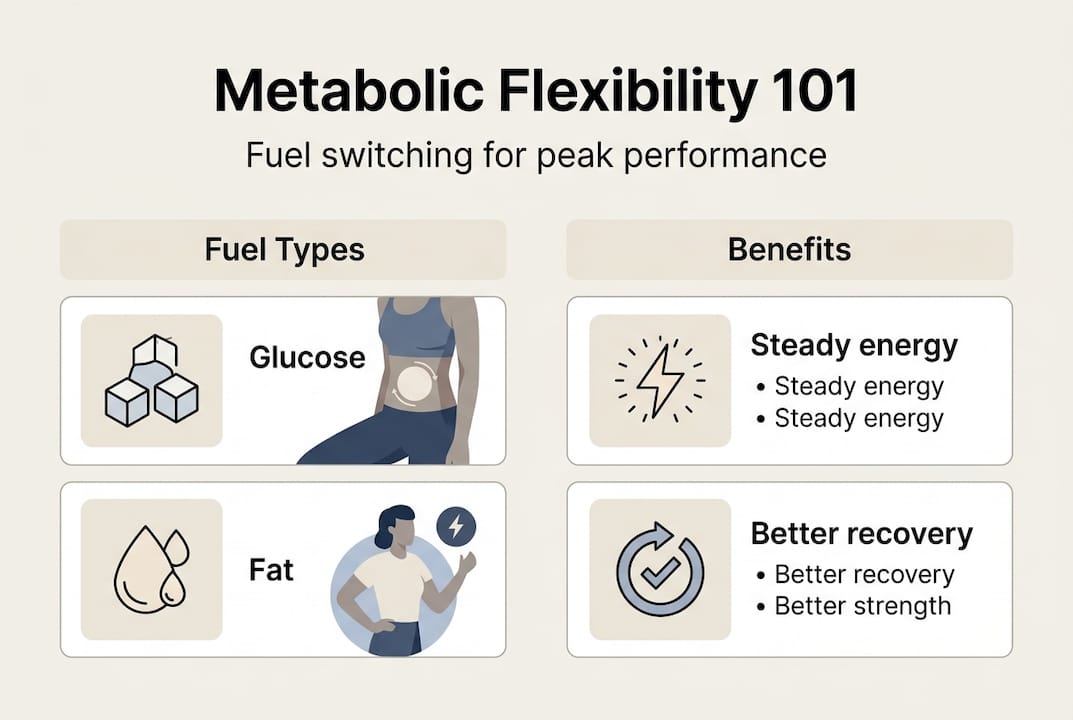
Your body runs on two primary fuels: glucose (from carbohydrates) and fatty acids (from fat). At any given moment, your cells are making a decision about which one to burn. Metabolic flexibility is the capacity of cells, tissues, or the body to switch between fuel sources, primarily glucose and fatty acids, in response to changing nutrient availability, energy demands, or physiological states like fed versus fasted or exercise versus rest.
Think of it like a hybrid car. A rigid metabolic system is like a vehicle that can only run on gasoline. A flexible one can switch between gasoline and electric power without skipping a beat. Your body needs that same versatility.
Different situations demand different fuels:
- High-intensity exercise: Your muscles crave glucose for fast energy output.
- Low-intensity movement or rest: Fat oxidation becomes the dominant and more efficient pathway.
- Fasted state: Your body should shift toward fat burning to preserve muscle glycogen.
- Post-meal: Insulin rises, signaling a switch toward glucose uptake and storage.
Here is where a lot of fitness culture gets it wrong. The keto and fat-adaptation movement has convinced many people that training your body to burn fat is the gold standard. But being fat-adapted is only half the picture. True metabolic flexibility, as supported by research in Frontiers in Nutrition, means your body handles both fuels efficiently, not just one.
“The goal is not to become a fat-burning machine or a carb-burning machine. The goal is to become a machine that can do both, on demand.”
For athletes, this is especially critical. If your body can only efficiently burn fat, your performance at high intensities will suffer. If you can only burn carbs, you will hit the wall the moment glycogen runs low. Understanding metabolic health basics gives you the foundation to appreciate why this balance matters so much. And when you pair that with a solid grasp of energy metabolism, the picture becomes even clearer.
The science behind fuel switching: Mechanisms and measurements
So what actually happens inside your body when it switches fuels? The process is far more sophisticated than most people realize, and it involves hormones, enzymes, and your mitochondria working in concert.
Key mechanisms involve hormonal signaling (insulin, glucagon, cortisol), enzyme modulation, mitochondrial function, and tissue-specific adaptations. Here is how each piece fits:
- Insulin rises after eating carbohydrates, promoting glucose uptake and suppressing fat burning.
- Glucagon rises during fasting or low blood sugar, triggering fat release from adipose tissue.
- Cortisol mobilizes both glucose and fatty acids during stress or prolonged exercise.
- Mitochondria are the actual sites where fuel is burned. More mitochondria and healthier mitochondria mean better flexibility and greater capacity to switch fuels without lag.
The more mitochondria your muscle cells contain, and the more efficiently those mitochondria function, the better your metabolic flexibility. This is a major reason why endurance training improves fuel switching. It literally builds more mitochondrial machinery inside your cells.
Scientists measure metabolic flexibility using the Respiratory Exchange Ratio (RER). This is the ratio of carbon dioxide produced to oxygen consumed. An RER near 0.7 indicates fat burning. An RER near 1.0 indicates carbohydrate burning. A metabolically flexible person will show a wide swing in RER in response to meals, fasting, or exercise. A rigid metabolic system stays stuck in a narrow range regardless of conditions.
| Population | Fasted RER | Post-meal RER | Flexibility range |
|---|---|---|---|
| Kenyan endurance athletes | 0.72 | 0.95 | High (0.23) |
| Average US adults | 0.80 | 0.88 | Low (0.08) |
| Individuals with obesity | 0.83 | 0.86 | Very low (0.03) |
This data, drawn from cross-population metabolic research, shows just how dramatically lifestyle and diet affect fuel-switching capacity. Kenyan endurance athletes, who train extensively and eat varied diets, show nearly three times the flexibility range of average American adults. Supporting your muscle recovery process is one practical way to keep mitochondrial health strong as you build toward better flexibility.
Why metabolic flexibility matters: Health, disease, and athletic performance
Metabolic flexibility is not just a performance metric. It is a health marker with serious implications for disease prevention and longevity.

Metabolic inflexibility increases risk for diabetes and cardiometabolic disease, and dynamic tests can reveal early problems before standard bloodwork catches them. In other words, you can be losing metabolic flexibility years before a doctor flags anything on a routine panel.
Here is how inflexibility shows up in real life:
- Energy crashes after meals (inability to smoothly shift from glucose burning)
- Hitting the wall during workouts (glycogen depletes with no efficient fat backup)
- Constant hunger and cravings between meals
- Slow recovery after exercise
- Brain fog during fasted periods
For athletes, this translates directly into performance ceilings. If your body cannot tap into fat stores during a long run or cycling event, you are entirely dependent on carbohydrate intake. That is a fragile strategy.
| Metabolically flexible | Metabolically inflexible |
|---|---|
| Steady energy across the day | Energy spikes and crashes |
| Efficient fat burning at rest | Poor fat oxidation even at low intensity |
| Strong performance across intensities | Performance drops without carb loading |
| Resilient to missed meals | Irritable and fatigued when fasting |
Aging also plays a role. Metabolic flexibility declines with aging, insulin resistance, and obesity, and prolonged low-carb or keto diets can paradoxically impair flexibility over time by reducing carbohydrate processing enzymes. This is the part no one talks about. The very diet some people use to “fix” their metabolism can make it more rigid if taken to an extreme.
Pro Tip: Avoid locking yourself into a single dietary framework for months or years. Rotating between higher and lower carbohydrate periods keeps your metabolic machinery primed for both fuels. Explore how fueling performance and balanced nutrition work together to support this approach.
How to identify and improve your metabolic flexibility
You do not need a lab to get a rough sense of where your metabolic flexibility stands. Start with these self-assessment signals:
- Do you crash hard after a carb-heavy meal?
- Can you skip breakfast without feeling miserable?
- Do your workouts suffer significantly if you train fasted?
- Does your energy flatline in the afternoon regardless of what you ate?
If you answered yes to most of these, your flexibility likely needs work. Here is a practical, evidence-backed approach to improve it.
1. Mix your exercise intensities. Low-intensity aerobic work (walking, easy cycling) trains fat oxidation. High-intensity intervals train carbohydrate metabolism. Doing both is what builds metabolic flexibility through fed-fasted cycles and diverse movement patterns.
2. Practice dietary periodization. This means intentionally cycling between higher carb days (around intense training) and lower carb days (on rest or easy days). No universal approach works for everyone, but periodized diets and diverse movement are consistently identified as key drivers of improved flexibility.
3. Incorporate strategic fasting. An overnight fast of 12 to 14 hours is enough to encourage fat oxidation without stressing your system. You do not need extreme fasting windows to see benefits.
4. Prioritize sleep. Poor sleep disrupts insulin sensitivity and hormonal signaling, which directly impairs fuel switching. This is one of the most underrated levers for metabolic health.
5. Monitor your response. If you have access to a continuous glucose monitor (CGM), it can reveal how your body handles carbohydrate loads and whether your glucose regulation is improving over time.
Pro Tip: Sustainability beats extremes every time. A moderate approach you can maintain for years will do more for your metabolic flexibility than any aggressive protocol you abandon after six weeks. Learn how functional nutrition for athletes, nutrient timing, and sustaining energy naturally can all support this long-term strategy.
The real key: Adaptability, not dietary dogma
Here is an uncomfortable truth: most nutrition debates, keto versus carbs, fasting versus frequent meals, are really just arguments about which half of your metabolic system to prioritize. And both sides are missing the point.
We have seen athletes perform brilliantly on high-carb diets and equally well on lower-carb approaches. The common thread is never the specific diet. It is how well their bodies adapted to use whatever fuel was available. Rigid dietary rules create rigid metabolisms. Adaptability creates resilience.
The data supports this clearly. The metabolism science consistently shows that the most metabolically healthy individuals are not the ones following the strictest protocol. They are the ones whose bodies respond fluidly to changing conditions. That is the real edge. Build a body that works with you, not one that depends on perfect conditions to function.
Boost your metabolic flexibility with NutriBliss
Improving your metabolic flexibility takes consistent effort across training, nutrition, and recovery. The right supplements can support that process by filling the gaps that diet and exercise alone sometimes miss.

At NutriBliss, we back every product recommendation with real science, because your goals deserve more than marketing claims. Whether you are looking to support mitochondrial health, optimize recovery, or maintain steady energy across your training week, our full supplement collection is built to complement a metabolically flexible lifestyle. Dig into the science behind superfoods to understand exactly what goes into our formulations and why it matters for your performance.
Frequently asked questions
How do I know if I have good metabolic flexibility?
Signs include steady energy throughout the day, quick recovery from meals, and the ability to fuel workouts with either carbs or fats without major dips. True flexibility shows up as a wide shift in fuel use across fasted, fed, and exercise states.
Can low-carb or keto diets harm my metabolic flexibility?
Yes, if taken to an extreme for too long. Prolonged low-carb diets can reduce the enzymes your body uses to process carbohydrates, making reintroduction harder and your overall flexibility narrower.
What’s the difference between being ‘fat-adapted’ and metabolically flexible?
Being fat-adapted means your body primarily burns fat for fuel. Metabolic flexibility goes further: true flexibility means efficiently using both glucose and fatty acids depending on what the situation demands.
How quickly can I improve my metabolic flexibility?
With consistent mixed-intensity training and dietary periodization, most people notice real improvements within several weeks. Training and dietary periodization can enhance flexibility relatively quickly when applied consistently.
Do supplements help with metabolic flexibility?
Supplements work best as support, not a substitute for diet and exercise. Mitochondrial health is central to fuel switching, and targeted supplements can help maintain the cellular machinery that makes flexibility possible.