

Many athletes dedicate hours to training but overlook the critical role timing plays in nutrition. The science behind nutrient timing reveals that when you eat can be just as important as what you eat for maximizing performance and recovery. By understanding how precise nutrient intake before, during, and after exercise supports muscle repair, glycogen replenishment, and tissue recovery, you gain the tools to train harder, recover faster, and achieve lasting athletic gains.
Table of Contents
- Defining Nutrient Timing And Core Concepts
- Key Timing Windows For Nutrient Intake
- Macronutrient Roles In Performance
- Supplement Strategies To Enhance Timing
- Risks, Myths, And Common Mistakes
Key Takeaways
| Point | Details |
|---|---|
| Nutrient Timing Importance | Strategically timing nutrient intake can significantly enhance athletic performance and recovery. |
| Three Key Phases | Pre-workout, during, and post-workout each require specific nutrients to maximize energy and facilitate recovery. |
| Macronutrient Roles | Carbohydrates, proteins, and fats each play unique roles in performance and should be tailored to athletic needs. |
| Beware of Myths | Understanding and debunking common nutrition myths is essential to achieving optimal performance and health. |
Defining Nutrient Timing and Core Concepts
Nutrient timing represents a strategic approach to consuming nutrients that maximizes athletic performance and recovery. At its core, this practice involves understanding precisely when and what to consume before, during, and after physical activity to optimize metabolic responses and physiological adaptations.
The International Society of Sports Nutrition defines nutrient timing as strategically planning nutrient consumption in relation to exercise. This approach goes beyond simply eating - it’s about consuming specific nutrients at precise moments to enhance several critical physiological processes:
- Muscle protein synthesis
- Glycogen replenishment
- Tissue repair
- Performance optimization
- Recovery acceleration
Understanding nutrient timing requires recognizing how different nutrients interact with exercise-induced hormonal changes. Nutrient timing principles highlight the complex interactions between exercise, metabolism, and nutritional intake. The body responds differently to nutrients depending on activity stage - pre-workout, during exercise, and post-workout periods each demand unique nutritional strategies.
Athletes who master nutrient timing can potentially improve their body composition, enhance recovery speed, and maximize training adaptations. By strategically consuming proteins, carbohydrates, and other essential nutrients, athletes create an internal environment primed for peak performance.
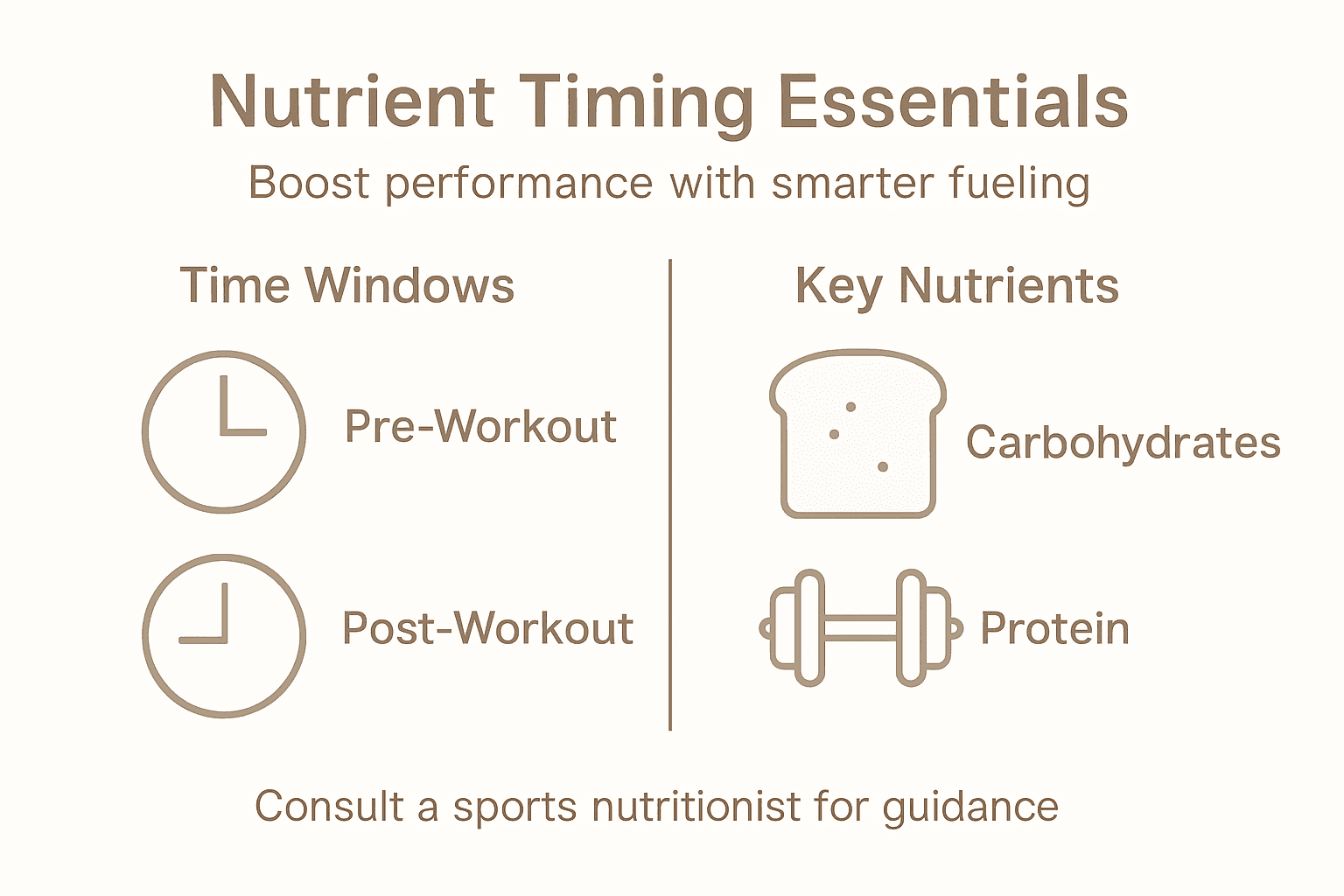
Pro tip: Start tracking your nutrient intake timing relative to your training sessions to identify your personal optimal nutrition windows.
Key Timing Windows for Nutrient Intake
Athletes seeking optimal performance must understand the critical nutrient timing windows that maximize physiological adaptations and recovery. Performance nutrition guidelines emphasize three primary phases of nutrient consumption: before, during, and after exercise, each with unique nutritional requirements.
Pre-workout nutrition involves strategic planning to prepare the body for intense physical activity. Recommended strategies include:
- Consuming carbohydrates 1-4 hours before exercise
- Targeting 30-60 grams of easily digestible nutrients
- Focusing on low-fiber, moderate protein meals
- Hydrating adequately before physical activity
Nutrient timing research reveals specific recommendations for each exercise stage. During prolonged exercise sessions lasting over 60 minutes, athletes should consume 30-60 grams of carbohydrates per hour to sustain energy levels and prevent metabolic fatigue.
Post-exercise nutrition represents the most critical window for recovery and adaptation. Within two hours after training, athletes should prioritize consuming a combination of carbohydrates and proteins to support:
- Glycogen replenishment
- Muscle tissue repair
- Reducing exercise-induced inflammation
- Supporting immune system function
Precise nutrient timing can dramatically improve athletic performance and recovery efficiency.
Pro tip: Experiment with different nutrient timing strategies during training to discover your body’s optimal absorption and recovery windows.
Here’s a summary of nutrient needs for each training phase:
| Exercise Phase | Main Nutrients Needed | Key Goals |
|---|---|---|
| Pre-workout | Carbohydrates, protein | Prepare energy stores |
| During | Fast-absorbed carbs, electrolytes | Sustain energy, prevent fatigue |
| Post-workout | Protein, carbohydrates | Repair muscle, restore glycogen |
Macronutrient Roles in Performance
Macronutrient composition plays a critical role in athletic performance, with carbohydrates, proteins, and fats each contributing unique physiological benefits. Understanding the specific functions of these nutrients enables athletes to optimize their nutritional strategies and enhance overall performance.
Carbohydrates represent the primary energy source for high-intensity activities, providing rapid fuel for muscular work. Key characteristics include:
- Fastest metabolic energy source
- Critical for maintaining blood glucose levels
- Essential for glycogen replenishment
- Support immediate and sustained energy production
Proteins serve as the fundamental building blocks for muscle tissue, supporting critical physiological processes. Nutritional research highlights their importance in:
- Muscle protein synthesis
- Tissue repair and regeneration
- Supporting immune system function
- Facilitating enzyme and hormone production
Fats, often misunderstood, play a nuanced role in athletic performance. During prolonged endurance activities, fats become a crucial energy substrate, helping athletes maintain consistent energy levels and support metabolic functions.
Balanced macronutrient intake is the cornerstone of optimal athletic performance and recovery.
Pro tip: Consult a sports nutritionist to develop a personalized macronutrient profile tailored to your specific training demands and physiological needs.

Compare the roles of each macronutrient in athletic performance:
| Macronutrient | Primary Function | Best Timing |
|---|---|---|
| Carbohydrates | Fast energy supply | Before/during exercise |
| Protein | Muscle repair, growth | After exercise |
| Fats | Endurance fuel, hormone support | Throughout the day |
Supplement Strategies to Enhance Timing
Supplement strategies play a critical role in optimizing athletic performance by targeting specific metabolic windows and supporting physiological recovery processes. Understanding when and how to integrate supplements can dramatically enhance an athlete’s training outcomes and overall performance potential.
Pre-workout supplement timing focuses on preparing the body for intense physical activity. Key strategies include:
- Consuming caffeine 30-60 minutes before exercise
- Using beta-alanine to buffer muscle fatigue
- Implementing creatine for energy system support
- Hydrating with electrolyte supplements
During exercise, targeted supplementation can help maintain performance and delay fatigue. Circadian rhythm research suggests carefully timed interventions can optimize metabolic efficiency and energy production.
Post-exercise supplement windows represent the most crucial period for recovery and adaptation. Strategic approaches include:
- Consuming protein within 30 minutes after training
- Using branched-chain amino acids for muscle repair
- Implementing anti-inflammatory supplements
- Restoring glycogen with fast-absorbing carbohydrates
Precision in supplement timing can transform athletic performance and recovery potential.
Pro tip: Maintain a detailed log tracking your supplement intake, performance metrics, and recovery to identify your personalized optimal timing strategy.
Risks, Myths, and Common Mistakes
Common nutrition myths can significantly derail athletes’ performance and health strategies. Understanding and debunking these misconceptions is crucial for developing effective, evidence-based nutritional approaches that support peak athletic performance.
Several persistent myths plague nutrient timing and supplementation strategies:
- Believing in universal ‘magic’ supplements
- Assuming more supplements always mean better results
- Ignoring individual metabolic differences
- Neglecting whole food nutrition
- Overemphasizing single nutrient intake
Research from sports nutrition experts highlights critical misconceptions about nutrient timing. The most dangerous myths include:
- The myth of the strict 30-minute ‘anabolic window’
- Thinking supplements can replace balanced nutrition
- Believing all athletes require identical nutritional strategies
- Assuming high-cost supplements guarantee superior results
Athletes often make critical mistakes that compromise their performance and health. These errors range from poorly timed supplement intake to neglecting overall dietary quality and individual physiological needs.
Not all nutritional advice is created equal - critical thinking is your best performance enhancer.
Pro tip: Consult a registered sports nutritionist to develop a personalized nutrition strategy tailored to your specific metabolic profile and training goals.
Unlock Your Peak Athletic Performance with Smart Nutrient Timing
Mastering nutrient timing is essential to overcoming common performance hurdles like slow recovery, energy dips during training, and suboptimal muscle gains. This article highlights how precise consumption of carbohydrates, proteins, and supplements at key moments fuels your body for muscle synthesis, glycogen restoration, and faster repair. If you’re committed to elevating your training outcomes through evidence-backed strategies, aligning your supplement routine with your workout schedule is critical.

Explore a targeted selection of Fitness Supplements and Athlete Recovery & Performance products designed to support your pre, during, and post-exercise needs. Don’t wait to maximize your energy and recovery potential. Visit Nutribliss.us now to customize your nutrient timing approach with science-backed supplements crafted for serious athletes like you.
Frequently Asked Questions
What is nutrient timing?
Nutrient timing is a strategy that involves consuming specific nutrients at precise moments before, during, and after exercise to maximize athletic performance and recovery. It focuses on the body’s response to nutrients in relation to physical activity.
How does nutrient timing affect muscle recovery?
Proper nutrient timing, especially post-exercise, is crucial for muscle recovery. Consuming a combination of carbohydrates and proteins within two hours after training supports glycogen replenishment and muscle tissue repair, leading to more efficient recovery.
What are the key nutrients to consume before working out?
Before a workout, it is recommended to consume carbohydrates and moderate protein. Eating 30-60 grams of easily digestible carbohydrates 1-4 hours prior can prepare energy stores and optimize performance during exercise.
Are there any common myths about nutrient timing I should be aware of?
Yes, some common myths include the belief in a strict 30-minute ‘anabolic window’ for nutrient intake post-exercise and the assumption that all athletes require the same nutritional strategies. It’s important to base your approach on individual needs and responses.