

Nearly 60 percent of American athletes use dietary supplements in pursuit of peak performance, yet many struggle to find clear, evidence-based guidance. With every intense workout or competition, the pressure to recover faster and perform better grows. This comprehensive guide breaks down the science of performance nutrition, showing health-conscious American fitness enthusiasts how targeted nutrition and smart supplementation can make a measurable impact on strength, endurance, and recovery.
Table of Contents
- Defining Performance Nutrition For Athletes
- Key Components: Macronutrients And Micronutrients
- Customizing Nutrition Strategies For Performance
- Role Of Supplements In Athletic Nutrition
- Common Pitfalls And How To Avoid Them
Key Takeaways
| Point | Details |
|---|---|
| Tailored Nutrition is Essential | Effective performance nutrition should be customized to the individual athlete’s sport, training intensity, and metabolic needs. |
| Role of Macronutrients and Micronutrients | A balanced intake of macronutrients (carbohydrates, proteins, fats) and micronutrients is crucial for optimal performance and recovery. |
| Avoid Common Nutritional Pitfalls | Athletes should watch for inadequate caloric intake, poor meal timing, and dehydration to enhance performance and prevent deficiencies. |
| Consult with Professionals | Seeking guidance from a registered sports nutritionist can help develop personalized nutrition and supplement strategies that align with athletic goals. |
Defining Performance Nutrition for Athletes
Performance nutrition represents a strategic approach to fueling athletic potential through scientifically targeted dietary practices. At its core, this discipline focuses on optimizing an athlete’s nutritional intake to enhance physical performance, support training adaptations, and accelerate recovery. Nutrition strategies for athletes center on consuming balanced diets tailored precisely to individual sport and training demands.
The fundamental goal of performance nutrition is creating a comprehensive nutritional framework that addresses an athlete’s unique metabolic needs. This involves carefully calibrating calorie intake, macronutrient ratios, and micronutrient consumption to support specific physiological requirements. Athletes require nutritional plans that not only provide energy but also facilitate muscle repair, reduce inflammation, and optimize overall metabolic function. Metabolic efficiency becomes the key metric, where every dietary choice is strategically selected to maximize athletic output.
Understanding performance nutrition means recognizing that nutrition is not a one-size-fits-all approach. Performance optimization through targeted nutrition depends on multiple factors including sport type, training intensity, individual metabolism, and specific performance goals. Competitive swimmers will have dramatically different nutritional needs compared to marathon runners or powerlifters. Each athlete requires a personalized nutritional strategy that considers their unique physiological demands, training schedule, and biochemical responses.
Here’s how common sports vary in their nutritional demands:
| Sport Type | Dominant Energy Source | Key Nutrient Focus | Typical Training Intensity |
|---|---|---|---|
| Marathon Running | Carbohydrates | Glycogen loading | Prolonged, moderate-high |
| Powerlifting | Proteins & Fats | Muscle repair, strength | Short, high-intensity bursts |
| Swimming | Balanced Mix | Hydration, recovery support | Intervals, moderate-high |
| Soccer | Carbohydrates & Protein | Endurance, quick recovery | Sustained, variable bursts |
Pro tip: Consult with a sports nutritionist to develop a personalized nutrition plan that precisely matches your specific athletic goals and metabolic profile.
Key Components: Macronutrients and Micronutrients
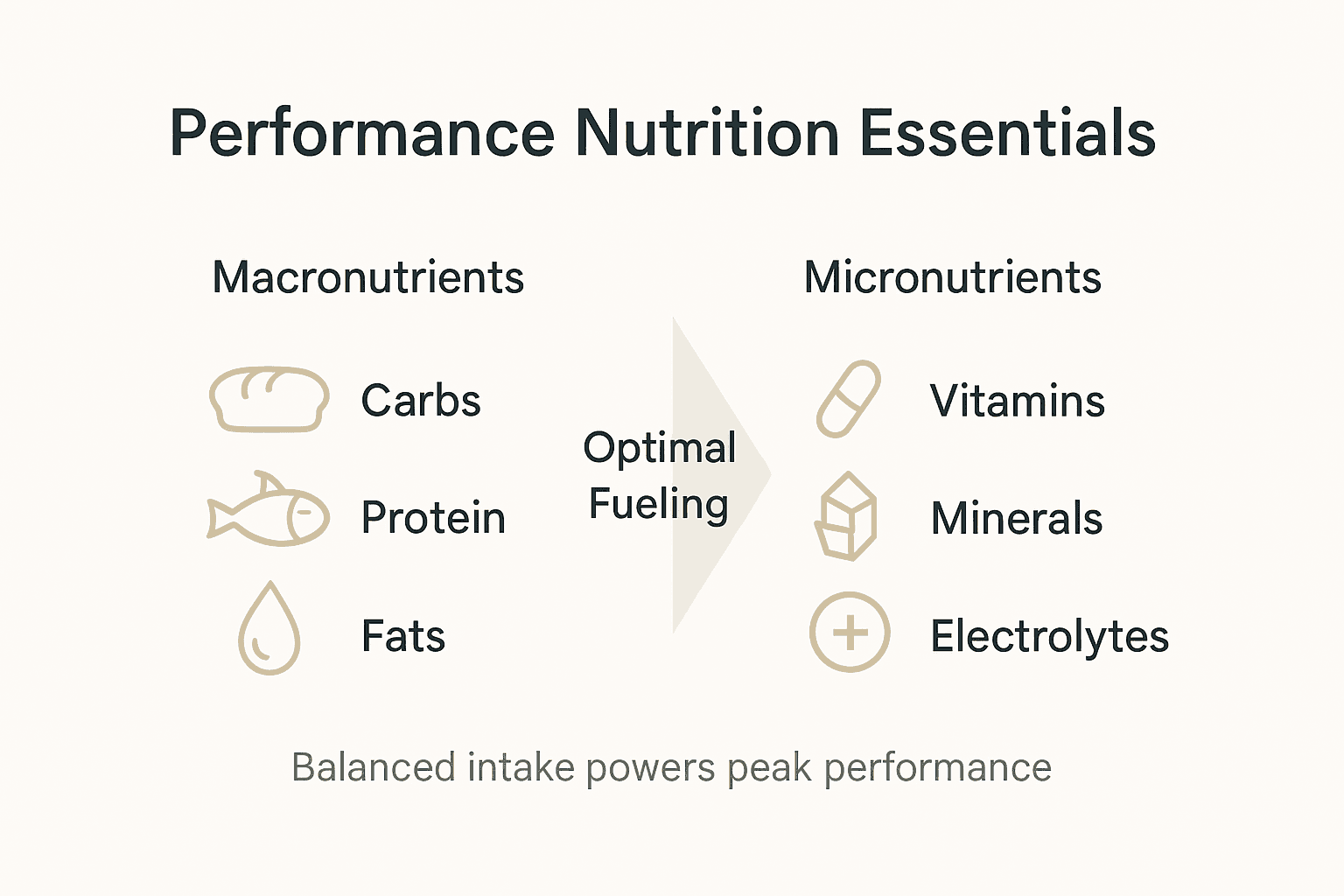
Athletic performance hinges on understanding the critical role of macronutrients and micronutrients in fueling and sustaining peak physical conditions. Nutritional components essential for exercise break down into three primary macronutrients: carbohydrates, proteins, and fats, each playing a unique and indispensable role in metabolic function and athletic performance.
Carbohydrates serve as the body’s primary energy source, storing critical glycogen in muscles and liver tissues to power high-intensity workouts. Proteins are fundamental for muscle repair, growth, and recovery, acting as the building blocks that reconstruct muscle tissue after intense training sessions. Fats, often misunderstood, are crucial for hormone production, nutrient absorption, and providing sustained energy during endurance activities. These macronutrients work synergistically to support an athlete’s physiological demands, with precise ratios varying based on individual sport requirements and training intensity.

Micronutrients, though required in smaller quantities, are equally vital for optimal athletic performance. Vitamins and minerals like iron, calcium, vitamin D, and B-complex vitamins play critical roles in oxygen transportation, bone health, energy metabolism, and immune system function. Athletes often have heightened micronutrient needs due to increased metabolic stress, making targeted supplementation and strategic dietary planning essential for maintaining peak physical condition and preventing potential performance-limiting deficiencies.
Review the critical functions of key macronutrients and micronutrients for athletes:
| Nutrient Category | Main Role in Performance | Typical Deficiency Impact |
|---|---|---|
| Carbohydrates | Fuel high-intensity effort | Early fatigue, low stamina |
| Proteins | Muscle growth/recovery | Slow recovery, injury risk |
| Fats | Endurance, hormone balance | Poor endurance, low energy |
| Micronutrients | Immunity, bone health | Weak bones, illness, fatigue |
Pro tip: Consult a sports nutritionist to develop a personalized macronutrient and micronutrient strategy tailored specifically to your unique athletic goals and metabolic profile.
Customizing Nutrition Strategies for Performance
Performance nutrition is not a one-size-fits-all approach but a nuanced, highly personalized strategy that demands careful consideration of individual athletic requirements. Nutrition strategies for athletes must be meticulously tailored to account for sport-specific demands, training intensity, metabolic variations, and individual physiological characteristics.
Different athletic disciplines require dramatically different nutritional approaches. A marathon runner’s nutritional needs dramatically diverge from those of a powerlifter or competitive swimmer. Nutritional periodization becomes crucial, involving strategic adjustments to calorie intake, macronutrient ratios, and meal timing that align precisely with training cycles, competition schedules, and specific performance goals. This dynamic approach ensures that an athlete’s nutritional intake remains responsive to changing physical demands, supporting optimal performance and preventing potential metabolic plateaus.
Beyond sport-specific considerations, individual metabolic variations play a critical role in customizing nutrition strategies. Factors such as body composition, genetic predispositions, hormonal profiles, and previous injury history all influence an athlete’s nutritional requirements. Some athletes might require higher protein intake for muscle recovery, while others might need increased complex carbohydrates to sustain endurance activities. Advanced nutritional assessments, including metabolic testing and comprehensive blood panels, can provide granular insights that enable hyper-personalized nutrition planning.
Pro tip: Work with a registered sports nutritionist to conduct comprehensive metabolic testing and develop a truly personalized nutrition strategy that evolves with your athletic performance.
Role of Supplements in Athletic Nutrition
Supplements play a critical yet nuanced role in athletic performance, serving as targeted nutritional support that can bridge gaps in dietary intake and potentially enhance physiological capabilities. Dietary supplements for athletic performance encompass a diverse range of ingredients including amino acids, proteins, creatine, and caffeine, each offering unique potential benefits for strength, endurance, and recovery.
The strategic use of performance supplements requires careful scientific scrutiny and individualized assessment. While some supplements demonstrate measurable performance improvements, others lack substantial evidence or pose potential risks. Key performance-enhancing supplements like creatine monohydrate have robust research supporting muscle strength and power output, whereas others may provide marginal or inconsistent benefits. Athletes must approach supplementation with a critical eye, understanding that these nutritional tools are meant to complement—not replace—a well-structured, nutrient-dense dietary foundation.
Comprehensive supplement strategies demand more than simply consuming popular products. Individual metabolic variations, training goals, and potential interactions with existing medications or health conditions must be carefully evaluated. Professional guidance from sports nutritionists and healthcare providers becomes crucial in developing a safe, effective supplement protocol. Advanced testing, including comprehensive metabolic panels and performance assessments, can help athletes identify precise nutritional needs and potential supplementation strategies that align with their unique physiological profile.
Pro tip: Consult a registered sports nutritionist to develop a personalized supplement strategy that accounts for your specific athletic goals, metabolic profile, and individual health considerations.
Common Pitfalls and How to Avoid Them
Performance nutrition strategies require careful navigation to prevent common mistakes that can dramatically undermine athletic performance. Athletes frequently encounter nutritional challenges that, if left unaddressed, can significantly compromise their training effectiveness, recovery, and overall health.
One of the most critical nutritional pitfalls involves inadequate caloric intake and poor meal timing. Many athletes mistakenly restrict calories or consume nutrients at inappropriate times, disrupting metabolic processes and hindering muscle recovery. Dehydration represents another significant risk, with athletes often underestimating fluid requirements during intense training. Micronutrient deficiencies can also emerge silently, creating potential performance limitations that are not immediately apparent but can cause long-term metabolic disruptions.
Comprehensive nutrition management demands a holistic approach that goes beyond simple calorie counting. Athletes must develop a nuanced understanding of their individual metabolic needs, carefully balancing macronutrient intake, micronutrient consumption, and hydration strategies. Professional guidance becomes crucial in identifying potential nutritional gaps, designing personalized dietary interventions, and creating adaptive nutrition protocols that evolve with changing training intensities and performance goals. Systematic tracking, regular metabolic assessments, and collaboration with sports nutrition experts can help athletes proactively address potential nutritional challenges before they impact performance.
Pro tip: Maintain a detailed nutrition and training journal to track your body’s responses and identify potential nutritional gaps before they become performance limitations.
Unlock Your Athletic Potential with Precision Nutrition Support
Performance nutrition demands more than just knowledge it requires the right fuel to power your training, accelerate recovery, and achieve your personal best. If you are facing challenges like poor recovery, low energy, or difficulty optimizing your macronutrient balance, targeted supplementation can be the game-changer. At Nutribliss, we understand the importance of a personalized nutrition strategy that supports your metabolic needs, training intensity, and specific athletic goals.
Enhance your regimen with our carefully curated selection of Fitness Supplements designed to fuel strength and endurance. Support your recovery process with premium products from our Athlete Recovery & Performance collection that reduce inflammation and speed muscle repair.

Take control of your athletic success today by choosing science-backed supplements tailored for performance excellence. Visit Nutribliss.us to explore detailed product options and build a customized nutrition plan that keeps you performing at the peak of your potential.
Frequently Asked Questions
What is performance nutrition and why is it important for athletes?
Performance nutrition refers to a strategic approach to fueling athletes by optimizing their dietary intake to enhance physical performance, support training adaptations, and accelerate recovery. It is crucial for achieving peak athletic capabilities and maintaining overall health.
How do macronutrients affect athletic performance?
Macronutrients like carbohydrates, proteins, and fats play vital roles in fueling energy, aiding muscle repair, and providing sustained energy during activities. Athletes must balance their intake of these macronutrients according to their specific sport and training demands for optimal performance.
Why is micronutrient intake important for athletes?
Micronutrients, including vitamins and minerals, are essential for functions like oxygen transport, bone health, and energy metabolism. Athletes often have increased micronutrient needs due to heightened metabolic stress, making strategic dietary planning and supplementation critical to prevent deficiencies.
What are some common pitfalls in performance nutrition that athletes should avoid?
Common pitfalls include inadequate caloric intake, poor meal timing, and dehydration. Athletes must be mindful of their individual nutritional needs and ensure they have a balanced intake of macronutrients and micronutrients to avoid performance limitations.
Recommended
- Athletic Supplements Explained: Complete Guide for 2024 – Nutribliss Inc.
- 7 Essential Supplements to Enhance Performance Naturally – Nutribliss Inc.
- 7 Essential Supplements for Athletes to Boost Performance – Nutribliss Inc.
- Complete Guide to the Role of Protein Supplementation – Nutribliss Inc.
- Complete Guide to How Detox Impacts Energy - Mahoney inter