

Athletes across the American sports scene know that nutrition impacts more than just energy levels—over 60 percent of performance fluctuations are tied to dietary choices. Navigating the difference between generic advice and functional nutrition matters for anyone pushing their physical limits. This guide sheds light on personalized nutrition strategies designed to help American fitness enthusiasts transform everyday meal planning into a precision tool for stronger results and improved recovery.
Table of Contents
- Defining Functional Nutrition In Sports
- Core Principles And How It Works
- Types Of Functional Nutrition Strategies
- Personalized Approaches And Athlete Benefits
- Common Risks And What To Avoid
- Comparing Functional And Traditional Nutrition
Key Takeaways
| Point | Details |
|---|---|
| Personalized Nutrition Plans | Functional nutrition requires tailoring dietary strategies to fit individual athlete needs and performance goals. Consult a sports nutritionist to develop a precise plan to enhance performance. |
| Dynamic Nutritional Strategies | Nutrition should adapt based on training cycles and physiological responses, ensuring optimal fueling and recovery. Periodized nutrition is recommended for adjusting nutrient intake during different training phases. |
| Safety in Supplementation | Athletes must prioritize using scientifically validated supplements to avoid health risks related to contamination and unregulated products. Work with professionals to ensure safety and efficacy. |
| Functional vs Traditional Nutrition | Unlike traditional guidelines, functional nutrition emphasizes individualized approaches that dynamically respond to athletes’ specific metabolic and performance needs for peak optimization. |
Defining Functional Nutrition in Sports
Functional nutrition represents a sophisticated, science-driven approach to fueling athletic performance that goes far beyond basic dietary recommendations. At its core, this discipline focuses on providing targeted nutritional strategies customized to an athlete’s specific metabolic needs and performance goals.
Unlike generic nutrition plans, functional nutrition in sports considers multiple complex factors including an athlete’s specific sport, body composition, metabolic profile, training intensity, and individual physiological responses. Sports nutrition emphasizes appropriate nutrient types and quantities that maintain and improve athletic performance, strategically balancing macronutrients and micronutrients to support energy production, muscle recovery, and overall athletic health.
The fundamental goal of functional nutrition is optimization - transforming food and supplements from basic fuel into precise performance enhancement tools. This means creating personalized nutrition protocols that address unique athlete requirements, such as supporting muscle protein synthesis, managing inflammation, improving metabolic efficiency, and accelerating recovery processes. Nutribliss athletes understand that nutrition isn’t one-size-fits-all, but a dynamic, individualized approach to achieving peak physical potential.
Pro tip: Consult a sports nutritionist to develop a personalized functional nutrition plan that precisely matches your specific athletic demands and performance objectives.
Core Principles and How It Works
Functional nutrition for athletes operates on a sophisticated framework of personalized nutritional strategies that adapt to training cycles and performance demands. At its core, this approach transcends traditional dietary recommendations by creating dynamic, responsive nutrition protocols that evolve with an athlete’s specific physiological needs and performance goals.
Macronutrient Precision becomes paramount in functional nutrition. Athletes require carefully balanced intake of proteins, carbohydrates, and fats that support energy production, muscle recovery, and metabolic efficiency. This means calculating exact nutrient ratios based on individual metabolism, training intensity, and specific sport requirements - transforming nutrition from a generic fuel source into a strategic performance enhancement tool.
The implementation of functional nutrition involves complex, multifaceted assessment techniques. Sports nutritionists conduct comprehensive evaluations including metabolic testing, body composition analysis, training load assessments, and individual physiological response tracking. These detailed diagnostics allow for creating hyper-personalized nutrition plans that address unique athlete requirements such as supporting muscle protein synthesis, managing inflammatory responses, and optimizing energy systems for peak performance.
Pro tip: Work with a certified sports nutritionist to conduct a comprehensive metabolic assessment that can reveal your body’s specific nutritional needs and performance potential.
Types of Functional Nutrition Strategies
Periodized nutrition strategies represent a sophisticated approach to athletic nutrition, strategically adjusting nutrient intake across different training and competition phases. This method recognizes that an athlete’s nutritional needs are not static, but dynamically change based on training intensity, competition schedules, and specific physiological demands.
Macronutrient Manipulation stands as a critical functional nutrition strategy. Athletes can optimize performance by carefully calibrating carbohydrate, protein, and fat intake to match specific training objectives. This might involve increasing carbohydrate intake during high-intensity training blocks, implementing targeted protein consumption for muscle recovery, and adjusting fat intake to support metabolic efficiency and hormonal balance.

Beyond macronutrient strategies, functional nutrition encompasses advanced techniques like nutrient timing, supplementation protocols, and specialized hydration approaches. These methods include strategic pre and post-workout nutrition, targeted use of ergogenic aids like creatine and beta-alanine, and individualized hydration plans that account for an athlete’s sweat rate, electrolyte balance, and environmental conditions. The goal is transforming nutrition from a basic fuel source into a precision performance enhancement tool.
Pro tip: Consult a sports nutritionist to develop a personalized nutrition strategy that precisely matches your individual athletic goals and physiological profile.
Personalized Approaches and Athlete Benefits
Personalized nutrition strategies transform athletic performance by addressing the unique metabolic requirements of individual athletes. Unlike generic dietary approaches, these tailored plans consider an athlete’s specific physiological profile, training intensity, recovery needs, and performance goals, creating a precision-engineered nutritional blueprint that maximizes potential.
Metabolic Customization represents the cornerstone of personalized athletic nutrition. Research indicates that athletes who engage with targeted nutritional strategies experience significant improvements in recovery, energy levels, and muscle synthesis. This approach goes beyond standard dietary recommendations, instead developing nutritional protocols that adapt to an athlete’s unique biochemical responses, training cycles, and individual performance metrics.
The benefits of personalized nutrition extend far beyond immediate performance enhancement. Athletes who implement customized nutritional strategies can expect improved metabolic efficiency, reduced injury risk, enhanced recovery speed, and more consistent energy production. By precisely addressing individual nutrient deficiencies, optimizing macronutrient ratios, and strategically timing nutrient intake, athletes can unlock more predictable and sustainable performance improvements across various training and competitive environments.
Pro tip: Invest in a comprehensive metabolic assessment with a sports nutritionist to develop a nutrition strategy that precisely matches your unique physiological blueprint.
Common Risks and What to Avoid
Functional nutrition strategies carry potential risks that athletes must carefully navigate to maintain optimal performance and health. These risks extend beyond simple dietary choices, encompassing complex interactions between nutrition, training, and individual physiological responses that can significantly impact athletic potential.
Supplement Safety emerges as a critical concern in athletic nutrition. Many dietary supplements marketed for performance enhancement may pose unexpected health risks, including potential contamination, medication interactions, and unregulated ingredient profiles. Athletes must exercise extreme caution, prioritizing scientifically validated supplements from reputable sources and avoiding unverified products that promise miraculous performance improvements.
The most significant nutritional risks for athletes include Relative Energy Deficiency in Sport (RED-S), extreme dietary restrictions, and unsupervised supplement consumption. These pitfalls can lead to decreased performance, compromised immune function, hormonal imbalances, and increased injury susceptibility. Professional athletes must work closely with registered sports nutritionists to develop comprehensive, individualized nutrition strategies that balance performance goals with long-term health considerations.
Below is a summary of key risk factors in athletic functional nutrition and expert recommendations to reduce them:
| Risk Factor | Potential Impact | Expert Recommendation |
|---|---|---|
| Unvetted supplements | Health risks, contamination | Use only third-party tested products |
| Energy deficiency (RED-S) | Decreased performance, illness | Monitor calorie intake with a nutritionist |
| Extreme dietary restrictions | Hormonal imbalance, fatigue | Avoid unsupervised dietary changes |
| Inadequate recovery fueling | Heightened injury risk | Implement strategic post-workout meals |
Pro tip: Always consult a certified sports nutritionist before implementing any new supplement or radical dietary change to ensure safety and effectiveness.
Comparing Functional and Traditional Nutrition
Traditional nutrition approaches provide foundational dietary guidelines, but functional nutrition represents a sophisticated evolution in athletic dietary science. While traditional methods focus on general balanced intake, functional nutrition develops precision strategies that adapt to an athlete’s unique metabolic landscape, training cycles, and individual performance objectives.
Dynamic Nutritional Frameworks distinguish functional nutrition from conventional dietary recommendations. Functional nutrition goes beyond static nutritional guidelines by integrating complex factors like nutrient timing, personalized supplementation, and periodized dietary adjustments. Traditional nutrition typically provides standardized recommendations, whereas functional nutrition creates customized protocols that respond dynamically to an athlete’s changing physiological demands.
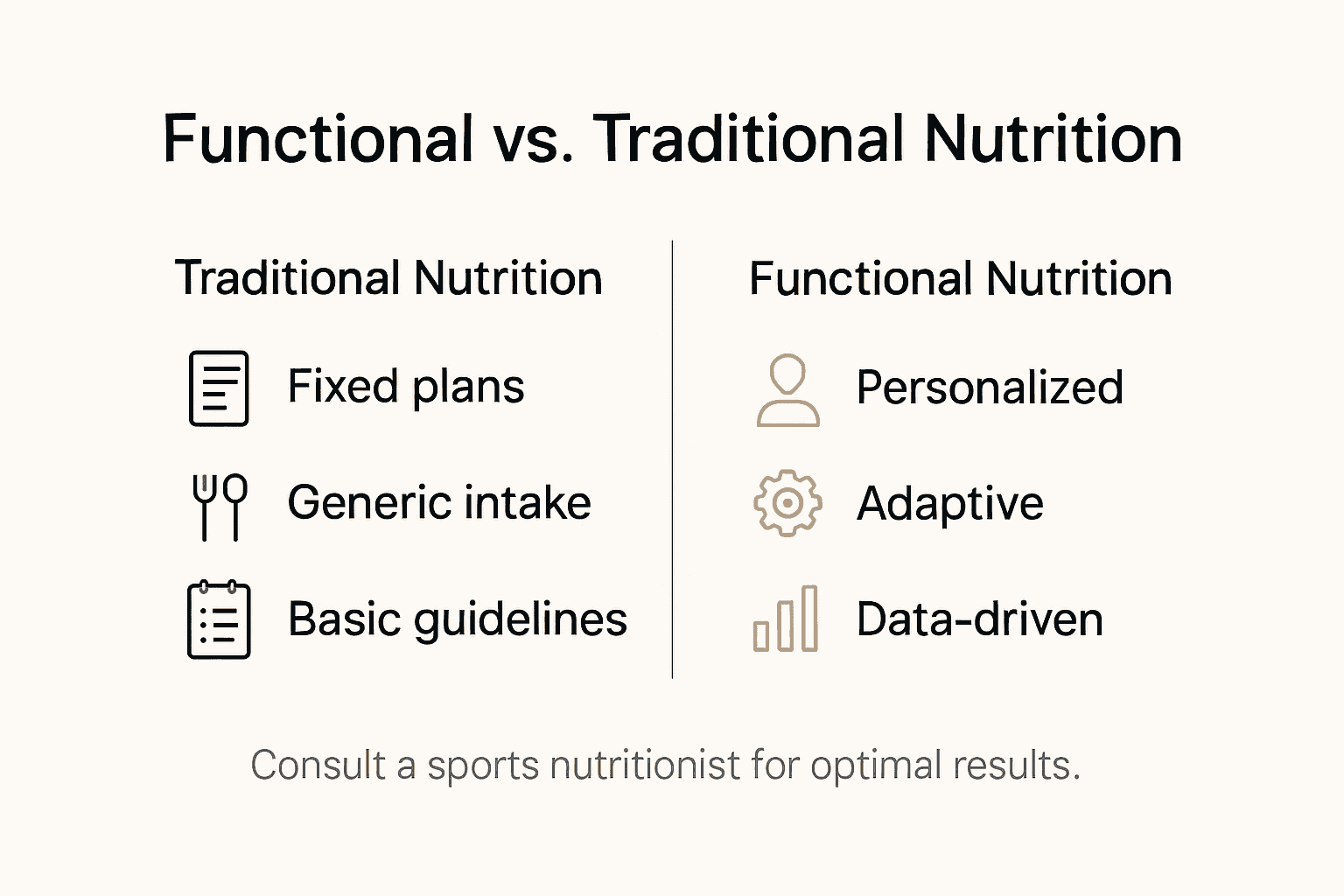
The key differentiators emerge in approach and implementation. Traditional nutrition emphasizes consistent macronutrient intake across general health guidelines, while functional nutrition tailors nutritional strategies to specific performance metrics, recovery needs, and individual metabolic responses. This precision allows athletes to optimize energy production, muscle synthesis, recovery speed, and overall athletic potential through targeted, scientifically informed nutritional interventions.
Here’s a side-by-side overview of how functional and traditional nutrition differ for athletes:
| Aspect | Traditional Nutrition | Functional Nutrition |
|---|---|---|
| Approach | Broad dietary guidelines | Tailored to individual needs |
| Adaptability | Static, rarely adjusts | Dynamic, evolves with athlete |
| Focus | General health maintenance | Peak performance optimization |
| Diagnostic Tools | Basic nutrition assessment | Advanced metabolic testing |
| Supplement Strategy | Minimal or generic advice | Personalized and evidence-based |
| Recovery Emphasis | Limited | Central to plan design |
Pro tip: Collaborate with a sports nutritionist to develop a functional nutrition strategy that transcends generic dietary recommendations and aligns precisely with your athletic performance goals.
Achieve Peak Athletic Performance with Functional Nutrition Support
Struggling to match your unique metabolic needs and maximize recovery? The article highlights how personalized functional nutrition is essential for optimizing muscle synthesis, balancing macronutrients, and managing inflammation to reach your best form. Ignoring these precise nutritional strategies can hinder progress and increase injury risk.
Explore our Fitness Supplements to find science-backed products designed to complement personalized nutrition plans. From protein powders that fuel muscle repair to targeted electrolytes aiding hydration recovery, Nutribliss offers diverse options tailored to your athletic lifestyle.

Take control of your performance today by visiting Nutribliss.us. Discover supplements that work together with your functional nutrition strategy. Start building a nutrition routine that evolves with your training demands and unlocks your full potential now.
Frequently Asked Questions
What is functional nutrition for athletes?
Functional nutrition for athletes is a science-driven approach that focuses on personalized dietary strategies tailored to an athlete’s metabolic needs and performance goals, optimizing energy production, muscle recovery, and overall athletic health.
How does functional nutrition differ from traditional sports nutrition?
Functional nutrition emphasizes dynamic, personalized approaches that adapt to an athlete’s individual physiological profile and performance objectives, whereas traditional nutrition typically follows broad, static dietary guidelines.
What are some benefits of personalized nutrition strategies for athletes?
Personalized nutrition strategies can lead to improved recovery, increased energy levels, enhanced muscle synthesis, reduced injury risks, and more consistent performance by specifically addressing individual nutrient needs and metabolic responses.
What are common risks associated with functional nutrition in sports?
Common risks include reliance on unvetted supplements, energy deficiencies like RED-S, extreme dietary restrictions, and inadequate post-workout fueling, which can lead to performance decline and health issues if not managed properly.