

For athletes pushing their limits in American endurance sports, finding ways to maintain energy during competition is a constant challenge. Glycogen loading offers a strategic solution, helping athletes delay fatigue and enhance endurance by maximizing muscle and liver energy reserves ahead of prolonged events. Understanding the science behind carbohydrate loading and separating fact from myth can help you make smarter choices when selecting supplements and nutrition plans for peak performance.
Table of Contents
Key Takeaways
| Point | Details |
| Glycogen loading maximizes energy reserves | This nutrition strategy enhances endurance by increasing carbohydrate stores, allowing athletes to delay fatigue. |
| Myths hinder effective implementation | Misconceptions about carbohydrate intake and dietary restrictions can prevent proper glycogen loading techniques from being utilized. |
| Quality and timing of carbohydrates matter | Athletes should focus on low glycemic index foods and strategic timing of carbohydrate intake for optimal performance. |
| Personalized approaches are essential | Consulting with a sports nutritionist can help tailor glycogen loading strategies to individual needs and metabolic responses. |
Glycogen Loading Defined and Common Myths
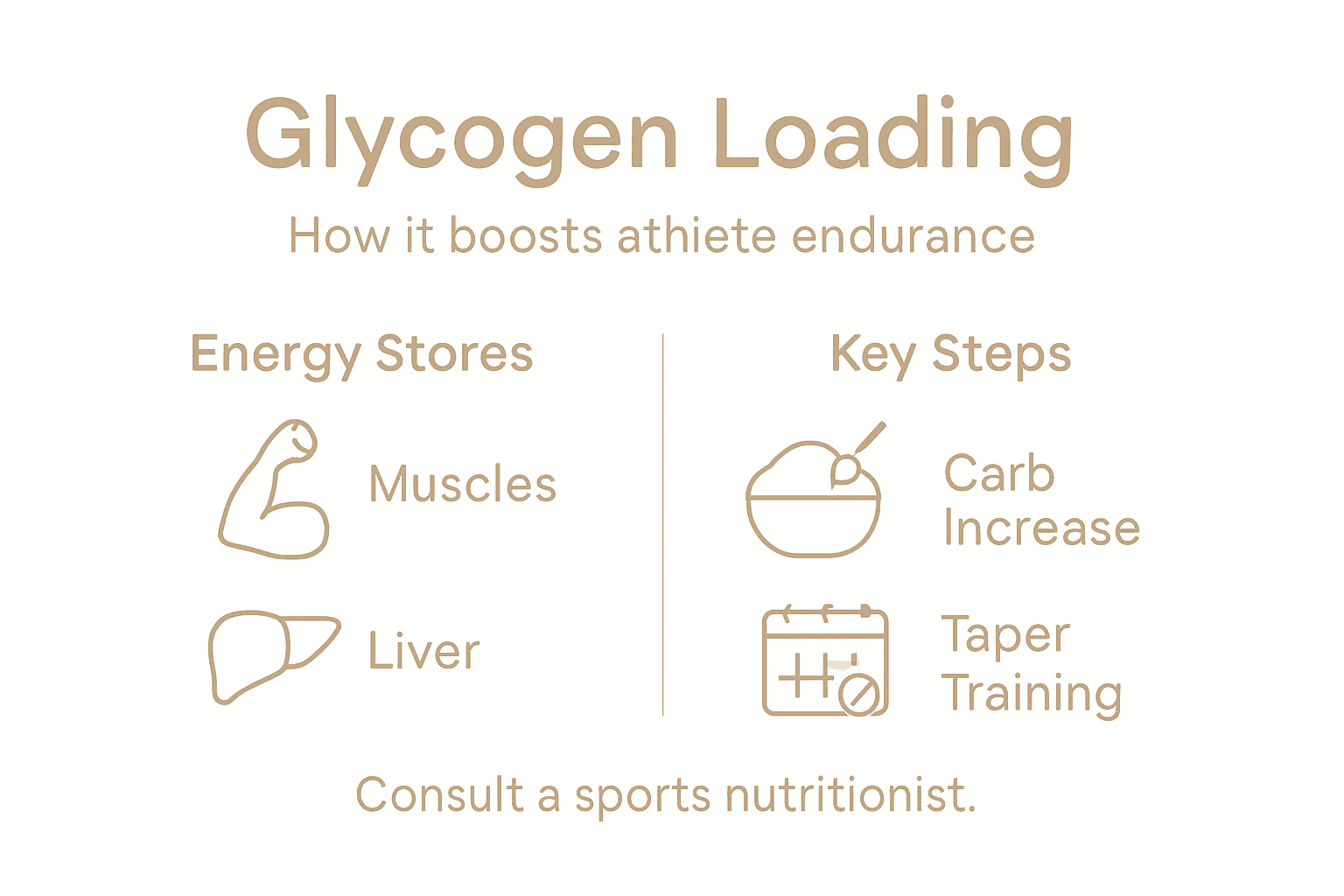
Glycogen loading is a strategic nutrition technique used by endurance athletes to maximize muscle and liver energy reserves before prolonged physical events. Carbohydrate loading strategies help athletes delay fatigue and enhance overall performance by optimizing energy storage.
At its core, glycogen loading involves systematically manipulating diet and exercise to increase the body’s carbohydrate storage capacity. Typically, athletes focus on consuming approximately 65-70% of their total calories from carbohydrates during the days leading up to a major competition. This approach allows muscles to stockpile glycogen, providing a critical energy reservoir during extended athletic performances.
Common myths about glycogen loading often prevent athletes from implementing this strategy effectively. Here are the most prevalent misconceptions:
-
Myth 1: Massive carbohydrate consumption immediately before an event guarantees optimal performance
-
Myth 2: Any type of carbohydrate works equally well for loading
-
Myth 3: Glycogen loading is necessary for all athletic events
-
Myth 4: The process requires extreme dietary restrictions
Modern carbohydrate loading techniques recommend consuming low glycemic index carbohydrates gradually, avoiding the older depletion-based approaches. Athletes should focus on complex carbohydrates that provide sustained energy without causing rapid blood sugar spikes.
Effective glycogen loading is about strategic nutrition, not random carbohydrate consumption.
Understanding the nuanced science behind glycogen loading can dramatically improve an athlete’s endurance and performance. By carefully planning nutrient intake and understanding individual metabolic responses, athletes can unlock their body’s maximum energy potential.
Pro tip: Consult a sports nutritionist to develop a personalized glycogen loading strategy tailored to your specific athletic goals and metabolic profile.
How Glycogen Loading Enhances Performance
Athletes seek every possible advantage in competitive sports, and glycogen loading represents a critical strategy for maximizing performance potential. Muscle glycogen availability plays a fundamental role in sustaining high-intensity athletic activities, particularly during prolonged and demanding competitions.
The primary mechanism of glycogen loading involves dramatically increasing the body’s energy storage capacity. When athletes strategically consume and store carbohydrates, they create a substantial reservoir of readily available fuel for muscles. This enhanced glycogen storage provides several key performance benefits:
-
Delays muscle fatigue during extended events
-
Improves energy production efficiency
-
Maintains consistent muscle performance
-
Reduces recovery time between intense activities
-
Supports more stable blood glucose levels
Muscle glycogen serves as a critical energy source, especially during high-intensity intermittent activities like soccer, basketball, and endurance racing. Without adequate glycogen stores, athletes experience rapid performance decline, reduced muscle function, and accelerated fatigue. By implementing strategic glycogen loading techniques, athletes can effectively counter these energy depletion challenges.
Enhanced glycogen stores provide athletes with a significant competitive edge by maintaining peak physiological performance.
The biochemical impact of glycogen loading extends beyond simple energy storage. It improves excitation-contraction coupling, enables more efficient ATP production, and helps athletes sustain higher performance levels under increased physiological demands. Proper glycogen loading can mean the difference between maintaining peak performance and experiencing mid-event energy crashes.

Pro tip: Work with a sports nutritionist to develop a personalized glycogen loading protocol that matches your specific athletic requirements and metabolic profile.
Methods and Dietary Approaches Explained
Glycogen loading requires a strategic and nuanced approach to nutrition that goes well beyond simple carbohydrate consumption. Dietary carbohydrate intake strategies recommend precise protocols for athletes seeking optimal performance enhancement, focusing on both quantity and quality of nutritional intake.
The fundamental methodology involves carefully calibrating carbohydrate consumption in the days leading up to an athletic event. Athletes typically aim to consume between 7-12 grams of carbohydrates per kilogram of body weight, with a critical emphasis on selecting the right types of carbohydrates. The recommended approach includes:
The following table compares popular carbohydrate sources for glycogen loading:
| Carbohydrate Source | Glycemic Index | Recommended for Loading? | Energy Release Rate |
| Brown Rice | Low | Yes | Sustained, gradual energy |
| White Bread | High | No | Rapid, short-lived energy |
| Oatmeal | Moderate | Yes | Stable, prolonged release |
| Sports Drinks | High | Limited | Quick spike, fast drop |
-
Prioritizing complex carbohydrates
-
Selecting low to moderate glycemic index foods
-
Avoiding simple sugars that cause rapid blood glucose spikes
-
Consuming carbohydrates immediately post-exercise
-
Tapering exercise intensity during loading phase
Nutritional management plays a crucial role in effective glycogen loading. Different sports and individual metabolic profiles require customized approaches, making personalization key to success. Nutritional strategies for glycogen storage highlight the importance of understanding an athlete’s unique metabolic characteristics.
Successful glycogen loading is more than a diet - it’s a precision nutritional strategy tailored to individual athletic requirements.
The biochemical intricacies of glycogen loading extend beyond simple carbohydrate consumption. Athletes must consider macronutrient balance, timing of intake, and individual metabolic responses. Proper implementation can significantly enhance energy storage, improve muscle function, and potentially reduce recovery time between high-intensity performances.
Pro tip: Consult a sports nutritionist to develop a personalized glycogen loading protocol that matches your specific metabolic profile and athletic goals.
Here’s a concise summary of glycogen loading strategies in relation to various athletic activities:
| Athletic Event Type | Benefit of Glycogen Loading | Typical Carbohydrate Needs |
| Endurance Sports | Significant performance boost | 8-12 g/kg body weight per day |
| Team Sports | Improved stamina and focus | 7-8 g/kg body weight per day |
| Power/Strength Events | Minor potential impact | 5-7 g/kg body weight per day |
| Short Duration Activities | Minimal impact | Standard balanced intake |
Best Supplements for Effective Glycogen Loading
Achieving optimal glycogen loading requires more than just dietary strategies; strategic supplementation can significantly enhance an athlete’s performance. Supplements supporting glycogen loading play a crucial role in helping athletes maximize their energy storage and utilization during intense training and competition.
The most effective supplements for glycogen loading can be categorized into several key groups that support different aspects of energy metabolism and muscle recovery:
-
Carbohydrate Supplements
-
Glucose powders
-
Maltodextrin blends
-
Quick-absorbing carbohydrate gels
-
-
Performance Enhancers
-
Creatine for muscle energy
-
Caffeine for endurance support
-
-
Recovery Aids
-
Protein supplements
-
Branch chain amino acids (BCAAs)
-
Complex carbohydrate strategies emphasize that supplements should complement, not replace, a well-structured nutrition plan. Athletes must carefully select supplements that align with their specific metabolic needs and training requirements.
Supplement selection is a precision science - one size does not fit all in athletic nutrition.
The biochemical mechanisms of glycogen loading involve intricate interactions between nutrition, supplementation, and training. Proper hydration, timed nutrient intake, and understanding individual metabolic responses are critical for maximizing the effectiveness of any supplementation strategy.
Pro tip: Consult a sports nutritionist to develop a personalized supplement protocol that matches your unique physiological requirements and athletic goals.
Risks, Side Effects, and Athlete Precautions
Glycogen loading, while beneficial, is not without potential complications for athletes seeking performance optimization. Glycogen loading risks demand careful consideration and strategic implementation to prevent unintended physiological consequences.
Athletes must be aware of several potential side effects associated with improper glycogen loading strategies:
-
Digestive Complications
-
Bloating and gas
-
Intestinal discomfort
-
Potential diarrhea
-
-
Metabolic Risks
-
Unwanted weight gain
-
Blood sugar fluctuations
-
Potential energy imbalances
-
-
Performance-Related Concerns
-
Reduced training efficiency
-
Potential muscle glycogen oversaturation
-
Diminished metabolic responsiveness
-
Relative energy deficiency represents a significant concern for athletes attempting aggressive glycogen loading protocols. The complex interplay between nutrition, training intensity, and individual metabolic responses requires nuanced understanding and personalized approach.
Effective glycogen loading is a precision strategy, not a one-size-fits-all nutritional intervention.
Individual variability means that athletes must carefully monitor their body’s responses, adjusting carbohydrate intake and timing to minimize potential adverse effects. Professional guidance becomes crucial in navigating these intricate nutritional strategies.
Pro tip: Regularly track your body’s response to glycogen loading and work with a sports nutritionist to develop a personalized, safe supplementation protocol.
Maximize Your Endurance with Strategic Glycogen Loading and Science-Backed Supplements
Endurance athletes know that proper glycogen loading is essential to delay fatigue and sustain peak performance. Challenges like digestive discomfort, energy crashes, and ineffective carbohydrate choices can slow your progress and leave you feeling frustrated. Nutribliss.us understands these struggles and offers a carefully curated selection of dietary supplements designed to support your glycogen storage and optimize your energy metabolism. From complex carbohydrate blends to recovery aids and performance enhancers each product is selected to complement your personalized glycogen loading strategy.

Discover the difference that high-quality, science-backed supplements can make for your athletic goals. Visit Nutribliss.us today to explore our full range of performance and recovery products. Don’t let ineffective nutrition hold you back — take action now to enhance your glycogen loading and unlock your body’s true endurance potential.
Frequently Asked Questions
What is glycogen loading?
Glycogen loading is a nutritional strategy used by endurance athletes to maximize the storage of glycogen in muscles and the liver, enhancing performance during prolonged physical activities.
How does glycogen loading improve athletic performance?
Glycogen loading delays muscle fatigue, improves energy production efficiency, maintains consistent muscle performance, and supports faster recovery times during extended athletic events.
What types of carbohydrates are best for glycogen loading?
Athletes should prioritize complex carbohydrates with a low to moderate glycemic index, such as brown rice and oatmeal, while avoiding high glycemic index foods like white bread.
Are there any risks or side effects associated with glycogen loading?
Yes, potential risks include digestive complications, unwanted weight gain, blood sugar fluctuations, and reduced training efficiency if the strategy is not implemented correctly.