

Most American adults believe they understand what balanced nutrition looks like, yet nearly 90 percent fall short of getting key nutrients every day. As fitness routines intensify and wellness goals evolve, separating science-backed facts from widespread myths becomes critical for athletic performance and long-term health. This guide clears away the confusion, highlighting practical strategies for American fitness enthusiasts who want to turn nutrition into real results.
Table of Contents
- Balanced Nutrition Fundamentals And Common Myths
- Key Nutrients: Carbohydrates, Proteins, And Fats
- Micronutrients, Hydration, And Their Roles
- How Balanced Nutrition Boosts Athletic Performance
- Risks Of Poor Nutrition And Supplement Pitfalls
Key Takeaways
| Point | Details |
|---|---|
| Balanced Nutrition is Essential | Balanced nutrition supports overall wellness and athletic performance through understanding macronutrients and micronutrients. |
| Personalized Nutrition Plans | Consult a registered dietitian to create tailored eating plans that align with individual metabolic needs and fitness goals. |
| Understanding Macronutrients | Proper intake of carbohydrates, proteins, and fats is crucial for energy, muscle recovery, and overall health. |
| Caution with Supplements | Prioritize whole food nutrition over supplements and consult healthcare professionals before starting any regimen to avoid potential risks. |
Balanced Nutrition Fundamentals and Common Myths
Balanced nutrition represents a strategic approach to consuming nutrients that support overall wellness and athletic performance. Understanding the core principles helps individuals make informed dietary choices, moving beyond simplistic myths that often mislead people about optimal health. Nutrition myths persist that can significantly impact dietary decisions and personal wellness strategies.
Many individuals harbor misconceptions about nutritional needs, believing oversimplified rules like “carbohydrates are bad” or “all fats should be avoided.” In reality, balanced nutrition requires understanding the nuanced roles of macronutrients. Carbohydrates provide essential energy, proteins support muscle recovery, and healthy fats are crucial for hormone regulation and cellular function. The key is consuming these nutrients in proportionate, quality-driven amounts that align with individual fitness goals and metabolic requirements.
The World Food Programme highlights that nutritional needs vary significantly across different demographics. Diverse food groups are critical for meeting individual nutritional requirements, challenging the notion of a universal dietary approach. Athletes, for instance, might require higher protein intake, while sedentary individuals need more carefully portioned meals. Understanding these distinctions helps prevent blanket nutritional recommendations that fail to account for personal physiological differences.
Pro tip: Develop a personalized nutrition strategy by consulting a registered dietitian who can analyze your specific metabolic profile and create a #nutribliss tailored eating plan that matches your wellness objectives.
Key Nutrients: Carbohydrates, Proteins, and Fats
Understanding the three primary macronutrients is crucial for developing a comprehensive nutrition strategy that supports wellness and athletic performance. Essential nutrient functions vary significantly, with each playing a unique role in maintaining bodily health and supporting metabolic processes. The Centers for Disease Control and Prevention highlights how macronutrient consumption patterns have evolved, demonstrating the dynamic nature of nutritional science.
Carbohydrates serve as the body’s primary energy source, providing quick fuel for physical and cognitive functions. Proteins are fundamental for muscle repair, tissue growth, and supporting enzymatic reactions. Fats, often misunderstood, play critical roles in hormone production, cellular membrane structure, and vitamin absorption. Macronutrient intake trends show Americans are increasingly adjusting their dietary compositions, moving towards more protein and healthy fat consumption while reducing simple carbohydrate intake.
Balancing these macronutrients requires understanding individual metabolic needs. Athletes might require higher protein intake for muscle recovery, while endurance performers need more complex carbohydrates for sustained energy. The quality of these nutrients matters as much as quantity – choosing whole grains over processed carbs, lean proteins, and heart-healthy fats can dramatically improve nutritional outcomes. Nutritional strategies should be personalized, considering factors like age, activity level, fitness goals, and overall health status.
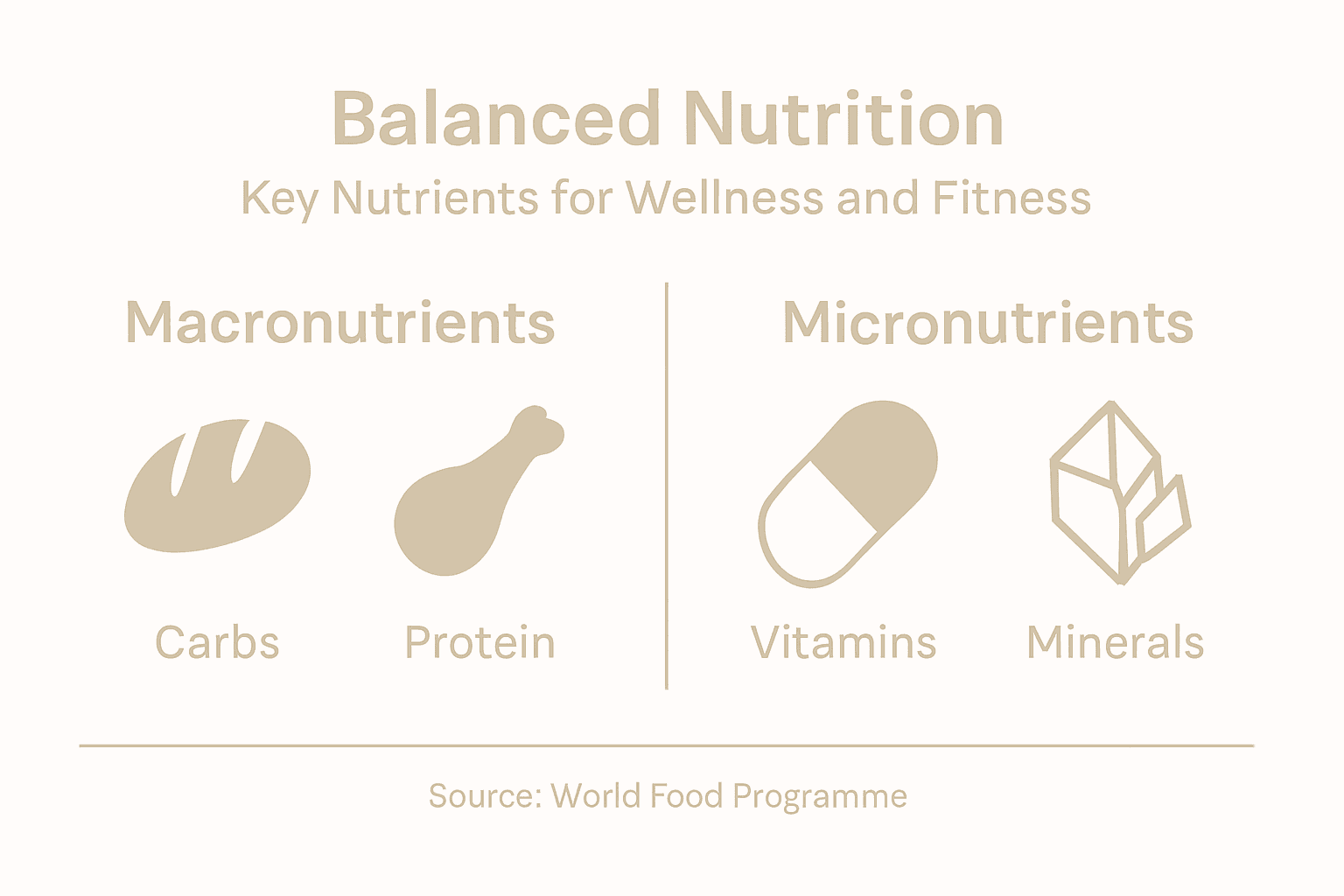
Here’s a side-by-side comparison of macronutrients to clarify their roles in a balanced diet:
| Macronutrient | Main Function | Key Food Sources | Importance for Athletes |
|---|---|---|---|
| Carbohydrates | Primary energy supply | Whole grains, fruits | Fuel for endurance and recovery |
| Proteins | Build and repair tissues | Lean meat, legumes | Essential for muscle development |
| Fats | Hormone and cell support | Nuts, olive oil, avocados | Needed for sustained energy |
Pro tip: Create a personalized macronutrient tracking system using a digital app to monitor your #nutribliss intake and adjust your nutrition strategy based on your body’s specific response and performance goals.
Micronutrients, Hydration, and Their Roles
Micronutrients are the silent architects of human health, playing critical roles in maintaining optimal physiological functioning despite their minuscule quantities. Micronutrient deficiency risks can lead to significant health complications, impacting cellular processes, immune response, and overall wellness. Vitamins and minerals like vitamin A, iron, zinc, and iodine are essential for supporting metabolic functions, growth, and disease prevention.

Hydration emerges as a fundamental component of nutritional wellness, interacting dynamically with micronutrient absorption and cellular performance. Hydration and immune function are intricately connected, with proper fluid balance supporting nutrient transport, temperature regulation, and immune system efficiency. Athletes and active individuals must pay special attention to electrolyte balance, understanding that water intake goes beyond simple thirst management and represents a complex biochemical process.
The intricate relationship between micronutrients and hydration highlights the importance of a holistic nutritional approach. Different population groups have varying micronutrient requirements based on age, activity level, and physiological demands. For instance, endurance athletes might need higher zinc and magnesium intake, while sedentary individuals require more targeted nutritional strategies. Understanding these nuanced interactions can help individuals develop personalized nutrition plans that optimize health and performance.
Pro tip: Create a weekly meal plan that incorporates diverse micronutrient sources and track your hydration levels using a #nutribliss digital app to ensure comprehensive nutritional coverage.
How Balanced Nutrition Boosts Athletic Performance
Athletic performance is fundamentally driven by strategic nutritional choices that fuel, support, and optimize physiological processes. Nutrition requirements for athletes vary dramatically across different sports and individual metabolic profiles, demanding a personalized approach to dietary planning. Understanding how specific nutrients interact with muscle function, energy production, and recovery mechanisms becomes crucial for athletes seeking peak performance.
Carbohydrates, proteins, and strategic hydration form the cornerstone of effective athletic nutrition. Sports nutrition strategies emphasize consuming the right nutrients at precise times to maximize energy availability and muscle recovery. Endurance athletes require complex carbohydrate loading before events, while strength performers need higher protein intake for muscle repair and growth. The timing of nutrient consumption can be as critical as the nutritional composition itself, with pre- and post-workout meals playing pivotal roles in performance optimization.
Beyond macronutrients, micronutrients and hydration critically influence athletic output. Minerals like iron, magnesium, and zinc support metabolic processes, oxygen transportation, and muscle function. Proper hydration isn’t merely about water intake but maintaining electrolyte balance that supports cellular function, temperature regulation, and sustained energy production. Athletes who understand and implement comprehensive nutritional strategies can significantly enhance their performance, reduce injury risks, and accelerate recovery processes.
Pro tip: Develop a personalized nutrition journal to track your #nutribliss intake, performance metrics, and energy levels, enabling data-driven adjustments to your athletic nutrition strategy.
Risks of Poor Nutrition and Supplement Pitfalls
Navigating the complex landscape of nutritional supplements requires critical understanding and scientific skepticism. Supplement myths and safety reveal a market fraught with misconceptions and potential health risks. Most individuals incorrectly assume that dietary supplements are thoroughly regulated and universally beneficial, when in reality, these products exist in a largely unmonitored environment that can pose significant health challenges.
The dietary supplement industry operates with minimal oversight, creating substantial risks for consumers seeking quick wellness solutions. Dietary supplement regulations highlight that the FDA does not scrutinize these products with the same rigorous standards applied to pharmaceuticals. Weight loss supplements, performance enhancers, and energy boosters frequently make unsubstantiated claims, potentially causing harmful side effects, dangerous interactions with medications, and unexpected physiological disruptions. Athletes and health-conscious individuals must approach supplement consumption with extreme caution, prioritizing whole food nutrition and professional medical guidance.
Nutritional deficiencies should be addressed through comprehensive dietary strategies rather than relying on potentially ineffective or harmful supplements. Blood tests, consultation with registered dietitians, and personalized nutrition planning represent more scientifically sound approaches to identifying and correcting nutritional gaps. Understanding individual metabolic needs, genetic factors, and specific health conditions becomes crucial in developing a targeted nutritional strategy that minimizes risks and maximizes health outcomes.
This table highlights differences between addressing nutrient needs with whole foods versus supplements:
| Approach | Benefits | Risks |
|---|---|---|
| Whole Foods | Natural nutrients, fiber, satiety | May need careful meal planning |
| Supplements | Convenient, can target deficiencies | Possible overdose, little regulation |
Pro tip: Consult a registered healthcare professional before starting any supplement regimen, and prioritize #nutribliss whole food sources to meet your nutritional requirements safely and effectively.
Elevate Your Wellness and Fitness with Personalized Nutrition Support
Achieving balanced nutrition is a journey filled with challenges like understanding macronutrient roles, overcoming supplement myths, and meeting your unique metabolic needs. The article highlights crucial pain points such as the importance of precise nutrient timing, hydration, and choosing quality foods or supplements to fuel performance and recovery. If you want to overcome these hurdles and embrace a scientifically guided approach to your dietary goals, there is a solution designed just for you.
Discover a wide range of carefully formulated products at Fitness Supplements and explore the full selection at Nutribliss Supplements to find the ideal vitamins, minerals, protein powders, and electrolytes. These products help fill nutritional gaps responsibly and safely, complementing whole food nutrition with trustworthy, science-backed options.

Take control of your balanced nutrition today by visiting Nutribliss.us. Start building your personalized nutrition strategy that truly supports your wellness and fitness ambitions. Act now to experience the power of targeted supplementation aligned with your body’s exact needs.
Frequently Asked Questions
What is balanced nutrition?
Balanced nutrition is a strategic approach to consuming a variety of nutrients, including carbohydrates, proteins, and fats, in proportionate and quality-driven amounts to support overall wellness and athletic performance.
How do macronutrients impact athletic performance?
Macronutrients, specifically carbohydrates, proteins, and fats, play critical roles in providing energy, supporting muscle recovery, and maintaining bodily functions necessary for optimal athletic performance.
Why is hydration important for nutrition and performance?
Hydration is essential for nutrient absorption, temperature regulation, and effective immune system function. Maintaining proper fluid balance is especially important for athletes to optimize performance and recovery.