

Pushing through a tough workout only pays off when your muscles can actually grow and recover stronger. For fitness enthusiasts and aspiring bodybuilders across the United States, understanding muscle protein synthesis is key to getting more from every rep and every supplement. This foundational process rebuilds muscle tissue after training, making it possible to progress toward bigger gains and better performance. Gain insight on how this biological mechanism shapes muscle growth and guides your nutrition approach.
Table of Contents
- Defining Muscle Protein Synthesis And Its Role
- How Muscle Protein Synthesis Works
- Dietary Protein And Supplement Impact
- Optimizing Recovery Through Nutrition Timing
- Common Misconceptions And Pitfalls To Avoid
Key Takeaways
| Point | Details |
|---|---|
| Muscle Protein Synthesis is Critical for Growth | MPS is essential for building and repairing muscle tissue in response to exercise and nutrition. |
| Timing and Quality of Protein Intake Matter | Consume 20-30 grams of high-quality protein shortly after workouts to maximize MPS. |
| Personalize Your Nutrition Strategy | Optimal protein needs differ based on individual goals, age, and activity level; consult a nutritionist for guidance. |
| Awareness of Misconceptions is Key | Relying solely on protein supplements can hinder progress; whole foods should be prioritized for balanced nutrition. |
Defining Muscle Protein Synthesis and Its Role
Muscle protein synthesis (MPS) represents a fundamental biological process that enables athletes and fitness enthusiasts to build, repair, and maintain muscle tissue. At its core, MPS is the body’s intricate mechanism for creating new muscle proteins in response to exercise, nutrition, and recovery stimuli. Exploring protein synthesis mechanisms reveals how our muscles adapt and grow stronger after physical stress.
The process begins when muscle fibers experience microdamage during intense training, triggering a complex cellular response. Satellite cells activate and proliferate, fusing with existing muscle fibers to increase muscle fiber size through a process called hypertrophy. These specialized cells contribute additional nuclei to muscle fibers, enhancing their capacity to synthesize critical proteins like actin and myosin - the fundamental building blocks responsible for muscle contraction and growth.
Protein synthesis plays a crucial role beyond simple muscle repair. Protein synthesis fundamentally impacts tissue health by enabling the formation of new proteins essential for cellular function. This means that MPS is not just about getting bigger muscles, but about maintaining overall muscular health, improving recovery speed, and supporting long-term athletic performance.
Pro tip: Maximize your muscle protein synthesis by consuming 20-30 grams of high-quality protein within 30 minutes after your workout, combined with adequate rest and targeted resistance training.
How Muscle Protein Synthesis Works
Muscle protein synthesis (MPS) operates through a sophisticated cellular mechanism involving multiple intricate steps. Muscle protein synthesis mechanisms reveal how our body transforms exercise stress into muscle growth by activating specialized cellular pathways that rebuild and enhance muscle tissue.
The process begins when muscle fibers experience microscopic damage during resistance training, triggering a cascade of cellular responses. Satellite cells - specialized muscle stem cells - become activated and start proliferating. These cells then fuse with existing muscle fibers, contributing additional nuclei that increase the muscle’s capacity to synthesize proteins. The newly added nuclei allow for enhanced production of critical contractile proteins like actin and myosin, which are fundamental to muscle contraction and growth.

Motor proteins play a crucial role in this process. Motor proteins drive muscle contraction by walking along actin filaments and generating force powered by ATP. This molecular movement enables muscle fibers to not just repair damage, but to adapt and become stronger. The sarcomeres - the basic functional units of muscle fibers - increase in size and number, directly contributing to muscle hypertrophy and improved performance.
Pro tip: Optimize your muscle protein synthesis by combining progressive resistance training with adequate protein intake and sufficient recovery time between workouts.
Dietary Protein and Supplement Impact
Protein intake is critical for maximizing muscle protein synthesis and supporting athletic performance. Protein consumption strategies reveal complex guidelines for optimal muscle maintenance and growth, with recommended daily intake varying based on age, activity level, and individual fitness goals.
Research indicates that protein distribution matters as much as total consumption. Athletes should aim for approximately 1 to 1.6 grams of protein per kilogram of body weight, spread across multiple meals throughout the day. This approach ensures consistent amino acid availability and supports sustained muscle protein synthesis. Consuming protein immediately after resistance training can help jumpstart recovery processes and stimulate muscle repair mechanisms.
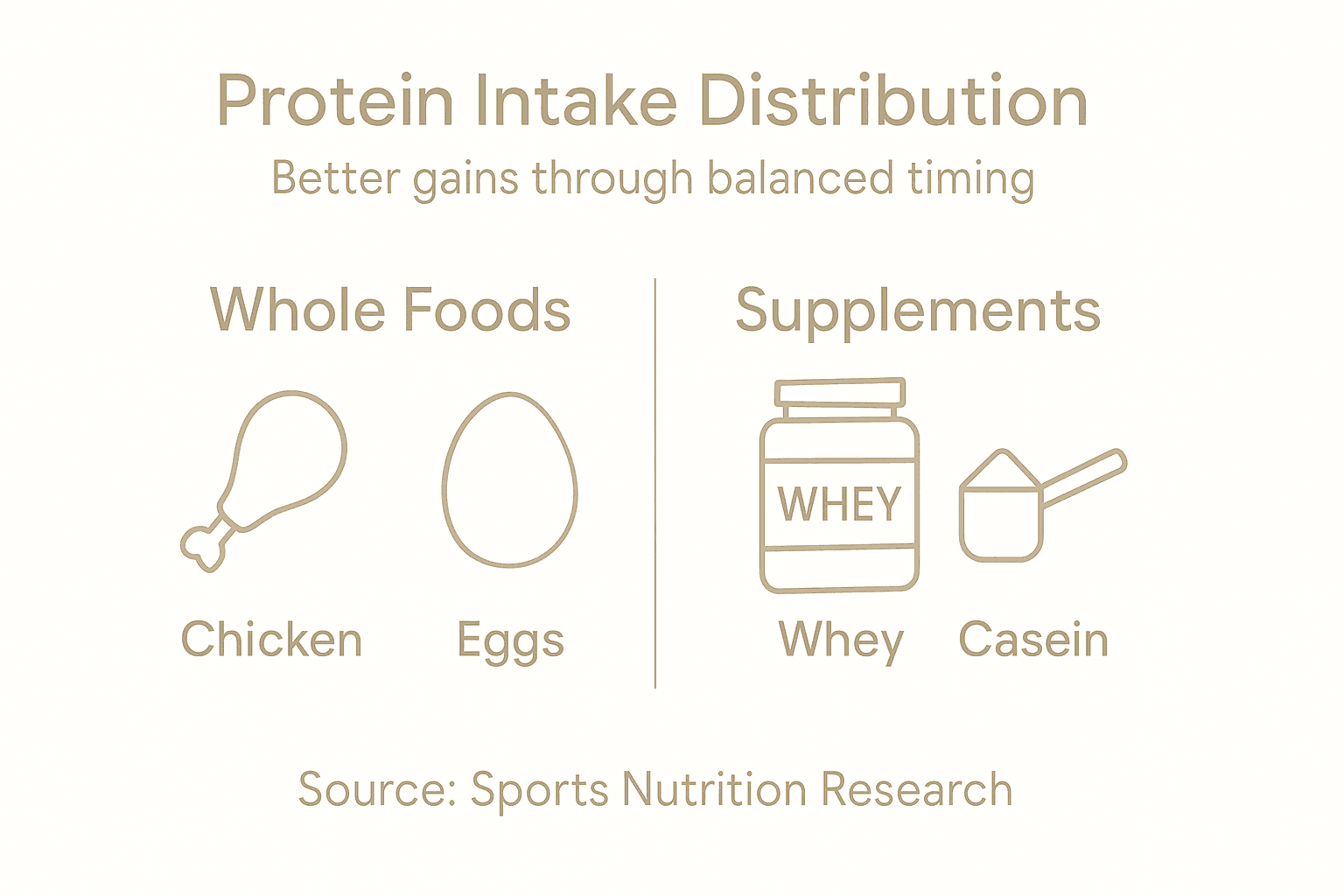
While protein supplements are popular among athletes, they are not a universal solution. Supplement effectiveness varies widely with many athletes already receiving sufficient protein through their regular diet. Excessive supplementation can potentially introduce unnecessary risks, and high-quality whole food sources often provide more balanced nutritional profiles. The key is understanding individual nutritional needs and selecting supplements that complement, rather than replace, a balanced diet.
Pro tip: Prioritize whole food protein sources and use supplements strategically, focusing on timing and quality rather than excessive quantity.
Here’s a comparison of dietary protein sources and popular supplements for muscle protein synthesis:
| Protein Source | Nutrient Quality | Digestion Speed | Typical Use Case |
|---|---|---|---|
| Lean meats (chicken, fish) | Complete amino acids | Moderate | Main meals, muscle building |
| Dairy (Greek yogurt, milk) | High in leucine | Fast (whey), Slow (casein) | Recovery and overnight repair |
| Plant proteins (beans, soy) | Lower in some amino acids | Moderate | Vegetarian/vegan diets |
| Whey protein supplement | Very high bioavailability | Very fast | Immediate post-workout boost |
| Casein protein supplement | Slow release | Slow | Sustained overnight synthesis |
| Other supplements (collagen, pea, etc.) | Varies | Varies | Specialized or restricted diets |
Optimizing Recovery Through Nutrition Timing
Nutrient timing is a strategic approach to consuming specific nutrients at precise intervals to maximize athletic recovery and muscle protein synthesis. Nutrient timing research reveals that the traditional concept of a narrow post-workout anabolic window is more nuanced than previously understood, with a broader range of effective nutrient absorption periods.
Athletes should focus on protein and carbohydrate distribution throughout the day rather than obsessing over exact timing. Protein consumption strategies demonstrate that spreading protein intake evenly across meals can more effectively support muscle protein synthesis than consuming large amounts in a single sitting. The body has a limited capacity to utilize protein per meal, making consistent intake crucial for optimal recovery and muscle maintenance.
Understanding individual metabolic responses is key to personalizing nutrition timing. Factors such as exercise intensity, individual metabolism, prior nutrition, and overall daily intake play significant roles in determining the most effective nutrient absorption windows. While immediate post-workout nutrition remains important, the overall daily nutritional strategy proves more critical for long-term athletic performance and muscle recovery.
Pro tip: Create a personalized nutrition schedule that distributes protein and carbohydrates evenly across 4-6 meals, focusing on quality sources and consistent intake rather than rigid timing.
Common Misconceptions and Pitfalls to Avoid
Protein supplementation often leads athletes down misguided paths with unrealistic expectations. Protein consumption misconceptions reveal that more protein does not automatically translate to increased muscle growth. Many individuals mistakenly believe excessive protein intake guarantees better results, when in reality, the body can only utilize a limited amount of protein per meal.
Muscle growth mechanisms are far more complex than simply consuming protein supplements. Athletes often overlook critical factors like progressive overload, proper recovery, and balanced nutrition. Misunderstanding satellite cell activation and protein synthesis can lead to ineffective training strategies. Some individuals rely too heavily on supplements, neglecting the fundamental principles of muscle development that require a holistic approach combining nutrition, rest, and targeted resistance training.
Another significant pitfall is the belief that one-size-fits-all nutrition strategies work for everyone. Individual metabolic differences, age, activity level, and overall health play crucial roles in determining optimal protein intake and muscle synthesis. Older adults, for instance, have different protein requirements compared to younger athletes, and blindly following generic supplement recommendations can be counterproductive or even harmful.
Pro tip: Consult with a registered sports nutritionist to develop a personalized nutrition strategy that considers your unique physiological needs and fitness goals.
This summary highlights common misconceptions versus best practices for maximizing muscle growth:
| Misconception | Reality | Recommended Approach |
|---|---|---|
| More protein always means more muscle | Muscle growth is limited per meal | Focus on total daily intake |
| Supplements are always necessary | Whole foods often suffice | Use supplements when needed |
| Generic plans fit everyone | Needs vary by age and activity | Personalize nutrition and training |
Boost Your Muscle Recovery with Targeted Nutrition from Nutribliss.us
Struggling to maximize muscle protein synthesis after tough workouts can hold back your progress and delay recovery. The article highlights critical challenges like timing protein intake, choosing the right supplements, and supporting muscle repair through proper nutrition. Achieving your athletic goals means more than just training hard; it requires fueling your body with high-quality protein, carefully balanced nutrients, and science-backed supplements to activate satellite cells and promote hypertrophy.

Discover a diverse range of premium protein powders, vitamins, and specialty supplements designed to support efficient muscle growth and faster recovery at Nutribliss.us. Don’t wait to enhance your gains — optimize your muscle protein synthesis today by visiting Nutribliss.us and browsing products crafted for your performance and wellness needs. Take control of your nutrition strategy now and turn muscle repair into muscle growth.
Frequently Asked Questions
What is muscle protein synthesis and why is it important?
Muscle protein synthesis (MPS) is the biological process through which the body builds, repairs, and maintains muscle tissue. It’s crucial for athletes and fitness enthusiasts as it helps in muscle recovery after exercise and contributes to long-term athletic performance.
How can I maximize muscle protein synthesis after my workouts?
To optimize muscle protein synthesis, consume 20-30 grams of high-quality protein within 30 minutes post-workout, along with a balanced recovery strategy that includes rest and progressive resistance training.
Does the timing of protein intake affect muscle recovery?
Yes, while immediate post-workout protein intake is beneficial, spreading protein consumption evenly throughout the day is more effective for sustained muscle protein synthesis and overall recovery.
Are protein supplements necessary for muscle growth?
Not necessarily. While protein supplements can be useful, many athletes can meet their protein needs through whole food sources. It’s essential to evaluate individual nutritional needs and use supplements strategically, rather than relying on them exclusively.