

TL;DR:
- Improving endurance relies more on nutrition and supplementation than on training volume alone.
- Athletes should assess their nutritional gaps, optimize macronutrient timing, and practice gut training.
- Strategic, evidence-based supplements like caffeine and nitrates can enhance performance when paired with a solid diet.
You’ve logged the miles, pushed through brutal sessions, and still hit a wall. Your times aren’t improving, your energy fades faster than it should, and you’re starting to wonder if training harder is even the answer. It’s not. The real breakthrough for most endurance athletes comes from the plate and the supplement stack, not just the track. This guide walks you through exactly how to assess your nutritional baseline, build a fueling structure that works, choose evidence-backed supplements, and troubleshoot the setbacks that derail even the most disciplined athletes.
Table of Contents
- Assess your current endurance and nutritional baseline
- Prepare your dietary foundation for maximum endurance
- Boost endurance with evidence-based supplements
- Troubleshoot and optimize: Real-world application and common pitfalls
- Expert perspective: What most guides miss about endurance nutrition
- Connect your endurance journey with professional support
- Frequently asked questions
Key Takeaways
| Point | Details |
|---|---|
| Baseline assessment | Start by measuring your current endurance levels and daily nutrition to identify key improvement areas. |
| Macronutrient focus | Prioritize carbohydrates for fuel and adequate protein for recovery using evidence-backed targets. |
| Smart supplementation | Use supplements like caffeine and dietary nitrates selectively to enhance performance when needed. |
| Adapt and troubleshoot | Continuously monitor progress, adjust strategies as needed, and address common pitfalls for steady gains. |
| Expert guidance matters | A personalized, periodized nutrition plan outperforms generic advice for lasting endurance gains. |
Assess your current endurance and nutritional baseline
Before you change anything, you need to know where you actually stand. Most endurance plateaus aren’t caused by a lack of effort. They’re caused by invisible nutritional gaps that quietly undermine your capacity to train hard and recover faster. Skipping this step is like trying to fix a car without knowing which part is broken.
Start by measuring your current endurance with objective markers. Track your weekly mileage or total training hours, record your time-to-exhaustion on a benchmark effort, and log your rate of perceived exertion (RPE) across different intensities. RPE is simply how hard an effort feels on a scale of 1 to 10. When your RPE creeps up for the same pace or power output, that’s a signal your body isn’t recovering or fueling properly.
Next, run a 5-day nutrition log. Write down everything you eat and drink, including portion sizes. Most athletes are shocked to discover they’re under-eating protein or carbohydrates relative to their actual training load. Endurance athletes need roughly 1.8 g/kg of protein per kilogram of body mass daily, rising to 2.0 g/kg during carbohydrate restriction or high-intensity training blocks.
Here’s a quick breakdown of what your daily macronutrient targets should look like based on training volume:
| Training level | Protein (g/kg/day) | Carbohydrates (g/kg/day) |
|---|---|---|
| Moderate (1-1.5 hrs/day) | 1.8 | 5-7 |
| High (1.5-3 hrs/day) | 1.8-2.0 | 7-10 |
| Very high (3+ hrs/day) | 2.0 | 10-12 |
When reviewing your log, look for these common gaps:
- Total daily protein falling below 1.6 g/kg
- Carbohydrate intake dropping below 5 g/kg on heavy training days
- Skipping post-workout nutrition within the 30-60 minute window
- Low micronutrient variety (iron, magnesium, and B vitamins are especially critical)
- Inadequate hydration relative to sweat loss
Understanding muscle protein synthesis helps explain why protein timing matters as much as total intake. Your muscles rebuild during recovery, not during the workout itself. And if you want a broader framework, exploring functional nutrition for athletes can help you connect macronutrient targets to real performance outcomes.
Pro Tip: Use a free app like Cronometer for your 5-day log instead of estimating. Estimations are almost always off by 20-30%, which is enough to explain a plateau.
Prepare your dietary foundation for maximum endurance
Once you’ve pinpointed your nutritional starting point, it’s time to put the right dietary structure in place. Think of this as building the engine before you add the turbo.

Start with your carbohydrate target. Carbohydrates fuel endurance exercise at 5-12 g/kg/day depending on intensity, with 30-90 grams per hour recommended during prolonged sessions to keep glycogen stores topped off. Glycogen is simply stored carbohydrate in your muscles and liver. When it runs out, your pace drops hard.
Here’s a simple step-by-step structure to build your daily fueling plan:
- Calculate your carb target. Multiply your body weight in kilograms by 6-8 for moderate training days, or 9-12 for high-volume days.
- Set your protein target. Use 1.8-2.0 g/kg based on your training intensity. Spread this across 4-5 meals to maximize absorption.
- Time your pre-workout meal. Eat a carbohydrate-rich meal 2-3 hours before training. A smaller carb snack 30-60 minutes before works if time is tight.
- Fuel during long sessions. For any session over 75 minutes, consume 30-60 grams of carbs per hour. Sports drinks, gels, or real food all work.
- Prioritize post-workout recovery nutrition. Within 30-60 minutes after training, combine fast carbs with 20-30 grams of protein to kickstart repair.
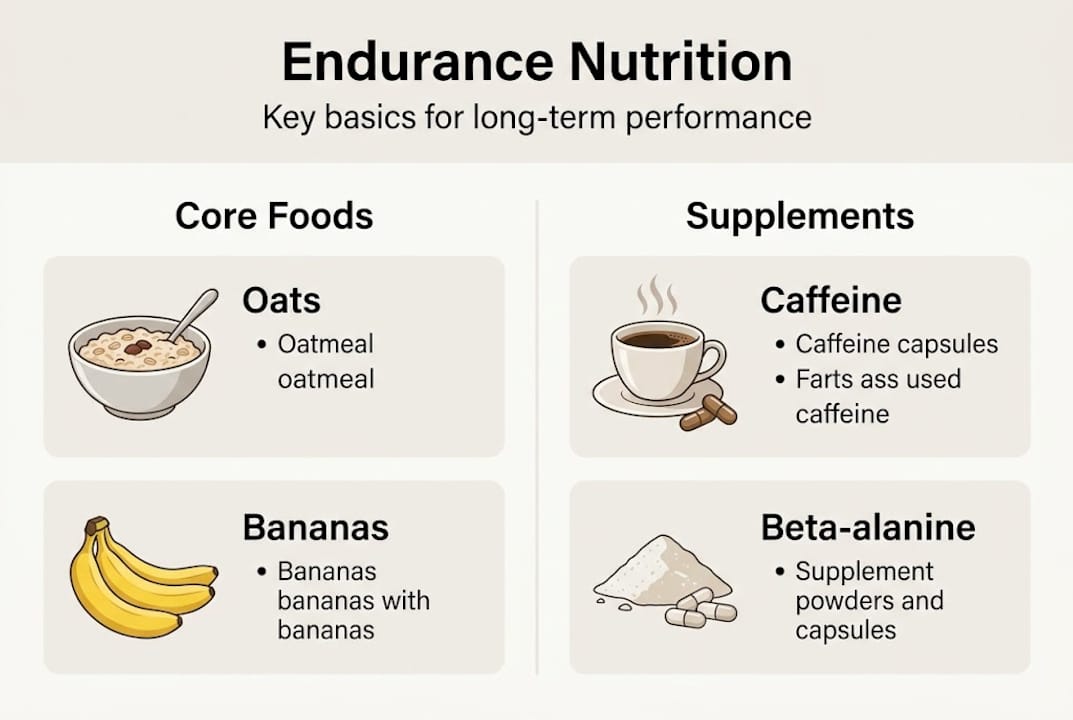
For nutrient-dense food choices, focus on oats, sweet potatoes, brown rice, bananas, eggs, Greek yogurt, salmon, and leafy greens. These aren’t exciting, but they’re consistent performers. Learning about performance nutrition gives you a deeper look at how to structure these choices across a full training week.
If you’re preparing for a major race, glycogen loading strategies can help you maximize stored fuel in the 48-72 hours before competition. And don’t overlook micronutrition for athletes, because vitamins and minerals regulate everything from oxygen transport to nerve function.
Pro Tip: Practice your race-day nutrition during long training runs. Your gut is trainable. Athletes who try new gels or drinks on race day often experience cramping or nausea that could have been avoided with gut training in advance.
Stat to know: Carbohydrate intake of 30-90 g/hour during prolonged exercise is the evidence-backed range for maintaining performance. Going below 30 g/hour in sessions over 90 minutes is one of the most common fueling mistakes endurance athletes make.
Boost endurance with evidence-based supplements
With your diet in place, you can safely consider strategic supplementation to gain a performance edge. The key word is strategic. Not every supplement on the shelf deserves a spot in your routine.
Here’s how the top endurance supplements compare:
| Supplement | Effective dose | Timing | Primary benefit | Evidence level |
|---|---|---|---|---|
| Caffeine | 3-6 mg/kg | 30-60 min pre-exercise | Fat oxidation, glycogen sparing | Strong |
| Beetroot/Nitrates | 300-600 mg nitrate | 2-3 hrs pre-exercise | Blood flow, time-to-exhaustion | Moderate |
| Beta-alanine | 3.2-6.4 g/day | Daily (loading) | Buffering muscle acid | Moderate |
| BCAAs | 5-10 g | During or post-exercise | Reduce muscle breakdown | Moderate |
Caffeine at 3-6 mg/kg taken 30-60 minutes before exercise enhances endurance by promoting fat oxidation and sparing glycogen, which means you burn fat more efficiently and preserve your stored carbs for when you really need them. This is one of the most consistent findings in sports nutrition research.
Dietary nitrates improve time-to-exhaustion with a standardized mean difference of 0.33-0.48, though effects are less pronounced in elite athletes whose cardiovascular systems are already highly efficient. Beetroot juice is the most practical source, but outside nitrate supplements can also support blood flow and endurance capacity.
A few important rules when using supplements:
- Never combine multiple stimulants (caffeine plus pre-workout blends) without knowing total caffeine load
- Start with the lower end of any dose range and assess tolerance
- Cycle off caffeine for 7-10 days periodically to maintain sensitivity
- Take beta-alanine in split doses to reduce the tingling sensation (called paresthesia)
For a full breakdown of what works and what doesn’t, the guide on top endurance supplements is worth reading before you buy anything. And if you want to understand how nitric oxide fits into endurance physiology, nitric oxide boosters explains the mechanism clearly.
Pro Tip: Always test supplements during training, never on race day. Even well-researched supplements can cause individual GI reactions. A training run is the right place to find out, not the start line.
Troubleshoot and optimize: Real-world application and common pitfalls
Even the best plans need troubleshooting. Here’s how to apply these strategies in the real world and adjust on the go.
Follow this implementation sequence to avoid the most common mistakes:
- Lock in your baseline nutrition first. Don’t add supplements until your daily protein and carbohydrate targets are consistently met for at least two weeks.
- Introduce one supplement at a time. This lets you isolate what’s actually working.
- Track energy, mood, and performance weekly. A simple notebook works. Look for trends, not single data points.
- Adjust carb timing if you’re fading mid-session. If you bonk (hit sudden energy depletion) after 60-90 minutes, you’re likely under-fueling before or during the session.
- Reassess protein intake every 4-6 weeks. As training volume increases, your protein needs shift upward.
The most common mistakes we see athletes make:
- Mistiming carbs by eating too close to training, causing GI distress
- Under-dosing protein and wondering why recovery feels slow
- Relying on supplements to fix a broken diet
- Ignoring hydration and electrolyte balance during multi-hour efforts
For ultra-endurance athletes specifically, the rules change. During exercise over 60 minutes, 30-60 g/h of carbohydrates extends performance, and combining that with 5-10 g/h of protein is especially important for events lasting several hours or more. Your gut needs to be trained to absorb fuel at this rate, which is why gut training during long sessions is non-negotiable.
“The athletes who perform best in ultra-endurance events aren’t always the fittest. They’re the ones who’ve practiced fueling as a skill.”
Understanding nutrient timing for athletes gives you a precise framework for when each macronutrient does its best work. And for overnight recovery, casein protein for recovery is worth considering as a slow-digesting protein source before sleep.
Expert perspective: What most guides miss about endurance nutrition
Here’s the uncomfortable truth: most endurance nutrition guides treat every athlete the same. Same carb targets, same supplement stack, same timing rules. That approach fails more athletes than it helps.
The real edge comes from periodized nutrition, which means cycling your carbohydrate intake deliberately. High carb intake on performance days, lower carb intake on easy days to promote fat adaptation. A periodized approach that combines strategic carbohydrate timing with elevated protein and a food-first philosophy consistently outperforms static diet plans in the research.
Supplements only work when the dietary foundation is solid. We’ve seen athletes spend hundreds of dollars on caffeine and beetroot products while chronically under-eating protein. The supplements did almost nothing because the body had nothing to build on.
Gut training is the most underrated skill in endurance sports. Your intestines can be conditioned to absorb more carbohydrates per hour, reducing cramping and bonking during long events. This takes weeks of consistent practice, not a last-minute gel experiment. The athletes who explore sports nutrition for performance and apply it consistently are the ones who break through plateaus. The ones who chase the next supplement without fixing the basics stay stuck.
Connect your endurance journey with professional support
Ready to enhance your endurance with science-backed nutrition? Here’s how to take the next step with trusted support.
You now have the framework. The next move is putting the right products in your hands. Whether you need to replenish minerals lost during long sessions or speed up recovery between hard training blocks, having quality supplements you can trust makes a real difference.

At Nutribliss, we’ve built a range designed specifically for athletes who take their performance seriously. Explore Nutribliss electrolytes to maintain hydration and muscle function during extended efforts. Browse our full range of recovery supplements to find the right stack for your training phase. Your endurance goals deserve more than guesswork.
Frequently asked questions
What is the minimum protein intake needed for endurance athletes?
Endurance athletes need at least 1.8 g/kg of protein per kilogram of body weight daily to support recovery and adaptation. This rises to 2.0 g/kg during high-intensity or carbohydrate-restricted training phases.
How many grams of carbohydrates should I consume to maximize endurance?
Target 5-12 g/kg/day of carbohydrates, scaling upward with training intensity and session duration. Higher volume days demand the upper end of that range to keep glycogen stores full.
Does caffeine really help with endurance performance?
Yes. Caffeine at 3-6 mg/kg taken before exercise boosts endurance by increasing fat oxidation and preserving glycogen, giving you more fuel for the later stages of a race or long session.
Should I use supplements or focus on whole foods for endurance?
Whole foods should cover your core nutritional needs first. A food-first approach is the foundation, with targeted supplements like caffeine or beta-alanine adding a measurable edge once the diet is dialed in.
What should I eat during ultra-endurance events?
For events over 60 minutes, aim for 30-60 g of carbohydrates per hour combined with 5-10 g of protein per hour to sustain performance and limit muscle breakdown during extended efforts.