

Ramping up your training often means paying close attention to protein, carbs, and fats, but the real difference makers are the tiny yet powerful micronutrients hiding in your meals. For athletes in the United States, these vitamins and minerals do more than fill gaps—they keep the engine running smoothly by fueling energy production, muscle repair, and immune defense. Discover how prioritizing micronutrient intake can be the game changer between hitting plateaus and pushing your performance boundaries.
Table of Contents
- What Is Micronutrition and Why It Matters
- Types of Micronutrients Essential for Athletes
- How Micronutrients Support Wellness and Recovery
- Supplementation, Dosing, and Safety Considerations
- Micronutrition Pitfalls and Best Practices
Key Takeaways
| Point | Details |
|---|---|
| Micronutrients are Critical for Athletes | Essential micronutrients like Iron, Magnesium, and Zinc significantly influence athletic performance and recovery. Deficiencies can lead to impaired endurance, muscle recovery, and increased injury risk. |
| Targeted Supplementation Matters | Supplementation should address specific deficiencies identified through tracking or blood work, rather than relying on generic multivitamins or megadosing. Individual needs vary greatly among athletes. |
| Whole Foods Should Be the Foundation | Prioritize obtaining micronutrients from a balanced diet rich in whole foods for better nutrient absorption and efficacy. Supplements should only fill dietary gaps as needed. |
| Preventing Deficiencies is Key | Regular monitoring of micronutrient levels and maintaining adequate intake can prevent chronic deficiencies that hinder performance and overall health. |
What Is Micronutrition and Why It Matters
Micronutrients are the small but mighty compounds your body needs daily to function at peak performance. Think of them as the spark plugs in your engine. Without them, even the best fuel won’t generate power. Micronutrients include vitamins, trace elements, and minerals that your body requires in small quantities, typically less than 100 milligrams daily. These aren’t the carbohydrates, proteins, and fats that make up the bulk of your diet. Instead, they’re the essential chemicals that regulate cellular function, support hormone production, enable muscle contraction, and help your body recover from intense training.
For athletes specifically, micronutrition becomes non-negotiable. You can consume perfect macros and train with laser focus, but deficiencies in iron, zinc, magnesium, or B vitamins will undermine everything. Your muscles won’t repair properly after workouts. Your energy production becomes sluggish. Your immune system weakens, leaving you vulnerable to infections that derail training blocks. The problem runs deeper than just feeling tired. Micronutrient deficiencies can severely impact physical development and disease resistance, affecting your ability to build strength and maintain consistency in your training program. This is why understanding what your body needs, beyond just protein powder and carbs, separates athletes who plateau from those who progress.
Why does this matter for your performance specifically? Athletic training creates extraordinary demands on your body. Every intense workout depletes micronutrient stores through sweat, increased metabolic activity, and tissue breakdown. For instance, endurance athletes lose significant amounts of iron through perspiration and red blood cell turnover. Strength athletes demand extra magnesium for muscle function and recovery. Your nervous system relies on B vitamins to process the signals that coordinate movement. Without adequate micronutrition, your body can’t fully adapt to training stress, your recovery slows, and your risk of injury climbs. The relationship between functional nutrition and athletic performance directly influences whether you make gains or stagnate.
The hidden cost of micronutrient gaps often goes unnoticed until performance stalls. You might assume you need more volume, better programming, or simply aren’t working hard enough. Meanwhile, your body is actually screaming for zinc to support testosterone production, or magnesium to enable proper muscle relaxation and sleep quality. Addressing these gaps transforms everything. Energy improves. Recovery accelerates. Muscle soreness decreases. Your body builds strength more efficiently. #nutribliss This isn’t hype. This is biochemistry. When your micronutrient status aligns with your training demands, your performance ceiling rises significantly.
Pro tip: Start by tracking your micronutrient intake for three days using a nutrition app, then identify which vitamins and minerals fall consistently short of recommended daily values to target your supplementation strategy effectively.
Types of Micronutrients Essential for Athletes
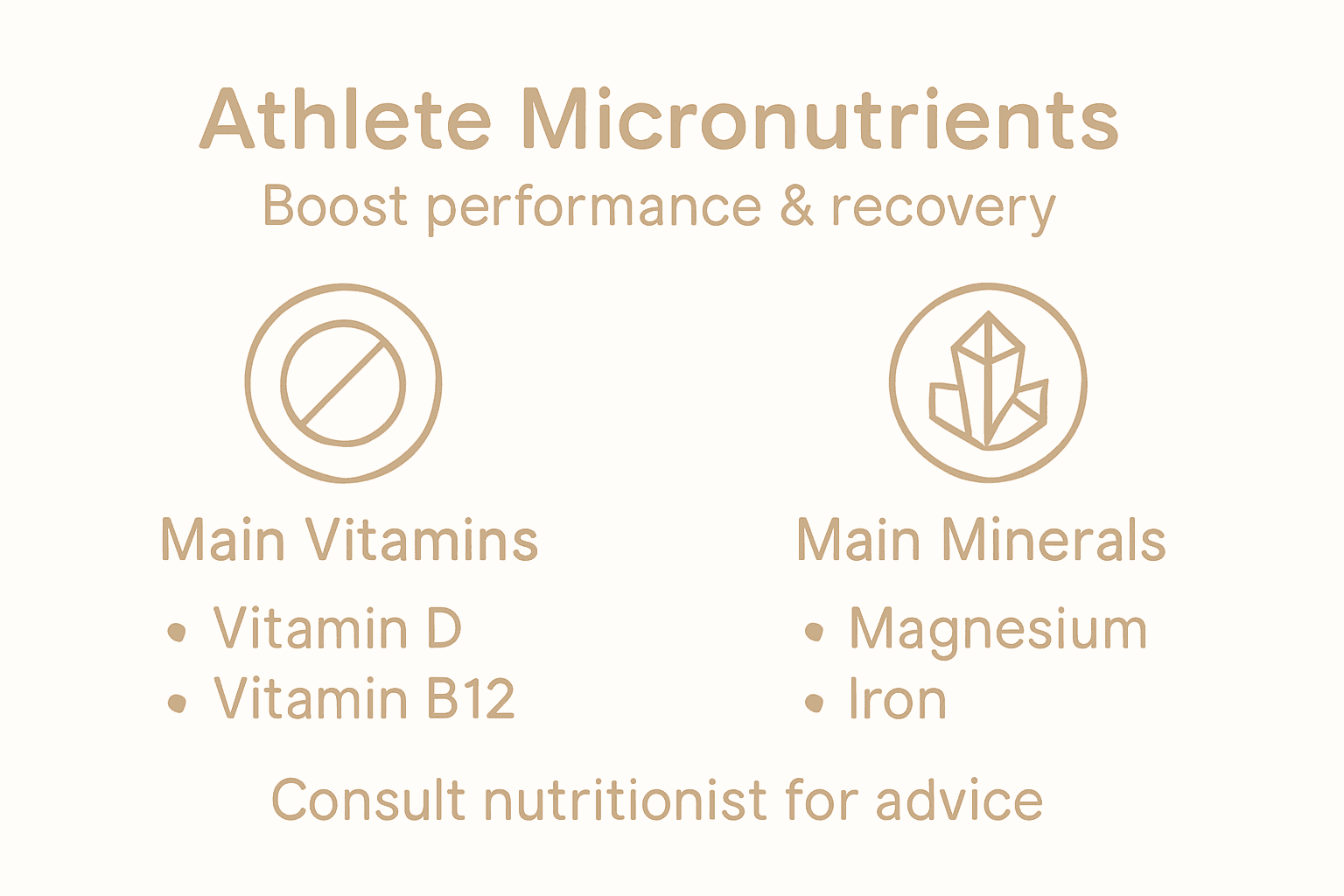
Not all micronutrients matter equally for your athletic performance. Your body has specific demands based on the type of training you do, your sport, and your individual metabolism. Understanding which micronutrients pack the biggest punch helps you stop throwing money at random supplements and start making targeted choices. Vitamins and minerals support energy production, immune function, muscle repair, and antioxidant defense. The key micronutrients you should prioritize include B vitamins, vitamin C, vitamin D, iron, calcium, and zinc. Each one plays a distinct role in your ability to train hard, recover faster, and build strength.
B vitamins deserve special attention because they’re metabolic workhorses. B6, B12, and folate help convert your food into usable energy during workouts. Without adequate B vitamin status, your body struggles to extract energy from carbohydrates and fats, leaving you feeling drained even when you’re eating well. Vitamin C supports collagen synthesis, which strengthens connective tissue and reduces injury risk. Vitamin D regulates calcium absorption and immune function, becoming especially critical during winter months or if you train indoors consistently. Iron carries oxygen throughout your body, and even mild iron deficiency tanks your aerobic capacity and endurance performance. Magnesium for muscle function and recovery directly impacts your ability to relax muscles after training and achieve quality sleep. Calcium works alongside magnesium to regulate muscle contraction and maintain bone density under the stress of repeated training impact. Zinc supports testosterone production and immune response, both critical for building muscle and staying healthy throughout intense training blocks.
Antioxidants deserve mention as well. Vitamins C and E, along with minerals like selenium, help manage the oxidative stress your body experiences during intense exercise. Your muscles produce free radicals during workouts as a byproduct of energy production. While some oxidative stress triggers adaptation, excessive amounts delay recovery and increase inflammation. Antioxidant micronutrients keep this process balanced so your body adapts effectively rather than getting stuck in an inflammatory state. The research is clear: tailored micronutrient intake matters for energy metabolism, immune function, and reducing injury risk. You don’t need megadoses of everything, but you do need adequate amounts of each key player working in concert.
Here’s a summary of the most essential micronutrients for athletes and their primary functions:
| Micronutrient | Primary Role | Impact on Performance |
|---|---|---|
| Iron | Oxygen transport | Boosts endurance, prevents fatigue |
| Magnesium | Muscle relaxation, energy production | Supports recovery, improves sleep quality |
| Vitamin D | Calcium absorption, immune function | Maintains bone health, reduces injury risk |
| Zinc | Testosterone production, immune support | Enhances repair, maintains muscle strength |
| B Vitamins | Energy metabolism | Converts food to energy, fights fatigue |
| Calcium | Bone density, muscle contraction | Reduces stress fractures, supports strength |
| Vitamin C | Collagen synthesis, antioxidant | Protects joints, boosts immunity |
One critical distinction: supplementation without actual deficiency rarely improves performance. Flooding your system with excess zinc or iron when you already have adequate levels won’t make you stronger or faster. However, identifying where you actually fall short and correcting those gaps delivers substantial improvements. This is why tracking matters and why generic multivitamins sometimes miss the mark for serious athletes.
Pro tip: Get a blood panel done annually to identify any actual deficiencies in iron, vitamin D, or B12 rather than guessing, then supplement specifically for what your body is genuinely missing.
How Micronutrients Support Wellness and Recovery
Recovery isn’t something that happens passively after you leave the gym. Your body requires specific tools to repair muscle tissue, replenish energy stores, and adapt to the training stress you imposed. This is where micronutrients become your silent partners in the recovery process. Micronutrients support enzymatic processes, cell repair, and antioxidant defenses that reduce disease risk and allow your body to bounce back stronger. When you train hard, you create microscopic damage in muscle fibers. Your immune system activates to manage inflammation. Your nervous system becomes taxed from coordination and effort. Your hormonal systems shift to accommodate the physical stress. None of this repair happens without the micronutrient cofactors that make every biological process work.
Consider what happens at the cellular level during recovery. Magnesium is required for muscle relaxation and the protein synthesis that builds new muscle tissue. Without adequate magnesium, your muscles stay partially contracted even during sleep, preventing deep recovery and increasing soreness. Zinc powers immune function, which matters enormously because intense training temporarily suppresses immunity, leaving you vulnerable to infection during the recovery window. Vitamin D regulates calcium absorption and immune signaling, becoming critical for bone remodeling under training stress. B vitamins drive energy metabolism, helping your body restore depleted glycogen and ATP stores. Vitamin C supports collagen synthesis in connective tissue, reducing injury risk from repeated loading. Vitamins and minerals work together in energy metabolism, immune support, and cellular repair, making them integral to muscle recovery and overall post-exercise recuperation. When these micronutrients are present in adequate amounts, your body recovers 20 to 30 percent faster than when you’re running deficient.

The wellness piece extends beyond just bouncing back from individual workouts. Chronic micronutrient deficiencies accumulate over time, degrading your baseline health. Your immune system weakens, making you susceptible to recurring colds and infections that derail training blocks. Your joints become more fragile. Your sleep quality suffers. Your mood and motivation decline. These aren’t dramatic symptoms that send you to the doctor, but they’re the difference between progressing consistently and dealing with constant setbacks. Role of supplements in recovery becomes increasingly important for athletes pushing toward advanced performance levels. This is why getting micronutrition right isn’t optional for serious athletes. It’s the foundation that makes every other training decision worthwhile.
The timing and form matter too. Micronutrients from whole foods are generally superior to synthetic versions because your body recognizes and absorbs them more efficiently. However, meeting all your micronutrient needs exclusively from food is challenging for athletes with high training volume. Strategic supplementation fills the gaps, ensuring your recovery never bottlenecks due to micronutrient shortfalls.
To clarify how whole foods compare with supplements for micronutrient needs:
| Source | Advantages | Limitations |
|---|---|---|
| Whole Foods | High bioavailability, dense nutrient profile | Hard to meet needs with high training volume |
| Supplements | Convenient, targeted nutrients | Risk of excess intake, may lack synergistic compounds |
Pro tip: Consume magnesium and zinc within two hours post-workout when your muscles are most receptive to nutrient uptake, and time vitamin D intake with a meal containing fat to maximize absorption.
Supplementation, Dosing, and Safety Considerations
More isn’t always better when it comes to micronutrient supplementation. This is the mistake most athletes make. They assume that if 10 milligrams of zinc supports immune function, then 50 milligrams will provide five times the benefit. Wrong. Your body has specific requirements, and exceeding them creates problems rather than solutions. Evidence based recommendations on micronutrient supplementation require individualized approaches addressing diagnosed deficiencies. Supplementation should target actual gaps in your intake or increased needs from your training stress, not blanket megadosing. The goal is to fill holes, not flood your system. When you exceed safe upper limits for certain minerals like iron or zinc, you risk oxidative stress, gastrointestinal distress, and impaired absorption of other nutrients. This is why dosing precision matters more than supplement quantity.
Start by understanding the difference between recommended daily allowance (RDA), which covers sedentary people, and the increased needs athletes experience. Your training creates elevated demands for iron (due to increased oxygen transport needs and red blood cell turnover), magnesium (muscle function and energy production), zinc (immune support and protein synthesis), and B vitamins (energy metabolism). However, the exact amount you need depends on your sport, training volume, body weight, and current nutritional status. This is why generic supplementation often misses the mark. A 150-pound female distance runner has completely different micronutrient needs than a 220-pound male strength athlete. One size fits no one well.
The research is clear on performance outcomes: while supplementation in well-nourished athletes typically does not enhance performance, supplementation is warranted for diagnosed deficiencies or compromised energy intake. Excessive supplementation can actually impair your body’s natural adaptation to training, preventing the very improvements you’re seeking. Your body adapts by upregulating nutrient absorption when it faces mild deficiency stress. Flood it with excess nutrients, and this adaptation mechanism shuts down. Additionally, how to combine supplements safely for optimal health results requires understanding potential interactions. Iron interferes with calcium absorption. High zinc intake can reduce copper status. Some supplements compete for absorption in your gut. This is why professional guidance matters. A sports nutritionist or sports medicine physician can assess your actual needs through dietary analysis and targeted blood work, then recommend dosing that addresses real deficiencies without creating new problems.
Safety also extends to supplement quality and sourcing. Not all supplements are created equal. Some products contain contaminants, inaccurate labeling, or fillers that compromise efficacy and safety. Look for third party tested products from reputable manufacturers. Check that dosages fall within established safe upper limits. If you’re taking multiple supplements, verify they work synergistically rather than against each other. And maintain regular communication with your healthcare provider about what you’re supplementing, especially if you have underlying health conditions or take medications.
Pro tip: Have your doctor or sports nutritionist order micronutrient blood panels before supplementing, then retest every six months to verify your strategy is working and adjust dosages based on actual lab values rather than guessing.
Micronutrition Pitfalls and Best Practices
Athletes fall into predictable traps when managing micronutrition. The biggest one is assuming supplements replace food. They don’t. A bottle of pills will never provide the nutrient density, bioavailability, and synergistic benefits of real food. Chicken provides not just zinc, but also B vitamins, selenium, and amino acids that work together. A zinc supplement provides zinc. Period. Best practices emphasize obtaining micronutrients primarily through well-balanced diet tailored to individual requirements, using supplements only when necessary. This means your foundation should be nutrient-dense whole foods. Lean meats, colorful vegetables, fruits, whole grains, and healthy fats should comprise 80 to 90 percent of your micronutrient intake. Supplements fill the remaining 10 to 20 percent where food realistically falls short given your training demands and lifestyle constraints. This is the hierarchy that actually works.
Another critical pitfall is ignoring individual variation. You’re not a statistic. Your friend might need iron supplementation while you don’t. Your training partner might thrive on a standard multivitamin while you require targeted mineral support based on your sweat rate and training intensity. Under-recognition of subclinical deficiencies means many athletes don’t realize they’re running low on key micronutrients until performance crashes. This is why baseline testing matters more than guessing. Get your bloodwork done before supplementing aggressively. Know your actual status for iron, vitamin D, B12, magnesium, and zinc. Make decisions based on data, not marketing claims or what worked for someone on social media. What boosts performance for them might be completely irrelevant or even counterproductive for you.
Misinformation creates another massive pitfall. The supplement industry profits from confusion, so you’ll encounter wild claims about miraculous performance gains from specific micronutrients. Most of these claims lack scientific support. More supplement is not the answer. Flooding your system with excess nutrients doesn’t enhance performance and can actually impair it by disrupting your body’s natural adaptation mechanisms. Additionally, monitoring levels clinically and avoiding excessive intake protects against toxicity and ensures safe supplementation. Work with qualified professionals like sports nutritionists or sports medicine physicians who can assess your actual needs, monitor your progress, and adjust your strategy based on objective markers rather than just how you feel.
The best practice approach is straightforward but requires discipline. Prioritize whole food sources. Build meals around lean proteins, complex carbohydrates, and colorful vegetables. Track your intake for three to four days to identify actual gaps. Get baseline bloodwork. Use targeted supplementation only for diagnosed deficiencies or genuinely elevated needs from your training. Retest periodically to verify your strategy works. Avoid supplement stacking and megadosing. Choose third-party tested products from reputable manufacturers. And most importantly, maintain realistic expectations. Micronutrition optimizes the foundation that makes training effective. It’s not magic. It’s biochemistry working as intended when you provide your body what it actually needs.
Pro tip: Build your micronutrition foundation on whole foods first by creating a meal template you enjoy, then use targeted supplementation only to address specific bloodwork findings rather than taking random supplements hoping something works.
Elevate Your Athletic Performance with Targeted Micronutrition Solutions
If you are struggling with fatigue, slow recovery, or stalled progress despite hard training you may be missing essential micronutrients like magnesium, zinc, or B vitamins that power your energy metabolism and muscle repair. The article highlights how micronutrient deficiencies silently undermine your gains and increase injury risk. Addressing these gaps with science-backed supplements tailored for athletes can transform your training outcomes and overall wellness.
Discover our wide range of Fitness Supplements designed to support muscle function, energy production, and recovery.

Take control of your micronutrition today and unlock your performance potential by exploring Nutribliss.us — your trusted source for high-quality, carefully formulated supplements. Visit Nutribliss.us now to find the targeted nutrients your body truly needs and build the foundation for consistent gains and lasting health.
Frequently Asked Questions
What are micronutrients and why are they important for athletes?
Micronutrients are essential vitamins and minerals that the body needs in small amounts to function optimally. For athletes, they play a crucial role in energy production, muscle recovery, immune function, and overall performance.
How do I know if I’m deficient in micronutrients?
Tracking your micronutrient intake over a few days using a nutrition app can help you identify any deficiencies. Additionally, getting a blood panel done annually can reveal specific deficiencies in nutrients like iron or vitamin D.
Can I rely on supplements for micronutrients instead of food?
While supplements can help fill gaps in your diet, they shouldn’t replace whole foods. Real food provides a complex nutrient profile with better bioavailability and synergistic benefits that supplements alone cannot offer.
What are the key micronutrients that athletes should focus on?
Athletes should prioritize B vitamins, vitamin D, iron, calcium, magnesium, and zinc. Each of these micronutrients has specific roles in energy metabolism, muscle repair, and immune support, which are critical for optimal athletic performance.