

Recent research reveals a surprising truth: antioxidant supplements increase mortality risk when used indiscriminately, challenging the widespread belief that more is always better. For athletes and health-conscious individuals, understanding the nuanced role of antioxidants in cellular protection, exercise recovery, and long-term wellness is essential. This guide decodes the latest science, clarifies when supplementation helps versus harms, and provides actionable strategies for integrating antioxidant-rich foods and targeted supplements into your routine.
Table of Contents
- What are antioxidants and how do they work?
- Antioxidants in exercise: Benefits and limitations
- Whole food antioxidants vs. supplements: What science says
- Risks and controversies: When antioxidants become harmful
- Practical strategies: Applying antioxidant science to your routine
- Explore science-backed superfoods and supplements
- Frequently asked questions
Key Takeaways
| Point | Details |
|---|---|
| Balance is critical | Antioxidants support cellular health but excessive supplementation can undermine exercise benefits. |
| Whole foods first | Prioritizing antioxidant-rich foods is safer and often more effective than high-dose supplements. |
| Supplement wisely | For recovery, use antioxidant supplements strategically—especially in high-training periods—to avoid risks. |
| Evidence-driven caution | Emerging science warns against indiscriminate supplement use due to potential health risks. |
| Practical integration | Guide your antioxidant intake by combining nutrition knowledge with your individual wellness goals. |
What are antioxidants and how do they work?
Antioxidants are molecules that protect your cells by neutralizing reactive oxygen species and reactive nitrogen species, preventing oxidative damage to lipids, proteins, and DNA. When your body metabolizes oxygen during exercise or daily activities, it generates these reactive molecules. Left unchecked, they trigger oxidative stress, accelerating cellular aging and impairing recovery.
Your body produces two categories of antioxidants. Enzymatic antioxidants include SOD, CAT, GPx, while non-enzymatic types encompass vitamins C and E, glutathione, and polyphenols from diet. Each type targets specific reactive molecules, creating a layered defense system.
Types of antioxidants and their primary targets:
| Antioxidant Type | Examples | Primary Function |
|---|---|---|
| Enzymatic | SOD, CAT, GPx | Neutralize superoxide, hydrogen peroxide |
| Non-enzymatic (endogenous) | Glutathione, uric acid | Scavenge free radicals, regenerate other antioxidants |
| Non-enzymatic (dietary) | Vitamins C, E, polyphenols | Protect cell membranes, support immune function |
The key to antioxidant function lies in balance. Your cells need some reactive oxygen species to trigger beneficial adaptations, including improved mitochondrial function and enhanced immune response. This concept, called hormesis, explains why completely eliminating oxidative stress can backfire. Mild oxidative stress acts as a signal for your body to strengthen its defenses.
“Antioxidants maintain cellular redox balance by donating electrons to unstable molecules, preventing chain reactions that damage cellular structures and impair physiological function.”
How antioxidants protect your cells:
- Donate electrons to stabilize free radicals before they damage DNA
- Prevent lipid peroxidation in cell membranes
- Support enzyme systems that repair oxidative damage
- Regulate gene expression for stress response proteins
For athletes, understanding this balance matters. Intense training increases oxidative stress, but that stress drives adaptation. Strategic antioxidant intake supports recovery without blocking the signals your body needs to get stronger. Learning about micronutrition for athletes helps you optimize this balance, while recognizing micronutrient deficiency and performance connections ensures you address gaps that limit progress.
Antioxidants in exercise: Benefits and limitations
Exercise creates a paradox. Training generates oxidative stress that damages muscle fibers, yet that same stress triggers adaptations that make you stronger. Antioxidants play a complex role in this process, offering measurable recovery benefits while potentially interfering with long-term gains when overused.
Research shows antioxidant supplementation reduces post-exercise lactate by 1.25 standard deviations and creatine kinase by 1.88 standard deviations, indicating faster muscle damage recovery. These markers matter because elevated creatine kinase signals muscle breakdown, while high lactate reflects metabolic stress. Lowering both accelerates your return to training.
Coenzyme Q10 demonstrates particularly strong effects. Studies document that CoQ10 supplementation reduces MDA by 0.61 μmol/L, lactate dehydrogenase by 69.99 IU/L, and creatine kinase by 71.81 IU/L in athletes. These reductions translate to less oxidative damage, lower inflammation, and improved recovery between sessions.
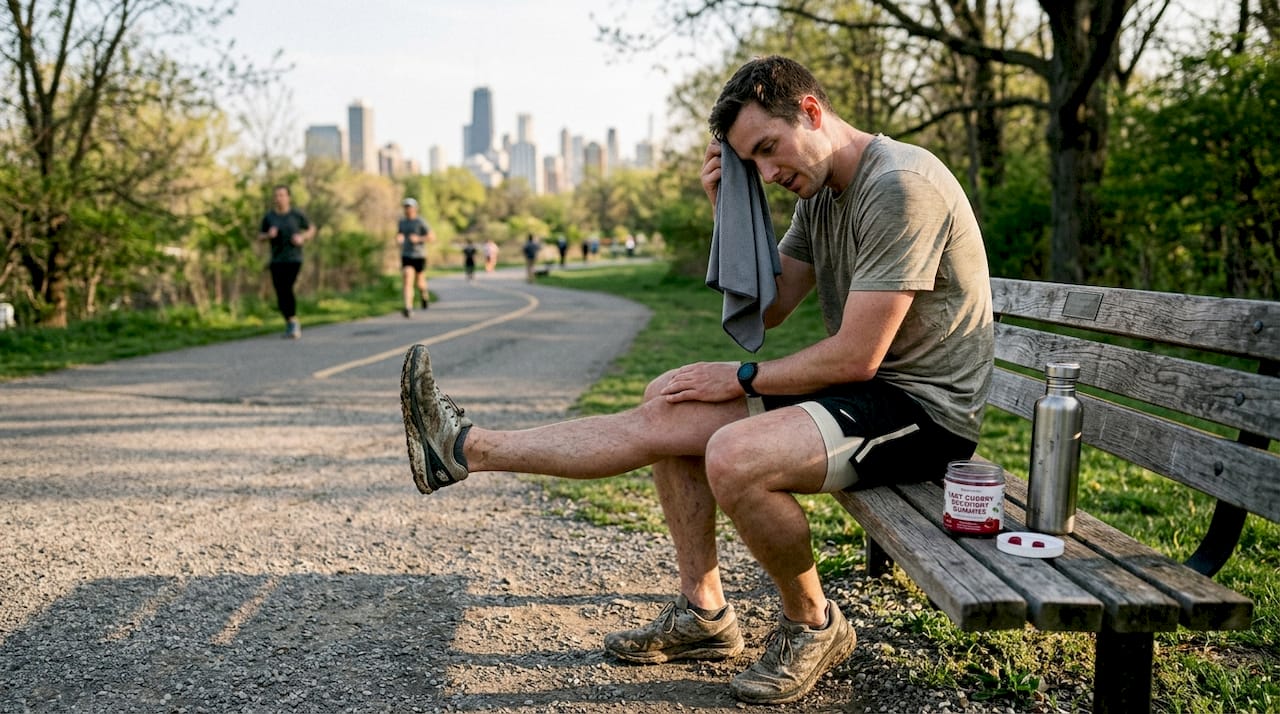
Comparison: Antioxidant sources for post-exercise recovery
| Source | Recovery Benefit | Adaptation Risk | Best Use Case |
|---|---|---|---|
| Whole foods (berries, vegetables) | Moderate, sustained | Minimal | Daily baseline nutrition |
| Tart cherry (480mg/day) | High for soreness | Low when timed | Post-competition recovery |
| CoQ10 (100-200mg/day) | High for muscle markers | Low | High-volume training blocks |
| High-dose vitamin C/E | Variable | High | Avoid during adaptation phases |
How antioxidants support your body after intense exercise:
- Neutralize excess reactive oxygen species generated during muscle contractions
- Reduce inflammatory signaling that prolongs soreness and delays recovery
- Support mitochondrial repair and regeneration in damaged muscle fibers
- Enhance immune function to prevent illness during heavy training periods
- Accelerate glycogen resynthesis and protein synthesis for faster adaptation
Pro Tip: Time your antioxidant supplementation strategically. Use targeted supplements like tart cherry or CoQ10 during competition phases or high-intensity blocks, then scale back during base-building periods when you want maximum adaptation stimulus. This approach, detailed in guides on muscle protein synthesis, preserves training adaptations while supporting recovery when it matters most.
The limitation emerges when supplements interfere with the oxidative signals your muscles need to adapt. High doses of vitamins C and E can blunt mitochondrial biogenesis, the process that increases your aerobic capacity. Your CoQ10 supplement for recovery works differently, supporting energy production without blocking adaptation signals. Exploring best recovery supplements helps you choose options that enhance recovery without compromising long-term progress.
Whole food antioxidants vs. supplements: What science says
The debate between food-based and supplemental antioxidants centers on bioavailability, synergy, and safety. Whole foods deliver antioxidants alongside fiber, minerals, and phytonutrients that enhance absorption and function. Supplements provide concentrated doses that may help in specific situations but carry risks when overused.
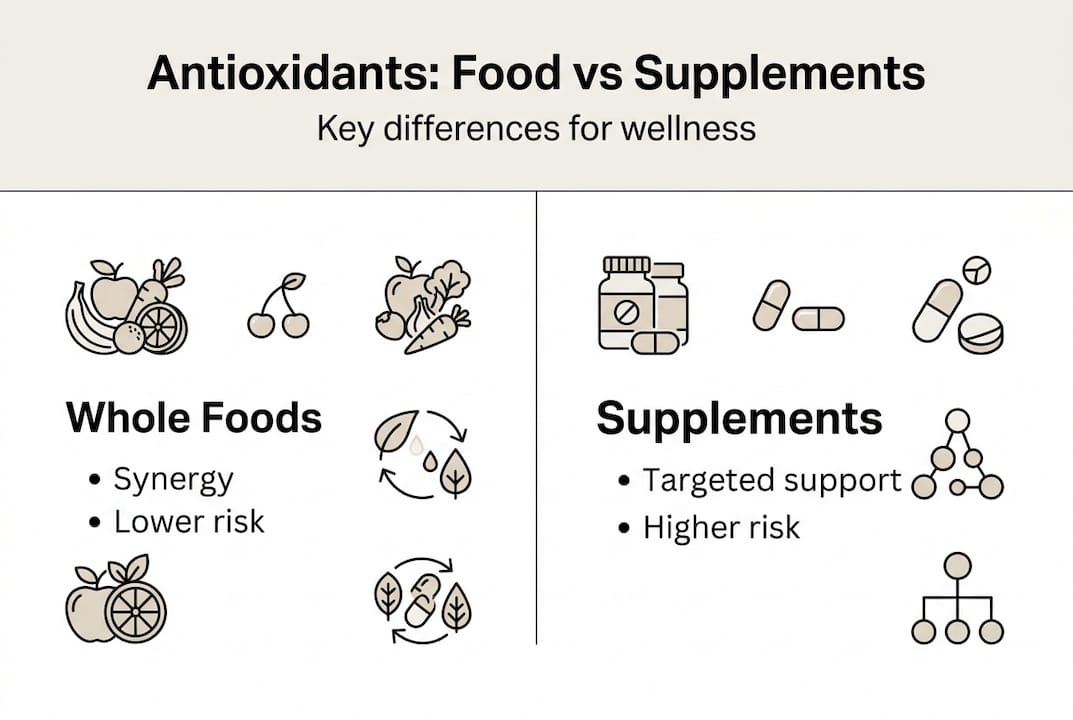
Evidence strongly favors dietary sources as your foundation. Dietary antioxidants from whole foods like Mediterranean diet staples, tart cherry, and beetroot are preferred over supplements to avoid interference with training adaptations. These foods provide antioxidants in forms your body recognizes and processes efficiently, with built-in safeguards against excess.
When whole foods provide superior antioxidant support:
- Daily baseline nutrition for cellular protection and immune function
- Long-term disease prevention and healthy aging
- Supporting gut microbiome diversity and metabolic health
- Providing synergistic nutrients that enhance antioxidant absorption
- Minimizing risk of over-supplementation and adverse effects
Supplements fill specific gaps. Research indicates tart cherry, astaxanthin, and CoQ10 may aid recovery during high-training periods at doses of 480mg/day, 4-12mg/day, and 100-200mg/day respectively. The key phrase is “high-training periods.” These supplements work best as tactical tools, not daily staples.
Pro Tip: Build your antioxidant intake from colorful vegetables, berries, nuts, and seeds first. Add supplements only when training volume or intensity exceeds your body’s natural recovery capacity, and cycle off during lower-intensity phases. This strategy, explored in nutritional supplements for recovery, maximizes benefits while minimizing risks.
The risks of indiscriminate supplementation are real. Studies link high-dose antioxidant supplements to increased mortality, with relative risks of 1.03 to 1.04 in well-designed trials. While these increases seem small, they matter when millions of people take supplements daily. The mechanism likely involves disrupting beneficial oxidative signaling that supports immune function and cellular cleanup processes.
For athletes specifically, supplements can blunt the very adaptations you train to achieve. Your body interprets oxidative stress as a signal to build more mitochondria, strengthen antioxidant defenses, and improve oxygen utilization. Flooding your system with external antioxidants dampens these signals, potentially limiting performance gains over time. Understanding omega-3 for athletes provides another perspective on strategic supplementation that supports rather than hinders adaptation.
Risks and controversies: When antioxidants become harmful
The darker side of antioxidant supplementation emerges in performance impairment and disease risk. While moderate intake from food supports health, high-dose supplements exceeding 400mg/day of vitamin C, along with vitamin E and beta-carotene, may impair performance by blunting training adaptations and mitochondrial biogenesis.
Mortality data raises serious concerns. A comprehensive Cochrane review found antioxidant supplements increase mortality risk with relative risks of 1.03 to 1.04 in low-bias trials. This finding contradicts the assumption that antioxidants universally protect health, suggesting they may interfere with natural cellular processes that eliminate damaged cells.
Documented risks of excessive antioxidant supplementation:
- Blunted mitochondrial biogenesis and reduced aerobic capacity gains
- Interference with insulin sensitivity improvements from exercise
- Increased lung cancer risk in smokers taking beta-carotene
- Elevated prostate cancer risk with vitamin E supplementation
- Potential tumor promotion in individuals with existing cancer mutations
Cancer research reveals the most troubling findings. In laboratory models with KRAS or BRAF mutations, antioxidants can promote tumor growth by reducing ROS-mediated p53 activation, a critical tumor suppression mechanism. This doesn’t mean antioxidants cause cancer, but they may accelerate existing tumors by protecting cancer cells from oxidative stress that would otherwise trigger cell death.
“The relationship between antioxidants and health is not linear. While deficiency impairs function, excess supplementation can disrupt beneficial stress responses that maintain cellular quality control and drive physiological adaptation.”
Special populations face heightened risks. Smokers should avoid beta-carotene and vitamin E supplements due to documented increases in lung and prostate cancer. Individuals with family histories of cancer should consult healthcare providers before starting antioxidant regimens, as genetic factors may influence how supplements affect tumor suppression pathways.
For athletes, the performance implications matter most. Blocking oxidative signals prevents your muscles from adapting to training stress. You might recover faster in the short term but sacrifice long-term gains in strength, endurance, and power. This trade-off makes strategic timing essential, using supplements only when recovery demands outweigh adaptation priorities. Resources on BCAAs for muscle recovery and sports supplement benefits help you navigate these decisions with evidence-based frameworks.
Practical strategies: Applying antioxidant science to your routine
Translating research into action requires a systematic approach that prioritizes food, times supplements strategically, and monitors your individual response. The goal is supporting recovery and health without compromising the adaptations that improve performance.
Building an antioxidant-rich diet for optimal wellness:
- Consume 5-7 servings of colorful vegetables and fruits daily, emphasizing berries, leafy greens, and cruciferous vegetables
- Include nuts, seeds, and olive oil for fat-soluble antioxidants like vitamin E and polyphenols
- Choose whole grains over refined options to increase intake of selenium and other trace minerals
- Incorporate fatty fish twice weekly for omega-3s that reduce inflammation and oxidative stress
- Use herbs and spices liberally, as they contain concentrated polyphenols and flavonoids
- Limit processed foods and added sugars that increase oxidative stress and inflammation
For health-conscious individuals and athletes, prioritizing antioxidant-rich whole foods over high-dose supplements supports recovery without blunting exercise adaptations. This foundation provides consistent, moderate antioxidant intake that protects cells while preserving the oxidative signals needed for improvement.
Supplementation becomes useful in specific contexts. During competition phases, heavy training blocks, or periods of high stress, targeted supplements can accelerate recovery when food alone falls short. Tart cherry extract at 480mg daily reduces muscle soreness after intense sessions. CoQ10 at 100-200mg supports mitochondrial function during high-volume training. Astaxanthin at 4-12mg may reduce exercise-induced oxidative damage.
Pro Tip: Track your training load, recovery markers, and supplement use in a journal. Notice whether supplements actually improve how you feel and perform, or if they’re just adding cost without benefit. Adjust your approach based on objective measures like training consistency, illness frequency, and performance trends. This individualized strategy, combined with insights from magnesium for athletic performance, ensures your supplement choices align with your specific needs and goals.
Explore science-backed superfoods and supplements
If you’re ready to apply these principles with products designed for health-conscious athletes, NutriBliss offers curated supplements that balance efficacy with safety. Our approach emphasizes evidence-based formulations that support recovery without compromising your training adaptations.

Explore our educational resources on the science behind superfoods to deepen your understanding of how whole food nutrients work synergistically. When you’re ready to add targeted supplementation, browse our complete supplement collection featuring CoQ10, omega-3s, and other recovery-focused options. Every product at NutriBliss is selected to help you achieve your wellness and performance goals through science-backed nutrition.
Frequently asked questions
Should athletes use antioxidant supplements or focus on diet?
Athletes benefit most from antioxidant-rich whole foods as their foundation, using supplements only during high-training periods when recovery demands exceed dietary intake. This approach preserves training adaptations while supporting recovery.
Can taking too many antioxidants be harmful?
Yes, high-dose antioxidant supplements increase mortality risk with relative risks of 1.03 to 1.04 in well-designed trials. They can also impair exercise adaptations and interfere with beneficial cellular stress responses.
Which antioxidant supplements are best for recovery?
Tart cherry, astaxanthin, and CoQ10 show the strongest evidence for recovery support at doses of 480mg/day, 4-12mg/day, and 100-200mg/day respectively. Use them strategically during intense training phases rather than year-round.
Why should smokers avoid certain antioxidant supplements?
Smokers face increased lung and prostate cancer risks from beta-carotene and vitamin E supplements. These supplements may interfere with tumor suppression mechanisms in individuals with existing cellular damage from smoking.
How do antioxidants support muscle recovery after exercise?
Antioxidants reduce post-exercise lactate and creatine kinase by 1.25 and 1.88 standard deviations respectively, indicating faster clearance of metabolic byproducts and reduced muscle damage markers. This accelerates recovery between training sessions.