

Many athletes believe BCAAs alone will maximize muscle growth, but this oversimplifies their true role. BCAAs support muscle recovery through specific metabolic pathways, yet they work best alongside complete protein sources. This guide clarifies how BCAAs enhance performance, reduce soreness, and fit into evidence-based nutrition strategies for serious training.
Table of Contents
- Understanding BCAAs: Composition And Unique Metabolic Properties
- Mechanisms Of BCAA Action In Muscle Recovery
- BCAAs And Muscle Soreness Reduction: Accelerating Recovery
- Common Misconceptions About BCAAs
- Limitations And Optimal Use Of BCAAs In Athletic Supplementation
- Broader Implications Of BCAAs Beyond Muscle Recovery
- Discover Quality Supplements To Enhance Your Fitness Journey
- Frequently Asked Questions About BCAAs
Key takeaways
| Point | Details |
|---|---|
| Unique metabolism | BCAAs are metabolized directly in muscle tissue, not the liver, enabling immediate energy and repair support. |
| Leucine drives growth | Leucine activates the mTOR pathway, triggering muscle protein synthesis and anabolic signaling. |
| Complete protein needed | BCAAs alone cannot induce maximal muscle growth without all essential amino acids present together. |
| Soreness reduction | Supplementation lowers muscle damage markers and perceived soreness by 20 to 30 percent after intense workouts. |
| Optimal dosing matters | Effective use involves balanced 2:1:1 ratios, 15 to 20 grams daily, and strategic timing around exercise. |
Understanding BCAAs: composition and unique metabolic properties
Branched-chain amino acids consist of three essential amino acids your body cannot produce: leucine, isoleucine, and valine. Unlike most amino acids that travel to the liver for processing, BCAAs bypass liver metabolism and are directly metabolized in skeletal muscle10290-7/fulltext) for immediate anabolic and energy support. This unique pathway allows them to serve as rapid fuel during workouts while simultaneously signaling muscle repair processes.
The direct muscle metabolism gives BCAAs an advantage for athletes seeking quick recovery. When you exercise intensely, your muscles break down stored glycogen and amino acids for energy. BCAAs step in to provide oxidizable fuel without waiting for liver conversion. This immediate availability means your muscle cells can maintain energy levels and begin repair signaling faster than with other amino acid sources.
Understanding this metabolic difference helps explain why boosting muscle growth and recovery with BCAAs has become popular among serious athletes. The three BCAAs work together but serve distinct roles:
- Leucine acts as the primary anabolic trigger, stimulating protein synthesis pathways that build new muscle tissue.
- Isoleucine supports glucose uptake into cells and enhances energy production during sustained exercise.
- Valine helps prevent muscle breakdown and supports neurotransmitter balance for reduced central fatigue.
This complementary action makes BCAAs particularly valuable around training windows when muscle cells are most receptive to nutrient signals.
Mechanisms of BCAA action in muscle recovery
The mTOR pathway regulates muscle protein synthesis, acting as a master switch that determines whether your body builds or breaks down muscle tissue. BCAAs, especially leucine, activate the mTOR signaling pathway, significantly increasing muscle protein synthesis rates after exercise. This activation happens quickly, usually within 30 to 60 minutes of BCAA ingestion, making timing critical for maximizing benefits.
Leucine is the primary BCAA driving mTOR activation and anabolic muscle signaling among the three branched-chain amino acids. When leucine binds to specific sensors in muscle cells, it triggers a cascade of molecular events that ramp up protein production machinery. Think of leucine as the key that unlocks your muscle’s growth potential after training stress damages muscle fibers.
Beyond stimulating growth, BCAAs reduce muscle protein breakdown, particularly during rest periods between training sessions. This anti-catabolic effect preserves hard-earned muscle mass during calorie restriction or intense training phases. BCAAs also support satellite cells, specialized stem cells that fuse with damaged muscle fibers to repair and expand muscle tissue.
The combined anabolic and anti-catabolic actions create an optimal environment for recovery:
- Increased protein synthesis rates build new contractile proteins to repair exercise damage.
- Reduced protein breakdown preserves existing muscle mass and prevents excessive tissue loss.
- Enhanced satellite cell activity accelerates structural repair and adaptation to training stress.
- Improved nutrient partitioning directs amino acids toward muscle tissue rather than oxidation for energy.
Pro Tip: Take BCAAs 30 minutes before training to prime mTOR activation, then follow with complete protein within two hours post-workout to provide all essential amino acids for maximal muscle protein synthesis explained.
BCAAs and muscle soreness reduction: accelerating recovery
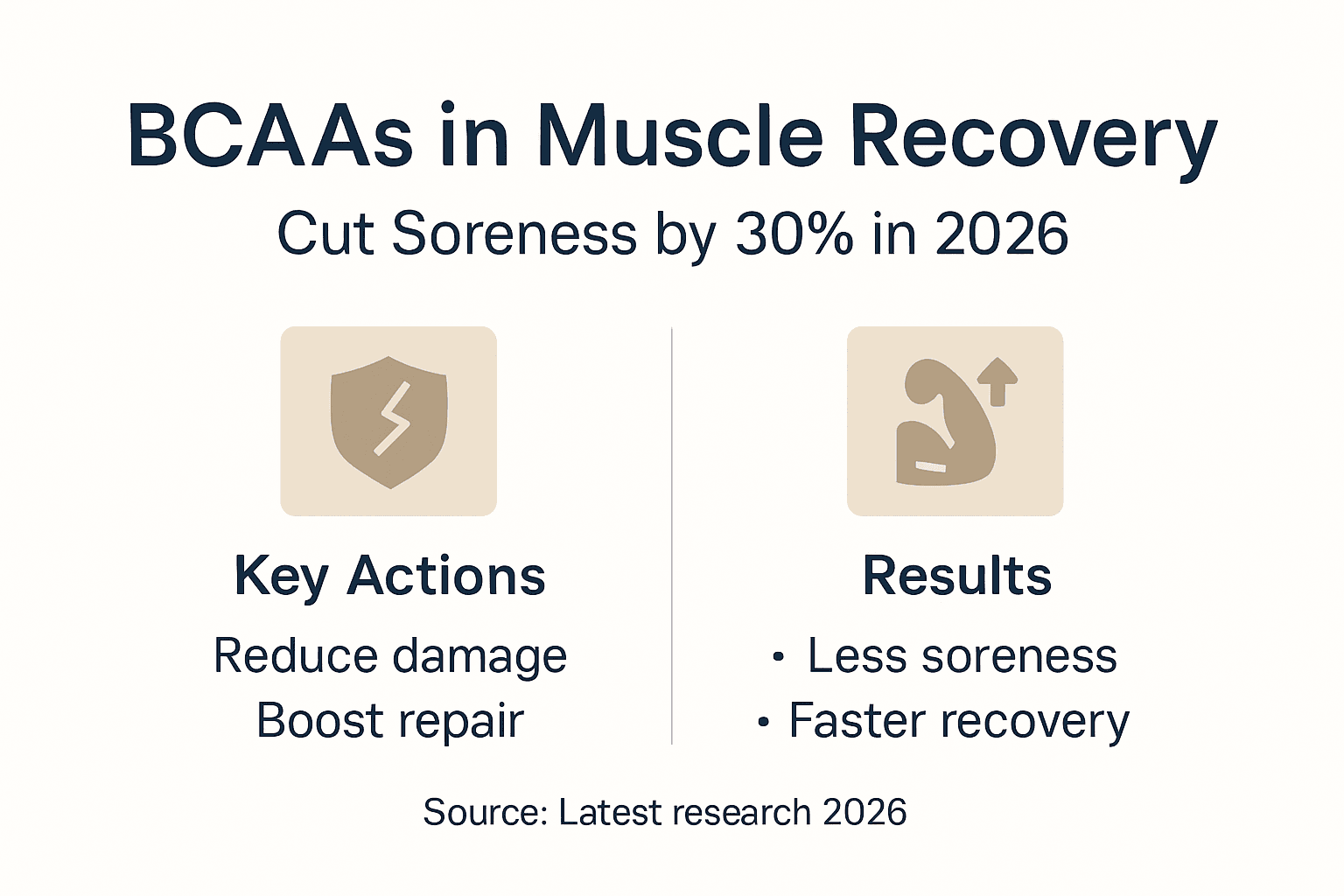
Muscle soreness after intense training stems from microscopic damage to muscle fibers and resulting inflammation. BCAA supplementation significantly reduces creatine kinase levels and perceived muscle soreness after intense exercise, with athletes reporting 20 to 30 percent less discomfort when using BCAAs consistently. Creatine kinase serves as a blood marker of muscle damage, so lower levels indicate less tissue breakdown occurred during training.

The soreness reduction mechanism involves more than just muscle repair. BCAAs enhance macrophage polarization supporting muscle regeneration post-exercise by modulating immune cell activity at damage sites. Macrophages are immune cells that clear cellular debris and coordinate tissue repair. BCAAs help shift these cells from inflammatory states to regenerative states, speeding the transition from breakdown to rebuilding.
This dual action on muscle cells and immune cells explains why reducing muscle soreness with BCAAs helps athletes return to training faster. Less soreness means you can maintain workout frequency and intensity without extended recovery periods. Consistent training stimulus drives better adaptations over time compared to sporadic sessions interrupted by excessive soreness.
Key recovery benefits include:
- Lower perceived muscle soreness allows earlier return to high-intensity training sessions.
- Reduced inflammation markers indicate less systemic stress and faster tissue repair.
- Improved range of motion post-exercise enables better movement quality in subsequent workouts.
- Enhanced workout adherence from decreased discomfort supports long-term training consistency.
Research shows athletes using 15 to 20 grams of BCAAs daily experience up to 30 percent reduction in delayed-onset muscle soreness compared to placebo groups, particularly after eccentric-focused training.
Common misconceptions about BCAAs
One widespread myth suggests BCAAs alone can build muscle effectively without other protein sources. The reality contradicts this belief: BCAAs alone do not stimulate maximal muscle protein synthesis without all essential amino acids present. Your body needs all nine essential amino acids to construct complete muscle proteins, not just the three branched-chain varieties. BCAAs may trigger the anabolic signal, but without other amino acids available, protein synthesis stalls.
Another misconception involves safety and dosing. While BCAAs are generally safe, excessive BCAA intake may cause liver or kidney stress and impair glucose metabolism in susceptible individuals. Taking 30 to 40 grams daily without medical supervision can disrupt amino acid balance and potentially interfere with absorption of other nutrients. Moderate, evidence-based dosing avoids these risks while delivering benefits.
Some athletes believe BCAA benefits come purely from direct muscle building effects. Actually, muscle soreness reduction from BCAAs also involves immune modulation, not just direct muscle building effects. The immune system plays a crucial role in clearing damage and orchestrating repair, so BCAAs’ influence on inflammation and macrophage function contributes significantly to faster recovery.
Common myths to avoid:
- BCAAs can replace whole protein sources for muscle building (false, all essential amino acids are required).
- More BCAAs always mean better results (false, excessive doses may cause metabolic imbalances).
- BCAAs only affect muscle tissue directly (false, immune and metabolic effects are significant).
- BCAA timing doesn’t matter (false, peri-workout timing optimizes anabolic signaling).
Pro Tip: Combine BCAAs with complete protein sources like whey or plant-based protein blends to ensure all essential amino acids are available, following safe supplementation strategies that balance nutrient intake.
Limitations and optimal use of BCAAs in athletic supplementation
Effective BCAA supplementation requires understanding evidence-based dosing and timing protocols. Maximal muscle protein synthesis requires co-ingestion of all essential amino acids, not just BCAAs, so pair BCAA supplements with complete protein sources within your daily nutrition plan. This combination ensures BCAAs trigger anabolic signaling while other amino acids provide the building blocks for actual tissue construction.
Recommended BCAA dosage ranges between 15 to 20 grams daily based on training intensity and body weight. Heavier athletes or those training multiple times daily may benefit from the upper end, while moderate exercisers can stick to 10 to 15 grams. The ideal BCAA ratio is 2:1:1 leucine:isoleucine:valine, which matches research showing leucine drives most anabolic effects while the other two support energy and prevent excessive leucine competition for transport.
Timing supplementation strategically maximizes benefits:
- Take 5 to 10 grams 30 minutes before training to prime mTOR and provide intra-workout fuel.
- Consume 5 to 10 grams immediately post-workout to maintain elevated amino acid levels during the anabolic window.
- Add BCAAs to intra-workout drinks during sessions longer than 90 minutes to prevent excessive muscle breakdown.
- Include BCAAs with morning meals if training fasted to protect muscle tissue from catabolic hormones.
| Supplementation Scenario | BCAA Dose | Timing | Co-nutrients |
|---|---|---|---|
| Pre-workout | 5 to 10g | 30 min before | Carbohydrates for energy |
| Post-workout | 5 to 10g | Within 30 min | Complete protein, carbs |
| Intra-workout | 5 to 10g | During session | Electrolytes, simple carbs |
| Morning fasted training | 10g | Upon waking | Small amount of carbs |
Pro Tip: Pair BCAA supplements with fast-digesting carbohydrates post-workout to spike insulin levels, which enhances amino acid uptake into muscle cells and amplifies anabolic signaling from timing and dosing of BCAAs.
Broader implications of BCAAs beyond muscle recovery
BCAAs influence more than just muscle tissue, offering benefits for mental performance and metabolic health. BCAA supplementation modulates neurotransmitter synthesis reducing central fatigue and improving mental endurance during prolonged exercise. This happens because BCAAs compete with tryptophan, an amino acid precursor to serotonin, for transport into the brain. Lower brain serotonin during exercise delays the onset of mental fatigue and perceived exhaustion.
This cognitive benefit matters for endurance athletes and those performing high-skill activities under physical stress. When your brain stays sharp, you maintain better technique, make smarter tactical decisions, and push through challenging training segments. The mental stamina enhancement complements the physical recovery benefits, creating a complete performance package.
BCAAs may also support metabolic health through improved energy regulation and glucose handling. Emerging research suggests they influence insulin signaling pathways and help maintain stable blood sugar during and after exercise. This metabolic support prevents energy crashes and supports consistent performance across training sessions.
Additional BCAA benefits include:
- Reduced perception of effort during endurance activities by delaying central nervous system fatigue signals.
- Enhanced focus and concentration during technical training requiring coordination and precision.
- Better mood and motivation through neurotransmitter balance, particularly during calorie-restricted diets.
- Improved energy availability through oxidation of BCAAs as fuel during glycogen-depleted states.
Exploring cognitive benefits of BCAAs reveals how these amino acids support whole-body performance beyond obvious muscle effects. Understanding the broader roles of BCAAs helps athletes make informed decisions about when supplementation offers the most value for their specific training demands and performance goals.
Discover quality supplements to enhance your fitness journey
Applying the science of BCAA supplementation starts with choosing quality products formulated with optimal ratios. Explore Nutribliss BCAA supplement designed with the evidence-based 2:1:1 leucine:isoleucine:valine ratio that research supports for muscle recovery and performance enhancement.

Complementing BCAA use with comprehensive nutrition knowledge maximizes your training results. Check out our expert guide on dietary supplements to understand how different nutrients work together. Implement strategic nutrient timing strategies that align supplementation with your body’s changing needs throughout training cycles. Smart supplementation combined with solid nutrition fundamentals creates the foundation for consistent progress toward your fitness goals.
Frequently asked questions about BCAAs
What is the best time to take BCAAs for muscle recovery?
Take 5 to 10 grams 30 minutes before training to prime anabolic pathways, then another 5 to 10 grams immediately post-workout to maintain elevated amino acid levels. For sessions longer than 90 minutes, add BCAAs to intra-workout drinks to prevent excessive muscle breakdown during training.
Can BCAAs alone build muscle without other proteins?
No, BCAAs trigger the anabolic signal but cannot build muscle alone because your body needs all nine essential amino acids to construct complete muscle proteins. Always pair BCAA supplements with complete protein sources like whey, eggs, or plant-based proteins throughout your daily nutrition plan.
Are there risks with taking too many BCAAs daily?
Excessive intake above 25 to 30 grams daily may cause digestive discomfort, disrupt amino acid balance, and potentially stress liver or kidney function in susceptible individuals. Stick to evidence-based doses of 15 to 20 grams daily and follow safe supplement mixing guidelines to avoid interactions.
How do I choose a quality BCAA supplement?
Look for products with a 2:1:1 ratio of leucine:isoleucine:valine, third-party testing for purity, and minimal fillers or artificial ingredients. Check for clear dosing information and avoid proprietary blends that hide actual BCAA amounts per serving.
Do BCAAs help with mental fatigue during workouts?
Yes, BCAAs compete with tryptophan for brain transport, reducing serotonin synthesis that contributes to central fatigue during prolonged exercise. This helps maintain mental focus, delay perceived exhaustion, and sustain motivation during challenging training sessions or competitions.