

Missing a workout feels frustrating, but missing hidden nutrients can quietly derail every training effort. For Americans committed to health and performance, micronutrient deficiency is a silent threat, with about 31 percent at risk for at least one deficiency despite eating enough calories. Understanding how hidden hunger impacts energy, immunity, and recovery opens the door to smarter choices. Learn how proactive testing, dietary habits, and targeted supplements sharpen your athletic edge and protect long-term wellness.
Table of Contents
- Defining Micronutrient Deficiency And Misconceptions
- Types Of Micronutrient Deficiencies In The U.S.
- Causes And Symptoms Impacting Wellness
- Effects On Athletic Performance And Energy
- Prevention Through Diet And Supplementation
Key Takeaways
| Point | Details |
|---|---|
| Micronutrient Deficiency Is Common | Approximately 31% of Americans lack adequate levels of critical micronutrients, impacting health and performance. |
| Invisible Symptoms | Deficiencies manifest subtly through fatigue, slow recovery, and frequent illnesses, easily mistaken for overtraining. |
| Food Quality Matters | Processed and calorically dense diets significantly reduce micronutrient intake, making balanced eating essential for optimal health. |
| Testing for Precision Nutrition | Regular blood testing for key nutrients like iron, vitamin D, magnesium, and zinc allows for targeted dietary adjustments and supplementation. |
Defining micronutrient deficiency and misconceptions
Micronutrient deficiency occurs when your body doesn’t get enough vitamins and minerals to function optimally. These nutrients work in small amounts, but their impact is massive. Your body needs them for energy production, muscle function, immune defense, and recovery.
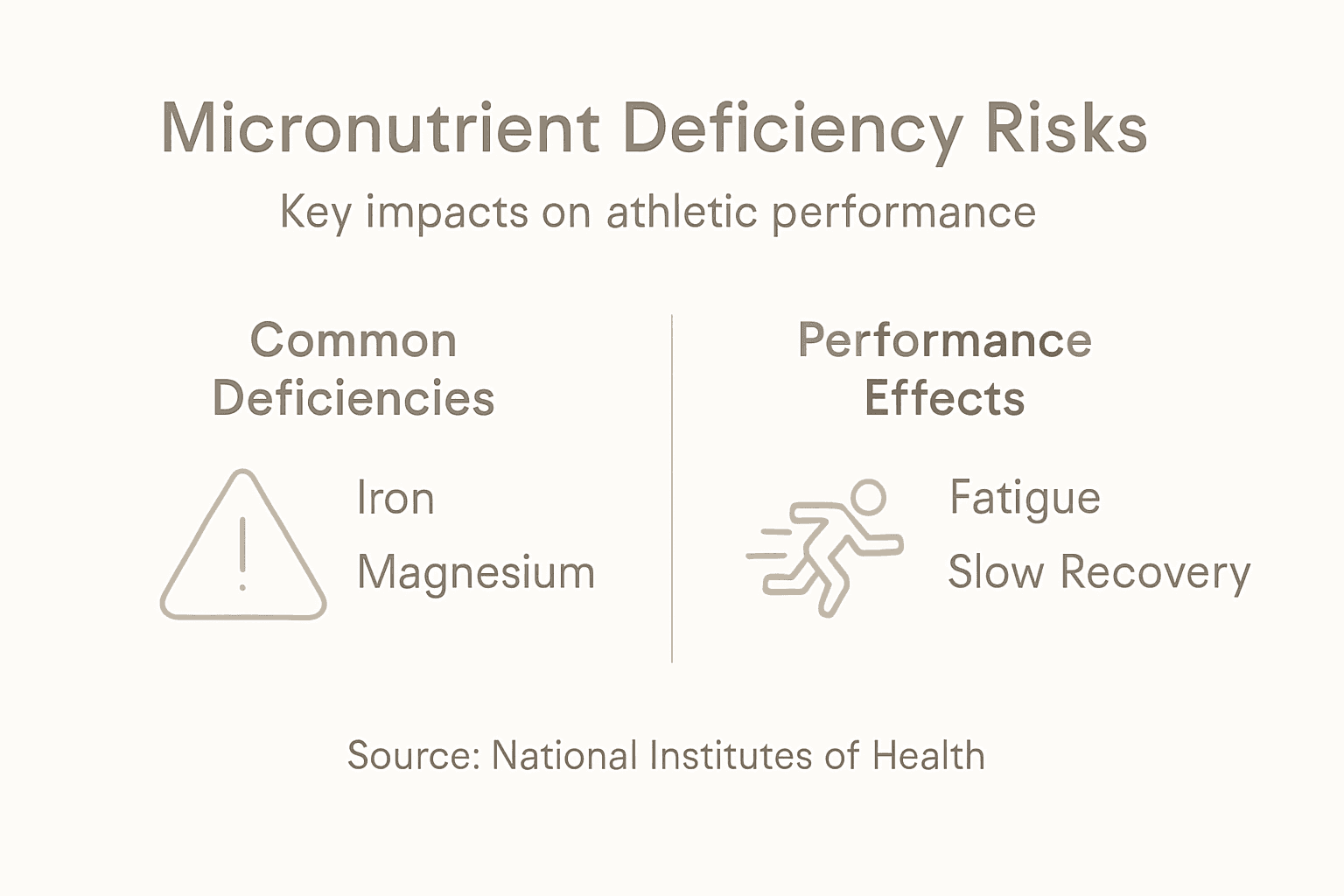
Many athletes overlook this because hidden hunger doesn’t announce itself loudly. You won’t wake up gasping for air like you would with severe anemia. Instead, deficiency sneaks up through fatigue, slower recovery, frequent colds, and declining performance—symptoms you might chalk up to overtraining.
Common deficient micronutrients affecting athletes include:
- Iron – Essential for oxygen transport and endurance
- Zinc – Critical for immune function and muscle repair
- Calcium – Vital for bone density and muscle contractions
- Vitamin D – Regulates immune response and bone health
- B vitamins – Support energy metabolism and recovery
- Magnesium – Reduces muscle cramps and supports sleep
The Misconceptions
Here’s where most athletes get it wrong. Many believe micronutrient deficiencies only cause acute symptoms like scurvy or beriberi. In reality, subtle deficiencies impact your metabolism, immune system, and disease risk long before severe symptoms appear.
Another myth? “If I eat reasonably well, I’m covered.” Not necessarily. Modern food processing, soil depletion, and restrictive diets all reduce micronutrient availability. Even eating “healthy” doesn’t guarantee adequate intake.
The biggest misconception: deficiencies only happen to malnourished populations. False. Active individuals—especially endurance athletes—deplete micronutrients faster through sweat, increased metabolism, and tissue breakdown. You’re at risk even when eating well overall.
Understanding that deficiency develops silently makes early detection and prevention your competitive advantage, not an afterthought.
Athletes often overlook micronutrient status because it’s invisible. You can’t “feel” low zinc or insufficient magnesium the way you feel dehydration. But your performance metrics reflect it. Testing micronutrient levels reveals what your symptoms hide, giving you actionable data to optimize your nutritional strategy with #nutribliss solutions designed specifically for performance athletes.
Pro tip: Start with a blood panel testing iron, vitamin D, magnesium, and zinc levels—these four nutrients most commonly limit athletic performance in active individuals.
Here is a quick comparison of micronutrient testing versus performance symptom monitoring for early detection:
| Approach | Advantages | Limitations |
|---|---|---|
| Blood Testing | Provides concrete data on nutrient levels | Requires lab access and cost |
| Symptom Monitoring | Non-invasive and immediate feedback | Symptoms are often vague and delayed |
Types of micronutrient deficiencies in the U.S.
The United States faces a hidden nutritional crisis. About 31% of Americans lack adequate levels of one or more critical micronutrients, despite consuming plenty of calories. This paradox defines modern eating patterns: high-calorie, low-nutrient foods that leave your body undernourished.
The typical Western diet contributes directly to this problem. Processed foods, refined grains, and added sugars dominate plates while nutrient-dense options take a backseat. Your body processes empty calories without gaining the micronutrients needed for optimal function.
Most Common Deficiencies Affecting Americans
Certain micronutrient gaps show up repeatedly across the U.S. population:
- Vitamin D – Insufficient sun exposure and diet quality create widespread deficiency
- Magnesium – Refined grains stripped of this mineral leave most people depleted
- Calcium – Dairy alternatives often lack equivalent nutrient density
- Iron – Particularly common in women and vegetarian athletes
- Potassium – Processed foods lack this mineral while sodium dominates
- Vitamin A and C – Low fruit and vegetable consumption reduces intake
These deficiencies aren’t random. Micronutrient inadequacies develop from dietary patterns high in processed foods and low in whole foods. Athletes face additional risk because training increases metabolic demand and mineral loss through sweat.
Who’s Most Vulnerable?
Certain groups face higher risk for deficiency. Children need adequate micronutrients for growth and development. Pregnant women require elevated levels for fetal development. The elderly often struggle with absorption and have reduced food intake. Active individuals deplete stores faster through intense training.
Your dietary choices matter tremendously. Restrictive diets, vegan or vegetarian patterns without proper planning, and consistent reliance on convenience foods all increase deficiency risk. Income and food access also play roles—nutrient-dense whole foods cost more than processed alternatives in many areas.
The standard American diet creates a perfect storm: calorie excess paired with micronutrient scarcity, leaving athletes and active people vulnerable despite eating “enough.”
Athletes specifically need heightened awareness. Training accelerates mineral depletion through sweat loss and increased metabolic turnover. A 2,500-calorie diet might seem adequate until you realize it’s missing critical micronutrients that directly impact recovery, immunity, and performance consistency.
Pro tip: Track your typical weekly diet against recommended intake levels for vitamin D, magnesium, iron, and potassium—these four deficiencies most commonly limit American athletes’ performance potential.
Causes and symptoms impacting wellness
Micronutrient deficiency doesn’t happen overnight. Multiple factors create the conditions for your body to become undernourished, even when calories seem adequate. Understanding these causes helps you recognize warning signs before performance suffers.

Root Causes of Deficiency
Deficiency develops through several interconnected pathways:
- Inadequate dietary intake – Not eating enough nutrient-dense foods leaves gaps in your micronutrient profile
- Poor nutrient absorption – Digestive issues, medications, or gut inflammation reduce how much you actually absorb from food
- Increased physiological demands – Intense training accelerates mineral depletion through sweat and metabolic stress
- Food quality decline – Modern soil depletion and processing strip nutrients from what you eat
- Lifestyle factors – Stress, sleep deprivation, and alcohol consumption increase micronutrient demands while reducing intake
Processed, calorie-dense diets low in nutrients drive deficiency prevalence in developed countries. Athletes face unique risk because training creates metabolic demands that exceed what casual dieters experience.
This table summarizes common causes of micronutrient deficiency and their typical impacts on wellness:
| Cause | Impact on Wellness | At-Risk Population |
|---|---|---|
| Processed food intake | Chronic undernourishment | General US population |
| High sweat loss | Faster mineral depletion | Endurance athletes |
| Poor absorption | Persistent deficiencies | Older adults, gut disorders |
| Restrictive diets | Specific micronutrient gaps | Vegetarians, vegans |
| Income/food access | Limited nutrient variety | Low-income households |
Subtle Symptoms You Shouldn’t Ignore
Deficiency symptoms develop quietly. You won’t collapse or experience dramatic warning signs. Instead, subtle shifts accumulate and compound over weeks and months.
Common early warning signs include:
- Persistent fatigue – Tiredness that doesn’t improve with rest or sleep
- Slow recovery – Muscle soreness lasting longer than expected after workouts
- Frequent illness – Catching colds, flu, or infections more often than peers
- Cognitive fog – Difficulty concentrating, memory lapses, mental clarity issues
- Mood disturbances – Unexplained anxiety, depression, or irritability
- Muscle cramps – Especially leg cramps at night or during training sessions
- Hair, skin, nails changes – Brittleness, dryness, slow growth, or unusual discoloration
Magnesium deficiency specifically links to cardiovascular disease, diabetes, depression, and cognitive decline. One mineral shortage cascades across multiple body systems.
Why Symptoms Mimic Other Problems
This is where confusion sets in. Athletes attribute fatigue to overtraining when it’s actually zinc deficiency. They blame brain fog on stress when magnesium depletion is the culprit. They wonder why injuries linger longer than textbooks predict, not realizing insufficient iron or vitamin C impairs healing.
Deficiency symptoms masquerade as normal athletic challenges, making them easy to overlook until performance measurably declines.
Your immune system suffers silently. Deficient zinc, iron, or vitamin D doesn’t announce itself with dramatic symptoms. Instead, you catch the virus your training partner shakes off easily. You get sidelined by infections that competitive athletes normally resist.
Pro tip: Notice patterns in your symptoms and match them against the micronutrient functions you’ve learned—persistent fatigue plus muscle cramps suggests magnesium deficiency, while frequent infections point toward zinc or vitamin D insufficiency.
Effects on athletic performance and energy
Micronutrient deficiency acts like a silent performance killer. You can follow perfect training protocols and recovery strategies, but without adequate micronutrients, your body simply cannot perform at its potential. The impact cascades across every athletic dimension.
Energy Production Collapse
Your muscles need energy to contract. That energy comes from food, but micronutrients are the catalysts making it happen. Vitamins and minerals act as cofactors in enzymes that generate energy from food, converting what you eat into usable fuel.
Without adequate B vitamins, iron, and magnesium, your body struggles to produce ATP—the currency your cells use for energy. You feel chronically tired. Workouts feel heavier. Your power output drops. You can’t explain why the weight that was manageable last month now feels crushing.
Iron deficiency specifically crushes endurance athletes. This mineral transports oxygen through your bloodstream to working muscles. Insufficient iron means your muscles receive less oxygen, forcing your cardiovascular system to work harder while delivering less fuel. Your pace slows. Your heart rate climbs at normal training intensities. Everything gets harder.
Compromised Muscle Function and Recovery
Muscles don’t repair themselves. Micronutrients orchestrate the entire repair process. Zinc, vitamin C, and amino acid cofactors rebuild damaged muscle fibers after training stress. Without them, recovery stalls.
Common deficiency-related performance problems include:
- Reduced strength gains – Muscle doesn’t adapt to training stimulus
- Delayed recovery – Soreness lingers for days instead of 48 hours
- Increased injury risk – Connective tissues weaken without adequate vitamin C and minerals
- Poor endurance capacity – Early fatigue during sustained efforts
- Slower reflexes – Magnesium and B vitamins support neurological function
You might interpret these symptoms as overtraining when the real culprit is micronutrient inadequacy. Your training volume isn’t the problem—your recovery foundation is crumbling.
Immune Breakdown and Illness Vulnerability
Intense training temporarily suppresses immune function. This creates a window where infections take hold. Micronutrient deficiency widens that window dangerously. Zinc, vitamin D, and iron directly support immune cell production and function.
Athletes with deficiencies catch upper respiratory infections, get sidelined by minor illnesses, and experience longer recovery times. One infection costs you two weeks of training. Another cost you a race or competition opportunity. Over a season, these interruptions devastate performance progress.
Micronutrient deficiency transforms training stress into illness risk, turning your hard work against you instead of building fitness.
Oxidative damage accumulates faster in deficient athletes. Intense training generates free radicals that damage cells. Antioxidant micronutrients like vitamins C and E, selenium, and zinc neutralize this damage. Without them, cellular stress compounds, slowing adaptation and increasing fatigue.
Pro tip: Prioritize iron, vitamin D, magnesium, and zinc assessment if you’re experiencing unexplained fatigue, slow recovery, or frequent infections despite consistent training—these four micronutrients most directly impact energy production and athletic performance.
Prevention through diet and supplementation
Prevention beats treatment every time. You don’t want to dig out of a deficiency hole when you can stay ahead through smart nutrition choices. The good news? Preventing micronutrient deficiency is entirely within your control through strategic dietary and supplementation decisions.
Food-First Strategy
Your diet should be your primary defense. Food-based approaches including dietary diversification and enhanced absorption strategies form the cornerstone of sustainable micronutrient prevention. Whole foods contain micronutrients plus supporting compounds that enhance absorption and utilization.
Build your plate around nutrient-dense foods:
- Leafy greens – Iron, magnesium, calcium, vitamins K and C
- Fatty fish – Vitamin D, omega-3s, selenium, B vitamins
- Legumes and nuts – Zinc, iron, magnesium, folate
- Colorful vegetables – Vitamin A, C, potassium, varied phytonutrients
- Whole grains – B vitamins, magnesium, chromium
- Eggs – Choline, selenium, lutein, multiple B vitamins
Consistency matters more than perfection. Eating these foods regularly builds nutritional resilience. You’re not aiming for a single perfect day but establishing patterns that compound across weeks and months.
When Supplementation Makes Sense
Diet alone doesn’t solve everything. Athletes have elevated micronutrient demands. Vegetarians and vegans need strategic supplementation for nutrients found primarily in animal products. Some individuals have absorption issues that dietary changes can’t fully overcome.
Strategic supplementation addresses real gaps. A multivitamin provides baseline coverage. Targeted supplements address specific deficiencies identified through testing. The combination of whole-food nutrition plus targeted supplementation creates comprehensive coverage.
Common strategic supplements for athletes include:
- Vitamin D – Especially important during winter months or with limited sun exposure
- Iron – Critical for female athletes and endurance specialists
- Magnesium – Supports sleep, recovery, and muscle function
- Zinc – Essential for immune function and testosterone production
- Electrolytes – Crucial for hydration and mineral balance during intense training
Successful prevention combines consistent nutrient-rich eating with targeted supplementation, not relying on either strategy alone.
Timing and quality matter. Taking supplements with food enhances absorption for fat-soluble vitamins. High-quality products from reputable brands ensure you’re getting what the label promises. Combining supplements safely requires understanding interactions and spacing certain nutrients appropriately.
Testing guides your strategy. Get baseline blood work done annually. This reveals which micronutrients you’re genuinely short on versus assuming based on diet. Testing transforms supplementation from guesswork into precision nutrition.
Pro tip: Start with whole-food nutrition, add a quality multivitamin, then test your micronutrient status to identify which targeted supplements actually move your numbers and support your athletic goals.
Take Control of Your Micronutrient Health for Peak Athletic Performance
Micronutrient deficiency quietly saps your energy, slows recovery, and increases your risk of illness without obvious warning signs. If you are struggling with persistent fatigue, frequent colds, or slowed progress despite consistent training, the hidden deficiencies in vitamin D, iron, magnesium, and zinc might be holding you back. Recognizing the critical role these nutrients play in energy production and immune support is the first step to regaining your edge.

Boost your performance and wellness with science-backed supplements tailored to your needs. At Nutribliss, you can find targeted vitamins and minerals to address these common gaps efficiently. Start by exploring our selection of essential supplements designed for active individuals and take advantage of reliable testing advice in our resource section. Don’t let subtle nutrient deficiencies slow you down. Visit Nutribliss now and power your journey to optimal health and athletic excellence.
Frequently Asked Questions
What is micronutrient deficiency and how does it affect athletic performance?
Micronutrient deficiency occurs when your body lacks essential vitamins and minerals necessary for optimal function. It can lead to symptoms like fatigue, slower recovery, and declining performance, which can severely impact an athlete’s training and competitive edge.
What are the most common micronutrient deficiencies affecting athletes?
Common deficiencies in athletes include iron, zinc, calcium, vitamin D, B vitamins, and magnesium. These deficiencies can impair energy production, muscle function, and immune response, all crucial for athletic performance.
How can athletes prevent micronutrient deficiencies?
Athletes can prevent deficiencies by adopting a food-first strategy, focusing on nutrient-dense foods like leafy greens, fatty fish, legumes, and whole grains. Strategic supplementation, especially for vitamins and minerals like vitamin D and iron, can also help address specific gaps identified through testing.
What symptoms should athletes watch for that may indicate a micronutrient deficiency?
Athletes should be alert for symptoms such as persistent fatigue, slow recovery, frequent illnesses, cognitive fog, mood disturbances, and muscle cramps. These signs can indicate underlying deficiencies that might compromise performance.