

Nearly 90 percent of people do not get enough omega-3 fatty acids in their diet, yet these essential fats can shape everything from muscle recovery to cardiac health. For athletes especially, omega-3s are more than just another nutrient. They drive inflammation control, sharpen mental focus, and help bodies bounce back faster from tough workouts. Understanding the unique science behind omega-3s gives you a powerful edge to train harder and maintain long-term wellness.
Table of Contents
- Defining Omega‑3 Fatty Acids
- Distinct Omega‑3 Types For Athletes
- How Omega‑3 Enhances Athletic Performance
- Omega‑3 Benefits For Recovery And Inflammation
- Optimal Dosage And Supplement Timing
- Risks, Safety, And Supplement Quality
Key Takeaways
| Point | Details |
|---|---|
| Understanding Omega-3 Types | Athletes should prioritize EPA and DHA from marine sources for optimal performance, while noting ALA’s limited conversion efficiency. |
| Role in Inflammation and Recovery | Omega-3s modulate inflammatory responses, potentially reducing muscle soreness and speeding up recovery post-exercise. |
| Personalized Supplementation | Recommended dosage is 1-2 grams of EPA and DHA daily, tailored to individual training intensity and recovery needs. |
| Supplement Quality and Safety | Choose high-quality omega-3 supplements verified by third-party testing to ensure safety and efficacy. |
Defining Omega‑3 Fatty Acids
Omega-3 fatty acids are essential polyunsaturated fats that play a critical role in human physiology, particularly for athletes seeking optimal performance and recovery. These unique lipid molecules cannot be produced by the human body and must be obtained through diet or supplementation, making them essential fatty acids.
The three primary types of omega-3s include alpha-linolenic acid (ALA), eicosapentaenoic acid (EPA), and docosahexaenoic acid (DHA). Each variant offers distinct physiological benefits. ALA is commonly found in plant sources like flaxseed and chia seeds, while EPA and DHA are predominantly sourced from marine environments such as fatty fish, algae, and fish oil supplements. Omega-3 for Fitness: Complete Evidence-Based Guide highlights the unique metabolic pathways these fatty acids activate in the human body.
For athletes, omega-3s are more than just nutritional components. They function as powerful metabolic regulators that support inflammation management, cardiovascular health, and cellular membrane integrity. These fatty acids help modulate inflammatory responses, potentially accelerating muscle recovery, reducing exercise-induced muscle soreness, and supporting joint health. The #nutribliss approach emphasizes understanding these molecular mechanisms to optimize athletic performance and long-term wellness.
From a nutritional perspective, omega-3s are distinguished by their molecular structure featuring multiple double bonds, which enables them to interact dynamically with cellular systems. Their fluid, flexible structure allows them to play crucial roles in membrane fluidity, cellular signaling, and gene expression. Athletes who strategically incorporate omega-3s into their nutritional protocol may experience enhanced metabolic efficiency, improved cardiovascular function, and potentially more rapid adaptation to intensive training regimens.
Distinct Omega‑3 Types For Athletes
Athletes require a nuanced understanding of omega-3 fatty acids, recognizing that each type offers unique performance and recovery benefits. The three primary omega-3 variants—ALA, EPA, and DHA—present distinct metabolic profiles that can strategically support athletic performance and physiological adaptation.
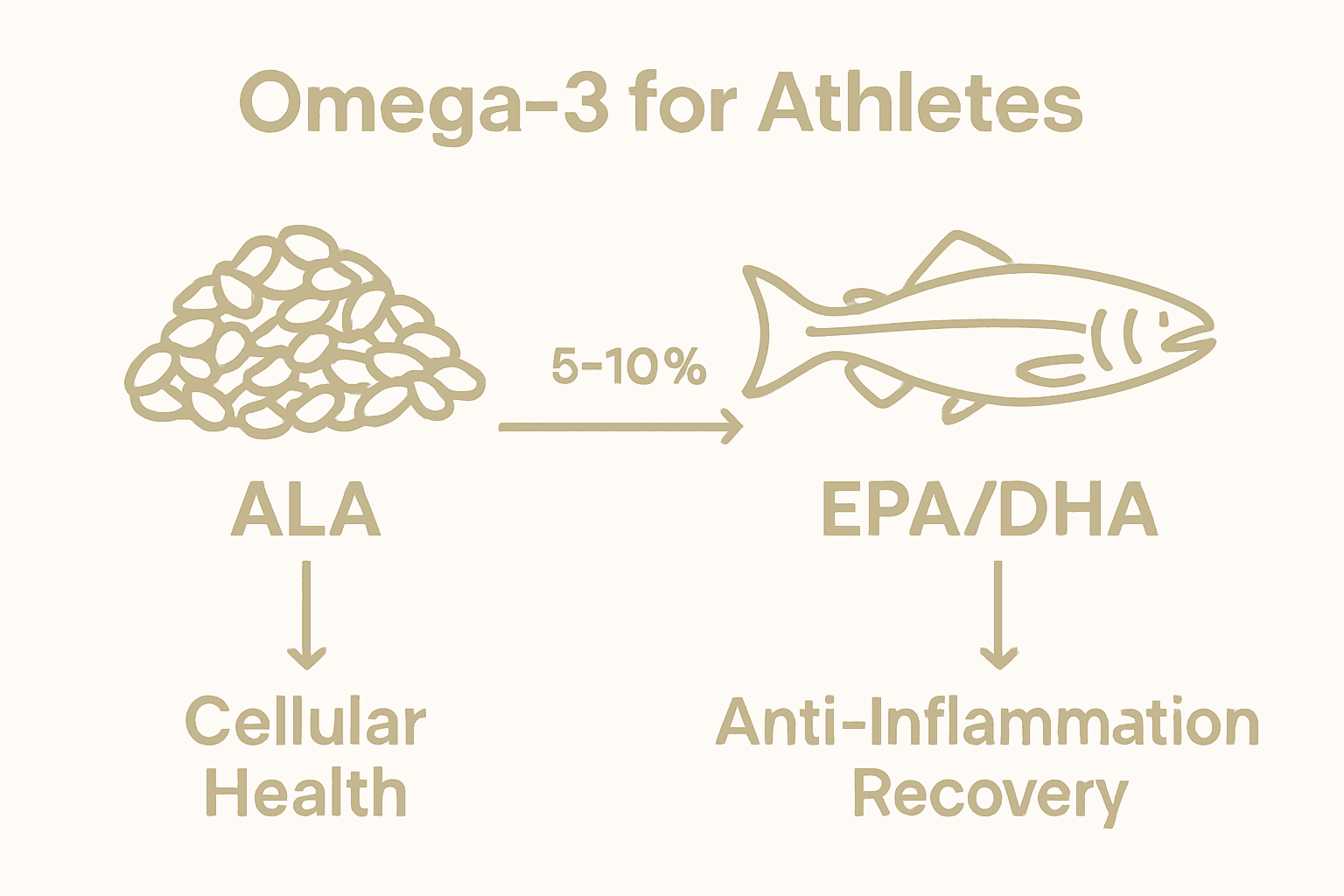
Alpha-Linolenic Acid (ALA) serves as a plant-based omega-3, predominantly found in sources like flaxseeds, chia seeds, and walnuts. While ALA is considered an essential fatty acid, athletes should understand its limited conversion rate. The human body inefficiently transforms ALA into EPA and DHA, typically converting only 5-10% into these more metabolically active forms.
 Athletic Supplements Explained: Complete Guide for 2024 highlights the importance of understanding these conversion limitations.
Eicosapentaenoic Acid (EPA) and Docosahexaenoic Acid (DHA) represent the most physiologically potent omega-3 types for athletes. Sourced primarily from marine environments like fatty fish, algae, and fish oil supplements, these fatty acids directly support inflammation management, cardiovascular function, and cellular membrane health. EPA demonstrates remarkable anti-inflammatory properties, potentially accelerating muscle recovery and reducing exercise-induced muscle damage. DHA plays a crucial role in neurological function, supporting cognitive performance and potentially enhancing reaction times and mental clarity.
For athletes seeking optimal omega-3 supplementation, understanding these distinctions becomes paramount. The #nutribliss approach recommends a comprehensive strategy that combines diverse omega-3 sources, ensuring a balanced intake of ALA, EPA, and DHA. By strategically incorporating these fatty acids, athletes can potentially optimize their nutritional protocol, supporting enhanced performance, faster recovery, and long-term physiological resilience.
How Omega‑3 Enhances Athletic Performance
Omega-3 fatty acids are a powerful nutritional tool that can dramatically transform an athlete’s performance, recovery, and overall physiological resilience. These essential fatty acids work through complex metabolic pathways to support multiple aspects of athletic excellence, extending far beyond simple nutritional supplementation.
At the cellular level, omega-3s play a critical role in inflammation management and recovery optimization. By modulating inflammatory responses, these fatty acids help athletes reduce exercise-induced muscle damage and accelerate healing processes. The anti-inflammatory properties of EPA and DHA can potentially decrease muscle soreness, minimize recovery time, and support more consistent training intensity. 7 Essential Supplements to Enhance Performance Naturally highlights the importance of strategic supplementation in athletic nutrition.
Beyond inflammation control, omega-3s contribute significantly to cardiovascular and neurological performance. These fatty acids enhance membrane fluidity in red blood cells and muscle tissues, potentially improving oxygen transportation and nutrient delivery. Additionally, DHA’s role in neurological function can support cognitive aspects of athletic performance, including reaction times, mental clarity, and strategic decision-making during high-pressure competitive scenarios.
The #nutribliss approach recognizes omega-3s as a multifaceted performance enhancer.
Athletes can experience comprehensive benefits ranging from reduced muscle inflammation and faster recovery to improved cardiovascular efficiency and neurological responsiveness. By strategically incorporating omega-3 sources into their nutritional protocol, athletes can potentially unlock a more refined, resilient physiological state that supports consistent high-level performance across various athletic disciplines.
Omega‑3 Benefits For Recovery And Inflammation
Athletes face constant physiological challenges that demand rapid recovery and precise inflammation management, making omega-3 fatty acids a critical nutritional strategy for optimal performance. These powerful compounds offer a sophisticated approach to supporting the body’s natural healing and adaptation processes, targeting inflammation at its cellular roots.
The anti-inflammatory mechanisms of omega-3s are particularly remarkable in athletic contexts. EPA and DHA work to modulate inflammatory responses by reducing pro-inflammatory cytokines and increasing specialized pro-resolving mediators (SPMs), which actively help terminate inflammatory processes. This targeted approach can potentially decrease muscle soreness, minimize exercise-induced muscle damage, and accelerate recovery timelines. Omega-3 Fatty Acids: Everything You Need to Know underscores the nuanced role these fatty acids play in metabolic regulation.
Beyond immediate recovery support, omega-3s contribute to long-term physiological resilience. By supporting cellular membrane health and reducing chronic low-grade inflammation, these fatty acids help athletes maintain consistent training intensity and reduce injury risk. The omega-3 pathway interacts with multiple physiological systems, potentially enhancing immune function, supporting joint health, and promoting more efficient muscle protein synthesis.
The #nutribliss approach recognizes omega-3s as more than just a supplement—they’re a strategic performance optimization tool. Athletes can experience comprehensive benefits that extend from immediate post-exercise recovery to long-term physiological adaptation. By understanding and strategically incorporating omega-3 sources, athletes can potentially unlock a more refined approach to managing inflammation, supporting tissue repair, and maintaining peak physical condition across diverse athletic disciplines.
Optimal Dosage And Supplement Timing
Navigating the precise omega-3 supplementation strategy requires a nuanced understanding of dosage, absorption, and individual physiological needs. Athletes must approach omega-3 intake as a strategic protocol, recognizing that one-size-fits-all recommendations fail to capture the complexity of individual metabolic responses.
Research provides critical guidance for optimal supplementation. According to academic research, a daily intake of 1-2 grams of EPA and DHA combined represents an effective baseline for athletes. Timing becomes equally crucial, with evidence suggesting that consuming omega-3 supplements with meals can significantly enhance nutrient absorption. How to Manage Supplement Intake Naturally for Best Results further emphasizes the importance of strategic supplementation timing.
Individual factors play a profound role in determining optimal omega-3 dosage. Athletes must consider variables such as body composition, training intensity, existing inflammatory status, and specific performance goals. Some athletes might require higher doses during intense training periods, while others may need more modest supplementation. The key is personalization—understanding that omega-3 needs can fluctuate based on training cycles, recovery demands, and individual metabolic efficiency.
The #nutribliss approach advocates for a dynamic, responsive supplementation strategy. By combining scientific research with individual metabolic insights, athletes can develop a precise omega-3 protocol that supports inflammation management, recovery optimization, and long-term physiological resilience. Consulting with nutritional professionals can help fine-tune dosage recommendations, ensuring that omega-3 supplementation becomes a targeted, performance-enhancing tool rather than a generic nutritional add-on.
Risks, Safety, And Supplement Quality
Athletes navigating the omega-3 supplement landscape must approach their choices with a critical eye, understanding that supplement quality and safety are paramount to protecting their health and performance potential. Not all omega-3 supplements are created equal, and the nuances of selection can significantly impact both efficacy and potential risks.
Supplement Regulation Explained: Ensuring Safe Choices emphasizes the importance of rigorous selection. According to academic research, omega-3 supplements are generally safe, but high doses may increase bleeding risk and potentially interact with certain medications. Consumer research from the Office of Dietary Supplements highlights potential side effects like gastrointestinal discomfort, underscoring the need for careful, informed supplementation.
Key considerations for selecting high-quality omega-3 supplements include verifying third-party testing, checking for heavy metal contamination, and understanding extraction methods. Athletes should prioritize supplements that demonstrate:
- Molecular distillation for purity
- Transparent sourcing information
- Independent laboratory certification
- Clear concentration of EPA and DHA
The #nutribliss approach advocates for a comprehensive evaluation of omega-3 supplements. Beyond basic safety, athletes must consider individual health profiles, potential medication interactions, and personal physiological responses. Consulting healthcare professionals can provide personalized guidance, ensuring that omega-3 supplementation becomes a strategic tool for performance enhancement rather than a potential health risk.
Unlock Your Peak Performance with Omega-3 Nutritional Support
Athletes know the challenges of managing inflammation, accelerating recovery, and maintaining mental clarity during intense training cycles. This guide shows how critical it is to include the right balance of EPA and DHA to reduce muscle soreness, support cardiovascular health, and enhance neurological function. If you’ve been searching for a scientifically grounded way to reach your athletic goals while protecting your body, omega-3 supplementation is a game-changer.

Explore top-quality omega-3 supplements and other performance-enhancing products at Nutribliss.us. Every formula is designed with purity and potency in mind to help you recover faster and train harder. Visit our Complete Guide to Athletic Supplements to understand how combining omega-3s with other essential nutrients can transform your regimen. Don’t wait for injuries or burnout to slow you down. Take control of your performance and recovery today by shopping at Nutribliss.us and start fueling your future.
Frequently Asked Questions
What are omega-3 fatty acids and why are they important for athletes?
Omega-3 fatty acids are essential polyunsaturated fats that cannot be produced by the body and must be obtained through diet or supplements. They play a crucial role in inflammation management, cardiovascular health, and cell membrane integrity, which are vital for athletic performance and recovery.
What are the different types of omega-3 fatty acids, and how do they benefit athletes?
The three primary types of omega-3s are alpha-linolenic acid (ALA), eicosapentaenoic acid (EPA), and docosahexaenoic acid (DHA). ALA is found in plant sources, while EPA and DHA, sourced from fatty fish and algae, offer more direct benefits for inflammation management, faster recovery, and improved cognitive function.
How do I determine the optimal dosage of omega-3s for my athletic needs?
A daily intake of 1-2 grams of combined EPA and DHA is recommended for athletes, but individual factors such as body composition, training intensity, and specific performance goals should be considered. Consulting with a healthcare professional can help tailor the dosage to your unique needs.
Are there any risks associated with omega-3 supplementation?
While omega-3 supplements are generally safe, high doses may increase the risk of bleeding and interact with certain medications. It is important to choose high-quality supplements, verify third-party testing, and consult with healthcare professionals to mitigate potential risks.