

Achieving optimal wellness feels overwhelming with countless supplements, conflicting advice, and unclear strategies flooding the market. Most people struggle to separate evidence-based approaches from marketing hype, leaving them frustrated and stuck in ineffective routines. This guide cuts through the noise with scientifically validated strategies for 2026, covering daily habits that leverage your biology, personalized supplement selection, and actionable steps to transform your wellness journey. You’ll learn exactly how to optimize energy, performance, and recovery using proven methods tailored to your unique needs.
Table of Contents
- Understanding The Science Behind Daily Wellness Rhythms
- Preparing And Choosing Supplements Wisely For 2026 Wellness Goals
- Executing Your Wellness Optimization Plan: Practical Steps And Supplement Recommendations
- Verifying Progress And Troubleshooting Common Wellness Optimization Challenges
- Explore NutriBliss Science-Based Wellness Solutions
- Frequently Asked Questions
Key takeaways
| Point | Details |
|---|---|
| Morning light sets your rhythm | Exposure to sunlight within 30 minutes of waking triggers hormonal cascades that regulate energy and sleep timing naturally. |
| Personalization beats generic plans | Evidence shows individualized supplement protocols outperform one-size-fits-all approaches by addressing your specific biology and goals. |
| Strategic supplements enhance performance | Caffeine at 3-6 mg/kg, beta-alanine, and amino acids demonstrate proven benefits for power output and fatigue reduction. |
| Avoid melatonin dependency | Regular melatonin use creates tolerance and disrupts dopamine levels, affecting mood and motivation the following day. |
Understanding the science behind daily wellness rhythms
Your body operates on precise biological clocks that govern everything from hormone release to cellular repair. Light exposure serves as the primary zeitgeber, the environmental cue that synchronizes your internal systems to the 24-hour day. When morning sunlight triggers hormone changes that set wakefulness and sleep timing over 15-16 hours, you’re harnessing millions of years of evolutionary programming.
This process begins the moment photons hit specialized cells in your retina. Within minutes, your brain releases cortisol and adrenaline to boost alertness and energy. Simultaneously, a countdown begins. Approximately 15 to 16 hours after this morning light exposure, your pineal gland starts producing melatonin, the hormone that prepares your body for sleep. This elegant system requires consistency to function optimally.
Disrupting this rhythm with irregular light patterns confuses your biological clock. Late-night screen time, inconsistent wake times, or staying indoors all day sends mixed signals that degrade sleep quality and daytime energy. The solution lies in deliberate light exposure patterns that reinforce your natural cycles.
Implementing morning sunlight exposure takes just 10 to 15 minutes outdoors within an hour of waking. Cloudy days still provide sufficient light intensity, though you may need slightly longer exposure. This simple habit enhances alertness, improves mood, and sets the foundation for restorative sleep later. Pairing this practice with personalized nutrition health supplements creates a comprehensive approach to wellness optimization.
Key practices for circadian alignment:
- Get outside within 30 minutes of waking, even on overcast days
- Aim for 10-15 minutes of direct sunlight exposure without sunglasses
- Repeat afternoon light exposure to reinforce the signal
- Dim lights 2-3 hours before bed to support melatonin production
- Maintain consistent wake and sleep times, even on weekends
Pro Tip: If you wake before sunrise, use bright artificial lights until natural light becomes available, then transition outdoors to anchor your circadian rhythm properly.
Preparing and choosing supplements wisely for 2026 wellness goals
The supplement industry floods consumers with products claiming miraculous results, yet most supplements do not work as advertised. Generic protocols fail because human biology varies dramatically between individuals. Your genetics, training status, diet quality, and specific goals determine which supplements provide genuine benefits versus expensive placebo effects.
Research confirms that supplement efficacy varies highly by type, sport, and individual characteristics. A supplement that enhances endurance performance may do nothing for strength athletes. Dosing matters enormously, with many products containing subtherapeutic amounts that couldn’t possibly produce effects. This reality demands a critical, evidence-based approach to supplement selection.
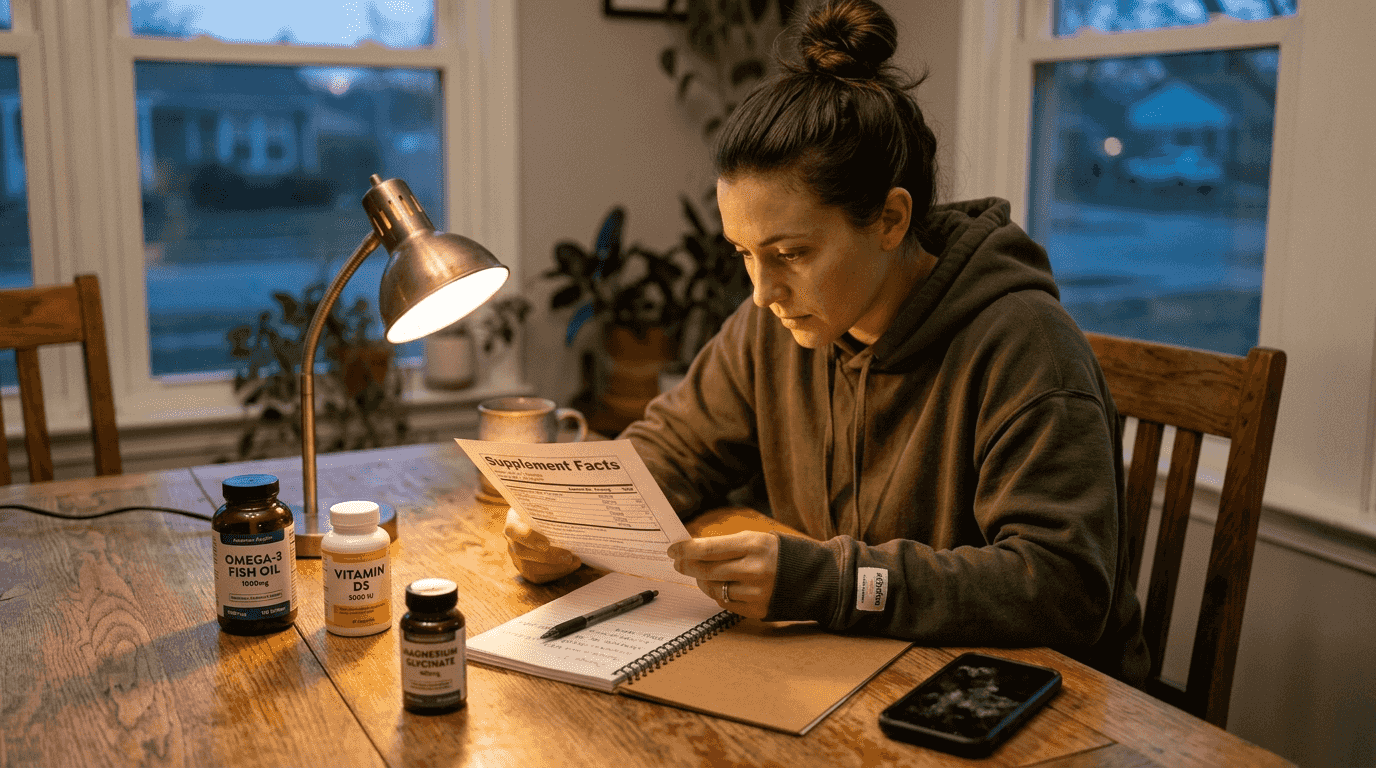
Before adding any supplement, examine the research quality supporting its use. Look for peer-reviewed studies, not testimonials or marketing materials. Check if studies used doses matching what’s in the product. Verify whether research subjects resembled your demographics and activity level. This investigative work separates effective interventions from wallet-draining disappointments.
Understanding supplement cycling prevents tolerance and dependency issues. Many compounds lose effectiveness with continuous use as your body adapts. Strategic breaks restore sensitivity and maintain benefits long term. The supplement selection process optimal results requires planning both usage periods and rest phases.
Critical evaluation criteria for supplements:
- Demand evidence from multiple independent studies, not single papers
- Verify dosages match research-proven effective amounts
- Check for third-party testing certifications ensuring purity
- Assess whether benefits justify cost compared to dietary optimization
- Research potential interactions with medications or other supplements
| Supplement Type | Evidence Level | Best Use Case | Common Pitfall |
|---|---|---|---|
| Caffeine | Strong | Pre-workout energy and power | Tolerance with daily use |
| Beta-alanine | Strong | Endurance and fatigue delay | Tingling sensation misunderstood |
| Amino acids | Moderate | Recovery and muscle preservation | Overpriced compared to food |
| Probiotics | Emerging | Gut health and immunity | Strain-specific effects ignored |
| Melatonin | Limited | Jet lag only | Dependency and mood disruption |
Pro Tip: Start with one supplement at a time, maintaining consistent doses for 4-6 weeks to accurately assess individual response before adding another variable.
Many athletes and fitness enthusiasts skip this preparation phase, stacking multiple supplements simultaneously without baseline measurements. This approach makes identifying what actually works impossible. Methodical testing, combined with knowledge from how to cycle supplements naturally athletes, produces superior long-term results.
Executing your wellness optimization plan: practical steps and supplement recommendations
Transforming knowledge into results requires a structured daily routine integrating evidence-based practices. Your morning sets the tone for the entire day. Wake at a consistent time, immediately expose yourself to bright light, and time your first caffeine dose strategically. Most people consume coffee too early, blunting natural cortisol peaks and creating afternoon crashes.
Wait 90 to 120 minutes after waking before consuming caffeine. This delay allows your natural cortisol awakening response to complete, maximizing both morning alertness and caffeine’s later benefits. When you do consume caffeine, research shows caffeine improves power output and technical performance at 3-6 mg/kg doses. For a 70 kg person, that’s 210-420 mg, roughly 2-4 cups of coffee.
Beta-alanine and amino acids deserve special attention for active individuals. Studies confirm beta-alanine and amino acids show proven benefits for exercise tolerance and fatigue prevention. Beta-alanine works through muscle carnosine buffering, requiring consistent daily dosing of 3-6 grams for 4-6 weeks to saturate muscle stores. The characteristic tingling sensation is harmless and indicates the supplement is active.
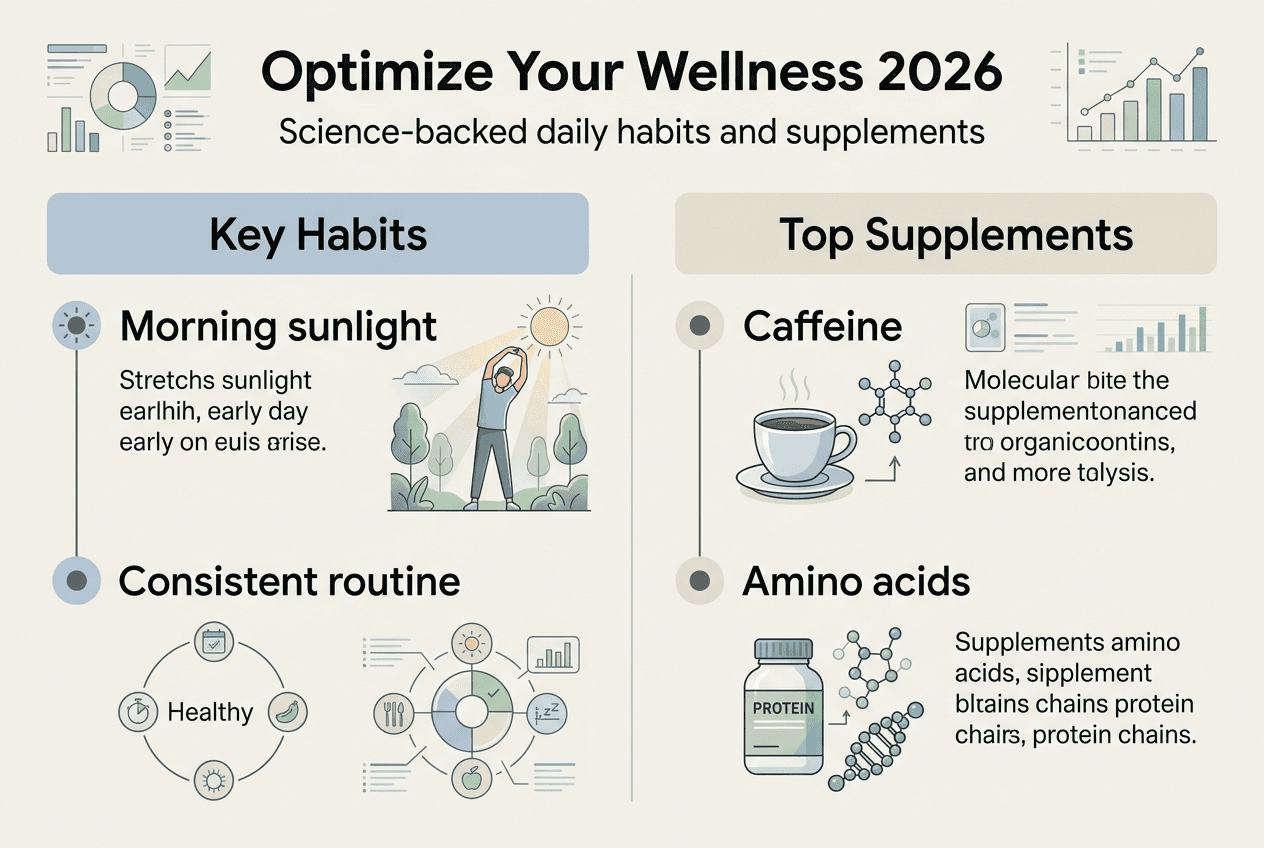
Amino acid supplementation becomes valuable when training volume is high or dietary protein intake falls short. Branch-chain amino acids and essential amino acid blends preserve muscle during intense training phases. However, whole food protein sources remain superior for most people. Supplements fill gaps, they don’t replace foundational nutrition.
Step-by-step daily optimization routine:
- Wake at consistent time and immediately get 10-15 minutes of outdoor light exposure
- Wait 90-120 minutes, then consume caffeine dose based on body weight and tolerance
- Take beta-alanine with breakfast if using for endurance or high-intensity training
- Schedule training session 60-90 minutes after caffeine consumption for peak performance
- Consume protein and carbohydrates within 2 hours post-workout for recovery
- Dim lights 2-3 hours before target bedtime to support natural melatonin production
- Maintain cool, dark sleeping environment and consistent sleep schedule
Evidence-based supplement timing and dosing:
- Caffeine: 3-6 mg/kg body weight, 60-90 minutes before training
- Beta-alanine: 3-6 grams daily, split into 2-3 doses with meals
- Essential amino acids: 10-15 grams around training if dietary protein is insufficient
- Probiotics: 10-20 billion CFU with breakfast for gut health support
- Vitamin D: 2000-4000 IU daily if blood levels are deficient
| Time of Day | Action | Purpose | Duration |
|---|---|---|---|
| Upon waking | Outdoor light exposure | Circadian rhythm anchoring | 10-15 min |
| 90-120 min post-wake | Caffeine consumption | Enhanced alertness and performance | Single dose |
| With breakfast | Beta-alanine, probiotics | Muscle buffering, gut health | Daily |
| Pre-workout | Caffeine peak timing | Maximize training performance | 60-90 min window |
| Post-workout | Protein and carbs | Recovery and adaptation | Within 2 hours |
| Evening | Light dimming | Melatonin production support | 2-3 hours pre-bed |
Avoid falling into the melatonin trap that ensnares many wellness seekers. While it seems logical to supplement a sleep hormone, melatonin is not recommended for regular use due to dependency and mood effects. Your body reduces natural production when you supplement consistently, creating a vicious cycle. Additionally, melatonin suppresses dopamine the following day, degrading motivation and mood.
Pro Tip: Track your supplement timing, doses, and subjective responses in a simple log to identify patterns and optimize your personal protocol over weeks.
Building an effective supplement stack requires understanding synergies and avoiding redundancies. The 7 essential supplements for athletes provides a foundation, while supplements to enhance performance naturally explores advanced options. Learning how to build supplement stack guide prevents common mistakes like excessive stimulant combinations or conflicting ingredients.
Verifying progress and troubleshooting common wellness optimization challenges
Measuring wellness optimization requires both subjective and objective markers. Track your energy levels throughout the day using a simple 1-10 scale at consistent times. Monitor sleep quality by noting how rested you feel upon waking and whether you’re sleeping through the night. Performance metrics like training volume, intensity, and recovery speed provide concrete feedback on whether your strategies are working.
Common mistakes derail even well-intentioned optimization efforts. Over-reliance on supplements while ignoring sleep, nutrition, and stress management produces minimal results. Supplements amplify a solid foundation, they cannot compensate for poor lifestyle habits. Another frequent error involves chasing too many interventions simultaneously, making it impossible to identify what’s actually contributing to improvements.
When progress stalls, systematically adjust one variable at a time. If energy remains low despite morning light exposure, examine your sleep duration and quality. Poor sleep undermines every other optimization effort. If supplements aren’t producing expected benefits, verify you’re using research-supported doses and allowing sufficient time for effects to manifest. Beta-alanine, for example, requires 4-6 weeks of consistent use before performance benefits appear.
Troubleshooting framework for common challenges:
- Low energy despite interventions: Assess sleep duration, quality, and consistency first
- Poor sleep quality: Review evening light exposure, room temperature, and caffeine cutoff time
- Minimal supplement effects: Verify dosing matches research, allow adequate loading time
- Afternoon crashes: Adjust morning caffeine timing and ensure adequate protein at meals
- Training performance plateau: Examine recovery adequacy, nutrition timing, and training program design
Progress verification checklist:
- Measure subjective energy levels at wake, midday, and evening for 2 weeks
- Track sleep onset time, wake times, and perceived sleep quality daily
- Record training performance metrics relevant to your goals weekly
- Photograph physique changes monthly if body composition is a goal
- Assess mood, motivation, and stress levels to catch negative supplement effects
- Review and adjust supplement doses based on response every 4-6 weeks
Safety considerations demand attention, particularly regarding supplement interactions and excessive dosing. Combining multiple stimulants can stress your cardiovascular system and disrupt sleep. High-dose fat-soluble vitamins accumulate in tissues and can reach toxic levels. Always research potential interactions between supplements and any medications you take. When in doubt, consult healthcare providers familiar with sports nutrition and supplementation.
Research consistently demonstrates that individualized, evidence-based approaches yield better supplementation outcomes than generic protocols. Your response to interventions depends on genetics, training history, diet quality, stress levels, and dozens of other factors. What works optimally for one person may produce minimal effects or side effects in another.
The key to sustainable wellness optimization lies not in finding the perfect supplement stack, but in building systems that align your daily habits with your biological design while strategically using evidence-based supplements to enhance results.
Regular refinement separates temporary improvements from lasting transformation. Schedule monthly reviews of your protocols, examining what’s working and what needs adjustment. Stay current with emerging research through reputable sources, but maintain healthy skepticism toward preliminary findings. The personalized nutrition health supplements landscape evolves constantly, and adaptability serves you well.
Understanding supplement dosage workflow peak performance prevents both underdosing and excessive intake. Many people take too little to produce effects or too much, wasting money and risking side effects. Following research-validated protocols and adjusting based on personal response creates the optimal middle path.
Explore NutriBliss science-based wellness solutions
NutriBliss builds every product on rigorous scientific research, not marketing trends or unsubstantiated claims. Our formulations use doses proven effective in peer-reviewed studies, ensuring you get genuine results rather than expensive placebo effects. Whether you’re optimizing recovery, enhancing performance, or supporting overall wellness, our collections provide targeted solutions backed by evidence.

Explore the science behind our approach to understand how we select ingredients and determine optimal dosing. Discover the science behind superfoods to learn which nutrient-dense compounds actually deliver measurable benefits. For athletes seeking competitive advantages, the science of athlete recovery performance page details how our specialized formulations accelerate adaptation and reduce fatigue. Your wellness journey deserves supplements that work as hard as you do.
Frequently asked questions
Is melatonin safe for daily use to improve sleep in 2026?
Melatonin is generally not recommended for regular, long-term use due to dependency risks and mood effects. Long-term melatonin use can create dependency and lower next-day dopamine levels, affecting mood and motivation. Short-term use for jet lag or occasional sleep disruptions may be acceptable under guidance, but it should not become a nightly routine. Focus instead on optimizing natural melatonin production through light exposure patterns and sleep hygiene.
What are the most effective supplements to improve athletic performance in 2026?
Caffeine, beta-alanine, amino acids, and probiotics show strong evidence for improving performance and reducing fatigue. Caffeine at 3-6 mg/kg enhances power output and technical skills. Beta-alanine buffers muscle acidity during high-intensity efforts. Essential amino acids support muscle preservation and recovery when dietary protein is insufficient. Personalized dosing based on body weight, training status, and individual response enhances benefits while reducing side effects.
How can I personalize my supplement plan for better results?
Consult research and expert guidance to select supplements suited to your specific goals and biology. Individualized, evidence-based supplementation strategies outperform generic protocols in effectiveness. Monitor your responses carefully and adjust dosage or cycling patterns accordingly. Use resources like personalized nutrition health supplements articles and work with qualified professionals to make informed decisions. Testing one variable at a time allows accurate assessment of what actually works for your unique physiology.
How long does it take to see results from wellness optimization strategies?
Timelines vary by intervention type and individual factors. Morning light exposure improves alertness within days and sleep quality within 1-2 weeks. Caffeine effects appear within 30-60 minutes of consumption. Beta-alanine requires 4-6 weeks of consistent dosing to saturate muscle stores and produce performance benefits. Body composition changes typically become noticeable after 4-6 weeks of consistent nutrition and training. Track multiple metrics to capture improvements across different timeframes and avoid premature conclusions about effectiveness.
Recommended
- How to Set Wellness Goals for Better Health Results
- How to Start a Wellness Journey Naturally for Lasting Health
- How to Create Supplement Schedule for Optimal Wellness
- How to Build a Wellness Stack for Personalized Results
- Cómo progresar en calistenia en Madrid en 2026: guía completa
- Relaxmechanismen voor Ouderen 2026: 61% Minder Vallen – Finlandic