

Hydrolyzed whey protein (WPH) is whey that has been partially pre-digested through enzymatic hydrolysis, breaking intact protein chains into shorter peptide fragments before you ever open the container. The practical verdict: it absorbs slightly faster than whey isolate in the first hour after ingestion, but for most healthy adults training normally, that speed edge rarely translates into meaningfully better muscle growth or strength. Where WPH genuinely earns its place is narrower than the marketing suggests.
Three situations where WPH makes real sense:
- Clinical or infant formulas where reduced allergenicity and faster gastric emptying are medically indicated
- Very early post-exercise feeding in tightly controlled protocols where every minute of the absorption window is being optimized
- Specific medical guidance from a registered dietitian or physician for people with malabsorption conditions or gastrointestinal surgery recovery
For everyone else, a quality whey protein isolate gets the job done at a lower cost per gram.
Key Takeaways
Hydrolyzed whey protein absorbs faster in the first hour, but total daily protein and leucine per serving matter more than protein form for most healthy adults.
| Point | Details |
|---|---|
| WPH definition | Pre-digested whey with partially cleaved peptide bonds; absorbs faster but costs more than isolate. |
| Early amino acid peak | Hydrolysate raises plasma essential amino acids roughly 28% higher in the first 60 minutes vs. isolate, but integrated MPS over several hours is often similar. |
| Anabolic window is overstated | Muscle repair occurs over 24–72 hours; marginal absorption speed rarely changes long-term hypertrophy outcomes. |
| Label-reading priority | Check protein per serving, first ingredient, and sweetener count; DH is rarely disclosed but heavy flavoring signals higher hydrolysis. |
| Nutribliss approach | Transparent protein-per-serving labeling and recovery-focused formulations; browse the supplement collection to compare against your label checklist. |
This article is general information, not a substitute for advice from a qualified doctor. Consult a qualified healthcare professional about your own circumstances before acting on anything here.
Table of Contents
- What is hydrolyzed whey protein and how is it made?
- How does WPH compare to whey concentrate and isolate?
- What does the research actually show about muscle gain and recovery?
- How does hydrolysis change the way protein behaves in food and drinks?
- Is hydrolyzed whey protein safe, and who should be cautious?
- How to read a hydrolyzed whey label before you buy
- The anabolic window, translational gaps, and what the evidence actually justifies
- The Nutribliss perspective on hydrolyzed whey
- Nutribliss protein supplements worth exploring
- Sources
What is hydrolyzed whey protein and how is it made?
WPH starts life as either whey protein concentrate (WPC) or whey protein isolate (WPI), both byproducts of cheese manufacturing. The hydrolysis step is what separates it from those two forms. Here is the production sequence:
- Source whey collection: Liquid whey is separated from cheese curds during dairy processing.
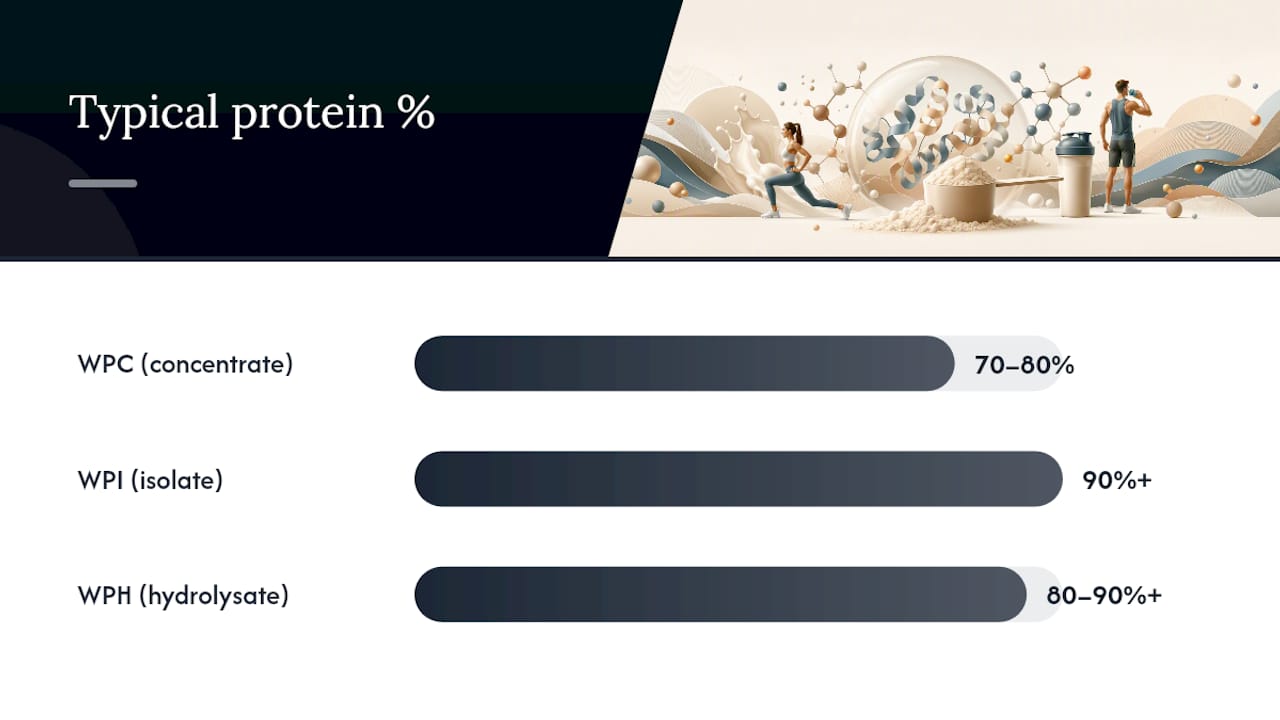
- Concentration or isolation: The liquid is filtered into WPC (typically 70–80% protein) or WPI (typically 90%+ protein) before hydrolysis begins.
- Enzymatic hydrolysis: Proteases, including trypsin, pepsin, and microbial proteases such as Bacillus subtilis-derived enzymes, are added under controlled pH, temperature, and time conditions to cleave peptide bonds. Enzymatic hydrolysis is the dominant industrial method because it preserves amino acid integrity better than acid hydrolysis, which can destroy certain residues.
- Enzyme inactivation: Heat treatment stops the reaction at the target degree of hydrolysis.
- Filtration and drying: The hydrolysate is filtered to remove large undigested fragments, then spray-dried into powder.
What degree of hydrolysis actually means
Degree of hydrolysis (DH) is the percentage of peptide bonds cleaved relative to the total bonds in the original protein. The exact DH values vary depending on the process, which determines properties like peptide size, solubility, and bitterness. It sounds like a minor technical detail, but DH determines almost everything about the final product: peptide size, solubility, bitterness, and how the powder behaves in a beverage or formula.
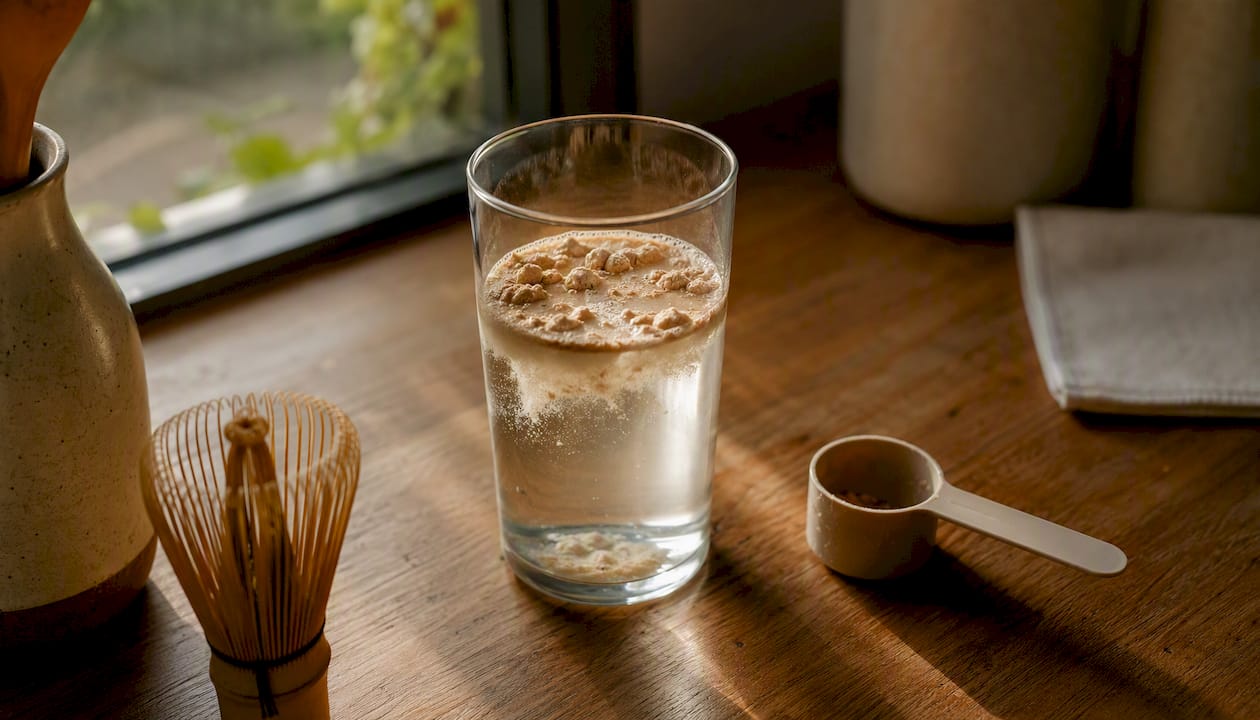
Experimental hydrolysis research confirms that higher enzyme concentration and longer incubation time both push DH upward, producing more small peptides within 30 minutes but also raising bitterness risk sharply.
The degree of hydrolysis influences peptide size, solubility, and bitterness risk, with lower hydrolysis having larger peptides and less bitterness, and higher hydrolysis producing smaller peptides and higher bitterness; these factors guide typical uses in supplements and medical nutrition.
One practical problem: DH is almost never printed on consumer supplement labels. Manufacturers control it tightly during production, but they rarely disclose it. Many products also add sweeteners or flavors post-hydrolysis specifically to mask bitterness, which can undermine the “clean label” goal some buyers have. A 2025 review noted that palatability and bitter taste remain among the most common limitations of WPH products.
How does WPH compare to whey concentrate and isolate?
The three main whey forms sit on a spectrum of processing intensity and cost. Understanding where each lands helps you spend money where it actually matters.
| Form | Typical Protein % | Lactose Content | Relative Absorption Speed | Typical Cost (per lb) | Best For |
|---|---|---|---|---|---|
| WPC (concentrate) | 70–80% | Moderate (3–8%) | Baseline | Lowest | Budget training, lactose-tolerant adults |
| WPI (isolate) | 90%+ | Very low (<1%) | Faster than WPC | Moderate | Lactose-sensitive, lean-phase diets |
| WPH (hydrolysate) | 80–90%+ | Very low to none | Fastest (first 60 min) | Highest | Clinical use, narrow timing protocols |
Short recommendations by audience:
- Budget trainees: WPC delivers excellent results at the lowest cost per gram. The modest lactose content is fine for most people.
- Lactose-sensitive athletes: WPI is the practical default. It removes nearly all lactose without the price premium of hydrolysis.
- Clinical cases or post-surgical recovery: WPH, under clinician guidance, where faster gastric emptying and reduced allergenicity matter.
- Timed post-workout protocols: WPH may offer a marginal edge in the first hour, but only if total daily protein is already dialed in.
One caveat worth knowing: some products labeled “hydrolyzed” are blends of WPI and a small percentage of WPH, not fully hydrolyzed protein. The first ingredient on the label tells you which form dominates. If “whey protein concentrate” appears before any hydrolysate, you are mostly buying concentrate with a hydrolysis marketing claim attached.
What does the research actually show about muscle gain and recovery?
The honest one-sentence answer: WPH raises early plasma essential amino acids faster than isolate, but integrated muscle protein synthesis over several hours is often indistinguishable between the two.
Tracer-study syntheses report that hydrolysate raises early plasma essential amino acids roughly 28% higher in the first 60 minutes compared with isolate, but integrated muscle protein synthesis over several hours can be indistinguishable between forms.
That early spike sounds compelling. The problem is that muscle protein synthesis is not a 60-minute event. It unfolds across hours, and the total leucine and amino acid delivery over that window matters more than the peak speed.
Key human trial evidence:
- An 8-week randomized trial in 56 resistance-trained men found WPH reduced fat mass compared to placebo, but showed no clear advantage over other whey forms for strength or lean mass gains. The authors called for more mechanistic research before drawing firm conclusions.
- Mechanistic human studies show WPH can activate mTORC1 signaling and stimulate amino-acid transport into muscle at small doses, sometimes matching or slightly exceeding intact whey acutely. Long-term hypertrophy outcomes, however, tend to converge when total protein intake is matched.
- A 2016 human study comparing WPH products with DH ranging from 23–48% found only small differences in plasma amino acid appearance rates between them, suggesting endogenous gut processes may override modest DH differences.
Limitations of the current evidence:
- Most trials use small samples (under 60 participants) and short durations (6–12 weeks).
- Products differ in DH, source protein (WPC vs. WPI), and enzyme mix, making cross-study comparisons unreliable.
- Confounders like total daily protein intake and training volume often swamp any hydrolysis effect.
- Few studies control for leucine content per serving, which is a stronger predictor of MPS than protein form.
The practical takeaway: if your total daily protein is at or above your target and you are hitting a leucine threshold per meal (roughly 2–3 grams), switching from isolate to hydrolysate is unlikely to move the needle on hypertrophy. For post-workout recovery timing, the form matters less than consistency.
How does hydrolysis change the way protein behaves in food and drinks?
Hydrolysis does more than speed up digestion. It physically changes how the protein interacts with water, fat, and other ingredients, which is why WPH shows up in beverages, infant formulas, and clinical nutrition products far more than in standard gym supplements.
Functional changes from enzymatic hydrolysis:
- Improved solubility across a wider pH range: Smaller peptides stay in solution more easily, which matters for acidic sports drinks where intact whey would precipitate.
- Better emulsification: Hydrolysates can stabilize oil-water interfaces, useful in ready-to-drink formulas.
- Water binding: Relevant for texture in food manufacturing.
- Altered gelation and foaming: Hydrolysis generally reduces gel strength and foam stability compared to intact whey, which can be a drawback in some food applications.
The bitterness issue deserves a direct explanation. When proteases cleave peptide bonds, they expose hydrophobic amino acid residues (leucine, isoleucine, valine, phenylalanine) that bind to bitter taste receptors. The higher the DH, the more of these residues are exposed. Research confirms that enzyme choice and hydrolysis conditions largely determine how bitter the final product becomes, and that extensive hydrolysis consistently raises bitterness risk.
Pro Tip: When evaluating a hydrolyzed whey product, check whether the first few ingredients after the protein source include sucralose, acesulfame potassium, or multiple natural flavors. Heavy sweetener use is often a sign the manufacturer is compensating for significant bitterness, which typically correlates with a higher DH and more aggressive hydrolysis.
Is hydrolyzed whey protein safe, and who should be cautious?
For healthy adults without dairy allergies, WPH is generally safe at standard serving sizes. The safety picture gets more nuanced for specific groups.
On allergenicity: Hydrolysis can reduce IgE-mediated binding to whey proteins, which is why partially hydrolyzed formulas are used in some infant nutrition contexts. However, this reduction is not complete or guaranteed. People with a diagnosed cow’s milk protein allergy should not assume WPH is safe without explicit clinician guidance. The degree of hydrolysis matters, and most consumer supplements do not disclose it.
Common side effects and GI complaints:
- Bitterness and poor palatability, especially at higher DH
- Bloating or loose stools if the product contains high doses of artificial sweeteners (osmotic effect)
- Nausea in sensitive individuals taking large servings on an empty stomach
Groups who should consult a physician or registered dietitian before using WPH:
- Infants and young children (formula selection requires medical oversight)
- Anyone with a diagnosed cow’s milk protein allergy or severe lactose intolerance
- People recovering from gastrointestinal surgery or with malabsorption conditions
- Individuals on medications that interact with high protein intake (certain renal or hepatic conditions)
For a broader look at whey protein side effects and tolerance considerations, the Nutribliss resource covers common adverse reactions and who is most at risk.
How to read a hydrolyzed whey label before you buy
Most WPH products do not disclose DH, so you have to read between the lines. Here is a practical checklist:
Label checklist:
- Protein per serving: Look for at least 20–25 grams per serving. Anything lower suggests heavy filler or low protein density.
- Protein-by-difference %: Divide grams of protein by total serving weight. A 30g scoop with 24g protein is 80% protein density, which is reasonable for WPH.
- First ingredient: Should read “hydrolyzed whey protein isolate” or “hydrolyzed whey protein concentrate.” If concentrate appears first and hydrolysate appears later, the hydrolysis content is likely minor.
- Sweeteners and flavorings: Multiple sweeteners (sucralose + acesulfame K) suggest significant bitterness masking, implying higher DH.
- “Partially hydrolyzed” language: More transparent than vague “hydrolyzed” claims; indicates the manufacturer is at least acknowledging the process is incomplete.
- DH disclosure: Rare, but present on some clinical-grade products. If listed, a DH of 5–10% is typical for sports supplements; above 15% is clinical territory.
Indirect DH clues when the label doesn’t say:
Price is the bluntest signal. WPH costs more to produce than WPI, so a “hydrolyzed” product priced at or below isolate prices is almost certainly a blend or a low-DH product with minimal hydrolysis. Aggressive sweetening and heavy vanilla or chocolate flavoring are the other tells.
Price-per-gram calculation: Divide the total protein in the container (grams) by the price. A 2 lb bag with 30 servings at 24g protein each contains 720g of protein. At $60, that is $0.083 per gram. Compare that to a quality WPI at $45 for the same protein content ($0.063/g). The WPH premium is real; decide whether your use case justifies it.
Buyer profiles, ranked:
- Clinically indicated users: WPH under dietitian or physician guidance, prioritizing DH disclosure and minimal additives.
- Lactose-sensitive athletes: WPI is the better default. Lower cost, nearly identical performance for most training goals.
- Budget-conscious trainees: WPC, full stop. Spend the savings on food quality or training consistency.
The anabolic window, translational gaps, and what the evidence actually justifies
The “anabolic window” concept, the idea that protein consumed within 30–60 minutes post-workout triggers uniquely superior muscle growth, has been one of the strongest marketing arguments for WPH. The evidence does not support the urgency.
A review published in Nutrition & Metabolism concluded that muscle repair occurs over 24–72 hours, making the marginal absorption speed advantage of hydrolysates seldom decisive for training outcomes in healthy adults.
The mechanistic story is more interesting than the outcome story. WPH does activate mTORC1 signaling and leucine transport in muscle tissue. But those mechanistic signals have not consistently translated into superior hypertrophy or strength in controlled chronic training studies when total protein is matched between groups.
Practical recommendations based on the current evidence:
- Prioritize total daily protein first. For most adults engaged in resistance training, hitting 0.7–1.0 grams per pound of bodyweight daily matters far more than protein form.
- Hit the leucine threshold per meal. Roughly 2–3 grams of leucine per serving is the more reliable trigger for MPS than absorption speed.
- Consider WPH only for narrow cases. Clinically indicated malabsorption, very early post-exercise feeding in elite protocols, or specific medical advice.
- Demand DH transparency. Products that disclose DH are more trustworthy than those that do not, per the 2025 review by Tang et al.
Research gaps that still need filling: standardized DH reporting across products, consistent enzyme and incubation disclosure, and longer-duration trials (beyond 12 weeks) with matched leucine intakes. Until those exist, cross-study comparisons remain difficult and practitioner guidance should lean on leucine-per-serving and protein-per-serving as the primary selection criteria.
The Nutribliss perspective on hydrolyzed whey
At #nutribliss, the view on hydrolyzed whey is straightforward: it is a real technology with real but narrow advantages, and the supplement industry has oversold it to a much broader audience than it genuinely serves. The evidence supports WPH for specific clinical and performance contexts. For the majority of fitness-focused consumers, a transparent, high-quality isolate delivers equivalent long-term outcomes at a lower cost. What matters most is knowing what is actually in the product, which is why Nutribliss prioritizes clear ingredient labeling and protein-per-serving transparency across its supplement line.
Nutribliss protein supplements worth exploring

If you have worked through the label checklist above and want a protein supplement built around the same transparency principles, Nutribliss approaches its protein products with a few non-negotiables: declared protein density, minimal unnecessary additives, and formulations grounded in recovery science rather than marketing trends.
- Protein-per-serving and leucine content are front-and-center, not buried in a proprietary blend
- Formulated with post-workout recovery in mind, consistent with the timing evidence discussed above
- No therapeutic claims, just honest specs you can compare against the checklist in this article
Browse the full Nutribliss supplement collection to find options that match your training goals and budget. If you want to understand the science behind the formulations, the Nutribliss science page walks through the evidence framework the brand uses to select and evaluate ingredients.
Sources
- Resistance-trained men trial: WPH effects on body composition and performance (PubMed entry)
- Chemical Properties of Whey Protein in Protein Powders and Its Impact on Muscle Growth in Athletes: A Review - Chuande Tang, Teli Xi, Junjian Zheng, Xuemei Cui, 2025