

TL;DR:
- Whey protein isolate is a high-purity supplement containing at least 90% protein, with minimal lactose and fat. It rapidly stimulates muscle protein synthesis by delivering a leucine-rich dose of 25 to 35 grams, especially when spaced across meals. Beyond muscle building, WPI supports blood sugar regulation, antioxidant defenses, and preserves lean mass during calorie deficits.
Most people grab a protein powder off the shelf without thinking much about what separates a whey protein isolate from a standard concentrate or a plant-based blend. That label confusion costs results. Whey protein isolate benefits go well beyond simply hitting a daily protein number. When you understand what whey protein isolate actually is, what it does inside your body, and how to use it correctly, you stop guessing and start making real progress on muscle recovery, body composition, and overall nutrition quality.
Table of Contents
- Key takeaways
- What whey protein isolate actually is
- Muscle recovery and protein synthesis benefits
- Benefits beyond muscle: what else WPI does for your body
- How to use WPI effectively in your routine
- My take on WPI and what most people get wrong
- Nutribliss WPI: built for the results you are after
- FAQ
Key takeaways
| Point | Details |
|---|---|
| Purity sets WPI apart | Whey protein isolate contains at least 90% protein with minimal lactose and fat after advanced filtration. |
| Leucine threshold matters | A 30 g serving of WPI delivers roughly 3 g of leucine, which is what your muscles need to fully activate protein synthesis. |
| Recovery goes beyond muscle | WPI also supports blood sugar control, antioxidant defense, and lean mass preservation during a calorie deficit. |
| Dose distribution beats big boluses | Spreading 20 to 40 g doses every 3 to 4 hours produces better muscle signaling than one large post-workout scoop. |
| Product quality varies widely | Some protein powders contain up to 23 g of added sugar per serving, which can work directly against your fitness goals. |
What whey protein isolate actually is
The term “whey powder” gets used loosely in fitness circles, and it leads to real confusion. Whey itself is the liquid byproduct of cheese production. That liquid contains a mix of proteins, lactose, fat, and water. To turn it into a usable supplement, manufacturers filter and dry it. The filtration method determines what you end up with.
Whey protein concentrate (WPC) goes through basic filtration and typically delivers 70 to 80% protein by weight, with the remaining calories coming from fat and carbohydrates including lactose. Whey protein isolate takes that process further. Through microfiltration or ion exchange, the isolate is refined until it reaches at least 90% protein with significantly reduced lactose and fat. That extra step is not marketing fluff. It changes the product’s digestibility, caloric density, and suitability for people with lactose sensitivity.
Here is how the main protein types compare:
| Protein Type | Protein % | Lactose Level | Digestion Speed | Best Use |
|---|---|---|---|---|
| Whey Protein Isolate | 90%+ | Very low | Fast | Post-workout, lactose sensitivity |
| Whey Protein Concentrate | 70–80% | Moderate | Fast | General use, budget-conscious |
| Casein | 70–80% | Moderate | Slow | Before sleep, sustained release |
| Plant-Based (Pea/Rice) | 70–85% | None | Moderate | Vegan, dairy-free diets |
Casein and plant-based proteins serve valid purposes, but neither matches WPI for rapid amino acid delivery. For anyone asking what is whey protein isolate specifically useful for, the short answer is: situations where you need clean, fast-absorbing, high-purity protein without a heavy lactose load.
Muscle recovery and protein synthesis benefits
This is where the science gets genuinely interesting. Eating protein triggers muscle protein synthesis, but not all protein sources trigger it equally. The key variable is leucine, a branched-chain amino acid that acts as a molecular switch for muscle building. Your muscles need you to clear what researchers call the leucine threshold, roughly 2.5 to 3 g per meal, before they fully activate anabolic signaling. A standard 30 g serving of WPI typically delivers about 3 g of leucine, clearing that threshold reliably.
Here is the practical sequence of events after you take WPI:
- WPI dissolves quickly and enters the small intestine within minutes of consumption.
- Amino acids, including leucine, flood the bloodstream rapidly, raising plasma amino acid levels faster than slower-digesting proteins.
- Elevated leucine signals the mTOR pathway inside muscle cells, turning on the machinery responsible for repair and growth.
- Muscle protein synthesis remains elevated for roughly 90 to 120 minutes post-ingestion.
- Recovery from training-induced damage accelerates, and you reduce the muscle soreness window between sessions.
The research on lean mass preservation is equally compelling. A clinical trial found that whey protein supplementation during caloric restriction preserved skeletal muscle mass when protein intake was raised from 0.8 to 1.5 g per kilogram of body weight daily. That matters enormously if you are cutting weight for a sport or trying to reduce body fat without sacrificing the muscle you have built.
You can explore more on how these mechanisms play out over the training cycle in this muscle protein synthesis explainer from the Nutribliss blog.

Pro Tip: Do not save all your protein for one post-workout shake. Distributing 20 to 40 g doses every 3 to 4 hours across the day keeps leucine levels high enough to sustain muscle protein synthesis more effectively than a single large bolus.
Benefits beyond muscle: what else WPI does for your body
People in fitness circles tend to reduce the “what does whey protein do for your body” question to one answer: builds muscle. The reality is broader. WPI has documented effects on blood sugar control, oxidative stress, and body composition that matter whether you train five days a week or three.
Blood sugar control. WPI consumed before or alongside a carbohydrate meal reduces postprandial glucose spikes by stimulating insulin and incretin hormone release. For anyone managing energy levels across a training day or trying to avoid the crash after a high-carb meal, this is a concrete benefit most protein powders simply do not get credit for.
Antioxidant support. Intense exercise increases oxidative stress markers in muscle tissue. WPI contains cysteine-rich peptides that serve as glutathione precursors, raising your cells’ antioxidant defenses. Glutathione is the body’s primary intracellular antioxidant, and getting more precursor material in is one of the most direct ways nutrition can support recovery at the cellular level.
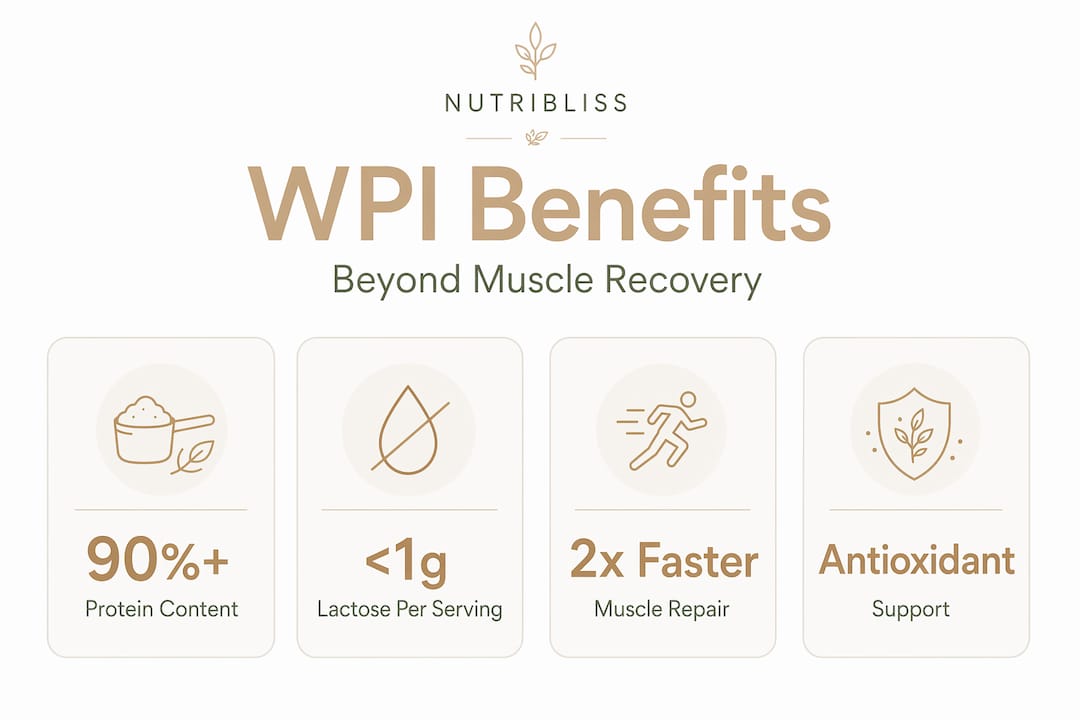
Body composition during a cut. As noted earlier, preserving lean mass during a caloric deficit is one of WPI’s best-documented advantages. Higher protein intake from WPI keeps muscle tissue protected when calories are reduced. Without adequate protein, a calorie deficit pulls from both fat and muscle, which leaves you lighter but weaker.
Bone and immune support. The relationship here is more indirect. Maintaining muscle mass through adequate protein intake reduces fall risk and supports bone density over time, particularly in older adults. Some research also points to immunoglobulins and lactoferrin in whey as mild immune modulators, though these are present in larger amounts in concentrate than isolate due to filtration.
What does whey do across all these pathways? It provides a concentrated, rapidly available source of amino acids and bioactive peptides that the body puts to use well beyond simple muscle repair.
How to use WPI effectively in your routine
Knowing what whey protein isolate is good for is half the equation. The other half is using it in a way that actually delivers those benefits instead of just adding calories.
- Dose size. Aim for 25 to 35 g per serving to reliably cross the leucine threshold. Going below 20 g frequently means weaker anabolic signaling. Going much higher than 40 g in one sitting does not proportionally increase muscle synthesis and may add unnecessary calories.
- Timing. Post-workout is the most studied window, but distributing intake across meals throughout the day is likely more effective for total daily muscle protein synthesis than back-loading everything after training.
- Product selection. Some protein powders contain up to 23 g of added sugar per serving and can contribute over 1,200 calories when consumed in volume. Always check the nutrition label for added sugars, artificial fillers, and actual protein percentage per serving.
- Lactose considerations. WPI has very low lactose compared to concentrate, but it is not always completely lactose-free. If you have a diagnosed lactose intolerance rather than a mild sensitivity, look for products that carry third-party testing verification for lactose levels. Those with a milk protein allergy (as opposed to lactose intolerance) should consult a physician before using any whey product.
- Whole food context. WPI is a supplement, not a meal replacement. Use it to fill gaps in your protein intake after accounting for what you get from eggs, meat, fish, dairy, and legumes. The benefits of whey protein stack best when layered on a solid whole-food base.
Pro Tip: If your goal is fat loss with muscle preservation, front-load protein at breakfast and post-workout rather than relying on a shake at the end of the day when your body is winding down. Early protein distribution supports better muscle retention across the full 24-hour recovery cycle.
My take on WPI and what most people get wrong
I have worked in fitness nutrition long enough to see the same misconceptions repeat themselves. The biggest one is treating protein supplementation as a volume game. More scoops equals more muscle. That logic falls apart when you understand the leucine threshold concept.
In my experience, the shift that produces the best outcomes is moving from “how much protein am I eating today” to “am I clearing the leucine threshold at each meal?” That reframe changes what you buy, when you eat, and how you structure your nutrition around training.
The other thing I consistently see is people buying a product labeled “whey protein” without checking whether it is an isolate, a concentrate, or a blend. Manufacturers are not required to break that down prominently. You have to look at the nutrition panel and ingredient list yourself. A product with 15 g of protein per scoop and 8 g of added sugar is not the same tool as a clean 30 g WPI shake, regardless of what the front of the tub says.
I also think the supplement industry undersells WPI’s role in blood sugar management and antioxidant support. These benefits matter to athletes and casual gym-goers alike. If you are going to use a protein supplement consistently, knowing it is doing multiple jobs across your physiology makes the habit easier to maintain.
The real principle: WPI works best as part of a holistic nutrition and training strategy, not as a shortcut around one. No supplement compensates for inconsistent training or a calorie intake that does not match your goals.
— GAURAV
Nutribliss WPI: built for the results you are after

At Nutribliss, the formulation philosophy starts with one question: does the science back it up? That is exactly why the Nutribliss Whey Isolate was developed to deliver the protein purity, leucine content, and clean ingredient profile this article describes. No unnecessary fillers. No hidden sugars undermining your cut. Just a product you can use with confidence.
If you want to see the full range of products and understand the research behind each formulation, the full supplement collection is a good place to start. And if you want to dig into the science behind how Nutribliss approaches ingredient quality, the science page lays it out clearly.
Use #nutribliss when you share your progress. The community is full of people using WPI the right way, and real results are worth showing.
FAQ
What is whey protein isolate?
Whey protein isolate is a high-purity form of whey protein produced through microfiltration or ion exchange, yielding at least 90% protein with minimal lactose and fat per serving.
What does whey isolate do for muscle recovery?
WPI rapidly elevates plasma amino acid levels post-ingestion, triggering muscle protein synthesis by clearing the leucine threshold, which accelerates repair after training-induced muscle damage.
Is whey protein isolate better than concentrate?
For people with lactose sensitivity or those who need a higher protein-to-calorie ratio, WPI is the stronger choice. Concentrate works well for general use but contains more lactose and fewer protein grams per scoop.
Can WPI help with fat loss?
Yes. Research shows that higher protein intake from whey during caloric restriction preserves lean muscle mass, which supports a better body composition outcome compared to losing both fat and muscle.
How much whey protein isolate should you take per serving?
Aim for 25 to 35 g per serving to reliably supply the roughly 3 g of leucine needed to fully activate muscle protein synthesis, and distribute doses every 3 to 4 hours throughout the day.