

TL;DR:
- Post workout whey protein is the most studied supplement for muscle recovery and growth, triggering muscle protein synthesis through high leucine content and rapid digestion. Consuming 20–40 grams within 1–2 hours of training maximizes anabolic response, though total daily protein intake is more important than precise timing. Whey isolate is the fastest-absorbing form, ideal post-workout, while combining whey with carbs enhances recovery; consistency in daily protein targets is key.
Post workout whey protein is the most studied and consistently effective supplement for muscle recovery and growth after resistance training. Consuming 20–40 grams within 1–2 hours of your session triggers muscle protein synthesis at a rate no other protein source reliably matches. Whey earns its gold standard status because of its complete amino acid profile, rapid digestion, and uniquely high leucine content. Whether you train at 6 a.m. or hit the gym after work, understanding how whey works and how to use it correctly is the difference between recovering well and recovering optimally. Nutribliss (#nutribliss) is built around exactly this kind of science-backed supplementation.
How does post workout whey protein aid muscle recovery and growth?
Whey protein triggers muscle repair through a specific biochemical chain reaction. The process starts with leucine, and whey protein contains roughly 11% leucine content, which is higher than virtually every other protein source. That leucine directly activates the mTOR signaling pathway, the cellular switch that tells your muscles to start building new tissue.
Speed matters here. Whey digests and absorbs in 15–30 minutes, which means amino acids reach your bloodstream fast. Casein, by contrast, releases amino acids slowly over several hours. Plant proteins like pea or rice protein digest at moderate speeds but deliver lower leucine per gram. For muscle protein synthesis after hard training, whey’s combination of speed and leucine density is unmatched.
The recovery benefits extend beyond muscle building:
- Reduced soreness: Whey protein post-exercise reduces markers of muscle damage and perceived soreness, helping you train again sooner.
- Faster tissue repair: The rapid amino acid spike supports repair of micro-tears caused by resistance training.
- Immune support: Whey contains immunoglobulins and lactoferrin, which support immune function that intense training can temporarily suppress.
- Nitrogen retention: Adequate protein intake keeps your body in a positive nitrogen balance, a prerequisite for net muscle gain.
Pro Tip: If you train fasted or skip pre-workout food, prioritize your post-workout shake even more. Your muscles are running on empty and the leucine spike from whey is the fastest way to flip the anabolic switch.
What is the optimal timing and dosage for whey protein post-workout?
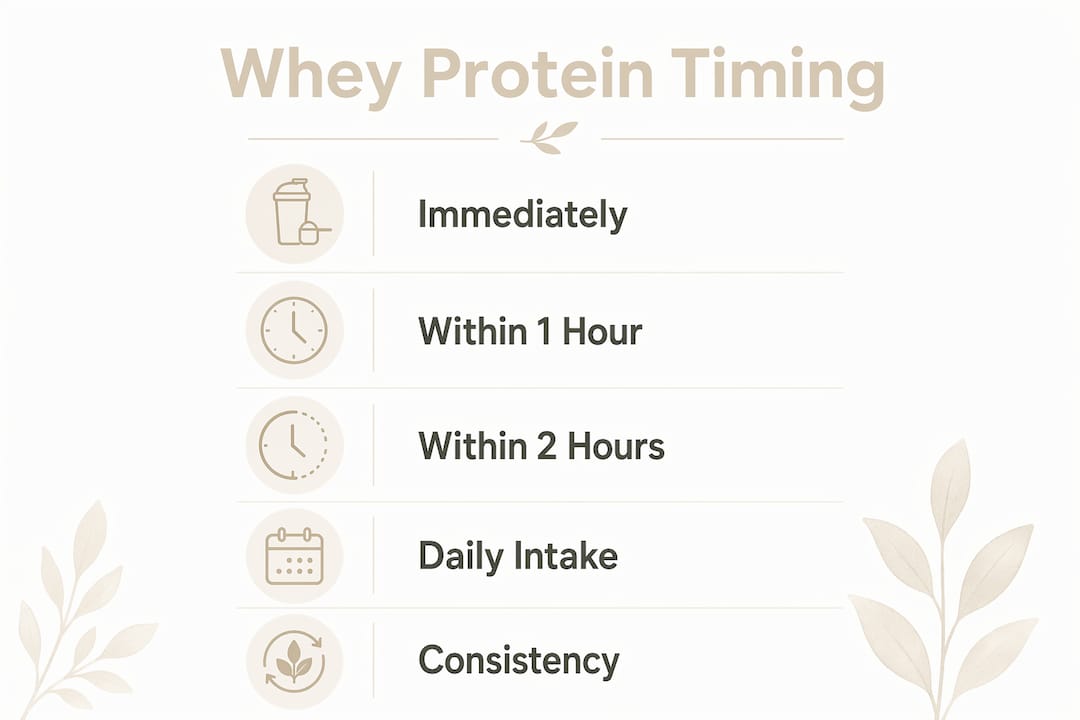
The 30-minute anabolic window is a myth. Research confirms that consuming whey within 1–2 hours post-workout is sufficient to maximize muscle protein synthesis. You do not need to sprint to your shaker the moment you rerack the bar.
Here is a practical, evidence-based framework for timing and dosage:
-
Dose 20–40 grams per serving. This range covers most athletes and gym-goers. A typical effective serving of 20–40 grams produces a strong anabolic response. Some research has examined doses up to 100 grams for prolonged anabolic effects, but for most people training 4–5 days per week, 25–35 grams is the practical sweet spot.
-
Consume within 2 hours of finishing your session. If you ate a protein-rich meal 1–2 hours before training, your window is even more flexible. If you trained fasted, aim for the earlier end of that range.
-
Prioritize total daily protein above all else. Total daily protein intake of 1.6–2.2 grams per kilogram of body weight governs muscle growth more than any timing detail. A 180-pound (82 kg) athlete targeting hypertrophy needs roughly 131–180 grams of protein per day. That number matters more than whether you drank your shake at 45 minutes or 90 minutes post-workout.
-
Spread protein across 3–5 meals. Research consistently shows that distributing protein intake across the day, rather than loading it all at once, produces better muscle protein synthesis over 24 hours.
-
Adjust for training intensity. After a heavy leg day or a long endurance session, lean toward the higher end of the dosage range. After a moderate upper-body session, 20–25 grams is adequate.
The practical takeaway: total protein consistency matters far more than chasing a precise post-workout minute. Build the habit of hitting your daily target, and the timing details will take care of themselves.
How to choose the best type of whey protein for post-workout use
Not all whey is the same. The three main forms differ in protein concentration, digestion speed, lactose content, and price.

| Type | Protein per 100g | Digestion speed | Lactose content | Best for |
|---|---|---|---|---|
| Whey concentrate | 70–80% | Moderate | Moderate | Budget-conscious athletes, no lactose issues |
| Whey isolate | 90%+ | Fast (15–30 min) | Very low | Post-workout priority, lactose sensitivity |
| Whey hydrolysate | 90%+ | Fastest | Very low | Elite athletes, rapid absorption priority |
Whey protein isolate contains over 90% protein with minimal carbs and fats, and it digests very rapidly. This makes it the top choice for post-workout use when speed of absorption is the goal. It also suits anyone with lactose sensitivity, since most of the lactose is removed during processing.
Whey concentrate is a solid choice if your budget is tighter or if you have no digestive issues with dairy. The slightly lower protein percentage and higher fat content are not meaningful drawbacks for most gym-goers. You can read more about isolate vs. concentrate benefits to decide which fits your training goals.
Whey hydrolysate is pre-digested, meaning it absorbs the fastest of all three. The trade-off is cost and taste. Hydrolysates are often more expensive and can taste bitter. For most recreational athletes, isolate delivers nearly the same speed at a better price.
Pro Tip: Check the label for protein per serving, not just the serving size. A 35-gram scoop with only 20 grams of protein is mostly filler. Look for products where protein accounts for at least 75–80% of the serving weight.
How to integrate whey protein into your nutrition and training routine
Knowing the science is one thing. Building a system that actually works in your daily life is another. Here is how to do it without overcomplicating your nutrition.
Assess your daily protein needs first
Calculate your target using body weight. For general fitness, aim for 1.2–1.6 grams per kilogram. For muscle gain, target 1.6–2.2 grams per kilogram. Once you know your number, audit your current diet to see how much of that you are already hitting through whole foods like chicken, eggs, Greek yogurt, and cottage cheese. Whey fills the gap, not the whole picture.
Pair whey with carbohydrates post-workout
Carbohydrates spike insulin, and insulin drives amino acids into muscle cells more efficiently. A post-workout recovery drink that combines 25–30 grams of whey with 40–60 grams of fast-digesting carbs (banana, white rice, or a sports drink) produces a stronger anabolic response than protein alone. This combination is especially useful after high-volume training or endurance work where glycogen depletion is significant.
Avoid these common mistakes
- Relying on whey as your only protein source. Whole foods provide fiber, micronutrients, and slower-digesting proteins that whey cannot replace.
- Ignoring total daily intake. Drinking a post-workout shake but eating too little protein the rest of the day will not produce meaningful muscle gain.
- Skipping protein on rest days. Muscle protein synthesis continues for 24–48 hours after training. Rest days still require adequate protein.
- Choosing flavor over quality. A great-tasting product with a poor amino acid profile is a poor investment. Always check the nutrition label.
Build a simple weekly plan
A practical approach for a 175-pound (79 kg) athlete targeting muscle gain looks like this: 3 whole-food protein meals per day averaging 35–40 grams each, plus one post-workout whey shake at 30 grams. That totals roughly 135–150 grams of protein daily, landing squarely in the hypertrophy range. For athletes focused on performance and recovery, this structure is both practical and effective.
Key takeaways
Post workout whey protein drives muscle recovery through leucine-triggered mTOR signaling, and total daily protein intake of 1.6–2.2 g/kg/day determines long-term muscle growth more than any single timing decision.
| Point | Details |
|---|---|
| Timing window is flexible | Consuming whey within 1–2 hours post-workout is sufficient; the 30-minute window is a myth. |
| Dose 20–40 grams per serving | This range covers most athletes and produces a strong anabolic response after training. |
| Isolate is best post-workout | Whey isolate absorbs fastest and suits those with lactose sensitivity due to its 90%+ protein content. |
| Total daily intake governs growth | Hit 1.6–2.2 g/kg/day consistently; timing is secondary to this daily protein target. |
| Pair with carbs for better results | Combining whey with fast-digesting carbs post-workout amplifies the insulin-driven amino acid uptake. |
What I have learned from years of watching athletes get this wrong
Here is the uncomfortable truth about post-workout protein: most people obsess over the wrong variable. I have watched athletes time their shakes to the minute while consistently eating 80 grams of protein per day total. That is like fine-tuning the carburetor on a car with no fuel in the tank.
The anabolic window research is real, but its practical significance is small compared to the impact of hitting your daily protein target. Whey protein is a tool, and like any tool, it only works when the rest of the job is being done. Resistance training and adequate rest are non-negotiable. Whey fills the dietary gap; it does not replace the work.
What I have found actually works is this: build a protein routine that is consistent enough to survive a bad week. If your post-workout shake requires a blender, three ingredients, and a 10-minute cleanup, you will skip it on hard days. A simple shaker bottle with a quality isolate and water takes 90 seconds. That consistency, repeated over months, is where the real gains come from.
I also think the whey versus plant protein debate is overblown for most gym-goers. Whey wins on leucine density and absorption speed, full stop. If you tolerate dairy, there is no compelling reason to choose a slower, lower-leucine option for your post-workout window. Save the plant proteins for other meals if you prefer them.
— GAURAV
Get your recovery right with Nutribliss

Nutribliss offers a full range of whey protein supplements formulated for athletes and gym-goers who take recovery seriously. Every product in the Nutribliss lineup is built on the same science covered in this guide: high leucine content, clean ingredient profiles, and formulations that actually fit into a real training schedule. If you want to understand exactly what goes into each formula, the science behind Nutribliss superfoods breaks down the research behind every key ingredient. Whether you are looking for a fast-absorbing isolate or a complete post-workout recovery drink, Nutribliss has options worth exploring.
FAQ
How much whey protein should I take after a workout?
The recommended range is 20–40 grams per serving after training. Larger athletes or those doing high-volume sessions can lean toward the upper end of that range.
Is whey protein better than other proteins for post-workout recovery?
Whey protein is the gold standard for recovery due to its high leucine content and rapid absorption rate. It stimulates muscle protein synthesis more effectively than casein, soy, or pea protein per gram consumed.
Does the timing of my protein shake really matter?
Timing matters less than most people think. Consuming whey within 2 hours of your workout is sufficient, and total daily protein intake has a far greater impact on muscle growth than the exact post-workout minute.
What is the difference between whey isolate and whey concentrate?
Whey isolate contains over 90% protein with very low lactose and fat, making it faster to digest. Whey concentrate contains 70–80% protein and is a cost-effective option for those without lactose sensitivity.
Can I build muscle without whey protein supplements?
Yes, but whey protein makes it significantly easier to hit your daily protein targets. A meta-analysis of 49 studies found that protein supplementation meaningfully increases muscle size and strength gains when combined with resistance training, especially for those not meeting daily protein needs through food alone.