

Over 70 percent of milk’s protein power often goes unnoticed, tucked away in the byproduct of cheese-making known as whey. For anyone seeking better muscle recovery or all-around nutrition, understanding whey protein is absolutely crucial. Not only does whey pack a full set of essential amino acids, but it also stands out for its fast absorption and unmatched benefits for fitness and everyday well-being. This guide unpacks what makes whey protein unique and how it could fit into your health routine.
Table of Contents
- Defining Whey Protein And Its Origins
- Types Of Whey Protein Explained
- How Whey Protein Supports Health And Fitness
- Absorption, Effectiveness, And Usage Guidelines
- Potential Side Effects And Safety Concerns
- Comparing Whey Protein With Alternative Supplements
Key Takeaways
| Point | Details |
|---|---|
| Whey Protein Composition | Whey protein is a complete protein with a rich amino acid profile, making it ideal for muscle recovery and growth. |
| Types of Whey Protein | The three primary forms of whey protein are Concentrate, Isolate, and Hydrolysate, each with distinct properties suited for different nutritional needs. |
| Healthy Integration | Timing and dosage are crucial; optimal intake is 20-25 grams within 30 minutes post-exercise for muscle recovery. |
| Monitoring Health Effects | Be mindful of potential digestive issues and allergies when incorporating whey protein, and consult with healthcare professionals for personalized advice. |
Defining Whey Protein and Its Origins
Whey protein is a remarkable nutritional powerhouse derived from milk during the cheese-making process. According to MDPI, whey represents a rich reservoir of nutrients, containing approximately 20% of milk’s total protein content.
The origins of whey protein trace back to traditional cheese production. When milk is transformed into cheese, a liquid byproduct emerges - this liquid is whey. Wikipedia explains that whey contains a complex mixture of proteins, including:
- α-lactalbumin
- β-lactoglobulin
- Serum albumin
- Immunoglobulins
These proteins aren’t just random components. They pack a serious nutritional punch. Whey is more than a cheese-making leftover - it’s a concentrated source of essential amino acids, vitamins, and minerals. For fitness enthusiasts and health-conscious individuals at #nutribliss, understanding whey protein’s composition is key to leveraging its incredible potential.
The protein composition makes whey uniquely valuable. Unlike other protein sources, whey contains a complete amino acid profile, making it a superior supplement for muscle recovery, growth, and overall nutritional support. Whether you’re an athlete, bodybuilder, or simply seeking optimal nutrition, whey protein offers a scientifically-backed solution to meet your protein requirements.
Types of Whey Protein Explained
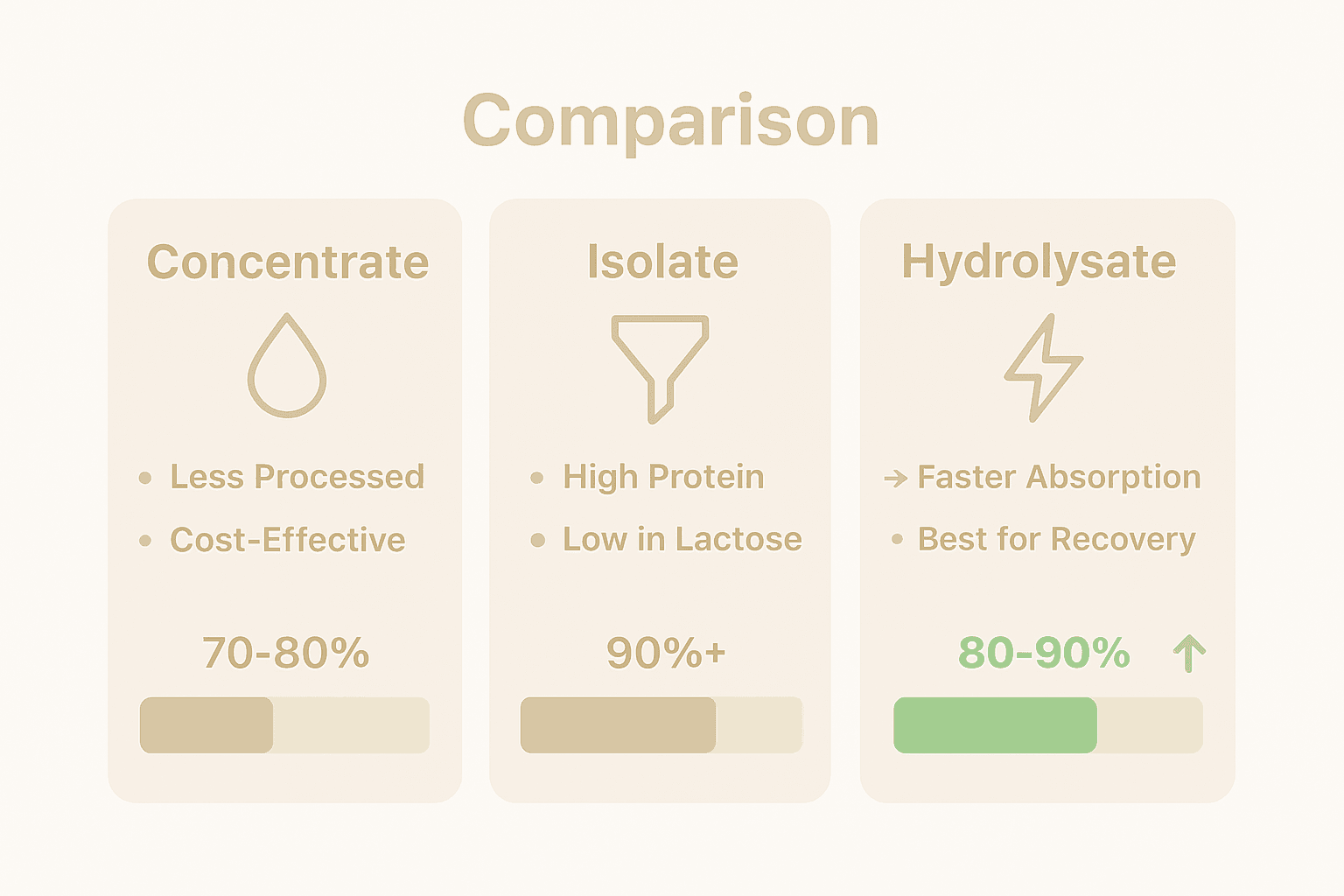
Whey protein comes in several distinct forms, each offering unique characteristics and benefits. According to Medical News Today, there are three primary types of whey protein that dominate the nutritional supplement market: whey protein concentrate (WPC), whey protein isolate (WPI), and whey protein hydrolysate (WPH).
Let’s break down these types in detail:
Whey Protein Concentrate (WPC)
- Protein content ranges between 29%–89% by dry weight
- Contains low levels of fat and carbohydrates
- Most affordable and commonly used form
- Retains more of milk’s natural nutrients
Whey Protein Isolate (WPI)
- Protein content over 90% by dry weight Wikipedia
- Lowest fat and lactose content
- Most refined and purest form of whey protein
- Ideal for individuals with strict dietary requirements
The third variant, whey protein hydrolysate (WPH), is pre-digested and partially broken down, making it the most rapidly absorbed protein type.
This makes it particularly attractive for athletes and fitness enthusiasts at #nutribliss seeking quick muscle recovery and nutrient absorption.
Understanding these variations helps you select the most appropriate whey protein for your specific fitness and nutritional goals. Whether you’re seeking muscle growth, rapid recovery, or general protein supplementation, there’s a whey protein type perfectly suited to your needs.

How Whey Protein Supports Health and Fitness
Muscle development stands at the core of whey protein’s remarkable health benefits. According to Medical News Today, whey protein is specifically designed to improve muscle protein synthesis and promote the growth of lean muscle mass. This makes it an essential supplement for athletes, fitness enthusiasts, and anyone committed to physical wellness.
Muscle Recovery and Growth
Wikipedia reveals that while consuming whey protein before exercise doesn’t directly enhance performance, it plays a crucial role in post-exercise protein recovery. By increasing the body’s free amino acid pool, whey protein accelerates muscle repair and growth processes.
Beyond muscle development, whey protein offers additional health advantages:
- Supports weight management
- Helps lower cholesterol levels
- Provides rapid nutrient absorption
- Boosts overall metabolic health
For individuals at #nutribliss seeking comprehensive nutritional support, whey protein represents more than just a supplement - it’s a strategic tool for optimizing physical performance. Whether you’re a professional athlete or someone committed to maintaining an active lifestyle, integrating whey protein can significantly contribute to your fitness and wellness goals.
To maximize benefits, consider consulting with a nutritionist or fitness professional who can help you determine the ideal whey protein type and consumption strategy tailored to your unique physiological needs and fitness objectives.
Absorption, Effectiveness, and Usage Guidelines
Protein absorption is critical to understanding whey protein’s effectiveness. According to Medical News Today, whey protein is rapidly absorbed and utilized by the body, making it particularly effective for post-exercise recovery. The key recommendation is consuming whey protein within 30 minutes after exercise to maximize muscle protein synthesis.
Optimal Consumption Strategies
For individuals at #nutribliss seeking peak performance, timing and dosage are crucial. Here are strategic guidelines for whey protein intake:
- Post-Workout Window
- Consume 20-25 grams within 30 minutes after exercise
- Helps replenish muscles and support recovery
- Accelerates protein synthesis
- Daily Protein Requirements
- Average adults: 0.8g per kilogram of body weight
- Athletes: 1.2-2.0g per kilogram
- Adjust based on individual fitness goals
Wikipedia notes that while whey protein is widely marketed with various health claims, individuals should approach supplementation thoughtfully. Those with milk allergies should be particularly cautious, as whey proteins can trigger allergic responses in sensitive individuals.
Consult with healthcare professionals to develop a personalized supplementation strategy that aligns with your specific nutritional needs, fitness objectives, and overall health profile. Remember, supplementation is most effective when integrated into a balanced diet and consistent exercise routine.
Potential Side Effects and Safety Concerns
Supplement safety requires careful consideration, especially when incorporating whey protein into your nutritional regimen. According to Medical News Today, excessive whey protein consumption may lead to several digestive complications, including cramping and nausea. These potential side effects underscore the importance of mindful supplementation.
Digestive and Allergic Reactions
Individuals with specific health conditions should exercise extra caution:
Digestive Concerns:
- Potential bloating
- Stomach discomfort
- Gas and intestinal issues
- Possible nausea
Allergy Considerations:
- Milk protein sensitivities
- Lactose intolerance risks
- Potential allergic responses
Wikipedia highlights that while whey proteins can trigger milk allergies, the primary milk allergens are actually caseins. This nuanced understanding is crucial for individuals at #nutribliss who may have complex dietary restrictions.
Before integrating whey protein into your diet, consult with healthcare professionals. Start with smaller doses, monitor your body’s response, and discontinue use if you experience any adverse reactions. Remember, individual tolerance varies, and what works for one person might not be suitable for another. Responsible supplementation means listening to your body and prioritizing your unique health needs.
Comparing Whey Protein With Alternative Supplements
Protein supplementation demands a nuanced understanding of different nutritional sources. Medical News Today highlights that whey protein stands out as a complete protein containing all essential amino acids, making it superior to many plant-based alternatives.
Comparative Analysis of Protein Supplements
Whey Protein Strengths:
- Complete amino acid profile
- Rapid absorption
- High biological value
- Excellent muscle recovery properties
Alternative Protein Options:
- Plant-based proteins (pea, hemp, rice)
- Casein protein
- Soy protein
- Egg protein
Considerations for Supplement Selection
For individuals at #nutribliss with dietary restrictions, alternative proteins become crucial. Wikipedia notes that while whey proteins can trigger milk allergies, consumers have multiple supplement options to consider.
Ultimately, the ideal protein supplement depends on individual health goals, dietary needs, and potential allergies. Plant-based proteins might be preferable for those with lactose intolerance, while athletes often prefer whey for its rapid absorption and complete amino acid profile. Consulting with nutritional experts can help you navigate these choices and select the most appropriate supplement for your specific physiological requirements.
Unlock Your Fitness Potential with Quality Whey Protein
Struggling to find the perfect whey protein that suits your workout needs and dietary preferences can feel overwhelming. This article clearly highlights the importance of choosing the right type of whey protein whether concentrate, isolate, or hydrolysate to support muscle growth, quick recovery, and overall health. If you want to avoid common pitfalls like digestive discomfort or allergies while maximizing your results, understanding these details is key.
At Nutribliss, we offer a wide range of high-quality whey protein supplements designed to meet your exact fitness and wellness goals. Whether you are an athlete looking for fast absorption or someone seeking a clean protein boost with minimal lactose, our detailed product descriptions help you make confident choices.

Explore our selection now and take control of your health journey today. Don’t wait to experience faster muscle recovery, enhanced performance, and better nutrition—visit Nutribliss and start shopping for the whey protein that works best for you.
Frequently Asked Questions
What is whey protein and where does it come from?
Whey protein is a high-quality protein derived from milk during the cheese-making process. It represents about 20% of milk’s total protein content and contains a complex mixture of proteins that are beneficial for muscle growth and recovery.
What are the different types of whey protein?
The three main types of whey protein are: 1) Whey Protein Concentrate (WPC) - contains 29%–89% protein; 2) Whey Protein Isolate (WPI) - contains over 90% protein; 3) Whey Protein Hydrolysate (WPH) - pre-digested for rapid absorption.
How does whey protein support muscle recovery?
Whey protein enhances muscle recovery post-exercise by increasing the body’s free amino acid pool, which accelerates muscle repair and growth. For optimal recovery, it is recommended to consume whey protein within 30 minutes after exercise.
Are there any side effects associated with whey protein?
Excessive consumption of whey protein may lead to digestive issues such as bloating, stomach discomfort, and nausea. Individuals with milk allergies or lactose intolerance should exercise caution and consult with healthcare professionals before use.
Recommended
- Unlocking the Power of Whey Protein – Nutribliss Inc.
- Complete Guide to the Role of Protein Supplementation – Nutribliss Inc.
- Complete Guide to Why Protein Matters – Nutribliss Inc.
- How to Use Protein Powder for Maximum Nutrition Results – Nutribliss Inc.
- 7 Essential Types of Protein Supplements Explained – MyGymSupplements