

Impact Whey Protein is a whey protein concentrate made from the liquid byproduct of cheesemaking. When enzymes curdle milk, the solid curds become cheese while the remaining liquid contains whey. That liquid gets filtered, pasteurized, and dried into the powder you scoop into your shaker. The result is a complete protein that delivers all nine essential amino acids your body cannot produce on its own, with a protein concentration in concentrate form that typically ranges from 35% to 80% depending on the processing method.
- Amino acid profile: Complete, including all nine essential amino acids
- Key amino acid: High leucine content, the primary trigger for muscle protein synthesis
- Absorption speed: Rapidly digested, with plasma amino acid levels peaking shortly after ingestion
- Common uses: Post-workout recovery, muscle building, daily protein supplementation, and cooking/baking additions
- Bioactive compounds: Contains lactoferrin, immunoglobulins, and glycomacropeptides that support immune function
What is Impact Whey Protein’s nutritional value, and why does protein matter for muscle?
Protein is the structural material of muscle. Every time you train, you create microscopic tears in muscle fibers, and your body repairs them using amino acids from dietary protein. Without adequate protein, that repair process stalls and muscle growth slows. For anyone training consistently, food alone often falls short of the daily protein target, which is where a concentrated source like Impact Whey Protein fills the gap.
Leucine sits at the center of this process. It directly activates the mTOR signaling pathway, the cellular switch that tells your muscles to start synthesizing new protein. Whey protein has a high level of branched-chain amino acids, and its leucine content is notably higher than casein or soy protein. Because whey digests quickly, plasma leucine concentrations peak shortly after ingestion, giving your muscles a fast anabolic signal right when they need it most.
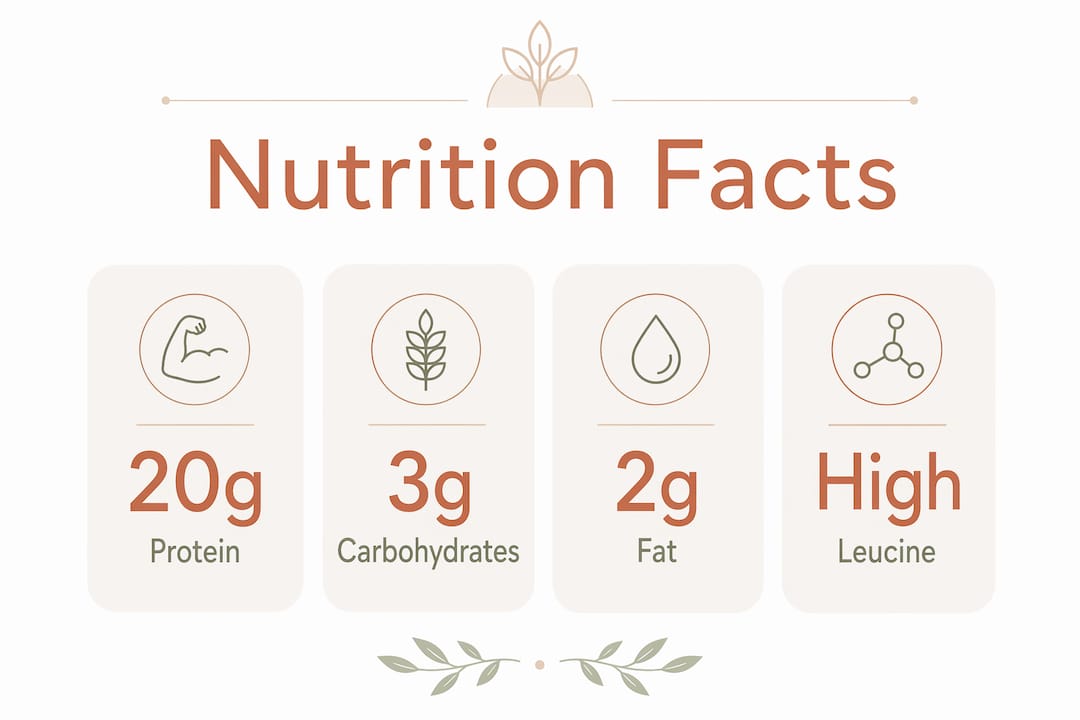
The nutritional profile of a standard Impact Whey Protein concentrate serving reflects this composition:
| Nutrient | Typical per 25g serving |
|---|---|
| Protein | 18–20g |
| Carbohydrates | 1–3g |
| Fat | 1–2g |
| Lactose | Low to moderate (varies by product) |
| Calcium | Present (from milk source) |
| Sodium | Trace amounts |
| Leucine (BCAA) | ~2g (part of BCAA content) |
The fat and carbohydrate content in concentrate is slightly higher than in isolate, but that also means it retains more of the naturally occurring bioactive compounds from milk, including immunoglobulins that support immune health.
Pro Tip: Time your Impact Whey Protein intake within 45 minutes before or immediately after resistance training. A systematic review of 21 RCTs found that consuming whey protein before multiple sets of resistance exercise can increase muscle protein synthesis by 1.3 to 2.5 times compared to exercise alone.
Key benefits of using Impact Whey Protein for muscle gain and health
The case for whey protein goes well beyond gym performance. Research consistently shows benefits across muscle, metabolism, and general health markers.
Muscle mass and strength gains. A meta-analysis of nine randomized controlled trials found that whey protein supplementation combined with resistance training produced small but statistically significant extra gains in fat-free mass, with an effect size of g=0.301. The same analysis showed positive effects on both upper and lower body maximal strength. A separate four-week randomized trial found a significant interaction between whey supplementation and muscle mass increase (p=0.033), along with improvements in isokinetic strength of the knee and shoulder joints.

Faster recovery and reduced muscle soreness. Whey’s rapid absorption means amino acids reach muscle tissue quickly after training, shortening the window between breakdown and repair.

Metabolic and cardiovascular support. Studies show that whey supplementation can reduce C-reactive protein and interleukin-6, two key inflammation markers. It also shows promise for improving insulin sensitivity, lowering blood pressure, and reducing triglyceride levels in studies lasting 12 weeks or longer.
Satiety and weight management. Protein is the most filling macronutrient. Whey in particular tends to be more satiating than casein or soy, which helps reduce overall calorie intake without feeling deprived.
Additional benefits supported by research:
- Supports lean body mass preservation during calorie restriction
- May help manage blood glucose levels, making it relevant for type 2 diabetes management
- Contributes to gut health through bioactive peptides and support for the intestinal barrier
- Provides antioxidant support by boosting glutathione production
- May help prevent age-related muscle loss (sarcopenia)
Research highlight: Whey protein supplementation combined with exercise improves muscle protein synthesis at 3–5 hours post-exercise, driven by time-dependent activation of the AKT/mTOR signaling pathway. This effect was measured across 15 studies in a systematic review and meta-analysis.
What product variants and flavors does the Impact Whey Protein range offer?
Myprotein Impact Whey Protein is the flagship product in the Impact Whey line, and it comes in a wide range of flavors and formats designed to fit different preferences and dietary needs.
The standard concentrate formula is the most popular entry point. It delivers a solid protein-per-serving ratio at a price point that makes daily use practical. For those who want a leaner profile with less fat and lactose, the Impact Whey Isolate version processes the whey further to reach approximately 90–95% protein concentration, though it loses some of the bioactive compounds present in concentrate.
Popular flavor options in the Impact Whey range include:
- Chocolate Smooth
- Vanilla Ice Cream
- Strawberry Cream
- Natural Chocolate
- Unflavored (for mixing into food or recipes)
- Salted Caramel
- Cookies and Cream
- Banana
Mixability is a consistent strength of the Impact Whey line. The powder dissolves well in water or milk with a standard shaker bottle, producing a smooth texture without clumping. Mixing with milk adds calories and casein protein, which slows digestion and extends the amino acid release window.
Dietary and allergen considerations:
- Contains milk and lactose; not suitable for those with dairy allergies
- Suitable for vegetarians (not vegans, as it is dairy-derived)
- Not suitable for those with severe lactose intolerance; the isolate variant is a better fit for that group
- Informed Sport certification is available on select products in the range, meaning they have been independently tested for banned substances
If you are comparing concentrate versus isolate within the Impact Whey line, the differences between whey forms come down to budget, lactose tolerance, and whether you prioritize pure protein density or a broader nutrient profile.
How to use Impact Whey Protein for the best results
Getting the timing and dosage right matters more than most people realize. The body can effectively use roughly 20–40 grams of protein per serving for muscle synthesis. Going above that in a single sitting does not translate to proportionally greater gains. Spreading protein intake across three to five meals throughout the day keeps muscle protein synthesis elevated more consistently than front-loading it.
Recommended usage guidelines:
- Serving size: One scoop (typically 25g powder) providing 18–20g protein
- Daily intake: Align with your total protein target, generally 1.6g per kilogram of body weight for active individuals
- Post-workout: Consume within 30–45 minutes after training for fastest delivery to muscle tissue
- Pre-workout: Taking whey 45 minutes before multiple sets of resistance exercise may extend the anabolic window
- Between meals: Works well as a protein-dense snack to hit daily targets without excess calories
- Before bed: Less ideal for whey concentrate due to fast absorption; casein is better suited for overnight recovery
Ways to consume Impact Whey Protein:
- Classic shake with water or milk
- Blended into smoothies with fruit, oats, or nut butter
- Mixed into oatmeal or overnight oats
- Added to pancake or waffle batter
- Stirred into Greek yogurt
For post-workout recovery timing and more detailed usage strategies, the post-workout protein guide at Nutribliss covers the recovery window in depth.
Pro Tip: Pair your whey shake with a small amount of fast-digesting carbohydrates like a banana or rice cakes after training. Carbohydrates spike insulin, which helps shuttle amino acids into muscle cells more efficiently and reduces muscle protein breakdown in the immediate post-exercise window.
Overconsumption is worth flagging. Taking large amounts of whey protein can cause digestive discomfort, including bloating, gas, or diarrhea, particularly in people with lactose sensitivity. If you experience these symptoms with concentrate, switching to an isolate version significantly reduces lactose content. Anyone with a diagnosed dairy allergy should avoid whey entirely and consider plant-based protein alternatives instead.
What does the science say about Impact Whey Protein and muscle growth?
The biochemistry behind whey’s effectiveness starts with leucine. It is the primary amino acid that activates mTOR complex 1 (mTORC1), which then phosphorylates p70S6K and 4E-BP1, two proteins that drive ribosomal assembly and kick off muscle protein synthesis at the cellular level. This is not a minor pathway. Whey protein supplementation combined with exercise significantly enhances the fractional synthetic rate (Hedge’s g = 1.24, 95% CI: 0.71–1.77; p < 0.001) compared to exercise alone, based on a meta-analysis of 15 studies.
The difference between concentrate and isolate is real but often overstated. Whey isolate reaches a higher protein concentration level compared to concentrate and is lower in fat and carbohydrates, but the processing strips out some of the immunoglobulins and lactoferrin that give concentrate its immune-supporting edge. Nutritionist Rachael Sacerdoti notes that the difference in muscle gains between the two forms is minimal when total daily protein intake is equivalent. The practical choice depends on lactose tolerance, budget, and whether immune support matters to you.
Manufacturing method also affects quality. Gentler filtration techniques like cross-flow microfiltration preserve the undenatured structure of whey proteins better than ion-exchange processing, keeping bioactive compounds intact. This is why ingredient transparency and processing standards matter when choosing a product.
Research highlight: A four-week randomized controlled trial found that whey protein supplementation produced a significant increase in muscle mass (p=0.033) and selective improvements in isokinetic strength of the knee and shoulder, independent of dietary influence. The placebo group showed no significant muscle mass change over the same period.
Whey protein supplements work best as a complement to a balanced diet, not a replacement for whole food protein sources. For people with high activity levels or dietary limitations, they fill a practical gap. Nutribliss approaches formulation with this principle in mind, prioritizing ingredient transparency and science-backed dosing so you know exactly what you are getting. Explore the science behind Nutribliss supplements to see how that commitment translates into product design.
For a deeper look at how whey protein’s mechanisms translate to real-world muscle and recovery outcomes, the power of whey protein resource at Nutribliss breaks down the biochemistry in practical terms.
Key Takeaways
Impact Whey Protein is a complete, fast-absorbing protein concentrate that supports muscle growth, recovery, and broader metabolic health when combined with consistent resistance training and adequate total protein intake.
| Point | Details |
|---|---|
| Complete amino acid profile | Contains all nine essential amino acids, with high leucine content that activates the mTOR muscle-building pathway. |
| Proven muscle gains | Meta-analysis shows an effect size of g=0.301 for extra fat-free mass gains when whey is combined with resistance training. |
| Optimal serving size | The body uses roughly 20–40 grams of protein per serving for muscle synthesis; exceeding this provides diminishing returns. |
| Concentrate vs. isolate | Concentrate retains more bioactive compounds for immune support; isolate suits those with lactose intolerance or higher protein-per-calorie needs. |
| Timing matters | Consuming 20–40g of whey before or immediately after resistance exercise enhances muscle protein synthesis by 1.3 to 2.5 times compared to exercise alone. |
#nutribliss

Ready to put the science to work? Nutribliss carries a curated range of protein supplements built on transparent formulations and quality-tested ingredients. Browse the full Nutribliss supplement catalog to find the right protein for your training goals.