

TL;DR:
- Whey protein side effects primarily result from overconsumption, sensitivities, or poor-quality products.
- Most adverse reactions, such as digestive discomfort or acne, are preventable through proper dosing and ingredient awareness.
Whey protein side effects are defined as adverse physical reactions caused by overconsumption, individual sensitivities, or contaminants in low-quality products. Whey protein itself is a complete protein derived from cow’s milk during the cheese-making process. It contains all nine essential amino acids, making it one of the most studied supplements in sports nutrition. Most side effects are avoidable with the right dosage, the right product, and an honest look at your own health profile. The FDA does not require pre-market safety testing for dietary supplements, which means product quality varies widely across the market.
What are the common side effects of whey protein?
The most frequently reported whey protein side effects fall into four categories: digestive discomfort, acne flare-ups, dehydration, and allergic reactions.
Digestive symptoms
Bloating, gas, and diarrhea are the most common complaints. These symptoms are especially common in people with lactose intolerance, since standard whey concentrate still contains measurable amounts of lactose. Diarrhea and bloating affect 1–10% of users depending on their lactose tolerance level. That range is wide because individual gut sensitivity varies significantly from person to person.

Acne and skin reactions
Excess protein intake can trigger acne in people who are already prone to breakouts. Excessive consumption above 40g per serving has been linked to acne flare-ups, likely because high protein stimulates insulin-like growth factor 1 (IGF-1), which increases sebum production. This does not happen to everyone, but people with a history of hormonal acne should monitor their skin when starting whey.
Dehydration
High protein intake increases the body’s production of nitrogenous waste, specifically urea. The kidneys must filter that waste, and high protein intake raises fluid requirements to handle that metabolic load. Without adequate water intake, dehydration becomes a real risk, not a theoretical one.
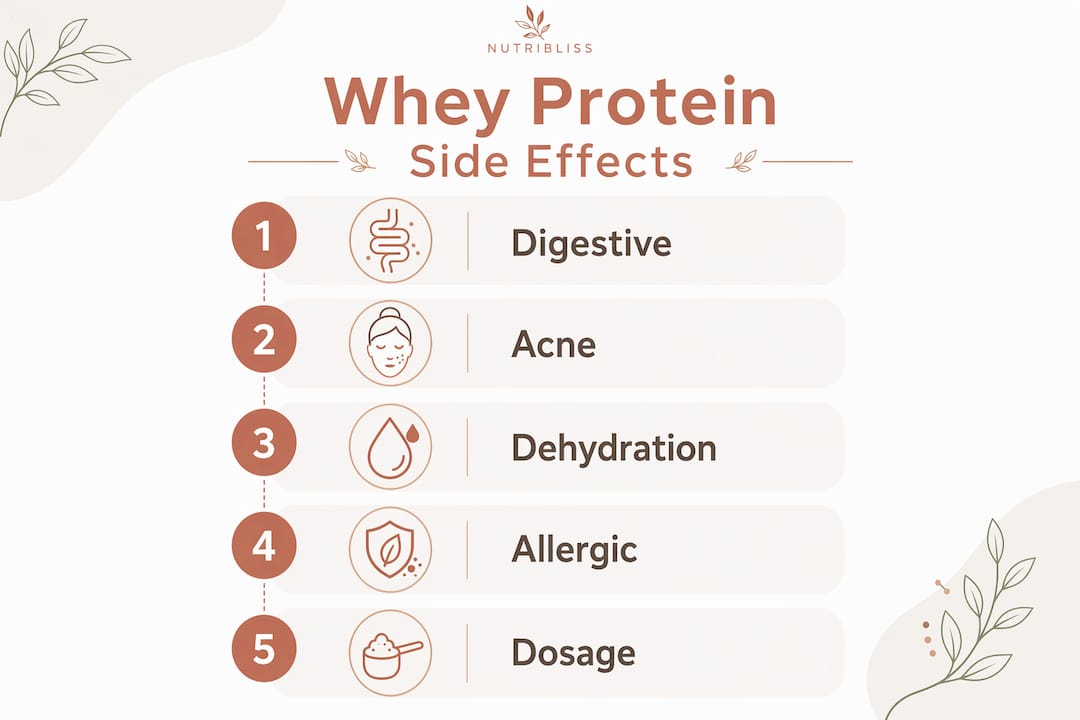
Allergic reactions
People with a milk protein allergy face the most serious risk. Milk protein allergy is a direct contraindication for whey protein use, and reactions can range from hives and stomach cramps to anaphylaxis in severe cases. This is different from lactose intolerance, which is a digestive issue. A milk allergy is an immune response.
Pro Tip: Start with a half-serving when trying a new whey protein product. This lets your digestive system adjust and helps you identify your personal tolerance threshold before committing to a full dose.
How does dosage affect your risk of side effects?
Dosage is the single biggest controllable factor in whey protein safety. Most healthy adults should limit intake to 20–40 grams per serving, and symptoms become significantly more likely above 50 grams in a single dose. That 50-gram threshold is not arbitrary. It reflects the upper limit of what the liver and kidneys can efficiently process at one time.
Chronic overuse is a separate concern from single-dose excess. Sustained intake above 3–4 grams per kilogram of body weight per day places stress on the kidneys in people with pre-existing kidney conditions. For healthy individuals with no kidney disease, current research does not show that high protein intake causes kidney damage. The risk is real and specific to those who already have compromised kidney function.
| Health profile | Safe intake range | High-risk threshold |
|---|---|---|
| Healthy adult, active | 20–40g per serving | Above 50g per serving |
| Sedentary adult | 10–20g per serving | Above 30g per serving |
| Pre-existing kidney condition | Consult physician | Any high-dose use |
| Lactose intolerant | Isolate form preferred | Standard concentrate |
| Milk protein allergy | Avoid whey entirely | Any amount |
People with kidney disease, liver disease, or known milk allergies should consult a physician before using any whey protein product. This is not a precautionary disclaimer. These conditions change how the body processes protein at a fundamental level.
Pro Tip: Spread your protein intake across three or four meals rather than consuming it all in one shake. This reduces the digestive burden per sitting and keeps amino acid delivery steady throughout the day.
What role does product quality play in protein powder side effects?
Many protein powder side effects have nothing to do with whey protein itself. They come from what else is in the tub. The FDA does not mandate pre-market safety testing for supplements, so manufacturers can sell products with varying levels of purity, accuracy in labeling, and contamination risk.
The Clean Label Project, an independent testing organization, has found heavy metals, BPA, and other contaminants in a significant number of protein powders sold in the United States. Protein powders may be mislabeled or contaminated with heavy metals or banned substances, making third-party certification especially important for athletes and people with health concerns.
Additives are the other major source of non-protein side effects. Common problem ingredients include:
- Added sugars: Some powders contain up to 23 grams of added sugar per scoop, which can cause blood sugar spikes and contribute to weight gain over time.
- Artificial sweeteners: Sucralose and acesulfame potassium can disrupt gut bacteria in sensitive individuals, worsening bloating and gas.
- Caffeine: Added stimulants increase heart rate and can cause anxiety, especially when combined with pre-workout products.
- Creatine: When added without disclosure of total creatine load, it can cause water retention and digestive discomfort.
- Thickeners and gums: Xanthan gum and carrageenan are common causes of bloating that people mistakenly attribute to the protein itself.
Many protein powders contain additives that produce side effects entirely separate from the protein content. Reading the ingredient label is not optional. It is the first line of defense. Nutribliss recommends checking how to evaluate supplement quality before purchasing any protein product.
How can you safely use whey protein to maximize benefits?
Safe whey protein use comes down to four practical decisions: choosing the right form, verifying the product, dosing correctly, and staying hydrated.
Choose the right form. Whey isolate undergoes additional filtration that removes most of the lactose and fat. People with lactose sensitivity consistently report fewer digestive issues with isolate compared to concentrate. Understanding why whey protein belongs in your fitness stack starts with picking the form that matches your body’s needs.
Verify the product. Third-party certification from organizations like NSF International or USP confirms that what is on the label matches what is in the product. These certifications also screen for banned substances and contaminants. They are the most reliable signal of product integrity available to consumers.
Dose correctly. Stay within the 20–40 gram per serving guideline. Account for protein from food sources when calculating your daily total. Most people who experience protein powder side effects are already consuming significant protein from chicken, eggs, dairy, and other whole foods.
Stay hydrated. The metabolic burden from excess protein requires the kidneys to process more nitrogenous waste. Drinking adequate water throughout the day, not just around workouts, protects kidney function and reduces dehydration risk.
Pro Tip: Avoid stacking multiple protein sources, such as a whey shake plus a protein bar plus a high-protein meal, without calculating your total daily intake. Unintentional excess is the most common cause of side effects in otherwise healthy people.
Key Takeaways
Most whey protein side effects are preventable with correct dosing, proper product selection, and adequate hydration.
| Point | Details |
|---|---|
| Dosage drives risk | Keep servings to 20–40g and avoid exceeding 50g in a single dose. |
| Lactose matters | Choose whey isolate if you experience bloating or digestive discomfort. |
| Additives cause problems | Read labels carefully and avoid powders with high added sugar or stimulants. |
| Certification protects you | NSF or USP certification confirms purity and reduces contamination risk. |
| Hydration is non-negotiable | Drink enough water daily to support kidney filtration of protein byproducts. |
What I’ve learned after years of watching people use whey protein wrong
The most persistent myth I encounter is that whey protein damages kidneys in healthy people. The research does not support that claim. Kidney stress from protein is a documented risk for people who already have kidney disease, not for people with healthy kidney function following reasonable intake guidelines.
What I do see cause real problems, consistently, is people buying the cheapest tub they can find and ignoring the ingredient list. A powder with 23 grams of added sugar per scoop is not a protein supplement. It is a dessert with protein marketing on the label. The side effects people blame on whey are often the side effects of artificial sweeteners, cheap fillers, and undisclosed additives.
The other pattern I see is people treating protein powder as a meal replacement rather than a supplement. Whey protein is most effective when it fills a gap in your diet, not when it replaces whole food. When people use it to hit a protein target they cannot reach through food alone, it works well. When they use it as a primary food source, the cumulative intake often exceeds what their body can process efficiently.
My honest recommendation is to use #nutribliss as a filter for quality. Look for products that are third-party tested, have clean ingredient lists, and match your specific health profile. The science behind superfoods is not complicated. The execution just requires paying attention to what you are actually putting in your body.
— GAURAV
Nutribliss and clean protein supplementation
If you want the benefits of whey protein without the side effects tied to poor-quality products, the starting point is choosing a product built around purity.

Nutribliss Whey Isolate Protein Supplement is formulated to minimize the additives and contaminants that cause most reported side effects. It uses a whey isolate base, which reduces lactose content and makes it a better fit for people with digestive sensitivity. For those who want to go deeper on the science, the Nutribliss Science Behind Superfoods collection explains the research behind each ingredient. If you are also managing hydration alongside your protein intake, the Nutribliss Electrolytes Supplement supports fluid balance and helps offset the dehydration risk that comes with higher protein consumption.
FAQ
What are the most common whey protein side effects?
The most common side effects are bloating, gas, diarrhea, and acne. These are most often caused by lactose intolerance, excessive dosing, or additives in the product rather than whey protein itself.
Is whey protein safe for people with kidney disease?
Whey protein is not recommended for people with pre-existing kidney disease without physician approval. Sustained intake above 3–4 grams per kilogram of body weight per day places additional stress on already compromised kidneys.
How much whey protein is safe per day?
Most healthy adults should stay within 20–40 grams per serving. Symptoms become significantly more likely above 50 grams in a single dose, and chronic overuse above recommended daily totals increases health risks.
Can whey protein cause allergic reactions?
Yes. People with a milk protein allergy should avoid whey protein entirely. Reactions can include hives, stomach cramps, and in severe cases, anaphylaxis. Lactose intolerance is a separate, less severe condition.
How do I choose a whey protein with fewer side effects?
Choose a whey isolate product with third-party certification from NSF International or USP. Check the ingredient list for added sugars, artificial sweeteners, and stimulants, which are common sources of non-protein side effects.