

TL;DR:
- Thermogenics increase body heat production to boost calorie expenditure and support modest fat loss.
- Their effectiveness is limited, providing only small increases in calorie burn and minimal weight loss.
- Safety concerns include stimulant side effects; choose tested, transparent products and consult healthcare providers.
Thermogenics are everywhere in the supplement world, and so is the confusion around them. Walk into any health store and you’ll see bold claims about torching fat and supercharging your metabolism. But the science tells a more nuanced story. These supplements can raise your calorie burn and support fat loss, but they’re not the shortcut many brands want you to believe. This guide breaks down exactly how thermogenics work, what the research actually shows about their effectiveness, what risks you need to know, and how to choose a product you can trust.
Table of Contents
- What are thermogenics and how do they work?
- Do thermogenics help with weight loss? Examining the evidence
- Potential risks and who should avoid thermogenics
- Choosing the right thermogenic supplement: Quality, transparency, and real-world tips
- Why most people expect too much from thermogenics
- Find expert-backed solutions for your supplement routine
- Frequently asked questions
Key Takeaways
| Point | Details |
|---|---|
| Thermogenics explained | Thermogenics increase heat production and calorie burn by acting on your metabolism. |
| Modest weight loss effects | Most supplements offer only small, short-term reductions in weight when combined with healthy habits. |
| Not risk-free | Thermogenics can cause side effects and are unsafe for some people, especially those with heart or blood pressure issues. |
| Choose reputable brands | Look for transparent labeling and third-party testing to avoid unsafe or adulterated supplements. |
What are thermogenics and how do they work?
Thermogenics are compounds that increase heat production in your body, which in turn raises your overall calorie expenditure. The word comes from “thermogenesis,” meaning the process of generating heat. When your body produces more heat, it burns more energy to do so. That’s the core idea behind every thermogenic supplement on the market.
The mechanisms that drive this process are more interesting than most people realize. Thermogenics primarily work by stimulating your sympathetic nervous system, which is the part of your nervous system responsible for your “fight or flight” response. This stimulation triggers the release of hormones like epinephrine and norepinephrine, which tell your fat cells to release stored fat for energy. Research confirms that thermogenic compounds stimulate beta-adrenergic receptors, increasing lipolysis (fat breakdown) and activating non-shivering thermogenesis in brown adipose tissue (BAT) via a protein called UCP1.
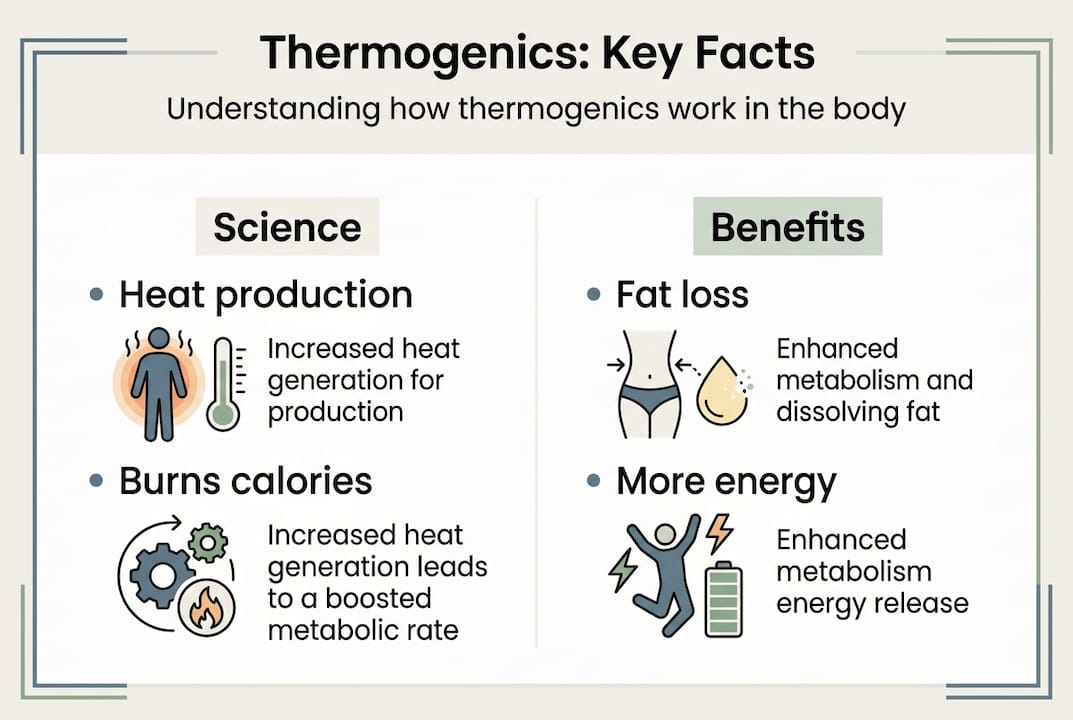
Brown adipose tissue deserves special attention here. Unlike white fat, which stores energy, BAT actually burns energy to generate heat. Activating BAT is one of the most promising targets in metabolic research, and several thermogenic compounds appear to do exactly that.
The most common thermogenic compounds include:
| Compound | Primary mechanism | Common source |
|---|---|---|
| Caffeine | Nervous system stimulation, fat oxidation | Coffee, tea, guarana |
| Green tea extract (EGCG) | BAT activation, fat oxidation | Green tea |
| Capsaicin | Increased energy expenditure, appetite reduction | Chili peppers |
| Yohimbine | Alpha-2 receptor blockade, fat mobilization | Yohimbe bark |
| Synephrine | Adrenergic stimulation | Bitter orange |
Many herbal supplements for fitness rely on one or more of these compounds to produce their thermogenic effects. Caffeine is by far the most studied and most effective on its own, but combinations of compounds may produce additive effects.
“Thermogenic compounds stimulate the sympathetic nervous system via beta-adrenergic receptors, increasing lipolysis and non-shivering thermogenesis in brown adipose tissue through UCP1 activation.”
Understanding these mechanisms helps you evaluate product labels with a much more critical eye. If a supplement doesn’t contain compounds with known thermogenic activity, it’s unlikely to deliver real results.
Do thermogenics help with weight loss? Examining the evidence
With a solid understanding of how thermogenics function, it’s important to explore if the research supports their role in weight loss. The short answer: they help, but modestly.
Clinical research shows that thermogenic supplements can increase resting energy expenditure (REE) by 3 to 8% acutely. That’s a real, measurable effect. For someone burning 2,000 calories a day at rest, that’s an extra 60 to 160 calories burned without any additional exercise. Over time, that can add up.
But here’s where expectations need to stay grounded. Meta-analyses show that the actual effects on body weight average around 0.7 to 1 kilogram of total loss, and effects on fat mass percentage are not always clinically significant. That’s a meaningful but modest outcome.
When thermogenics may be useful:
- You already follow a consistent diet and exercise program
- You’re looking for a small additional edge in a caloric deficit
- You’re a trained individual seeking to support fat loss during a cut
- You’re using them short-term alongside lifestyle changes
When thermogenics are unlikely to help:
- You’re relying on them as a replacement for diet and exercise
- You expect rapid or dramatic weight loss
- You have a highly variable diet or irregular sleep schedule
- You’re already consuming high amounts of caffeine daily
Some research suggests that trained males combining thermogenic supplementation with resistance training may see more pronounced reductions in body fat percentage. This makes sense physiologically: exercise amplifies the sympathetic nervous system response, potentially synergizing with thermogenic compounds.
| Supplement | Avg. calorie increase | Avg. fat loss support | Evidence quality |
|---|---|---|---|
| Caffeine | 50-100 kcal/day | Moderate | Strong |
| Green tea extract | 30-80 kcal/day | Modest | Moderate |
| Capsaicin | 20-50 kcal/day | Modest | Moderate |
| Yohimbine | Variable | Modest | Limited |
Reviewing supplement quality and safety before purchasing any thermogenic is a smart first step. The evidence supports cautious, informed use, not blind faith in marketing claims.
Potential risks and who should avoid thermogenics
Understanding the benefits is only half the story. Thermogenics also come with important safety considerations that every user needs to know before starting.
The most common side effects are directly linked to stimulant activity. Because most thermogenics work by activating your nervous system, they can cause:
- Jitteriness and anxiety
- Sleep disturbances, especially if taken in the afternoon or evening
- Increased heart rate and elevated blood pressure
- Nausea or gastrointestinal discomfort
- Headaches
These effects are generally dose-dependent, meaning higher doses produce more pronounced symptoms. Serious risks include liver injury (particularly from high-dose green tea extract or EGCG), cardiovascular events in sensitive individuals, and dangerous interactions with medications.
Groups who should avoid thermogenic supplements:
- Pregnant or breastfeeding women
- People with heart disease or arrhythmias
- Individuals with high blood pressure
- Those with caffeine sensitivity or anxiety disorders
- Anyone taking stimulant medications or MAO inhibitors
- Adolescents and young teenagers
Following supplement safety guidelines is especially important when adding any stimulant-based product to your routine. If you’re already taking other supplements, understanding how to mix supplements safely can prevent dangerous interactions.

Pro Tip: Start with the lowest effective dose and monitor yourself for 7 to 10 days before increasing. Watch for persistent heart rate elevation above your normal resting rate, unusual anxiety, or sleep disruption lasting more than two nights. These are early warning signs that the product may not be right for you.
Always consult a healthcare provider before starting thermogenics, especially if you have any existing health conditions or take prescription medications. No supplement result is worth a serious health event.
Choosing the right thermogenic supplement: Quality, transparency, and real-world tips
To maximize results and minimize risk, choosing the right supplement is crucial. Not all thermogenics are created equally, and the market is unfortunately full of products that don’t deliver what they promise.
One of the most alarming facts in supplement research: 37% of some supplement reviews reveal adulteration, meaning products contain unlisted ingredients, sometimes including banned stimulants or pharmaceutical compounds. That’s a serious problem in a category already carrying stimulant-related risks.
The NIH/NCCIH notes that most weight loss supplements, including thermogenics, lack strong evidence for significant long-term effects and carry safety concerns related to stimulants and adulteration. That’s not a reason to avoid them entirely, but it is a reason to be extremely selective.
How to choose a safer thermogenic supplement:
- Check for third-party testing. Look for certifications from NSF International, Informed Sport, or USP. Understanding third-party tested supplements can help you make a smarter choice.
- Demand transparent labeling. Every ingredient and its exact dose should be listed. Avoid products that hide behind proprietary blends, which make it impossible to know what you’re actually taking.
- Research each active ingredient. Stick to compounds with published clinical research behind them, like caffeine, EGCG, and capsaicin.
- Ignore sensational claims. Phrases like “melt fat overnight” or “clinically proven to triple fat loss” are red flags, not selling points.
- Start with single-ingredient products. If you’re new to thermogenics, a single-compound supplement makes it easier to identify what works and what causes side effects.
Pro Tip: If you’re caffeine-sensitive, look for stimulant-free thermogenic options that rely on capsaicin or other non-stimulant compounds. These carry a much lower risk profile and are still backed by real evidence.
Avoiding common supplement mistakes starts with reading labels critically and not letting marketing language do your thinking for you.
Why most people expect too much from thermogenics
Stepping back from the details, it’s worth asking why expectations and reality so often diverge when it comes to thermogenics. The honest answer: the supplement industry profits from optimism.
Marketing consistently overstates what these products can do. A 3 to 8% increase in resting calorie burn sounds exciting in a lab report. But when translated to real life, it’s often less than 100 extra calories per day, and that effect can diminish as your body adapts. The NIH/NCCIH confirms that most weight loss supplements lack strong evidence for significant long-term effects.
What actually drives meaningful fat loss? Consistent caloric deficit, progressive resistance training, quality sleep, and stress management. Thermogenics can support that framework, but they can’t replace it. We’ve seen too many people make avoidable supplement mistakes by treating thermogenics as the centerpiece of their plan rather than a supporting tool.
The most effective approach is to build your habits first, then consider whether a thermogenic adds value on top of that foundation. If your diet is inconsistent and you’re skipping workouts, no supplement will close that gap.
Find expert-backed solutions for your supplement routine
Now that you know what role thermogenics can realistically play in your routine, the next step is building a supplement stack that actually supports your goals without unnecessary risk.

At NutriBliss, we believe every product in your routine should earn its place with transparency, quality testing, and honest benefits. Whether you’re focused on recovery, hydration, or overall performance, our recovery supplements and electrolyte formulas are designed to complement a smart, evidence-based approach. Browse our full range and find products that support your health goals the right way.
Frequently asked questions
Are thermogenic supplements safe for everyone?
No, thermogenic supplements are not safe for everyone. People with heart disease, high blood pressure, caffeine sensitivity, or those who are pregnant should avoid thermogenics due to risks of cardiovascular events and other serious side effects.
Can thermogenics really help with fat loss?
They can produce a modest increase in calorie burn, but average fat loss from thermogenic supplements is typically only 0.7 to 1 kilogram, which is not significant without supporting diet and exercise changes.
What are the most common side effects of thermogenics?
The most commonly reported side effects include jitteriness, sleep difficulties, elevated heart rate, and upset stomach, all of which are linked to stimulant activity in most thermogenic formulas.
How can I choose a safe thermogenic supplement?
Prioritize products with transparent ingredient labels and third-party testing certifications, and avoid proprietary blends. Adulteration rates in some supplement categories reach 37%, making independent verification essential.
Is there any natural way to boost thermogenesis?
Yes, regular resistance and cardio exercise, eating spicy foods containing capsaicin, and building and maintaining lean muscle mass can all naturally increase your body’s thermogenic activity without supplementation.