

You trust supplement labels to tell you what’s inside, but proprietary blends can hide the exact amounts of ingredients you’re consuming. Many health-conscious individuals assume labels provide complete transparency, yet manufacturers often obscure critical dosing information behind these blends. This guide reveals what proprietary blends really are, how they impact your safety, and practical strategies for making informed wellness choices that truly support your performance and health goals.
Table of Contents
- What Is A Proprietary Blend In Dietary Supplements?
- How Proprietary Blends Impact Supplement Transparency And Safety
- Evaluating Proprietary Blend Quality And Efficacy
- Real-World Examples And Consumer Cautionary Tales
- Explore Transparent Supplements For Your Wellness Journey
- Frequently Asked Questions
Key takeaways
| Point | Details |
|---|---|
| FDA regulations allow opacity | FDA labeling guidelines require only total blend weight, not individual ingredient amounts, letting manufacturers hide exact doses. |
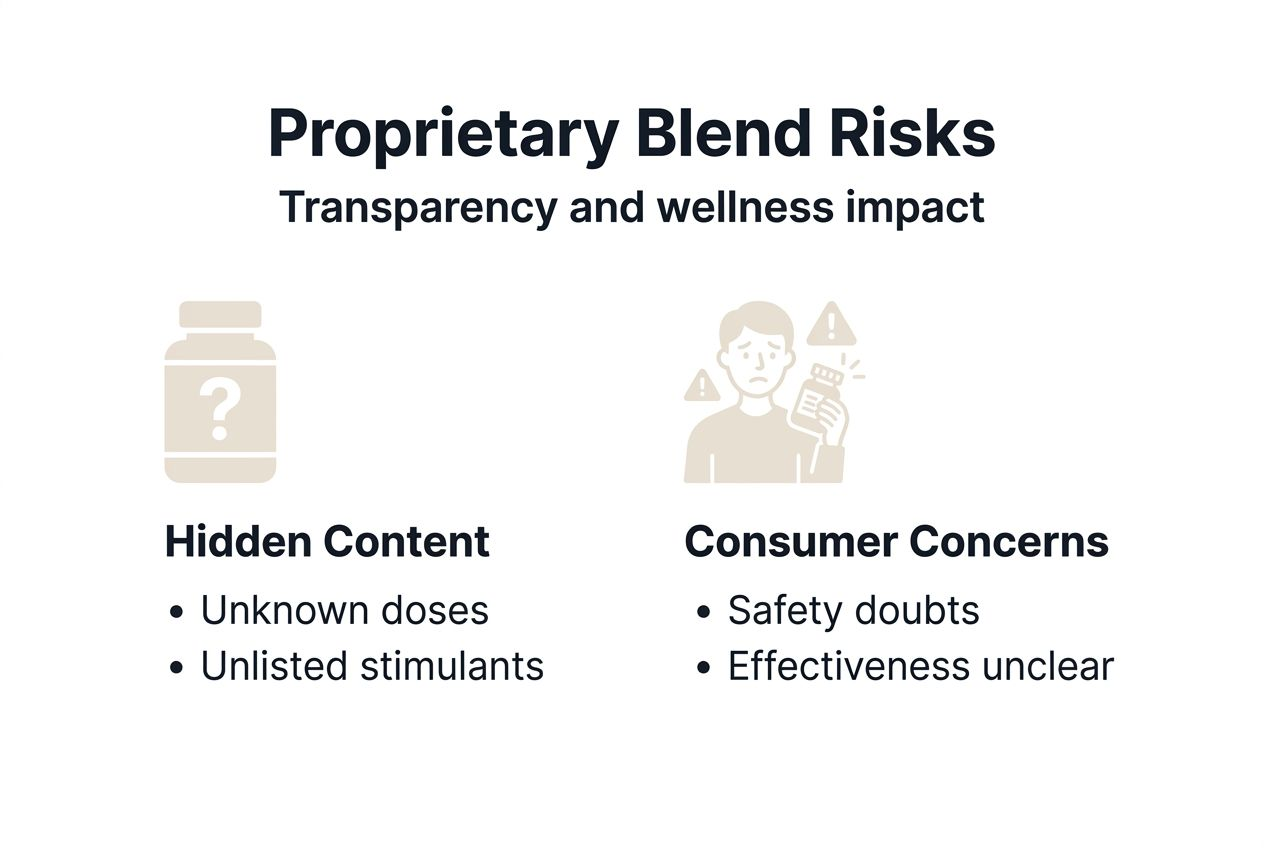
| Safety risks from hidden amounts | Proprietary blends can conceal high stimulant doses like caffeine or underdose expensive ingredients, risking adverse effects or wasting money. |
| Transparency protects consumers | Prioritize supplements with disclosed amounts and third-party testing to ensure safety and effectiveness. |
| Label dressing misleads buyers | Manufacturers list trace amounts of popular ingredients for marketing while proprietary blends hide that you’re getting ineffective doses. |
What is a proprietary blend in dietary supplements?
A proprietary blend is a combination of ingredients listed together on a supplement label under a collective name with only the total weight disclosed. Manufacturers use proprietary blends to protect trade secrets related to their formulas, preventing competitors from copying exact ratios. While this sounds reasonable from a business perspective, it creates significant transparency challenges for you as a consumer.
The FDA permits this labeling practice as long as certain conditions are met. FDA guidelines require manufacturers to list the total weight of the blend and name all ingredients in descending order by weight. However, the exact amount of each individual ingredient remains hidden. This means you know which ingredient is most abundant and which is least, but not the specific milligrams of each component.
Understanding supplement label reading becomes critical when evaluating proprietary blends. Here’s what the regulations allow and don’t allow:
- Total blend weight must be disclosed (example: “Proprietary Performance Blend 1,500 mg”)
- Individual ingredients must be listed in order from highest to lowest weight
- Exact amounts of each ingredient can remain undisclosed
- Blend names often sound scientific or impressive to boost marketing appeal
- No requirement exists for manufacturers to prove effective dosing of individual components
This regulatory framework creates a gray area where legal compliance doesn’t necessarily equal consumer protection. You might see impressive ingredients listed, but the first ingredient could comprise 90% of the blend while the last five ingredients total just 10%. Without knowing exact amounts, you can’t verify whether you’re getting therapeutic doses or merely trace amounts for marketing purposes.
How proprietary blends impact supplement transparency and safety
The opacity of proprietary blends creates multiple risks that directly affect your health and wallet. Manufacturers can exploit this lack of transparency in ways that prioritize profits over your wellness outcomes.
Hidden ingredient amounts prevent you from making informed decisions about dosing and safety. When you can’t see exact amounts, you face several significant challenges:
- Underdosing expensive ingredients: Companies may include minimal amounts of costly, popular ingredients like ashwagandha or rhodiola while filling the blend with cheap fillers. You pay premium prices for subtherapeutic doses.
- Excessive stimulant content: Blends can conceal dangerously high caffeine or other stimulant levels, risking heart palpitations, anxiety, or sleep disruption without your knowledge.
- Label dressing tactics: Manufacturers list trendy ingredients in trace amounts purely for marketing appeal, knowing most consumers won’t realize the doses are ineffective.
- Interaction risks: Without knowing exact amounts, you can’t accurately assess potential interactions with medications or other supplements you’re taking.
- Impossible comparison shopping: You can’t compare products effectively when exact ingredient amounts remain hidden across different brands.
Consider supplement safety guidelines when evaluating any product with proprietary blends. The risks extend beyond mere ineffectiveness to potential harm.
Pro Tip: If a supplement lists a proprietary blend but the manufacturer provides a separate breakdown of individual ingredient amounts elsewhere on the label or website, that’s a positive sign of transparency worth seeking out.
The fundamental problem is that proprietary blends shift risk from manufacturers to you. They maintain plausible deniability about dosing while you bear the consequences of inadequate or excessive amounts. This asymmetry makes critical evaluation essential for protecting your health investment.
Evaluating proprietary blend quality and efficacy
Assessing a proprietary blend’s potential effectiveness requires looking beyond the ingredient list to understand bioavailability, manufacturer reputation, and research backing. Without exact dosing information, you need alternative evaluation strategies.
Ingredient quality and bioavailability significantly impact whether your body can actually use the nutrients provided. A blend might contain the right ingredients but in poorly absorbed forms that pass through your system unused. Premium manufacturers often specify ingredient forms (like magnesium glycinate versus magnesium oxide), but proprietary blends frequently omit these details.
The lack of dosage transparency fundamentally limits your ability to judge safety and effectiveness. Research on individual ingredients typically identifies specific dose ranges for benefits. When you can’t verify you’re receiving those amounts, efficacy becomes guesswork.
Here are quality factors to prioritize when evaluating proprietary blends:
| Quality Factor | What to Look For | Why It Matters |
|---|---|---|
| Third-party testing | USP, NSF, or Informed Choice certification | Verifies content matches label claims and screens for contaminants |
| Manufacturer transparency | Companies that voluntarily disclose amounts | Indicates commitment to consumer trust over formula secrecy |
| Research backing | Published studies on the specific blend formula | Provides evidence beyond individual ingredient research |
| Ingredient forms | Specification of bioavailable forms | Shows attention to absorption and effectiveness |
| Dosage context | Total blend weight relative to known effective doses | Helps estimate whether adequate amounts are possible |
Follow these steps to critically evaluate a proprietary blend:
- Research effective doses for each listed ingredient independently through PubMed or examine.com.
- Calculate whether the total blend weight could realistically contain effective amounts of all ingredients.
- Check the ingredient order to identify which components likely dominate the formula.
- Look for third-party testing verification to confirm purity and accurate labeling.
- Search for published research specifically on the proprietary blend formula, not just individual ingredients.
- Assess manufacturer reputation through customer reviews and industry standing.
Pro Tip: If a 1,000 mg proprietary blend lists ten ingredients where each needs 100-200 mg to be effective, basic math tells you most ingredients are severely underdosed. Use this calculation to spot red flags quickly.
When examining combining supplements safely, proprietary blends create additional complexity. You can’t accurately track total intake of specific nutrients across multiple products when exact amounts remain hidden. This increases the risk of inadvertently exceeding safe upper limits or creating nutrient imbalances.
The best proprietary blends come from manufacturers who treat the designation as protection against exact formula copying while still providing enough information for informed decisions. Seek companies that offer transparency wherever possible while maintaining competitive advantages.
Real-world examples and consumer cautionary tales
Recent supplement scandals illustrate how proprietary blends and opaque labeling can facilitate serious consumer deception. These cases demonstrate why skepticism and verification matter for your safety.
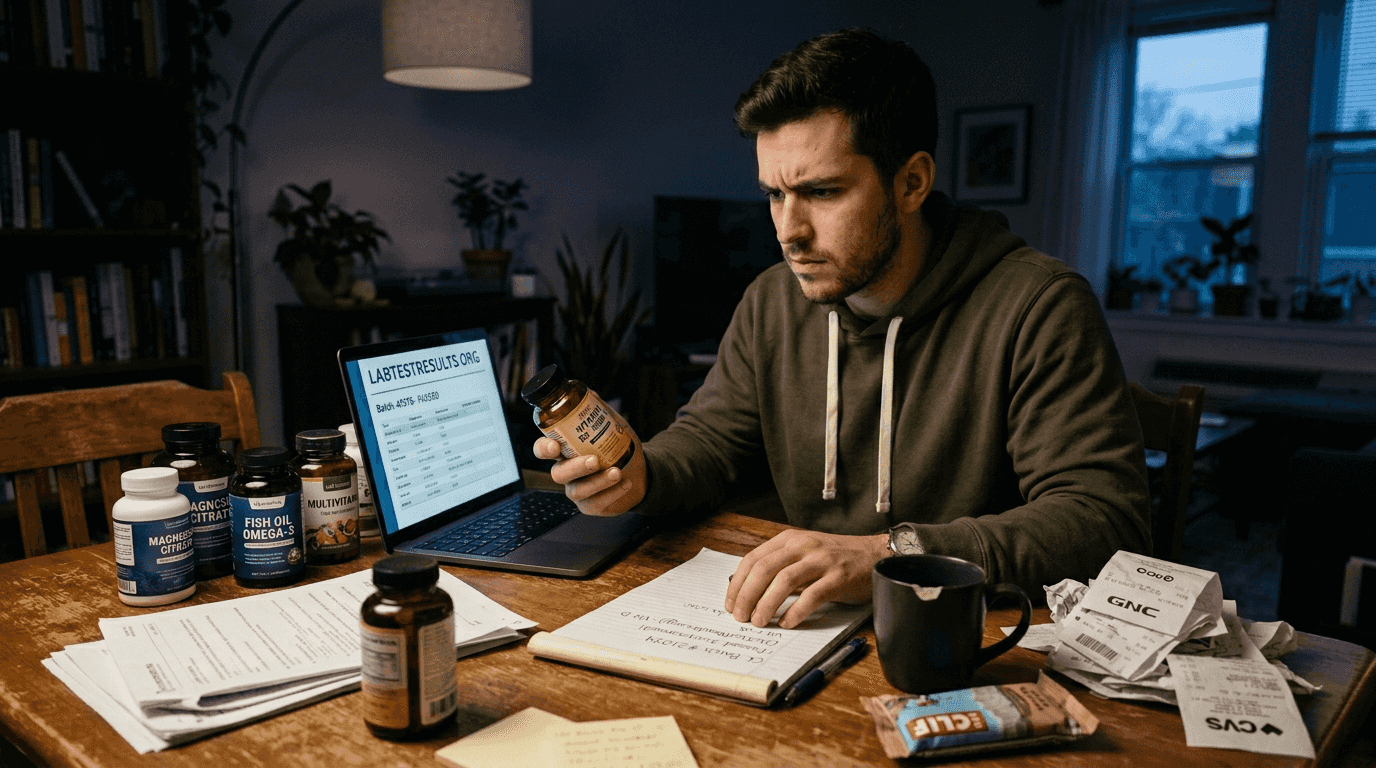
The Holmes Nutrition protein powder scandal shocked the supplement community in 2024 when independent testing revealed massive discrepancies. The protein powder contained only 3-4 grams of actual protein per serving despite labels claiming 25 grams, an 84% shortfall. Even more concerning, carbohydrate content tested at 39 grams versus the labeled 3 grams.
This dramatic mislabeling created real health consequences. Consumers relying on accurate macronutrient information for diabetes management or athletic nutrition experienced unexpected blood sugar spikes from the excessive undisclosed carbohydrates. Athletes underfed protein for muscle recovery due to fraudulent claims. After a Reddit user’s independent lab test went viral, the company quickly withdrew products and essentially vanished.
Here’s how the labeled versus actual content compared:
| Nutrient | Label Claim (per serving) | Actual Lab Results | Discrepancy |
|---|---|---|---|
| Protein | 25g | 3-4g | 84% less than claimed |
| Carbohydrates | 3g | 39g | 1,200% more than claimed |
| Overall accuracy | Trusted by consumers | Completely fraudulent | Total mislabeling |
This case offers critical lessons for supplement evaluation:
- Independent testing can reveal fraud that regulatory oversight misses
- Companies can disappear quickly when exposed, leaving consumers without recourse
- Proprietary formulations make it harder to verify claims without lab testing
- Community reporting and consumer vigilance serve as important fraud detection
- Avoiding supplement mistakes requires healthy skepticism even toward established brands
While not all proprietary blends involve fraud, the Holmes case demonstrates how opacity enables deception. When manufacturers resist transparency, ask yourself what they’re protecting—trade secrets or substandard formulations?
Other common issues with proprietary blends include energy supplements loaded with undisclosed caffeine causing emergency room visits, and weight loss blends containing banned substances discovered only after adverse events. These patterns reinforce that transparency protects consumers while secrecy often serves manufacturers’ interests over yours.
Explore transparent supplements for your wellness journey
After understanding the risks proprietary blends pose, you deserve supplement options that prioritize your safety through transparency and rigorous testing. Not all supplement companies hide behind proprietary formulations.

NutriBliss offers a curated selection of supplements with clear labeling and third-party verification, ensuring you know exactly what you’re consuming. When you understand the science behind superfoods and evidence-based formulations, you can make confident choices that genuinely support your wellness and athletic performance goals. Explore the Nutribliss supplements collection to discover products formulated with transparency as a core principle, helping you avoid the guesswork and risks associated with opaque proprietary blends. Every supplement journey benefits from choosing brands that respect your right to informed decisions about what enters your body. Visit NutriBliss to find options aligned with your commitment to safe, effective wellness.
Frequently asked questions
What exactly is a proprietary blend in dietary supplements?
A proprietary blend is a group of ingredients listed together under a collective name with only the total combined weight disclosed, not individual amounts. Manufacturers use this labeling approach to protect formula secrets while complying with FDA requirements to list ingredients in descending weight order.
Does the FDA require disclosure of individual ingredient amounts in proprietary blends?
No, FDA regulations permit manufacturers to list only the total blend weight and ingredient names in weight order. Individual ingredient amounts can remain undisclosed, creating transparency challenges for consumers trying to verify effective dosing or assess safety.
What health risks do proprietary blends pose to consumers?
Proprietary blends can hide dangerously high stimulant doses like caffeine, leading to heart issues or anxiety. They also enable underdosing expensive ingredients, wasting your money on ineffective products. Without knowing exact amounts, you can’t accurately assess interaction risks with medications or other supplements you’re taking.
How can I evaluate if a proprietary blend contains effective ingredient doses?
Research individual ingredient effective doses through scientific databases, then calculate if the total blend weight could realistically contain therapeutic amounts of all listed components. Check ingredient order to identify which dominate the formula. Prioritize products with third-party testing and manufacturers who voluntarily provide additional dosing details.
Should I avoid all supplements with proprietary blends?
Not necessarily, but approach them with informed skepticism. Some reputable manufacturers use proprietary designations while still providing substantial transparency. Prioritize blends with third-party testing, published research on the specific formula, and manufacturers with strong reputations. When possible, choose supplements that fully disclose individual ingredient amounts for maximum safety and effectiveness verification.
What should I do if I experience adverse effects from a proprietary blend supplement?
Stop taking the product immediately and consult your healthcare provider, especially if symptoms are severe. Report the adverse event to the FDA through their Safety Reporting Portal. Document all details including the product name, batch number, and symptoms. Consider having the product independently tested if serious harm occurred, and share findings with consumer protection communities to warn others.