

Finding the right dietary supplement can feel confusing when every American fitness aisle is packed with promises. Millennial athletes chasing peak performance often wonder if their regimen needs an extra boost or if they are falling for common mistakes. By focusing on proven nutrient deficiencies and researching product quality, you will learn how to make smart supplement choices that truly support your goals and avoid wasting money on unnecessary pills.
Table of Contents
- Step 1: Assess Your Supplement Needs
- Step 2: Research Product Quality And Ingredients
- Step 3: Choose The Right Supplement For Your Goals
- Step 4: Verify Proper Usage And Dosage
- Step 5: Monitor Effects And Adjust As Needed
Quick Summary
| Key Point | Explanation |
|---|---|
| 1. Assess Supplement Needs First | Identify if you truly need supplements based on medical advice or documented deficiencies to avoid unnecessary spending. |
| 2. Research Product Quality and Verification | Look for third-party tested supplements to ensure ingredients match the label and confirm product safety and quality. |
| 3. Define Your Health Goals Clearly | Establish specific health objectives to select supplements that effectively address your unique nutritional needs. |
| 4. Follow Accurate Dosage Instructions | Adhere to recommended dosages and timing to ensure supplements are taken safely and effectively for optimal results. |
| 5. Monitor Effects and Adjust Accordingly | Track your progress and side effects over weeks to evaluate the effectiveness of supplements and modify your regimen as necessary. |
Step 1: Assess your supplement needs
Before you buy anything, figure out why you actually need a supplement. Most people don’t require them unless there’s a documented health need or specific reason. Take time to identify what your body is actually missing.
Start by asking yourself these questions:
- Do you have a known nutrient deficiency confirmed by blood work or a doctor?
- Are you following a restricted diet (vegan, vegetarian, keto, etc.)?
- Do you have a medical condition that affects nutrient absorption?
- Are you in a life stage with higher nutritional demands (pregnant, older adult, athlete)?
Your answers matter. Proven nutrient deficiencies determined through testing should guide your purchasing decisions, not marketing hype or what your gym buddy is taking.
Some groups genuinely need supplementation. Vegans often lack adequate B12 without supplementation. Pregnant women require prenatal vitamins. Older adults frequently need extra calcium and vitamin D for bone health. If you don’t fit these categories, you probably don’t need most supplements.
Here’s a quick comparison of supplement needs for different groups:
| Group | Common Nutrient Gaps | Reason Supplements May Be Needed |
|---|---|---|
| Vegans | Vitamin B12, Iron | Lack animal-based foods |
| Pregnant Women | Folate, Iron, DHA | Higher nutrient demands, fetal growth |
| Older Adults | Vitamin D, Calcium | Lower absorption, bone health concerns |
| Athletes | Electrolytes, Protein | Increased activity and recovery needs |
If you’re unsure, get blood work done. A simple test can reveal whether you’re deficient in iron, vitamin D, B12, or other key nutrients. This takes the guesswork out of the equation and gives you actual data to work with.
Once you know your real needs, you can move toward selecting the right products. Understanding what your body actually requires prevents wasted money and disappointing results.
The most common supplement mistake isn’t taking the wrong product, it’s taking something you never needed in the first place.
You might also want to explore how to master the supplement selection process once you’ve identified your specific requirements.
Pro tip: Schedule a conversation with your doctor or registered dietitian before starting any supplement regimen, especially if you’re on medications or have health conditions, since they can review your specific situation and recommend only what you genuinely need.
Step 2: Research product quality and ingredients
Not all supplements are created equal. Since dietary supplements in the United States are not regulated as strictly as medications, you need to do the detective work yourself. This step separates effective products from those that are simply expensive placebos or worse.
Start by checking the label for complete transparency. Look for products that list all active and inactive ingredients clearly with exact amounts. If a label is vague or missing ingredient information, move on to another brand. Reputable manufacturers include detailed formulation data because they have nothing to hide.
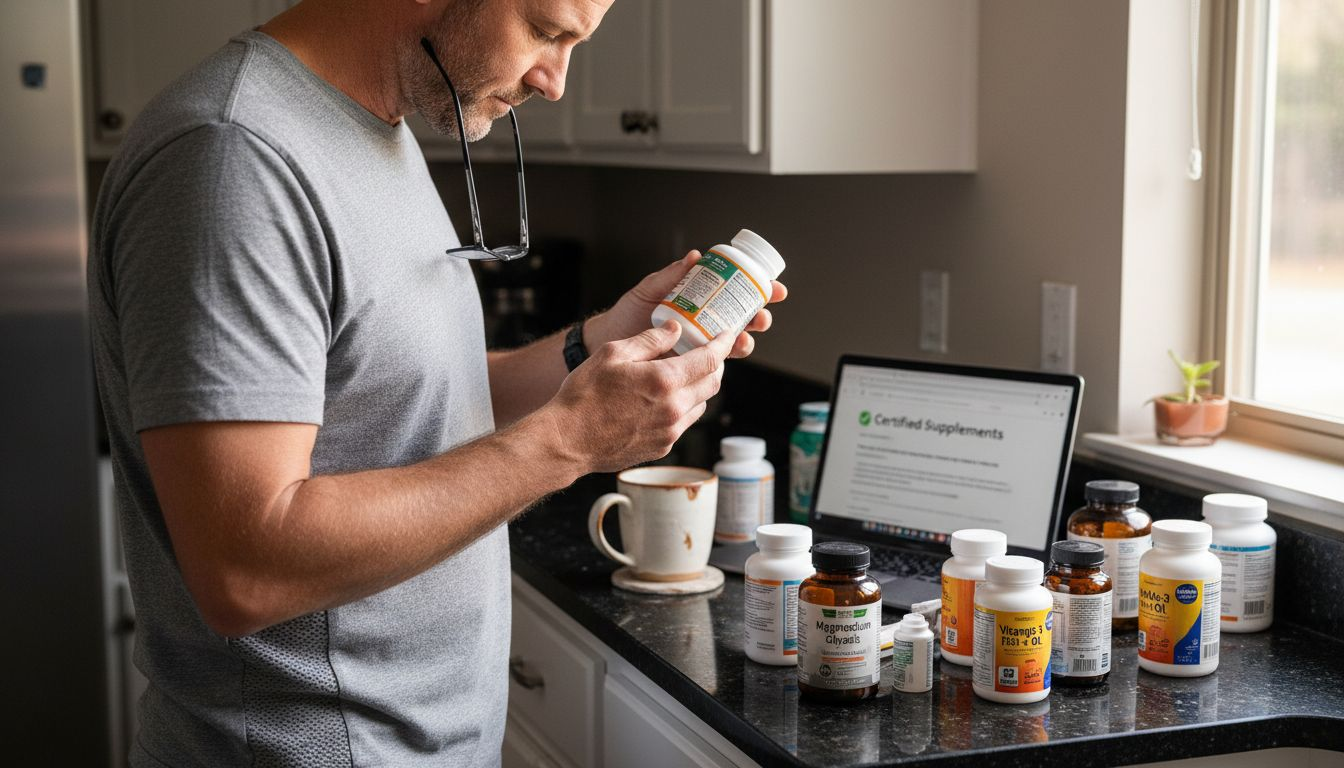
Verify that the product has undergone third-party testing to confirm purity and potency. Organizations like NSF International, USP, and ConsumerLab test supplements independently to ensure what’s on the label actually matches what’s inside the bottle. This certification tells you the product meets good manufacturing practices and contains the stated ingredients in the promised amounts.
Below is a summary of third-party certification organizations and their focus areas:
| Certification Body | Focus Area | Value for Consumers |
|---|---|---|
| NSF International | Purity, Safety | Verifies label accuracy and contaminants |
| USP (U.S. Pharmacopeia) | Ingredient Quality | Confirms strength, quality, and purity |
| ConsumerLab | Product Testing | Publishes test results and reviews |
Next, research whether the ingredients themselves have scientific support. Not every ingredient trending on social media has solid research backing it up. Look for peer-reviewed studies on each component, not just marketing claims. Ask yourself whether the dosages listed match what research suggests works.
Here’s what to verify before purchasing:
- Third-party certifications from trusted organizations
- Complete ingredient list with transparent dosing
- Manufacturing facility compliance with quality standards
- Scientific evidence supporting ingredient effectiveness
- No sketchy additives or unnecessary fillers
Check the brand’s reputation and history. How long have they been in business? Do customer reviews mention actual results or side effects? Can you find the manufacturer’s contact information? Legitimate companies stand behind their products with accessible customer service.
A supplement without third-party testing is essentially a promise made by someone trying to sell you something.
Take time to research before adding anything to your cart. This investment of 15 to 20 minutes per product prevents regrettable purchases and ensures your money goes toward quality supplements that actually deliver results.
Pro tip: Screenshot or bookmark the third-party certification logos and research summaries before purchasing, so you can compare multiple products side by side and remember which certifications matter most for your specific supplement type.
Step 3: Choose the right supplement for your goals
Now that you understand your nutritional gaps and know what to look for in quality products, it’s time to match supplements to your specific health objectives. The wrong supplement wastes money and doesn’t deliver results, so precision matters here.
Start by defining your actual goal. Are you looking to boost athletic performance, recover faster after workouts, improve bone health, support cardiovascular function, or address a specific deficiency? Different supplements target different outcomes, so clarity about your objective guides everything that follows.
Once you have a clear goal in mind, research which supplements have evidence supporting that specific outcome. For example, calcium and vitamin D are scientifically linked to bone health, while omega-3 fatty acids support cardiovascular function. Don’t assume one supplement does everything. Most effective supplement stacks address one primary goal with 2 to 3 complementary products.
Consider your current diet and lifestyle. If you’re already consuming plenty of fatty fish, adding an omega-3 supplement might be redundant. If you’re training intensely as a competitive athlete, you might need different support than someone doing recreational fitness. Supplement selection should align with your individual health goals and fill actual gaps in your routine, not duplicate what you already get from food.
Here’s how to narrow down your choices:
- Define your primary health goal clearly
- Research supplements with proven scientific support for that goal
- Cross-reference against your current diet and activities
- Avoid high-dose products unless specifically recommended
- Start with one new supplement at a time to track effectiveness
Consult with a healthcare provider or registered dietitian if you’re unsure. They understand your complete health picture, including medications and existing conditions, and can recommend products specifically tailored to your situation. This prevents interactions and ensures you’re taking only what you actually need.
The best supplement is the one you’ll use consistently because it actually addresses something you need.
Match your supplement to your goals, not the other way around. This approach prevents the common mistake of building a cabinet full of unused bottles.
Pro tip: Give each supplement at least 4 to 8 weeks before evaluating whether it’s working, and track your progress with specific metrics like strength gains, energy levels, or recovery time so you can objectively measure whether to continue or switch.
Step 4: Verify proper usage and dosage
Having the right supplement means nothing if you’re taking it incorrectly. Dosage mistakes sabotage results and can actually harm your health. This step ensures you’re using supplements safely and effectively to maximize benefits.
Start by reading the label carefully. The dosage instructions tell you exactly how much to take, how often, and whether to take it with food or on an empty stomach. These details matter because absorption rates vary. Some supplements work better with meals, while others need to be taken separately from food or medications.
Understand the difference between recommended daily intake and tolerable upper intake levels. Following dosage instructions prevents adverse effects from overdosing on certain nutrients. Taking megadoses hoping for faster results backfires. More is not better in the supplement world. Excessive intake of fat-soluble vitamins like A, D, E, and K can accumulate in your body and cause toxicity.
Consider your individual factors when determining your ideal dose. Age, body weight, health status, and what you’re already eating all influence how much of a supplement you need. A 150-pound athletic male needs different dosages than a 110-pound female or an older adult with absorption issues. What works for your training partner might not work for you.
Here’s what to verify before taking any supplement:
- Check label dosage against your age and weight
- Confirm timing requirements relative to meals or other medications
- Verify the supplement won’t interact with prescriptions you’re taking
- Start at the lowest recommended dose to assess tolerance
- Track how you feel and adjust only if necessary
Consult your healthcare provider before combining multiple supplements or if you’re on medications. Certain combinations create interactions that reduce effectiveness or cause problems. Your doctor can review your complete health picture and recommend safe, evidence-based dosing specifically for you.
Track your supplement intake just like you would track your training. Use a simple spreadsheet or calendar to note when you took each supplement and any effects you notice. This data helps you recognize patterns and decide whether to continue, adjust dosages, or switch products.
Taking the right supplement at the wrong dose is almost as wasteful as taking the wrong supplement.
Dosage precision separates successful supplement users from those who see no results.
Pro tip: Set phone reminders for your supplement schedule at the same time each day so you maintain consistency, and use a pill organizer or dedicated container to prevent accidentally taking double doses or forgetting whether you already took your daily dose.
Step 5: Monitor effects and adjust as needed
You’ve made smart choices so far, but the work doesn’t stop when you open the bottle. Real progress comes from paying attention to how your body responds and making adjustments based on actual results. Monitoring is where most people get lazy, and it’s exactly where the magic happens.
Give your supplement at least 4 to 8 weeks before deciding whether it’s working. Your body needs time to respond to nutritional changes. One month isn’t enough data. Track specific metrics that matter to your goal: strength gains, energy levels, recovery speed, sleep quality, or whatever outcome you’re targeting. Write these down so you have objective evidence, not just vague feelings.
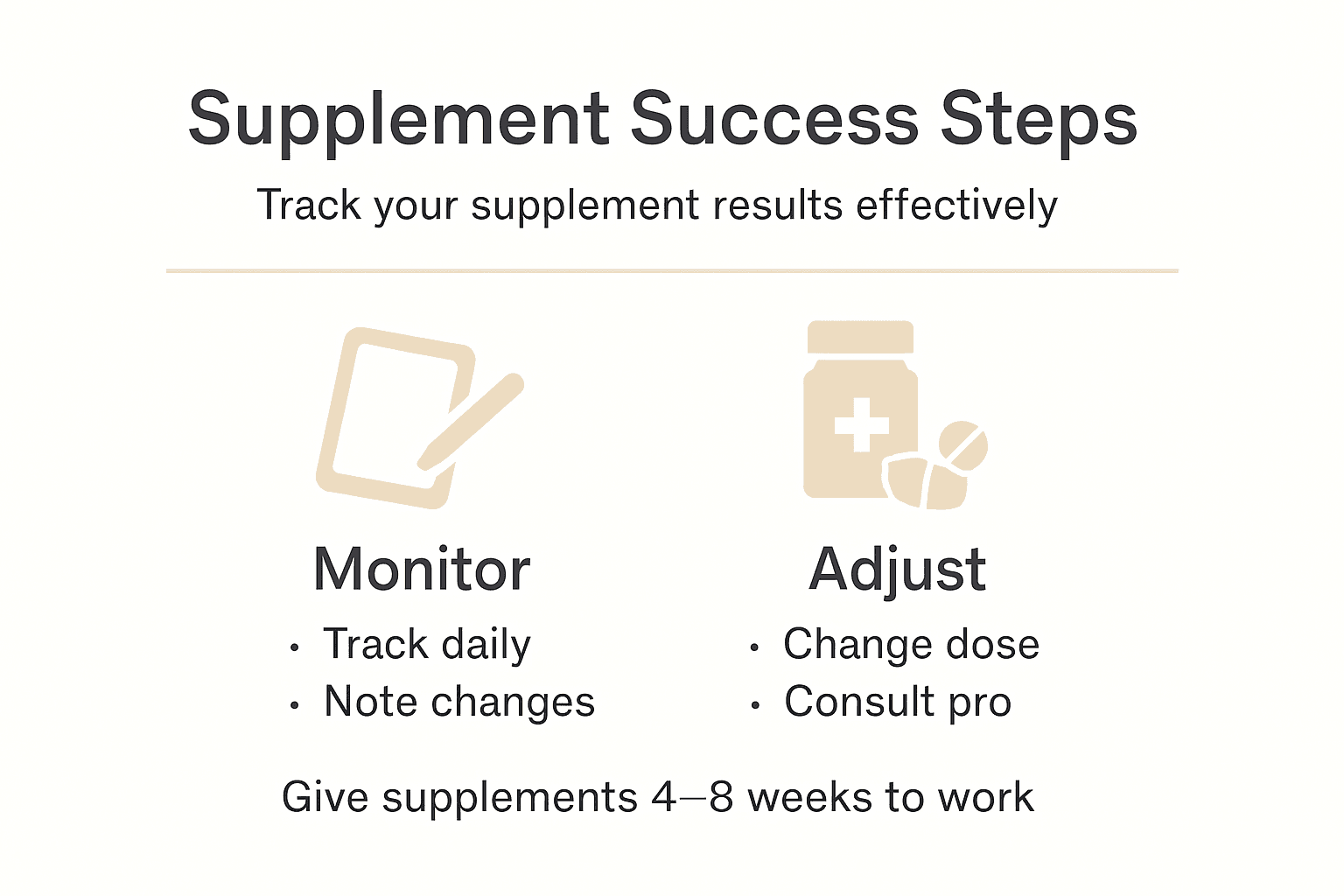
Watch for side effects, even minor ones. Some people experience digestive upset, headaches, or changes in mood when starting supplements. These signals matter. If a supplement causes problems, stop taking it and consult your healthcare provider. Observing improvements or adverse effects helps you make informed decisions about whether to continue or modify your regimen.
After 6 to 8 weeks, honestly assess whether you’re seeing results. Are you stronger? More energized? Recovering faster? If yes, continue the supplement and consider periodic blood work to confirm you’re benefiting. If no changes occurred, the supplement probably isn’t working for you, and it’s time to try something different or reassess your approach entirely.
Your supplement needs evolve as your goals, diet, and health status change. What worked during your intense training phase might not be necessary during a maintenance period. Revisit your supplement strategy quarterly or whenever major life changes occur.
Track your supplement journey with these markers:
- Baseline metrics before starting (strength, energy, sleep quality)
- Weekly or bi-weekly observations of how you feel
- Any side effects, even minor ones
- Performance improvements or lack thereof
- Changes in diet or training that affect supplement relevance
Schedule a check-in with your healthcare provider every 3 to 6 months. Regularly reviewing your supplement use ensures they’re still needed and effective for your current situation. Blood tests can reveal whether your initial deficiency has improved or whether you need dosage adjustments.
The supplement that worked perfectly last year might be completely unnecessary today.
Monitoring transforms guesswork into science. You’re not following trends anymore, you’re following data.
Pro tip: Create a simple spreadsheet with dates, supplement names, dosages, and a notes column for how you felt that day, then review it monthly to spot patterns like whether certain supplements improve your workouts or affect your sleep quality on specific days.
Make Every Supplement Count With Nutribliss
Avoiding costly supplement mistakes starts with understanding your unique needs and choosing quality products backed by science. If you want to close the gap between guessing and getting real results, explore our wide range of Nutribliss Supplements designed to target actual deficiencies and support your fitness and wellness goals.

Take control today by selecting supplements that match your goals with confidence. Visit Nutribliss.us now and browse our top-quality Fitness Supplements and Immunity Supplements crafted to deliver transparency and real benefits. Start your smarter supplement journey with us and transform your health with every dose.
Frequently Asked Questions
How can I assess my supplement needs effectively?
Start by identifying specific health concerns or dietary restrictions that may require supplementation. Ask questions regarding nutrient deficiencies, dietary choices, and life stages to clarify your actual needs.
What should I look for when researching supplement quality?
Check for transparency on the label, including a complete ingredient list and third-party testing certifications. Ensure that the chosen supplements have been independently verified for purity and potency before making a purchase.
How do I match supplements to my specific health goals?
Define your primary health goal and research supplements that have scientific evidence supporting that outcome. For example, if your goal is bone health, look for calcium and vitamin D, and avoid mixing multiple products without clear objectives.
What dosage should I take for my supplements?
Read the dosage instructions on the label carefully, as different supplements have varying requirements. Start with the lowest recommended dose and monitor how your body reacts over several weeks to identify the most effective amount.
How can I monitor the effects of the supplements I’m taking?
Track your progress by noting specific metrics related to your goals, such as energy levels and recovery speed, for at least 4 to 8 weeks. Adjust your supplement regimen based on your observations and consult a healthcare provider if you notice any adverse effects.
When should I reassess my supplement regimen?
Reevaluate your supplement needs quarterly or whenever major life changes occur, such as shifts in diet or health status. Schedule regular check-ins with your healthcare provider to confirm that your supplement strategy remains effective and necessary.