

Choosing the right supplements can feel overwhelming when quality varies so dramatically across brands. Recent testing reveals that many popular protein powders and supplements contain concerning levels of heavy metals like lead and cadmium, while others fail to deliver the protein content they promise. These hidden risks threaten your health goals and athletic performance. This guide teaches you practical methods to confidently assess supplement quality, interpret lab testing results, and spot red flags before you buy. You’ll learn exactly what to look for on labels, how experts test for contaminants, and which mistakes leave consumers vulnerable to low-quality products.
Table of Contents
- What You Need To Know Before Evaluating Supplements
- Step-By-Step Methods To Assess Supplement Quality And Safety
- How To Read And Interpret Supplement Labels For Quality Evaluation
- Common Mistakes To Avoid When Evaluating Supplement Quality
- Explore Quality Supplements With NutriBliss
- Frequently Asked Questions
Key takeaways
| Point | Details |
|---|---|
| Quality indicators | Focus on contamination levels, protein accuracy, and third-party testing verification when evaluating supplements. |
| Testing methods | Brands use Dumas Method for protein content and mass spectrometry for heavy metals to ensure product safety. |
| Label reading skills | Check serving sizes, ingredient transparency, and certification badges to calculate safe daily intake limits. |
| Red flags | Avoid proprietary blends, missing test results, and flashy marketing claims without independent verification. |
What you need to know before evaluating supplements
Before diving into quality assessment, you need foundational knowledge about supplement types and regulatory realities. Protein powders, ready-to-drink shakes, and vitamin capsules each present unique quality challenges. Powders require accurate protein measurement, while liquids face contamination risks during manufacturing. Capsules and tablets must deliver consistent dosing across batches.
The supplement industry operates under looser oversight than pharmaceuticals, creating quality gaps. Manufacturers can sell products without pre-market safety approval, placing the burden of verification on you. This regulatory environment makes independent testing and label literacy essential skills for safe supplementation.
Heavy metal contamination poses the most serious risk. Lead, cadmium, and arsenic accumulate in your body over time, potentially causing neurological damage and organ dysfunction. These contaminants enter supplements through soil where ingredients grow or during processing with contaminated equipment. Testing of protein supplements revealed that many popular brands contain levels that exceed safe daily exposure limits when consumed as directed.
Protein content accuracy matters equally for your fitness and health goals. Some products deliver 30% less protein than labeled, undermining your nutrition plan and wasting money. Inaccurate labeling prevents you from calculating true macronutrient intake, making it impossible to optimize your diet for muscle building or weight management.
Understanding supplement labels requires knowing which elements signal quality. Look for these critical components:
- Complete ingredient lists with specific amounts, not vague terms
- Serving size recommendations tied to safety data
- Manufacturing facility certifications and batch numbers
- Third-party testing seals from recognized laboratories
- Clear warnings about allergens and potential interactions
Recommended dosages directly impact safety because they determine your cumulative exposure to both beneficial nutrients and potential contaminants. A supplement with moderate heavy metal levels becomes dangerous when the label suggests three servings daily instead of one. Always evaluate quality in context of how much you’ll actually consume.
Step-by-step methods to assess supplement quality and safety
Laboratory testing follows rigorous protocols to reveal what’s really inside supplement containers. Understanding these methods helps you interpret test results and choose products backed by solid science. The process begins with representative sampling, where technicians collect multiple units from different production batches to ensure consistency across what consumers actually buy.
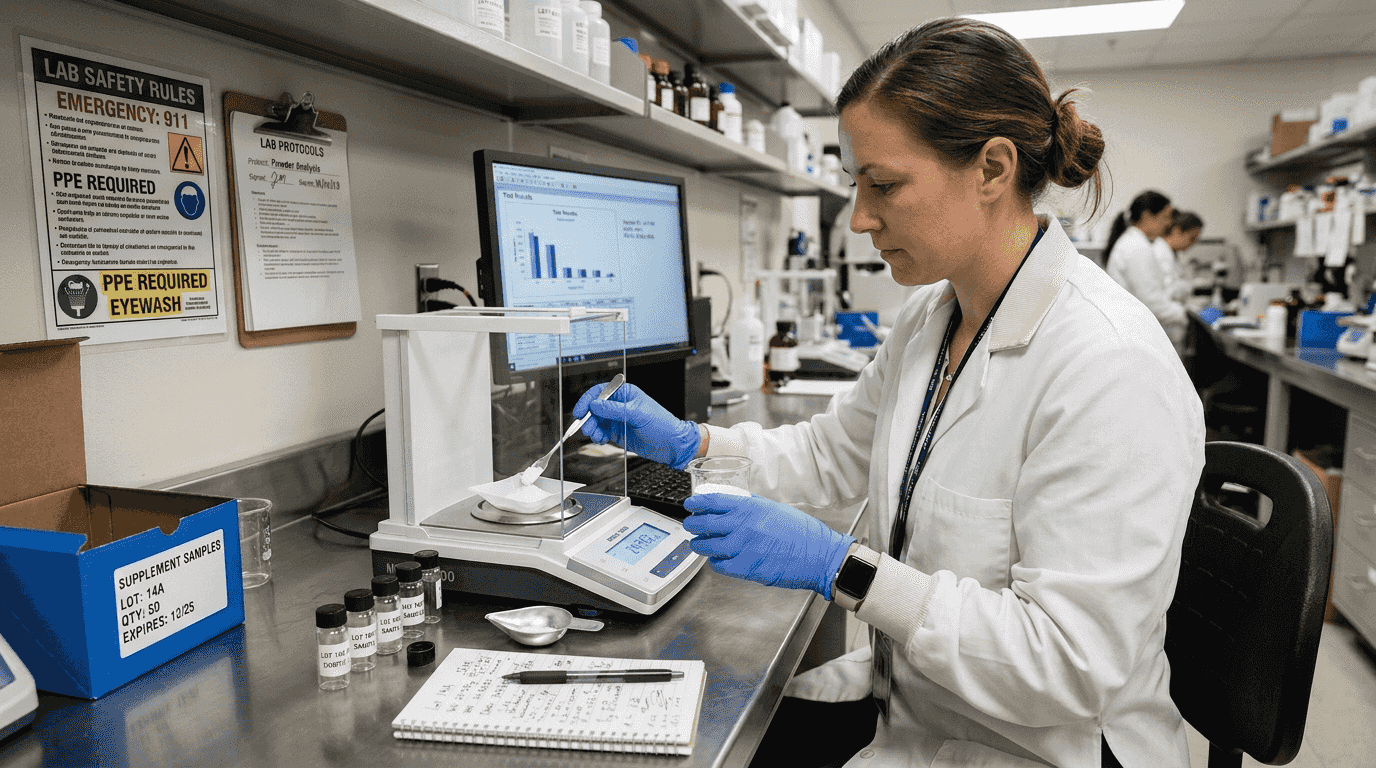
Protein content verification uses the Dumas Method, which measures total nitrogen in a sample and converts it to protein amount. This technique combusts the supplement at extremely high temperatures, capturing nitrogen gas released during burning. Since protein contains roughly 16% nitrogen by weight, labs calculate protein content with precision. The method catches manufacturers who use nitrogen-spiking ingredients to fake higher protein levels.
Heavy metal analysis relies on Inductively Coupled Plasma Mass Spectrometry, a sophisticated technique that identifies and quantifies toxic elements at parts-per-billion concentrations. The instrument ionizes the sample in plasma reaching 10,000 degrees Celsius, then separates ions by mass. This reveals exact amounts of lead, cadmium, arsenic, and mercury lurking in your supplement.
Follow these steps to evaluate test results:
- Compare measured protein against label claims, accepting only 5% variance as normal manufacturing fluctuation.
- Check heavy metal levels against California Proposition 65 limits and EPA reference doses for daily exposure.
- Calculate your personal risk by multiplying contaminant levels by servings you’ll consume daily.
- Verify the testing lab’s credentials and accreditation status to ensure reliable results.
- Look for comprehensive testing that covers multiple contaminants, not just one or two elements.
Risk assessment contextualizes raw numbers into meaningful health implications. A product with 2 micrograms of lead per serving might seem low, but consuming two servings daily for years creates cumulative exposure exceeding safe limits. Health-based exposure limits account for body weight, so smaller individuals face higher relative risk from the same supplement dose.
Third-party testing provides independent verification that manufacturers can’t manipulate. Companies that voluntarily submit products to organizations like NSF International, Informed Choice, or USP demonstrate commitment to quality. These certifications require regular retesting and facility inspections, catching quality drift over time.
Pro Tip: Request batch-specific test results from manufacturers before buying, not just generic certificates. Quality varies between production runs, so recent testing of the exact batch you’re purchasing offers the most reliable safety assurance. Reputable brands publish this data openly on their websites.
Transparency separates quality brands from those hiding problems. Companies confident in their products share detailed testing methodologies, not just pass/fail summaries. When evaluating supplements, prioritize those offering accessible lab reports showing actual measurements, not vague quality claims. Learning to mix supplements safely becomes easier when you understand individual product quality through proper testing. Following comprehensive supplement safety guidelines helps you integrate quality assessment into your overall wellness strategy.
How to read and interpret supplement labels for quality evaluation
Supplement labels contain critical information that reveals quality when you know what to examine. The ingredient list appears in descending order by weight, showing which components dominate the formula. Premium products list active ingredients first, while low-quality supplements bury them below fillers like maltodextrin or rice flour. This ordering tells you whether you’re buying mostly active nutrition or mostly cheap bulk.
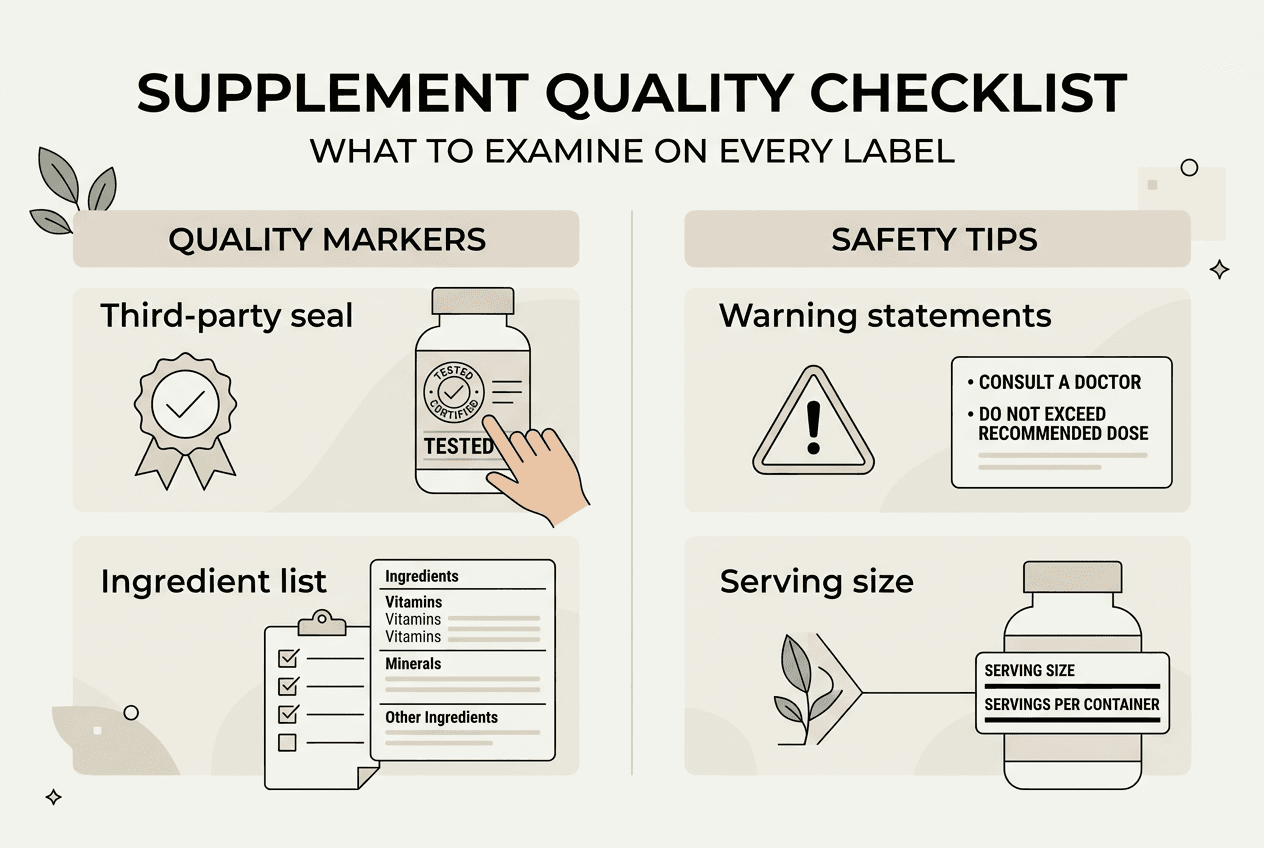
Serving size directly impacts safety and value calculations. A product claiming 30 grams of protein looks impressive until you notice the serving size is two scoops totaling 80 grams of powder. That’s only 37.5% protein by weight, indicating significant filler content. Compare protein density across products by dividing grams of protein by total serving weight, targeting ratios above 70% for pure protein supplements.
Manufacturer transparency signals quality commitment through specific details rather than vague marketing. Look for manufacturing facility addresses, batch codes, and expiration dates that enable traceability. Products listing only a corporate headquarters without production facility information raise red flags about quality control oversight.
Third-party verification badges from recognized organizations provide independent quality confirmation. NSF Certified for Sport, Informed Choice, and USP Verified marks indicate the product underwent testing beyond manufacturer claims. These certifications test for banned substances, verify label accuracy, and screen for contaminants. Not all certification programs offer equal rigor, so research what each badge actually guarantees.
Recent supplement purchases between November 2024 and January 2025 for quality testing revealed significant variance in what consumers actually receive versus label promises. This timeline demonstrates that quality issues persist in current products on shelves, making label scrutiny essential for every purchase.
Calculating daily intake requires multiplying per-serving amounts by how many servings you’ll realistically consume. If a protein powder contains 1.5 micrograms of lead per serving and you drink two shakes daily, your exposure reaches 3 micrograms daily. Compare this against California’s Proposition 65 limit of 0.5 micrograms daily to assess risk. Many consumers unknowingly exceed safe limits by following label recommendations without checking contaminant data.
Proprietary blends hide ingredient quantities behind vague labels listing multiple components with a single total weight. A label showing “Proprietary Blend (500mg): Green tea extract, caffeine, garcinia cambogia” prevents you from knowing if you’re getting 400mg caffeine or 10mg. This opacity makes dosing unpredictable and safety assessment impossible. Quality manufacturers list exact amounts for each ingredient.
Warning statements reveal potential risks manufacturers legally must disclose. Statements about pregnancy, medication interactions, or maximum daily use indicate ingredients with known safety concerns. Missing warnings on products containing stimulants or herbs with drug interactions suggest inadequate safety review.
Pro Tip: Cross-reference label claims against independent testing databases that publish results from products purchased at retail. Consumer Reports, Clean Label Project, and ConsumerLab regularly test popular supplements and reveal discrepancies between marketing and reality. These resources catch problems before they reach your body.
Allergen disclosures matter even if you don’t have diagnosed allergies. Statements like “manufactured in a facility that processes soy and dairy” indicate potential cross-contamination affecting product purity. Sensitive individuals need this information, while its presence demonstrates manufacturing transparency about facility practices.
Common mistakes to avoid when evaluating supplement quality
Trusting marketing claims without independent verification leads consumers to waste money on ineffective or dangerous products. Flashy labels featuring words like “pharmaceutical grade,” “clinically proven,” or “maximum strength” mean nothing without third-party testing data. These terms lack regulatory definitions, allowing manufacturers to use them freely regardless of actual quality. Always demand verifiable evidence through published lab results or recognized certifications.
Ignoring serving size when assessing safety creates dangerous exposure to contaminants. Risk assessment methodology estimates daily consumption based on label recommendations to evaluate health risks using established exposure limits. A supplement with moderate heavy metal levels becomes toxic when consumed at recommended three-servings-daily dosing. Calculate your cumulative intake by multiplying contaminant levels by actual servings you’ll take, not just examining per-serving amounts in isolation.
Proprietary blends mask true ingredient quantities, preventing informed safety decisions. These formulations list multiple ingredients with only a total combined weight, hiding whether you’re getting therapeutic doses or homeopathic traces. Manufacturers use proprietary blends to protect formulations from competitors, but this secrecy leaves you guessing about effectiveness and safety. Reject products using this labeling tactic unless the company provides detailed breakdowns upon request.
Misinterpreting contamination data in isolation rather than consumption context distorts risk assessment. A product containing 2 micrograms of lead per serving might fall below daily limits when taking one serving, but exceeds safe exposure at two servings daily for your body weight. Consider these factors together:
- Your body weight relative to reference doses calculated for average adults
- Total servings you’ll consume daily across all supplements
- Cumulative exposure from diet and environmental sources
- Duration of supplementation, since metals accumulate over time
Confusing correlation with causation when reading supplement research leads to unrealistic expectations. A study showing improved performance in athletes taking a supplement doesn’t prove the supplement caused the improvement. Training, diet, and placebo effects confound results. Look for randomized controlled trials with large sample sizes, not testimonials or observational studies.
“Heavy metal exposure from supplements poses cumulative health risks that manifest over years of consumption, making daily intake calculations essential for long-term safety. Even small amounts exceeding safe limits accumulate in tissues, potentially causing irreversible neurological and organ damage that won’t appear until significant harm has occurred.”
Assuming expensive supplements guarantee quality reflects marketing success, not scientific reality. Price correlates poorly with purity or effectiveness. Testing reveals that budget brands sometimes outperform premium products in both label accuracy and contamination levels. Evaluate every product on testing data and transparency, regardless of price point.
Overlooking the importance of manufacturing date and storage conditions degrades supplement quality before you consume it. Protein oxidizes over time, vitamins lose potency, and probiotics die without proper refrigeration. Check expiration dates and choose products with recent manufacturing dates when possible. Store supplements according to label instructions to preserve quality you paid for.
Neglecting to research common supplement mistakes before building your regimen leads to predictable problems with interactions, timing, and dosing. Learning from others’ errors saves you from repeating them. Understanding quality evaluation helps you avoid products that would undermine your health goals. Even quality supplements like matcha require proper sourcing and testing to deliver promised benefits safely.
Explore quality supplements with NutriBliss
Now that you understand how to evaluate supplement quality, finding products that meet these standards becomes your next step. NutriBliss builds transparency into every product, offering supplements developed with scientific rigor and independent testing verification. Their commitment to quality means you can trust what’s on the label matches what’s in the container.

Explore the science behind superfoods to understand how quality ingredients deliver real health benefits. The NutriBliss supplements collection features protein powders, electrolytes, and performance enhancers manufactured with the quality standards this guide teaches you to demand. Learn about athlete recovery science to see how properly formulated supplements support your training goals. Choosing verified quality supplements becomes straightforward when you partner with brands that prioritize your health over marketing hype.
Frequently asked questions
How can I tell if a supplement is third-party tested?
Look for certification seals from recognized organizations like NSF International, Informed Choice, USP Verified, or ConsumerLab on product packaging or the manufacturer’s website. These badges indicate independent laboratories tested the product for label accuracy, contaminants, and banned substances. Verify the certification by checking the testing organization’s database, where legitimate products appear with batch numbers and test dates.
What are the biggest risks of low-quality supplements?
Heavy metal contamination poses the most serious health threat, with lead, cadmium, and arsenic accumulating in your body over time to cause neurological damage, kidney dysfunction, and increased cancer risk. Inaccurate protein or ingredient amounts undermine your nutrition goals and waste money while potentially causing side effects from unlisted ingredients. Some low-quality supplements contain banned substances that trigger positive drug tests or dangerous stimulants that stress your cardiovascular system.
How often should I check for updates on supplement safety?
Review testing reports and safety information at least annually, or whenever you repurchase a product, since quality can change between production batches. Follow trusted sources like Consumer Reports, ConsumerLab, and Clean Label Project that regularly publish updated testing results on popular supplements. Set reminders to check your current supplements against new research every six months, especially if you take them daily for extended periods.
Can I trust supplements that don’t have third-party certification?
Products without independent testing carry higher risk but aren’t automatically dangerous if the manufacturer provides transparent lab results and detailed quality documentation. Request batch-specific test results directly from companies and verify their testing laboratory’s credentials and accreditation status. However, third-party certification significantly reduces risk by ensuring ongoing quality monitoring rather than relying solely on manufacturer claims that lack independent verification.