

TL;DR:
- Maintaining a consistent wake time helps regulate your body’s internal clock and improves sleep quality.
- Optimizing bedroom temperature, light exposure, and wind-down routines supports natural sleep signals and reduces disruptions.
Tips for better sleep are evidence-based habits and environmental adjustments that improve both sleep duration and quality by aligning your body’s natural rhythms with your daily routine. The American Academy of Sleep Medicine recommends that adults get 7–9 hours of quality sleep each night. That standard matters because falling short of it consistently raises your risk of poor concentration, mood disruption, and long-term health problems. The good news is that most sleep difficulties respond well to structured behavioral changes, starting with your schedule, your bedroom, and your wind-down habits.
1. Keep a consistent sleep schedule every day
Your body runs on a circadian rhythm, a roughly 24-hour internal clock that controls when you feel sleepy and when you feel alert. Waking up at the same time every day, including weekends, is the single most powerful way to stabilize that clock.
Irregular sleep schedules produce the same disorienting effect as traveling across time zones. Your body does not know when to release sleep hormones, so you end up lying awake at night and dragging through the day. Keeping a fixed wake time trains your brain to build sleep pressure at the right time each evening.
Key habits that support a stable schedule:
- Set one wake time and protect it, even after a bad night.
- Move your bedtime gradually, no more than 15 minutes earlier or later per night, when adjusting your schedule.
- Avoid sleeping in on weekends to compensate for lost sleep.
- If you need extra rest, use a short nap rather than a long morning lie-in.
Pro Tip: If you must shift your schedule, move it by 15 minutes every two to three days rather than jumping an hour all at once. Gradual changes let your circadian rhythm adapt without the grogginess.
2. Optimize your bedroom temperature for deeper sleep
Your core body temperature needs to drop slightly for sleep to begin and stay stable. The ideal bedroom temperature sits between 60 and 72°F, with 68°F being the sweet spot for most adults.
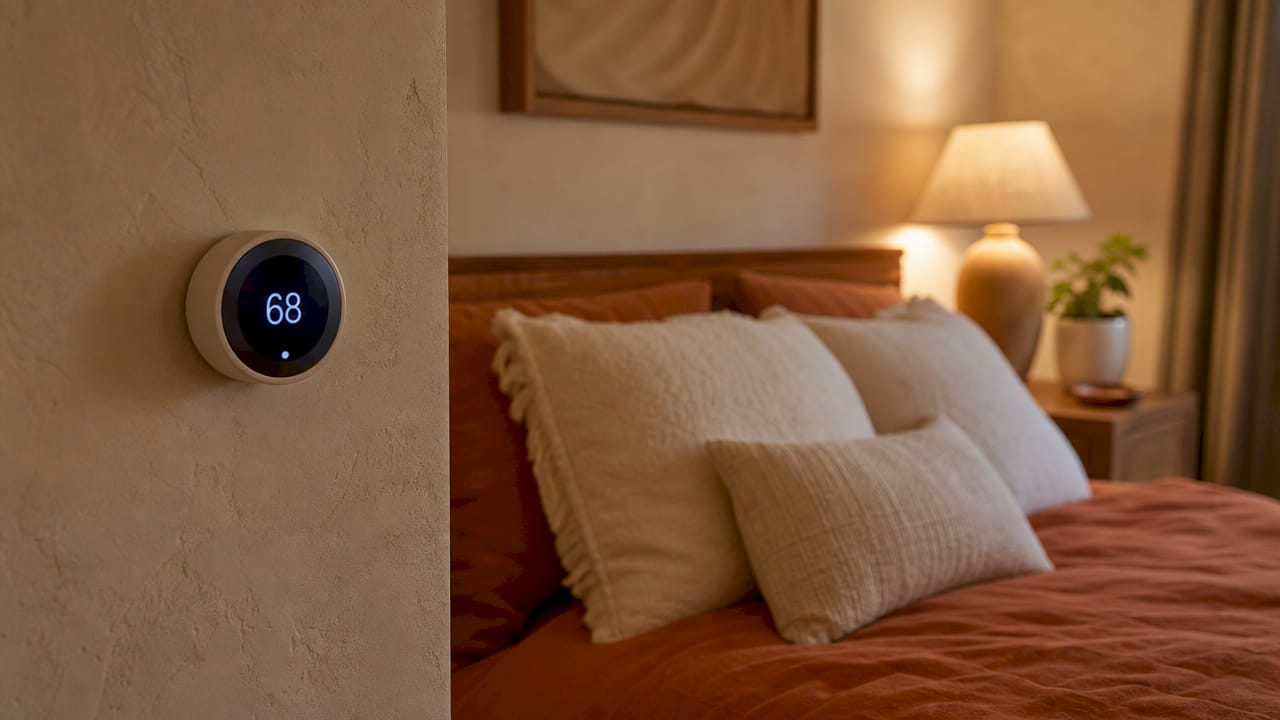
A room that is too warm keeps your body from cooling down, which delays sleep onset and increases nighttime waking. A room that is too cold can disrupt your sleep cycles in the second half of the night when your body temperature naturally rises again.
| Bedroom condition | Effect on sleep |
|---|---|
| Temperature 60–72°F | Supports natural body cooling and continuous sleep |
| Temperature above 75°F | Delays sleep onset and increases waking |
| Complete darkness | Maximizes melatonin production |
| Noise above 40 decibels | Fragments sleep cycles |
Pro Tip: Keep a light blanket nearby. A cool room with a warm blanket gives you control over your body temperature throughout the night without overheating the space.
3. Control light exposure to protect melatonin production
Light is the most powerful external signal your brain uses to set its internal clock. Bright light in the morning tells your brain it is daytime. Darkness in the evening triggers melatonin release, which is the hormone that makes you feel sleepy.
Getting natural sunlight within 60 minutes of waking anchors your circadian rhythm for the entire day. That single habit makes it easier to feel genuinely tired at bedtime. Dim your indoor lights at least one hour before bed to give melatonin a chance to build. You can read more about how this process works in this guide to melatonin and light exposure.
Practical light management habits:
- Step outside or sit near a bright window within the first hour of waking.
- Use blackout curtains or an eye mask to block streetlights and early morning sun.
- Switch to warm, dim lighting in the evening instead of overhead fluorescents.
- If you wake at night, use a low-light source like a small flashlight rather than turning on bright overhead lights. Bright light at 2 a.m. can delay your ability to fall back asleep by up to 30 minutes.
4. Build a 30–60 minute wind-down routine
Most people wait until they are already in bed to try to relax. That approach rarely works. A dedicated wind-down period of 30–60 minutes before bed gives your nervous system time to shift from active mode to rest mode.
Think of it as a buffer zone between your day and your sleep. The activities you choose during this window matter. The goal is to lower mental and physical arousal so your body can follow its natural sleep signals.
A practical wind-down sequence:
- Set a wind-down alarm 60 minutes before your target bedtime.
- Dim the lights in your home and put your phone face down or in another room.
- Write down any unresolved worries and your next steps for handling them. Pre-bed mental offloading reduces the mental chatter that keeps you awake.
- Choose one calming activity: reading a physical book, gentle stretching, or a short meditation.
- Take a warm shower or bath 60–90 minutes before bed. The heat causes blood vessels to dilate, and your core temperature drops quickly once you step into a cool room. That rapid temperature decline signals your brain that sleep is near.
Pro Tip: Write tomorrow’s to-do list before you start your wind-down routine, not during it. Getting tasks out of your head and onto paper removes the mental loop that keeps your brain running problem-solving mode at midnight.
5. Reserve your bed for sleep only
Using your bed for work, scrolling, or watching shows trains your brain to associate it with wakefulness. Bed should be reserved for sleep and intimacy only. That association is not just a preference. It is a behavioral conditioning principle called stimulus control, and it is one of the most effective tools in sleep hygiene.
When your brain links your bed to alertness, lying down stops triggering sleepiness. The fix is straightforward but requires discipline. If you are not asleep within 20 minutes of lying down, get up, go to a dim room, and do something quiet until you feel drowsy. Then return to bed. Repeating this process rebuilds the mental connection between your bed and sleep.
6. Manage caffeine and alcohol timing carefully
Caffeine blocks adenosine, the chemical that builds sleep pressure throughout the day. Its effects last longer than most people expect. Cutting off caffeine by early afternoon gives your body enough time to clear it before bed.
Alcohol is a more complicated case. It may help you fall asleep faster, but it fragments sleep in the second half of the night by suppressing REM sleep. You wake up feeling unrefreshed even after a full night in bed. Treating alcohol as a sleep aid consistently worsens sleep quality over time.
7. Exercise regularly, but time it right
Regular physical activity is one of the most reliable ways to improve sleep quality and duration. It reduces the time it takes to fall asleep and deepens slow-wave sleep, which is the most restorative stage.
The timing matters, though. Intense exercise within two hours of bedtime raises your core body temperature and increases adrenaline, both of which delay sleep onset. Morning or early afternoon workouts deliver the sleep benefits without the interference. If evening is your only option, choose lower-intensity activities like yoga or walking. You can find more on natural energy strategies that also support better nighttime rest.
8. Nap strategically, not reactively
A short nap can restore alertness and mood without disrupting nighttime sleep, but only when done correctly. Short early-afternoon naps of 15–20 minutes are far better than sleeping in on weekends to recover lost sleep. Weekend sleep-ins shift your circadian rhythm in the same way that flying across time zones does.
Keep naps to 20 minutes or less and schedule them before 3 p.m. Longer naps push you into deep sleep stages, which leaves you groggy and reduces your sleep drive for the evening.
9. Watch your meal timing and evening diet
Eating a large meal close to bedtime forces your digestive system to stay active while your body is trying to wind down. Heavy, fatty, or spicy foods are the biggest offenders. They increase the likelihood of acid reflux and general discomfort that disrupts sleep.
Finishing your last large meal two to three hours before bed gives your digestion time to settle. A small, light snack is fine if you are genuinely hungry. Foods with natural tryptophan, such as turkey, dairy, or bananas, may support serotonin production, which feeds into melatonin synthesis. Aligning meal timing with your sleep schedule is a simple way to support your circadian rhythm without any extra effort.
10. Consider targeted sleep supplements
Behavioral changes address the root causes of poor sleep, but targeted supplementation can provide additional support during the adjustment period. Magnesium glycinate, for example, supports muscle relaxation and nervous system calm, both of which contribute to faster sleep onset. You can read about magnesium glycinate for sleep and how it compares to other options.
Some adults also benefit from melatonin-free formulas that work through different pathways. Nutribliss offers a Sleep Formula supplement designed to support relaxation and healthy sleep cycles without relying on a single ingredient. Supplements work best as a complement to good sleep hygiene, not a replacement for it.
Key takeaways
The most effective approach to better sleep combines a fixed wake time, a cool and dark bedroom, a structured wind-down routine, and consistent daytime habits that reinforce your body’s natural sleep-wake cycle.
| Point | Details |
|---|---|
| Fix your wake time | Wake at the same time daily, including weekends, to stabilize your circadian rhythm. |
| Cool your bedroom | Keep bedroom temperature between 60 and 72°F, targeting 68°F for best results. |
| Start winding down early | Begin a 30–60 minute pre-sleep routine to lower arousal before you get into bed. |
| Protect your bed association | Use your bed only for sleep so your brain links it with rest, not wakefulness. |
| Get morning sunlight | Step outside within 60 minutes of waking to anchor your biological clock for the day. |
Why I stopped chasing perfect sleep and started building better habits
The most common mistake I see is treating sleep as a problem to solve in one night. People read a list of tips, try all of them at once, sleep terribly, and conclude that nothing works. That is not a failure of the tips. It is a failure of the approach.
Your circadian rhythm took years to get where it is. Shifting it takes weeks, not days. The one change that made the biggest difference for me was protecting my wake time no matter what. Not my bedtime. My wake time. Once that was locked in, everything else started to fall into place gradually.
The other thing I would push back on is the idea that your bedroom needs to be a perfectly engineered sleep chamber before you can rest well. Start with temperature and darkness. Those two variables move the needle more than anything else. The rest is refinement.
Multitasking in bed is the habit I see people defend the most and benefit from the least. Scrolling in bed, answering emails in bed, watching shows in bed. Each of those activities chips away at the mental association your brain builds between your bed and sleep. The #nutribliss approach to wellness is about building systems that support your body’s natural processes, not fighting against them. Sleep is no different. Progress over perfection, every time.
— GAURAV
Nutribliss sleep support: science-backed rest starts here
Behavioral habits are the foundation of better sleep. Sometimes your body needs a little extra support while those habits take hold.

Nutribliss offers a range of vitamins and supplements designed around the science of natural wellness, including the Nutribliss Sleep Formula and electrolyte supplements that support hydration and physical comfort through the night. The science behind Nutribliss superfoods explains how each ingredient is selected to work with your body’s existing processes. If you want to go deeper on natural approaches, the Nutribliss sleep hygiene guide is a solid next step.
FAQ
How many hours of sleep do adults actually need?
Adults need 7–9 hours of quality sleep per night, according to the American Academy of Sleep Medicine. Consistently sleeping less than seven hours impairs cognitive function, mood, and physical recovery.
What is the fastest way to fall asleep at night?
A warm shower or bath 60–90 minutes before bed triggers a rapid core temperature drop that signals your brain to initiate sleep. Pairing that with a dark, cool room and a mental offloading exercise like writing down tomorrow’s tasks speeds up sleep onset significantly.
Does napping during the day hurt nighttime sleep?
Short naps of 15–20 minutes taken before 3 p.m. do not disrupt nighttime sleep for most adults. Naps longer than 30 minutes or taken late in the afternoon reduce sleep drive and make it harder to fall asleep at your regular bedtime.
Why do I wake up in the middle of the night and can’t fall back asleep?
Nighttime waking is often triggered by light exposure, temperature changes, or unresolved mental tension. Using low light if you need to get up and avoiding screens helps your brain return to sleep faster. A consistent wind-down routine reduces the mental arousal that makes waking feel permanent.
Is it bad to use your phone in bed before sleep?
Using your phone in bed trains your brain to associate the bed with alertness rather than rest. The light from screens also suppresses melatonin production. Both effects delay sleep onset and reduce overall sleep quality.