

TL;DR:
- Different types of sleep aids include prescription medications, over-the-counter options, and natural supplements, each working through distinct mechanisms to improve sleep. Matching the right sleep aid to specific insomnia patterns requires understanding their unique effects, risks, and appropriate use. Lifestyle changes and sleep hygiene are essential foundations that enhance the effectiveness of any sleep aid and promote better long-term sleep health.
Types of sleep aids fall into three main categories: prescription medications, over-the-counter options, and natural supplements, each working through distinct mechanisms to improve sleep quality. Choosing the wrong category is one of the most common mistakes people make when dealing with insomnia. Zolpidem (Ambien), diphenhydramine (Benadryl), and melatonin all treat sleep problems, but they do so in completely different ways and carry very different risk profiles. Understanding those differences is what separates a short-term fix from a long-term solution. This guide breaks down every major sleep aid class so you can match the right option to your specific situation.
1. What are the main types of sleep aids?
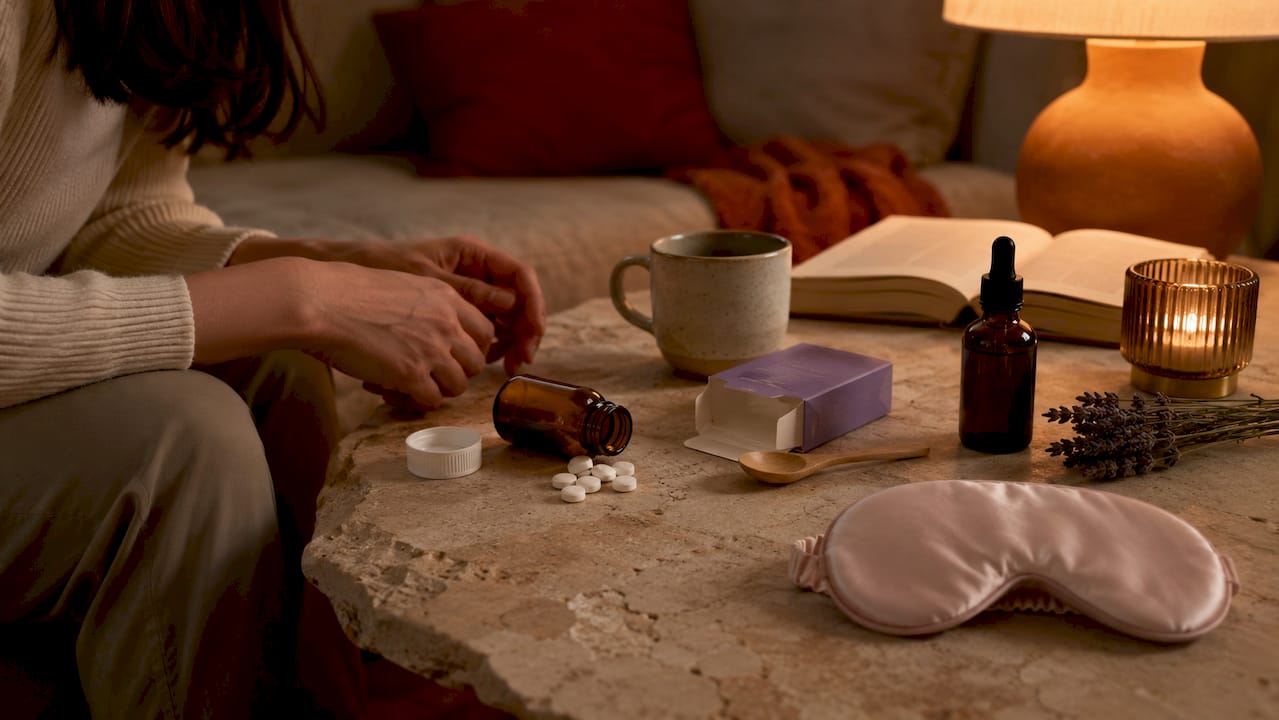
Sleep aids are not interchangeable, despite what most people assume. Each category targets a different part of the sleep problem, whether that is falling asleep, staying asleep, or resetting a disrupted circadian rhythm. Prescription medications alter brain chemistry directly. Over-the-counter options sedate through antihistamine pathways. Natural supplements work more gently, supporting the body’s existing sleep systems. Knowing which category fits your problem is the first step toward using any sleep aid safely and effectively.
2. Prescription sleep medications: classes and how they work
Prescription sleep medications are divided into five major classes, each with a distinct mechanism and risk profile. Short-term use is the clinical standard across all five classes to reduce dependency risk.
The five prescription classes:
- Benzodiazepines (temazepam): Enhance GABA activity to produce sedation. Carry significant dependency risk with extended use.
- Z-drugs (zolpidem/Ambien, eszopiclone): Also target GABA receptors but with more selectivity. Still carry tolerance and rebound insomnia risks.
- Orexin receptor antagonists/DORAs (suvorexant, lemborexant, daridorexant): Block wake-promoting orexin signals rather than forcing sedation. DORAs are now considered the safest prescription class for insomnia, with lower dependency risk and better sleep architecture preservation.
- Melatonin receptor agonists (ramelteon): Mimic melatonin to shift circadian timing. Best for sleep onset problems tied to circadian disruption.
- Sedating antidepressants (trazodone): Used off-label for insomnia, particularly in people with co-occurring depression or anxiety.
The key distinction between older sedatives and newer DORAs matters clinically. Sedative-hypnotics force sedation but can impair sleep architecture and cognitive function. Orexin antagonists promote more natural sleep by blocking wake signals rather than suppressing the entire nervous system. That difference shows up in how rested you feel the next morning.
| Class | Example | Best For | Dependency Risk |
|---|---|---|---|
| Benzodiazepines | Temazepam | Short-term acute insomnia | High |
| Z-drugs | Zolpidem (Ambien) | Sleep onset | Moderate |
| DORAs | Suvorexant, Lemborexant | Sleep maintenance | Low |
| Melatonin agonists | Ramelteon | Circadian disruption | Very low |
| Sedating antidepressants | Trazodone | Insomnia with mood disorders | Low |
Pro Tip: If your doctor offers a prescription sleep aid, ask specifically whether it is a DORA class medication. DORAs preserve natural sleep stages more effectively than benzodiazepines or Z-drugs.
3. Which over-the-counter sleep aids are most common?
Over-the-counter sleep aids are dominated by two sedating antihistamines: diphenhydramine and doxylamine. Diphenhydramine (Benadryl) and doxylamine (Unisom) are the active ingredients in most OTC sleep products sold in American pharmacies. They work by blocking histamine receptors, which produces drowsiness as a side effect of their antihistamine action. That mechanism is effective in the short term but creates problems with repeated use.
Tolerance to antihistamine sedation builds quickly, often within three to five days of nightly use. The sedation stops working, but the anticholinergic side effects, including dry mouth, blurred vision, and next-day cognitive fog, persist. In adults over 65, anticholinergic drugs are associated with increased fall risk and cognitive impairment, making OTC antihistamine sleep aids a poor choice for older adults.
OTC formulations also differ from prescription versions in dose flexibility. You cannot titrate diphenhydramine the way you can a prescription medication. The dose is fixed, and there is no clinical guidance built into the packaging for your specific sleep pattern.
Pro Tip: Use OTC antihistamine sleep aids for no more than two consecutive nights. Beyond that, tolerance reduces effectiveness and side effects accumulate without benefit.
4. What natural sleep supplements have evidence-backed effectiveness?
Natural sleep supplements vary widely in the quality of evidence behind them. A small group of supplements has genuine clinical support. The rest rely more on placebo effects or mild calming rituals than on strong biochemical action.
Evidence-supported natural sleep supplements:
- Magnesium glycinate (200–400 mg): Magnesium glycinate has superior absorption compared to other magnesium forms and a lower risk of gastrointestinal side effects. It supports GABA activity and reduces cortisol, making it one of the most practical natural sleep aids available.
- Low-dose melatonin (0.3–1 mg): High doses of melatonin (5–10 mg) commonly sold OTC can cause next-day grogginess. Clinical efficacy for circadian phase-shifting sits at much lower doses. The key is precise, low dosing aligned with your circadian needs, not the megadoses most commercial products provide.
- L-theanine (100–200 mg): An amino acid found in green tea that promotes relaxation without sedation. Works well for people whose sleep problems stem from racing thoughts rather than circadian disruption.
- Ashwagandha (600 mg KSM-66): Reduces cortisol and stress-related wakefulness. The KSM-66 extract form has the strongest clinical backing among ashwagandha preparations.
- Glycine (3 g): Lowers core body temperature, which signals the brain that it is time to sleep. Less well-known than melatonin but with solid mechanistic evidence.
| Supplement | Dose | Primary Mechanism | Evidence Level |
|---|---|---|---|
| Magnesium glycinate | 200–400 mg | GABA support, cortisol reduction | Strong |
| Melatonin | 0.3–1 mg | Circadian phase-shifting | Strong |
| L-theanine | 100–200 mg | Relaxation, anxiety reduction | Moderate |
| Ashwagandha KSM-66 | 600 mg | Cortisol reduction | Moderate |
| Glycine | 3 g | Core body temperature reduction | Moderate |
| Valerian root | Varies | Unclear | Weak |
Herbal sleep aids like valerian root often lack consistent, robust clinical evidence despite widespread use. Experts note these herbs may rely on placebo effects rather than strong biochemical actions. That does not mean they are useless, but it does mean you should not expect them to perform like magnesium glycinate or low-dose melatonin.
Pro Tip: Take magnesium glycinate 30–60 minutes before bed rather than with dinner. Timing matters for sleep-specific benefits, and food can slow absorption.
You can explore melatonin dosing science to understand why lower doses outperform the 5–10 mg products on most pharmacy shelves.
5. How do lifestyle and behavioral changes support sleep aids?
Sleep hygiene forms the foundation that any sleep aid builds on. Without it, even the best prescription medication delivers diminished results. No supplement or drug compensates for a bedroom that is too warm, too bright, or tied to waking activities like phone scrolling.
The three most impactful environmental changes are:
- Consistent wake times: Waking at the same time every day, including weekends, anchors your circadian rhythm more effectively than any supplement.
- Darkness: Even low levels of ambient light during sleep can increase heart rate and insulin resistance. Blackout curtains are not a luxury item for people with sleep problems. They are a clinical tool.
- Temperature: A bedroom temperature of 65–68°F supports the core body temperature drop that triggers deep sleep. Most people sleep in rooms that are too warm.
Cognitive behavioral therapy for insomnia (CBT-I) is the gold-standard treatment for chronic insomnia. CBT-I outperforms prescription sleep medications in long-term outcomes and carries no side effects or dependency risk. Sleep aids work best when used alongside natural sleep strategies rather than as a replacement for them.
6. How to choose the right sleep aid for your specific needs
Matching a sleep aid to your problem requires identifying your specific insomnia pattern first. Sleep onset insomnia (trouble falling asleep) responds differently than sleep maintenance insomnia (waking in the middle of the night).
Match your problem to the right category:
- Sleep onset insomnia: Low-dose melatonin, L-theanine, or ramelteon (prescription) address the circadian and anxiety components of difficulty falling asleep.
- Sleep maintenance insomnia: DORAs like suvorexant or lemborexant are the strongest prescription option. Magnesium glycinate and glycine support deeper sleep stages naturally.
- Stress-driven insomnia: Ashwagandha KSM-66 and L-theanine address the cortisol and anxiety pathway. CBT-I is the most effective long-term intervention.
- Occasional, situational insomnia: OTC antihistamines (diphenhydramine) or low-dose melatonin for short-term use only.
- Insomnia with mood disorders: Trazodone or other sedating antidepressants under physician supervision.
Age and medical history change the calculus significantly. Adults over 65 should avoid benzodiazepines, Z-drugs, and OTC antihistamines due to fall risk and cognitive effects. People with liver conditions need to discuss ramelteon and trazodone with a physician before use.
Testing one supplement at a time for at least a week before adding another is the clinical standard. Stacking multiple supplements simultaneously makes it impossible to identify what is working or causing side effects. That single rule prevents most of the confusion people experience when self-managing sleep with supplements.
Pro Tip: Start with the lowest effective dose of any sleep aid and assess for one full week before changing anything. Sleep quality, morning alertness, and mood are all data points worth tracking.
Key takeaways
The most effective approach to sleep aids is matching the specific aid class to your insomnia pattern, using the lowest effective dose, and building sleep hygiene as the non-negotiable foundation.
| Point | Details |
|---|---|
| Match aid to insomnia type | Sleep onset and sleep maintenance insomnia require different interventions. |
| DORAs are the safest prescription option | Orexin antagonists preserve sleep architecture better than benzodiazepines or Z-drugs. |
| Low-dose melatonin outperforms high-dose | Clinical efficacy sits at 0.3–1 mg, not the 5–10 mg doses sold in most stores. |
| Test one supplement at a time | Stacking supplements obscures effects and makes side effects impossible to trace. |
| Sleep hygiene is non-negotiable | Darkness, temperature, and consistent wake times amplify every sleep aid’s effectiveness. |
What I have learned after years of watching people get sleep aids wrong
People treat sleep aids like a category where more is better. More milligrams, more supplements, more prescriptions. The pattern I see repeatedly is someone taking 10 mg of melatonin, adding valerian root, and wondering why they wake up groggy and still cannot sleep through the night. The problem is not that sleep aids do not work. The problem is that most people are using the wrong ones at the wrong doses for the wrong reasons.
The shift that actually changes outcomes is treating sleep hygiene as the primary intervention, not the afterthought. I have seen people resolve years of sleep maintenance insomnia by dropping their bedroom temperature to 66°F and installing blackout curtains, with no supplements at all. That result is not unusual. It is what the research consistently shows, and it is what gets ignored because it is not a product you can buy.
When supplements do belong in the picture, magnesium glycinate is where I would start for most people. It has the absorption advantage over other magnesium forms, the side effect profile is minimal, and the evidence is solid. Low-dose melatonin (0.3–1 mg) is the second tool, not the first. Most people are taking ten times the effective dose and calling melatonin ineffective when the real issue is overdosing.
The #nutribliss approach to sleep support reflects this thinking. Build the foundation first. Add targeted, evidence-backed supplements second. Prescription medications are a short-term bridge, not a long-term strategy. And always, always consult a healthcare provider before starting any new sleep aid, especially if you are managing other conditions or taking other medications.
— GAURAV
Support your sleep with Nutribliss supplements
If you are ready to move beyond guesswork, Nutribliss formulates sleep support supplements around the ingredients with the strongest evidence: magnesium glycinate, L-theanine, and complementary compounds that work with your body’s natural sleep systems rather than against them.

Every Nutribliss formula is built on published research, not marketing trends. You can review the full science behind each ingredient on the Nutribliss supplements page or go deeper into the research at the science-backed formulations page. If you want a melatonin-free option, the melatonin-free sleep guide covers exactly what works without it.
FAQ
What is the safest prescription sleep medication?
Dual orexin receptor antagonists (DORAs) like suvorexant and lemborexant are currently considered the safest prescription class for insomnia. They carry lower dependency risk and preserve natural sleep architecture better than benzodiazepines or Z-drugs.
What is the best natural sleep supplement for most people?
Magnesium glycinate (200–400 mg) and low-dose melatonin (0.3–1 mg) have the strongest clinical evidence among natural sleep supplements. Magnesium glycinate is particularly well-tolerated due to its superior absorption and low gastrointestinal side effect profile.
Can you take melatonin every night?
Low-dose melatonin (0.3–1 mg) is generally considered safe for regular use, particularly for circadian rhythm disruption. Higher doses (5–10 mg) increase the risk of next-day grogginess and are not more effective than lower doses.
Are OTC sleep aids safe for older adults?
OTC antihistamine sleep aids like diphenhydramine (Benadryl) are not recommended for adults over 65. Anticholinergic effects increase fall risk and can impair cognitive function, making them a poor choice for older adults even for short-term use.
How long should you use a sleep aid?
Most sleep aids, both prescription and OTC, are recommended for short-term use only, typically two to four weeks. Long-term sleep problems are best addressed through cognitive behavioral therapy for insomnia (CBT-I) combined with sleep hygiene improvements.