

TL;DR:
- Melatonin is a natural hormone that regulates sleep, circadian rhythms, and immune functions.
- Proper timing and dosage maximize its effectiveness, especially for circadian disruptions like jet lag.
- It supports overall health through antioxidant, anti-inflammatory, and neuroprotective effects beyond sleep.
Most people reach for melatonin the way they’d grab a glass of warm milk before bed, treating it like a simple off switch for the brain. But melatonin is far more than a bedtime supplement you toss in your cart next to the chamomile tea. It’s a natural hormone produced by the pineal gland that plays a central role in your body’s internal clock, immune function, and even neurological health. If you’ve ever wondered why some nights melatonin works like magic and other nights it does nothing, this guide breaks down the real science so you can use it smarter.
Table of Contents
- What is melatonin? The basics explained
- How melatonin affects your sleep and circadian rhythm
- Melatonin supplements: Effectiveness, dosing, and who should use them
- Risks, side effects, and safety guidelines for melatonin
- Beyond sleep: Surprising benefits of melatonin for overall health
- Why melatonin isn’t a cure-all and what smart use really means
- Explore natural sleep and wellness solutions at NutriBliss
- Frequently asked questions
Key Takeaways
| Point | Details |
|---|---|
| Melatonin’s real role | Melatonin is a hormone that signals your body to prepare for sleep, not just a supplement. |
| Targeted sleep aid | Supplemental melatonin is most effective for jet lag, shift work, and delayed sleep cycles. |
| Safe, short-term use | Short-term use at low doses is generally safe, but long-term effects are less certain. |
| More than sleep | Melatonin may offer antioxidant, anti-inflammatory, and neuroprotective benefits. |
| Individual safety matters | Not everyone should use melatonin—always consider your age, health conditions, and other medications. |
What is melatonin? The basics explained
Melatonin is a hormone, not a sedative. That distinction matters more than most people realize. When you take a sleeping pill, you’re forcing your brain into a drowsy state through chemical suppression. Melatonin works differently. It’s a biological signal, a message your body sends to itself that says, “night is here, start winding down.”
The pineal gland in the brain produces melatonin in direct response to darkness. When light hits your retinas, a signal travels to the suprachiasmatic nucleus (your brain’s master clock), which then tells the pineal gland to hold off on melatonin production. Once darkness arrives, that brake is released and melatonin levels begin rising, typically peaking between 2 and 4 a.m. before tapering off toward morning.
Here’s what melatonin does in your body once it’s released:
- Signals sleep readiness by communicating with the brain’s sleep centers
- Lowers core body temperature, which is a key trigger for falling asleep
- Reduces alertness by acting on the hypothalamus to suppress wakefulness signals
- Influences circadian rhythms by acting through MT1 and MT2 receptors in the brain
- Coordinates biological processes across multiple organ systems, not just the brain
“Melatonin doesn’t knock you out. It tells your body the timing is right for sleep. That’s a fundamentally different mechanism than most people expect.”
The MT1 receptor primarily promotes sleep onset by inhibiting neuronal firing in the suprachiasmatic nucleus. The MT2 receptor is more involved in shifting the timing of your internal clock, which is why melatonin is so useful for jet lag and shift work. Understanding this distinction helps you use melatonin more effectively.
Good sleep hygiene tips work hand in hand with your natural melatonin cycle. Dimming lights at night, avoiding blue light from screens, and keeping a consistent bedtime all support the body’s own melatonin production before you ever consider a supplement.
How melatonin affects your sleep and circadian rhythm
Your circadian rhythm is roughly a 24-hour internal cycle that governs when you feel awake, when you feel sleepy, when your body temperature peaks, and dozens of other biological functions. Melatonin is the primary hormone that anchors this cycle to the actual day-night environment around you.
Here’s a step-by-step look at how darkness triggers melatonin release and what happens next:
- Light fades in the evening. Photoreceptors in your eyes detect the drop in light intensity and send signals to the brain’s master clock.
- The pineal gland activates. With the light-suppression brake lifted, the pineal gland begins converting serotonin into melatonin.
- Melatonin enters the bloodstream. Levels rise gradually over 1 to 2 hours, signaling the brain to shift into sleep-preparation mode.
- Body temperature drops. Melatonin acts on the hypothalamus to lower body temperature, blood pressure, and alertness, all of which facilitate sleep onset.
- Sleep begins. With the right conditions, sleep onset follows naturally within 30 to 60 minutes of peak melatonin signaling.
- Morning light suppresses melatonin. As light returns, melatonin drops rapidly and cortisol rises, triggering wakefulness.
Melatonin also acts through MT1 and MT2 receptors to control sleep onset and circadian phase, which is why it can actually shift the timing of your internal clock, not just make you sleepy. This is the mechanism behind its effectiveness for jet lag and shift work.
| Sleep scenario | How melatonin helps | Typical timing |
|---|---|---|
| Jet lag (eastward travel) | Advances the internal clock earlier | Take at destination bedtime |
| Jet lag (westward travel) | Delays the internal clock later | Take at destination morning |
| Shift work | Resets sleep timing to match work schedule | 30 min before desired sleep |
| Delayed sleep phase | Moves sleep onset earlier | 5 to 6 hours before current bedtime |
| General insomnia | Modest effect on sleep onset | 30 to 60 min before bed |
Pro Tip: If you’re traveling east across multiple time zones, start taking a low dose of melatonin at your destination’s bedtime two nights before you leave. This pre-adjusts your internal clock and dramatically reduces jet lag symptoms.
For anyone working on improving sleep routines, melatonin supplements work best when you treat them as a timing tool rather than a sedative. Pairing them with consistent wake times and morning light exposure produces far better results than simply swallowing a pill and hoping for the best. You can find additional strategies for improving sleep quality that complement melatonin’s natural role in the body.

Melatonin supplements: Effectiveness, dosing, and who should use them
Melatonin supplements are among the most widely used sleep aids in the United States, and for good reason. They work well for specific situations. But the research tells a more nuanced story than the supplement aisle might suggest.
Low-dose synthetic melatonin reduces sleep latency and improves sleep quality in short-term use, particularly for people with circadian rhythm disruptions. However, meta-analyses show melatonin reduces sleep onset by only about 7 minutes on average for general insomnia, making it significantly more effective for circadian rhythm disorders than for run-of-the-mill sleeplessness.
Who benefits most from melatonin supplements?
- Frequent travelers dealing with jet lag across multiple time zones
- Shift workers whose sleep schedule conflicts with their natural light-dark cycle
- People with delayed sleep phase disorder, where the internal clock is shifted too late
- Older adults, whose natural melatonin production declines significantly with age
- Individuals with insomnia related to circadian disruption rather than anxiety or stress
| Supplement type | Onset time | Best use case | Duration of effect |
|---|---|---|---|
| Immediate-release melatonin | 30 to 60 minutes | Trouble falling asleep | 4 to 6 hours |
| Extended-release melatonin | 60 to 90 minutes | Trouble staying asleep | 6 to 8 hours |
| Sublingual melatonin | 15 to 30 minutes | Fast sleep onset needed | 3 to 5 hours |
| Prescription melatonin (Ramelteon) | 30 minutes | Chronic circadian issues | Regulated dosing |
Dosing is where most people go wrong. The typical over-the-counter melatonin tablet in the U.S. contains 5 to 10 mg, but research consistently shows that 0.5 to 1 mg is often just as effective and produces fewer side effects. Higher doses don’t make melatonin work better; they just flood your system with more than your body needs.
Pro Tip: Start with 0.5 mg and take it 60 minutes before your target bedtime. Monitor results for 4 to 13 weeks before adjusting. Timing matters more than dose. Taking 10 mg at the wrong time of night can actually disrupt your sleep cycle rather than improve it.
For those who want to explore melatonin-free sleep aid alternatives, options like magnesium glycinate, L-theanine, and ashwagandha work through entirely different pathways and can be highly effective for stress-related sleep issues. A well-formulated natural sleep supplement can also combine multiple ingredients for broader support without relying solely on melatonin.
Risks, side effects, and safety guidelines for melatonin
Melatonin has an excellent short-term safety profile, but that doesn’t mean it’s completely without risk. Understanding the side effects and knowing when to avoid it protects you from unnecessary problems.
Common side effects of melatonin include daytime drowsiness, headache, and digestive symptoms. Over-the-counter versions also vary significantly in dose and quality, which adds another layer of unpredictability. Studies have found that some melatonin products contain anywhere from 83% less to 478% more melatonin than the label claims. That’s a massive range that can lead to unexpected effects.
Common short-term side effects include:
- Daytime drowsiness, especially with higher doses or poor timing
- Headache, particularly in people sensitive to hormonal fluctuations
- Nausea or digestive upset, more common with doses above 5 mg
- Vivid or unusual dreams, related to changes in REM sleep architecture
- Dizziness, especially in older adults or when combined with other sedatives
“Just because melatonin is natural doesn’t mean more is better. Dosing precision matters as much with melatonin as it does with any other supplement.”
Long-term safety data is limited. Most clinical trials run for 3 months or less, so there’s genuine uncertainty about what happens with years of nightly use. The FDA classifies melatonin as a dietary supplement, not a drug, which means it isn’t subject to the same rigorous pre-market testing.
Avoid melatonin in children under two and use it cautiously in older children only under medical guidance. It should also be avoided or used with extreme caution in people with depression, seizure disorders, autoimmune conditions, or those who are pregnant or breastfeeding.
Before adding melatonin to your routine, reviewing a supplement safety checklist is a smart move. And if you’re already taking other supplements or medications, understanding the principles of mixing supplements safely helps you avoid interactions, particularly with blood thinners, diabetes medications, and immunosuppressants.
Beyond sleep: Surprising benefits of melatonin for overall health
Here’s where melatonin’s story gets genuinely interesting. Most people think of it as a one-trick hormone, but research reveals a much broader biological role.
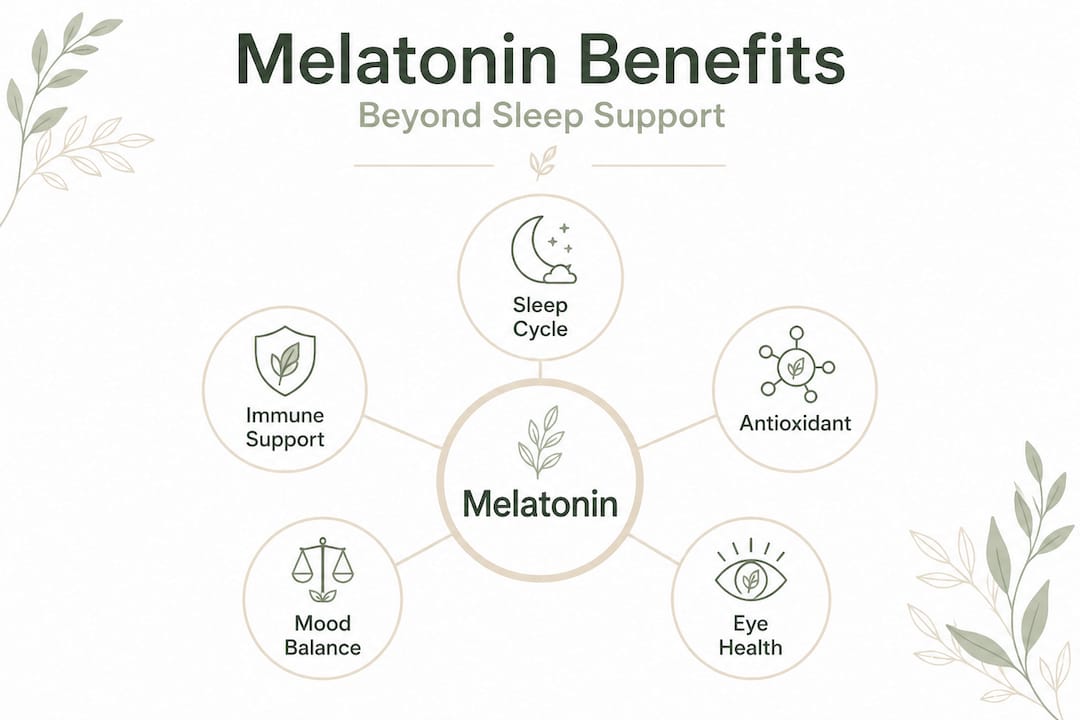
Melatonin has antioxidant, anti-inflammatory, and neuroprotective effects and may help with migraines and immune function. These aren’t fringe claims; they’re supported by a growing body of peer-reviewed research. Melatonin is actually one of the most potent naturally occurring antioxidants in the human body, capable of neutralizing free radicals directly without needing to be recycled like other antioxidants.
Here’s a summary of melatonin’s broader health effects currently supported by research:
- Antioxidant protection: Melatonin scavenges harmful free radicals and stimulates the production of other antioxidant enzymes, protecting cells from oxidative damage
- Anti-inflammatory effects: It modulates inflammatory pathways, which may reduce chronic low-grade inflammation linked to metabolic disease and aging
- Neuroprotection: Research suggests melatonin may protect neurons from damage, with implications for conditions like Alzheimer’s and Parkinson’s disease
- Migraine relief: Some studies show melatonin reduces migraine frequency and severity, potentially as effectively as certain medications
- Immune modulation: Melatonin appears to enhance immune function, particularly during nighttime when immune activity naturally peaks
- Cardiovascular support: Early research suggests melatonin may help regulate blood pressure through its effects on the autonomic nervous system
“Melatonin’s antioxidant capacity is particularly remarkable because it works in both fat-soluble and water-soluble environments, giving it access to virtually every cell in the body.”
These findings don’t mean you should take high-dose melatonin for antioxidant benefits. The research is still developing, and most of these effects have been studied at physiological doses, meaning the amounts your body naturally produces. Exploring antioxidant benefits through a broader supplement strategy is often more effective than relying on any single compound.
Why melatonin isn’t a cure-all and what smart use really means
We see this pattern constantly: someone has a rough week of sleep, grabs a 10 mg melatonin gummy, takes it randomly at 9 p.m., and then wonders why they’re groggy the next morning and still waking up at 3 a.m. Melatonin gets blamed. But the problem was never melatonin itself. It was the approach.
The most important reframe is this: melatonin is a chronobiotic, not a hypnotic. A hypnotic drug forces sleep. A chronobiotic shifts the timing of your internal clock. That’s a fundamentally different job. When you use melatonin as a chronobiotic, with precise timing, appropriate doses, and realistic expectations, it performs beautifully. When you use it like a sleeping pill, you’re asking it to do something it wasn’t designed to do.
The uncomfortable truth is that for chronic sleep problems rooted in stress, anxiety, poor sleep habits, or an irregular schedule, melatonin is at best a supporting player. Behavioral changes consistently outperform supplements for long-term sleep improvement. Cognitive behavioral therapy for insomnia, for example, produces better results than any supplement on the market, including melatonin.
Long-term evidence for melatonin is limited, and it isn’t FDA-approved for most uses. That doesn’t make it useless. It means you should use it strategically, for specific situations where it’s proven to work, while addressing the root causes of your sleep problems in parallel.
Our recommendation: use melatonin as a short-term tool for circadian disruption, pair it with solid sleep hygiene, and if sleep problems persist beyond a few weeks, look deeper. Exploring alternatives to melatonin is also worth considering if you’re not getting the results you expected, since different sleep challenges respond to different solutions.
Explore natural sleep and wellness solutions at NutriBliss
If this guide has shifted how you think about melatonin and sleep support, you’re already ahead of most people who are simply grabbing whatever’s on the shelf. At NutriBliss, we take a research-driven approach to every product we offer, because sleep is too important to leave to guesswork.

Our formulations are built around the science, not the marketing. Whether you’re looking for targeted melatonin support, a melatonin-free sleep formula, or a broader wellness stack, you’ll find products designed to work with your biology. Visit our NutriBliss science page to see the research behind what we do, or browse our full range of NutriBliss supplements to find the right fit for your sleep and wellness goals. Better sleep isn’t a luxury. It’s a foundation. Let’s build it together.
Frequently asked questions
Does melatonin help with all sleep problems?
Melatonin is most effective for delayed sleep issues, jet lag, and circadian rhythm disorders, but meta-analyses show it’s better for circadian disorders than for general insomnia or sleep disruption caused by stress or anxiety.
Can you take melatonin every night?
Short-term nightly use is generally considered safe for most healthy adults, but use caution with long-term melatonin beyond 3 to 6 months since safety data is limited and high doses should be avoided.
Are there natural ways to boost melatonin without supplements?
Yes. Dimming lights in the evening, keeping a consistent sleep and wake schedule, avoiding screens for 60 to 90 minutes before bed, and getting morning sunlight all support your body’s own melatonin production without any supplement.
Is melatonin safe for children?
Melatonin should be avoided in children under two and used cautiously in older children only under medical supervision, since long-term safety data in pediatric populations is very limited.
What are the most common side effects of melatonin?
The most common side effects are drowsiness, headache, dizziness, and nausea, which are typically mild, dose-dependent, and resolve quickly when the dose is reduced or timing is adjusted.