

Taking protein powder after a workout can support recovery and muscle growth, but the International Society of Sports Nutrition is clear: total daily protein intake is the primary driver of hypertrophy, not the exact minute you drink your shake. Aim for 1.4–2.0 g/kg of body weight per day, and target roughly 20–40 g (or ~0.3 g/kg) of high-quality protein per postworkout feeding. Get those two numbers right, and the rest is fine-tuning.
Who benefits most from a postworkout shake:
- Fasted trainees (morning lifters who skipped breakfast)
- Older adults, who show blunted muscle protein synthesis and benefit from consistent, adequate protein at each meal
- Heavy resistance trainers doing whole-body or high-volume sessions
Pro Tip: *You don’t need to sprint to your shaker immediately after training. Studies indicate the effective window for consuming protein is several hours wide for most people who ate before training. The urgency is greater if you trained fasted or won’t eat a meal for several hours.
Key Takeaways
Total daily protein intake, at 1.4–2.0 g/kg/day, is the primary driver of muscle recovery and growth; postworkout timing is a useful secondary tool, not the deciding factor.
| Point | Details |
|---|---|
| Daily protein target | Aim for 1.4–2.0 g/kg/day; serious lifters benefit from the upper end near 2.0 g/kg/day. |
| Postworkout dose | Target ~0.3 g/kg per feeding, which equals roughly 20–40 g for most adults. |
| Timing flexibility | The anabolic window is several hours wide for fed athletes; urgency is highest when training fasted. |
| Best protein type | Whey isolate or hydrolysate works fastest postworkout; plant-based athletes should dose ~20–30% higher. |
| Nutribliss option | Nutribliss offers transparently labeled, third-party tested protein powders matched to the 20–40 g evidence-based dose range. |
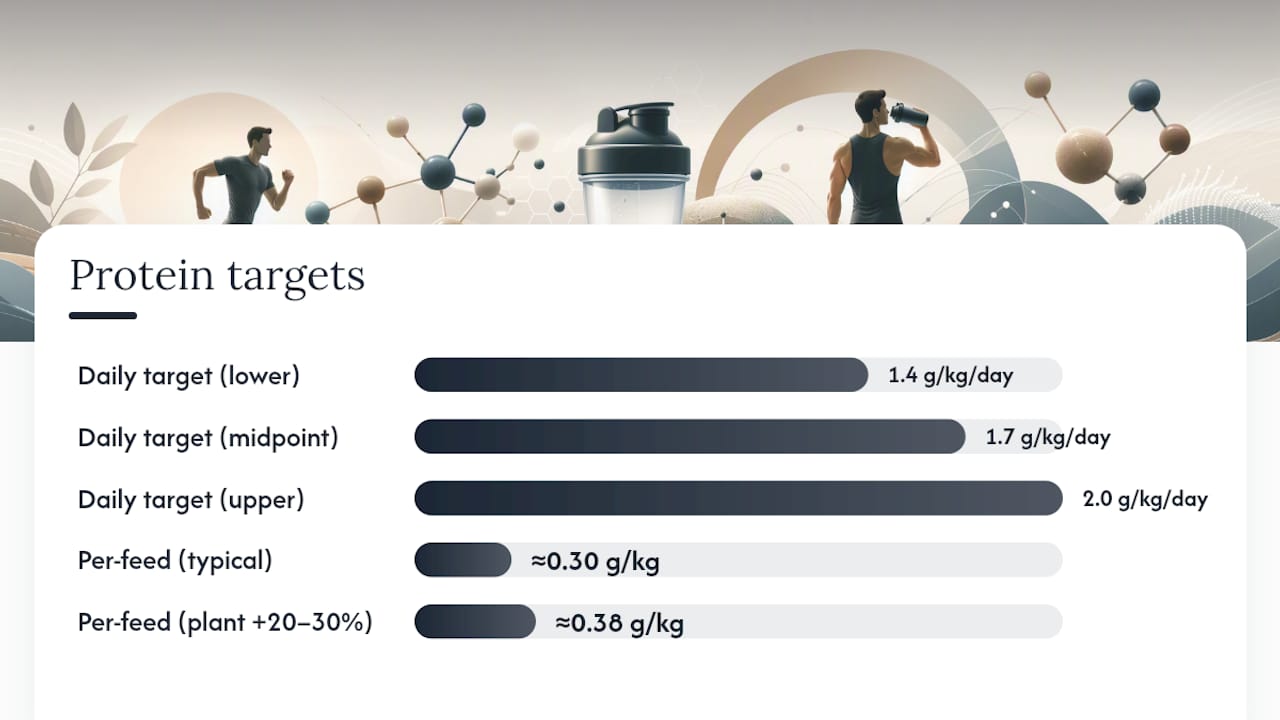
Table of Contents
- How much protein do you actually need each day?
- Does the anabolic window actually matter?
- Protein before vs. after a workout: which scenario fits you?
- Which protein powder works best after training?
- How to hit your protein targets with real food and shakes
- Are high-protein diets safe?
- What the research collectively says
- Your quick action checklist
- An evidence-first perspective on protein timing
- Nutribliss protein powders for post-workout recovery
- Sources
How much protein do you actually need each day?
The ISSN position stand sets the consensus daily target at 1.4–2.0 g/kg/day for exercising adults. Where you land within that range depends on your goal and training load.
A 2022 study in resistance-trained men found that habitual intakes approaching ~2.0 g/kg/day were associated with maximal whole-body anabolism, suggesting serious lifters should aim toward the upper end.
Per-meal targets by body weight (using ~0.3–0.4 g/kg as the per-meal target):
| Body Weight | Per-Meal Target (~0.3 g/kg) | Per-Meal Target (~0.4 g/kg) |
|---|---|---|
| 60 kg | 20 g | 24 g |
| 80 kg | 24 g | 40 g |
| 100 kg | 30 g | 40 g |
For most adults, that translates to 20–40 g per meal as a practical working range, consistent with dose-response analyses that peg the breakpoint for maximizing myofibrillar protein synthesis at ~0.31 g/kg per meal.
How goals shift your daily target:
- Muscle gain (hypertrophy): Push toward 1.8–2.0 g/kg/day; prioritize leucine-rich sources at each meal
- Endurance training: 1.4–1.6 g/kg/day is typically adequate; timing around long sessions matters more
- Fat loss: Keep protein at the higher end (1.8–2.0 g/kg/day) to preserve lean mass in a caloric deficit
- Maintenance / general fitness: 1.4–1.6 g/kg/day covers most needs
Does the anabolic window actually matter?
Short answer: less than you’ve been told. For most trained athletes who ate a protein-containing meal 2–3 hours before training, the postworkout window is wide, not a 30-minute emergency.
The evidence is consistent: total daily protein intake is the primary determinant of muscle adaptation. Peri-workout timing is a useful secondary strategy, not a prerequisite for gains. The ISSN position stand states this directly, and multiple randomized trials back it up.
A well-designed randomized trial in resistance-trained men had participants consume 25 g of protein either immediately before or immediately after training for 10 weeks. The result? No significant differences in hypertrophy or strength between groups. Pre or post, the outcomes were essentially the same when total intake was matched.
Research on postworkout anabolic sensitivity shows that muscle remains primed for protein feeding for many hours after exercise, sometimes up to 24–48 hours. The proximity of your pre-workout meal is what actually determines how urgent postworkout feeding is: a recent meal expands the effective window considerably.
Where timing does matter more: fasted training, older adults, and multiple sessions in a single day. In those cases, getting protein in sooner rather than later produces a measurable difference.
A meta-analysis on whey protein and MPS found that signaling markers like p70S6K and rpS6 peak 1–2 hours post-exercise and diminish after several hours, which supports peri-workout feeding for acute signaling benefits, even if the hypertrophy outcomes over weeks look similar regardless of exact timing.
Pro Tip: If you trained fasted or your next meal is more than 3 hours away, treat postworkout protein as a priority. Otherwise, focus on hitting your daily total and don’t stress the clock.
Protein before vs. after a workout: which scenario fits you?
The practical answer is that pre- and postworkout protein produce similar long-term outcomes when daily totals are adequate. What matters more is choosing a timing strategy you’ll actually stick to.
Common training scenarios and recommended approaches:
- Fasted morning training: Consume 20–40 g of protein within 30–60 minutes after finishing. This is the scenario where postworkout timing genuinely matters most.
- Fed afternoon training (ate 2–3 hours prior): Flexibility is high. Eat your next scheduled meal within a few hours of training and you’re covered.
- Multiple sessions in one day: Prioritize protein between sessions. Aim for at least 20 g of high-quality protein every 3–4 hours to keep muscle protein synthesis elevated.
- Long endurance sessions (90+ minutes): Pair protein with carbohydrates postworkout. Carbs replenish glycogen; protein supports muscle repair. A 3:1 or 4:1 carb-to-protein ratio is a common practical target.
Checklist for choosing your timing approach:
- Do you train fasted? Prioritize immediate postworkout protein.
- Do you have GI sensitivity? Avoid large protein doses within 30 minutes before training.
- Is portability an issue? A pre-mixed shake or single-serve packet solves the gym-bag problem.
- Are you doing back-to-back sessions? Protein between sessions is non-optional for recovery.
- Do you eat a full meal within 2 hours of training? Then exact timing is low priority.
Pro Tip: Pair 20–40 g of protein with 30–60 g of fast carbohydrates (banana, white rice, sports drink) after long endurance sessions or heavy lifting days. Carbs spike insulin and accelerate glycogen repletion, which protein alone cannot do.
Which protein powder works best after training?
Whey isolate and hydrolysate are the top choices for postworkout use. Both digest rapidly, deliver a high leucine load quickly, and produce the fastest rise in plasma amino acids. That speed matters acutely because whey combined with exercise increases myofibrillar fractional synthetic rate and activates AKT/mTOR signaling within 1–2 hours post-exercise, with effects that diminish after several hours.
Dose guidance: Clinical reviews report that about 20 g of rapidly digested, high-quality protein is sufficient to stimulate post-exercise muscle protein synthesis in many young adults.
| Protein Type | Digestion Speed | Leucine Content | Best Use Case |
|---|---|---|---|
| Whey isolate | Fast | High | Postworkout, fasted training |
| Whey hydrolysate | Very fast | High | Postworkout, GI-sensitive athletes |
| Whey concentrate | Moderate | Moderate-high | General use, budget-conscious |
| Casein | Slow | Moderate | Before bed, between meals |
| Pea + rice blend | Moderate | Moderate (when combined) | Plant-based athletes, postworkout |
| Soy isolate | Moderate | Moderate | Plant-based, complete amino profile |
Key considerations when choosing:
- Larger athletes (90+ kg) doing full-body sessions should lean toward the 35–40 g end of the dose range
- Plant-based athletes should increase dose by roughly 20–30% to compensate for lower leucine density per gram
- Avoid powders with proprietary blends that obscure individual ingredient amounts
- Hydrolysates cost more but offer marginal speed advantages most recreational athletes won’t notice
Pro Tip: Adding a modest dose of creatine monohydrate (several grams) to your postworkout shake is a well-supported practice that does not interfere with protein absorption and conveniently integrates into post-exercise nutrition routines.
For a deeper look at casein protein and when slower proteins fit your recovery plan, that’s worth reading before bed.
How to hit your protein targets with real food and shakes
Hitting 1.6–2.0 g/kg/day sounds abstract until you map it to actual meals. For an 80 kg athlete targeting 160 g/day, that’s roughly four 40 g protein feedings, or three meals plus one shake.
Quick real-food options delivering ~20–40 g protein:
- 3 whole eggs + 3 egg whites + 2 slices whole-grain toast: ~30 g
- 1 cup Greek yogurt (plain, full-fat) + 1 scoop whey: ~40 g
- 6 oz grilled chicken breast: ~38 g
- 1 cup cottage cheese + fruit: ~28 g
- 1 can tuna (5 oz) + crackers: ~25 g
Sample postworkout shake #1 (whey-based, ~40 g protein): Blend 1.5 scoops whey isolate + 1 cup whole milk + 1 banana + 1 tbsp almond butter. Delivers roughly 40 g protein, 55 g carbs, and 10 g fat. The banana handles glycogen repletion; the fat slows digestion slightly, which is fine outside of a fasted context.
Sample postworkout shake #2 (plant-based, ~35 g protein): Blend 2 scoops pea + rice protein blend + 1 cup oat milk + ½ cup frozen berries + 1 tbsp chia seeds. Roughly 35 g protein, 40 g carbs. Increase to 2.5 scoops if you’re over 85 kg.
For plant-based athletes, combining pea and rice protein covers the full essential amino acid profile that neither source provides alone. Dose slightly higher than you would with whey to account for the lower leucine density.
Pro Tip: Traveling or without gym access? Single-serve whey packets (most brands offer 25–30 g per packet) mix with water in a shaker cup and require no refrigeration. Pack two for a training day away from home.
Are high-protein diets safe?
For healthy adults, consuming protein within typical athletic intake ranges is generally well tolerated. Concerns about kidney damage from protein apply primarily to individuals with pre-existing kidney conditions; healthy individuals do not appear to be at risk from consuming moderate to high protein amounts. A meta-analysis on protein supplementation and performance notes that study results vary based on energy matching, which is a useful reminder that context matters when interpreting protein research.
Practical safety steps:
- Drink adequate water throughout the day. Higher protein intake increases nitrogen excretion, which raises fluid needs slightly.
- Watch calcium intake if you’re consuming very high protein long-term; some research links very high intakes to altered calcium balance.
- Read supplement labels. Avoid powders with excessive added sugars (more than 5–8 g per serving), artificial sweeteners in large amounts, or proprietary blends that hide individual doses.
- If you have kidney disease, liver disease, or a metabolic condition, get clearance from a clinician before pushing toward the upper range.
Pro Tip: Look for powders that list every ingredient with its exact amount. A label that says “performance blend, 8,000 mg” tells you nothing useful. Third-party testing seals (NSF Certified for Sport, Informed Sport) are the fastest way to confirm what’s actually in the container.
What the research collectively says
The aggregate evidence points in one consistent direction: total daily protein intake is the primary driver of muscle adaptation, and peri-workout timing is a useful but secondary tool. That conclusion holds across the ISSN position stand, multiple randomized controlled trials, and dose-response analyses.
Dose-response analyses peg the per-meal target at ~0.31 g/kg of high-quality protein to maximize myofibrillar protein synthesis after resistance exercise, which translates to roughly 20–40 g for most adults. This figure comes from breakpoint analyses of multiple feeding studies, not a single trial.
The pre- vs. post-exercise RCT showed no significant difference in outcomes over 10 weeks, reinforcing that the window is wider than once believed. Dose-response work puts the per-meal sweet spot at ~0.31 g/kg. Whey meta-analyses confirm acute signaling benefits in the 1–2 hour postworkout window, with effects tapering after that. And habitual intake data suggests that serious lifters approaching 2.0 g/kg/day capture the ceiling of whole-body anabolic response.
Where the research still has gaps: most RCTs use young, trained men, so findings for older adults, women, and endurance athletes carry more uncertainty. Age matters because older adults show anabolic resistance, meaning they may need higher per-meal doses (closer to 40 g) to achieve the same MPS response as younger lifters. Training status also matters: beginners respond to lower doses; advanced athletes may need more to see incremental gains.
For a deeper read on muscle protein synthesis and why dose and timing interact the way they do, that resource covers the physiology in more detail.
Your quick action checklist
Apply these steps and you’ve covered the evidence-based fundamentals:
- Set your daily protein target. Multiply your body weight in kg by 1.6–2.0. That’s your daily gram target. Start at 1.6 g/kg and adjust upward if you’re doing heavy resistance training.
- Aim for ~0.3 g/kg per postworkout feeding. For most people, that’s 20–40 g. Use the table in the “How much protein” section to find your number.
- Choose whey isolate or hydrolysate for postworkout use when speed matters. Plant-based athletes should use a pea + rice blend and dose roughly 20–30% higher.
- Add carbohydrates after long or high-volume sessions. Protein alone doesn’t replenish glycogen. A banana or sports drink alongside your shake handles that.
- Prioritize immediate postworkout protein only if you trained fasted or your next meal is more than 3 hours away. Otherwise, your next scheduled meal is fine.
- Check your powder’s label. Third-party tested, no proprietary blends, under 8 g added sugar per serving.
Pro Tip: Log your protein intake for 3–5 days using an app like Cronometer or MyFitnessPal. Seeing the real number is the fastest way to fix it.
An evidence-first perspective on protein timing
The loudest voices in fitness still push the 30-minute anabolic window like it’s gospel. The research doesn’t support that urgency for most people, and I think the fixation on timing is actually counterproductive. It shifts attention away from the variable that matters most: total daily protein. Athletes who obsess over drinking their shake within 20 minutes of training but routinely hit only 1.0 g/kg/day are optimizing the wrong thing entirely.
That said, I don’t think timing is irrelevant. For fasted trainees, older adults, and anyone doing two-a-days, getting protein in promptly after training has a real physiological basis. The nuance is knowing which category you’re in before you decide how much urgency to apply.
At Nutribliss, the approach is the same: evidence first, then product. If a shake fits your schedule and helps you hit your daily target, it’s doing its job. If you’re already hitting 1.8 g/kg/day through food, an extra scoop postworkout is a convenience, not a necessity. Explore the full range of Nutribliss supplements and follow #nutribliss for more research-backed guidance on protein, recovery, and performance.
Nutribliss protein powders for post-workout recovery
Nutribliss formulates its protein powders with the same dose-and-timing logic this article covers: high-quality whey isolate as the primary source, transparent labeling with no proprietary blends, and third-party testing so you know exactly what you’re getting per scoop. For athletes who want a postworkout option that matches the 20–40 g evidence-based dose range without the guesswork of decoding a label, Nutribliss is built for that.
The science behind Nutribliss formulations is publicly available, covering ingredient sourcing and the research behind each product. Whether you’re a fasted morning lifter who needs a fast-digesting isolate or a plant-based athlete looking for a complete amino acid profile, the product range covers both. Browse the full Nutribliss supplements collection and find the option that fits your training, your body weight, and your daily protein target.
Sources
- International Society of Sports Nutrition Position Stand: protein and exercise
- Maximizing Post-exercise Anabolism: The Case for Relative Protein Intakes
- Study on habitual protein intake and whole-body anabolism (2022)
- Dietary protein ingestion after exercise stimulates muscle protein synthesis (review)
This article is general information, not a substitute for advice from a qualified doctor. Consult a qualified healthcare professional about your own circumstances before acting on anything here.