

Struggling to find a protein that truly supports overnight recovery? For American athletes and fitness enthusiasts aiming for next-level muscle maintenance, casein protein stands out as a smart option. Its slow-digesting nature offers a sustained release of amino acids, helping muscles rebuild and repair while you rest. This article explores the science behind casein’s prolonged nutrient delivery, revealing how its unique molecular structure can power athletic performance and better nutrition strategies.
Table of Contents
- Casein Protein Defined And How It Works
- Types Of Casein Protein And Key Differences
- Health Benefits For Athletes And Fitness Fans
- How Casein Protein Supports Muscle Recovery
- Whey Vs. Casein Protein: Key Comparisons
Key Takeaways
| Point | Details |
|---|---|
| Casein Protein Characteristics | Casein protein digests slowly, providing a sustained release of amino acids, making it ideal for muscle recovery during rest periods. |
| Types of Casein | Four primary casein subtypes exist, each with unique functions important for nutritional composition and digestion. |
| Health Benefits for Athletes | Casein helps reduce muscle breakdown and supports protein synthesis, making it beneficial for athletes during recovery. |
| Whey vs. Casein | While whey protein is absorbed quickly for immediate recovery, casein’s slow absorption supports longer-term muscle maintenance, making them complementary. |
Casein Protein Defined and How It Works
Casein protein is a unique dairy-derived protein with remarkable characteristics that set it apart from other protein sources. Found predominantly in milk, casein comprises most protein molecules in cow’s milk, representing approximately 80% of total milk proteins. These proteins form complex structures called micelles, which play a critical role in nutritional biochemistry.
The molecular structure of casein is distinctly different from other proteins. Unlike whey protein, which digests rapidly, casein creates a gel-like substance in the stomach that significantly slows protein absorption. This unique property makes casein an exceptional protein for sustained amino acid release, particularly beneficial for muscle recovery and growth during periods of rest like sleep. The slow-digesting nature means a consistent, gradual protein supply to muscle tissues.
Caseins are not a single protein but a family of related phosphoproteins with fascinating biological functions. Complex protein structures stabilized by calcium-phosphate bridges enable these molecules to aggregate into micelles. These micelles serve multiple purposes beyond nutrition, including supporting infant development and potentially contributing to immune system responses. Interestingly, their complex structure also means they can trigger allergenic responses in some individuals, making them a protein source that requires careful consideration.
Pro tip: When incorporating casein protein into your nutrition plan, consider consuming it before bedtime to maximize muscle protein synthesis during overnight recovery periods.
Types of Casein Protein and Key Differences
Milk contains several distinct types of casein proteins, each with unique characteristics and biological functions. Four primary casein subtypes exist: αS1, αS2, β, and κ-casein. These protein variants play crucial roles in milk’s nutritional composition and molecular structure, with significant variations in their genetic makeup and functional properties.
The β-casein variant is particularly interesting, with two primary forms gaining consumer attention: A1 and A2. These genetic variations can influence protein digestion and potential health impacts. For instance, some individuals report different digestive responses between A1 and A2 β-casein types. Biochemical variations among casein types demonstrate how subtle genetic differences can dramatically affect protein function and human physiological response.
κ-casein stands out for its unique role in milk chemistry. This specific casein type is responsible for stabilizing protein micelle structures and plays a critical part in milk clotting processes. Its molecular configuration allows it to interact differently with other milk components, making it essential for understanding dairy protein functionality. The complexity of these protein subtypes highlights why casein is more than just a simple nutritional supplement.
Here is a summary of the main casein protein subtypes and their unique characteristics:
| Casein Subtype | Function in Milk | Notable Property |
|---|---|---|
| αS1-casein | Key nutrient carrier | Highly abundant, drives most allergies |
| αS2-casein | Calcium binding | Supports micelle structure stability |
| β-casein | Main protein matrix | Exists as A1 and A2 genetic variants |
| κ-casein | Micelle stabilization | Crucial for clotting and digestibility |
Pro tip: Consider consulting a nutritionist to understand which casein protein type might best suit your individual metabolic needs and potential genetic sensitivities.
Health Benefits for Athletes and Fitness Fans
Casein protein offers remarkable advantages for athletes and fitness enthusiasts seeking optimal muscle recovery and performance. Protein supports critical muscle maintenance by providing a steady stream of essential amino acids that help reduce muscle breakdown during extended recovery periods. This unique protein characteristic makes it particularly valuable for athletes looking to preserve and enhance muscle tissue.
The slow-digesting nature of casein protein creates a sustained amino acid release that differs significantly from faster-absorbing protein sources. This gradual nutrient delivery mechanism is especially beneficial during overnight recovery, when the body undergoes critical repair processes. Exercise performance depends on strategic protein intake to support muscle protein synthesis and minimize protein degradation, making casein an intelligent choice for athletes focused on long-term muscle preservation.
Beyond muscle recovery, casein protein contributes to overall athletic performance by providing essential calcium and supporting tissue growth. Athletes engaged in resistance training and high-intensity workouts can leverage casein’s unique molecular properties to maintain consistent muscle protein synthesis. The protein’s ability to provide prolonged amino acid availability makes it an exceptional nutritional strategy for individuals seeking sustained muscular support and enhanced recovery potential.
Pro tip: Consume casein protein approximately 30 minutes before bedtime to maximize overnight muscle recovery and protein synthesis.
How Casein Protein Supports Muscle Recovery
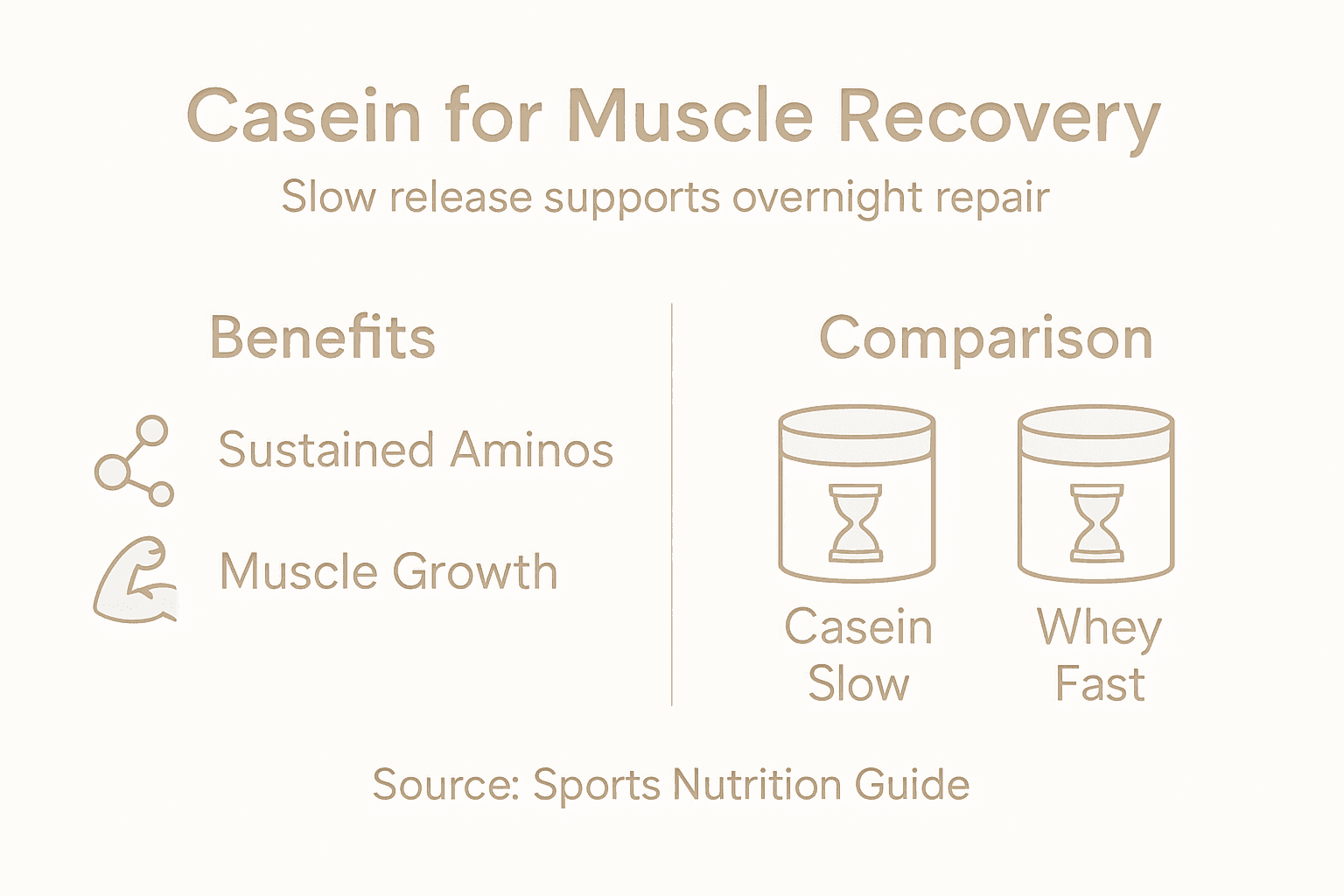
Muscle recovery is a critical process for athletes, and casein protein emerges as a powerful ally in this biological mechanism. Pre-sleep protein intake supports muscle repair by providing a sustained amino acid release that helps rebuild and strengthen muscle tissue during rest periods. The unique molecular structure of casein creates a gel-like substance in the digestive system, enabling a slow and consistent nutrient delivery that maximizes recovery potential.

Casein’s slow digestion mechanism provides a continuous stream of amino acids that actively combat muscle protein breakdown. This prolonged nutrient release is particularly advantageous during overnight recovery, when the body undergoes significant repair processes. By maintaining elevated amino acid levels in the bloodstream, casein helps athletes reduce muscle soreness, minimize inflammation, and support comprehensive tissue regeneration.
Research indicates that repeated casein protein consumption can lead to significant improvements in muscle strength and hypertrophy. The protein’s ability to sustain amino acid availability makes it an exceptional recovery tool, especially for individuals engaged in intense training regimens. By preventing muscle breakdown and supporting protein synthesis, casein becomes a strategic nutritional intervention for athletes seeking optimal recovery and performance enhancement.
Pro tip: Consume 20-30 grams of casein protein within 30 minutes of your evening workout to maximize overnight muscle recovery and protein synthesis.
Whey vs. Casein Protein: Key Comparisons
Protein supplementation requires understanding the unique characteristics of different protein sources. Whey and casein proteins exhibit distinct absorption profiles that dramatically impact their effectiveness for muscle recovery and performance. Whey protein is renowned for its rapid absorption, causing a quick spike in amino acids that triggers immediate muscle protein synthesis, making it ideal for post-workout recovery.
Protein absorption kinetics reveal critical differences between these two protein types. Casein’s slow-digesting nature creates a sustained amino acid release, which helps prevent muscle breakdown over extended periods. This makes casein particularly effective for nighttime recovery and maintaining muscle protein levels during prolonged rest. Whey, in contrast, provides a rapid nutrient influx that quickly repairs and rebuilds muscle tissue immediately after intense exercise.
The physiological impacts of these proteins extend beyond muscle recovery. Whey protein stimulates gastrointestinal hormones that promote satiety, while casein’s extended amino acid release supports longer-term nutritional needs. Athletes and fitness enthusiasts can strategically use both proteins to optimize their nutritional intake, leveraging whey’s rapid absorption for immediate recovery and casein’s prolonged nutrient delivery for sustained muscle maintenance.
The table below contrasts the key differences between whey and casein protein for fitness:
| Feature | Whey Protein | Casein Protein |
|---|---|---|
| Absorption Rate | Fast, immediate spike | Slow, gradual release |
| Best Use Timing | Post-workout | Before sleep |
| Satiety Effect | Strong, short-term | Long-lasting fullness |
| Muscle Support | Rapid recovery boost | Supports overnight repair |
Pro tip: Combine whey and casein proteins at different times of day to create a comprehensive protein strategy that maximizes muscle recovery and growth.
Unlock Your Full Muscle Recovery with Casein Protein from Nutribliss
Struggling to get the most out of your muscle recovery and overnight performance? This article highlights the power of casein protein’s slow and steady amino acid release that supports muscle repair while you rest. If your goal is optimal muscle maintenance and long-lasting recovery benefits using casein’s unique nutrient delivery can transform your fitness results.

Explore a wide selection of high-quality casein protein powders and supplements designed to maximize your nighttime muscle repair at Nutribliss.us. Don’t wait to fuel your body with proven, science-backed nutrition that supports consistent muscle protein synthesis and helps you wake up stronger each day. Visit Nutribliss.us now to shop smart supplements crafted for your health and athletic performance journey.
Ready to experience the difference of sustained protein absorption? Check out the best products to fit your recovery routine and take your fitness to the next level. Discover more at Nutribliss.us.
Frequently Asked Questions
What is casein protein, and how does it work?
Casein protein is a slow-digesting dairy-derived protein found mainly in milk, comprising about 80% of total milk proteins. It creates a gel-like substance in the stomach, leading to a gradual release of amino acids, which is beneficial for muscle recovery during periods of rest, like sleep.
How does casein protein support muscle recovery?
Casein protein provides a sustained release of amino acids that helps reduce muscle breakdown and supports tissue repair during overnight recovery. Its slow digestion allows for continuous amino acid availability, which is critical for muscle regeneration and minimizing soreness.
What are the differences between casein and whey protein?
Whey protein is absorbed quickly and is ideal for post-workout recovery, providing an immediate spike in amino acids. In contrast, casein protein is absorbed slowly, making it most effective for long-term muscle maintenance and nighttime recovery, preventing muscle breakdown over extended periods.
How should I take casein protein for optimal results?
To maximize muscle protein synthesis, consider consuming 20-30 grams of casein protein about 30 minutes before bedtime or after your evening workout. This timing helps ensure a steady supply of amino acids for muscle recovery during rest.