

TL;DR:
- Protein powders supplement dietary protein from animal or plant sources, aiding muscle repair and recovery. Selecting the right type depends on goals, dietary restrictions, and cost, with whey isolate and pea-rice blends being popular options. Quality products should have minimal additives, accurate labeling, and third-party testing for safety and efficacy.
Protein powders are concentrated protein supplements derived from animal or plant sources, delivering 10–30 grams of protein per scoop to support muscle repair, recovery, and daily nutritional targets. A whole egg provides 6 grams of protein, Greek yogurt delivers 18 grams, and 2 ounces of cooked chicken offers 14 grams. Protein powders fill the gap when whole foods fall short of your daily target. This guide breaks down every major type of protein supplement, compares their real differences, and gives you a clear framework for choosing the right one based on your goals, budget, and diet.
What are the main types of protein powder?
The protein supplement market divides into two broad categories: animal-based and plant-based. Within each category, the source, processing method, and amino acid profile determine how well the powder performs for muscle building, recovery, and general nutrition. Knowing the difference in protein powders before you buy saves money and prevents mismatched results.
Animal-based protein powders
Animal-based powders dominate the market because they deliver complete proteins with all nine essential amino acids. Whey, casein, egg white, and collagen are the four main types.

Whey protein comes from milk during cheese production and is the most studied protein supplement available. It exists in three forms: concentrate, isolate, and hydrolysate. Whey concentrate contains 70–80% protein with some residual lactose and fat. Whey isolate pushes past 90% protein content, removes most lactose, and costs roughly 30–50% more per serving. That price difference is worth it if you are lactose-sensitive or want maximum protein per calorie.
Whey hydrolysate is pre-digested for faster absorption, but the speed advantage is marginal for most gym-goers. It offers no meaningful muscle gain benefit over isolate for typical users. Hydrolysate makes sense mainly for people with serious digestive sensitivities, not for the average fitness enthusiast chasing an edge.
Casein protein digests slowly, releasing amino acids over 5–7 hours. That makes it the preferred choice before bed, when your body repairs muscle tissue during sleep. Athletes who train twice a day also use casein between sessions to maintain a steady amino acid supply.
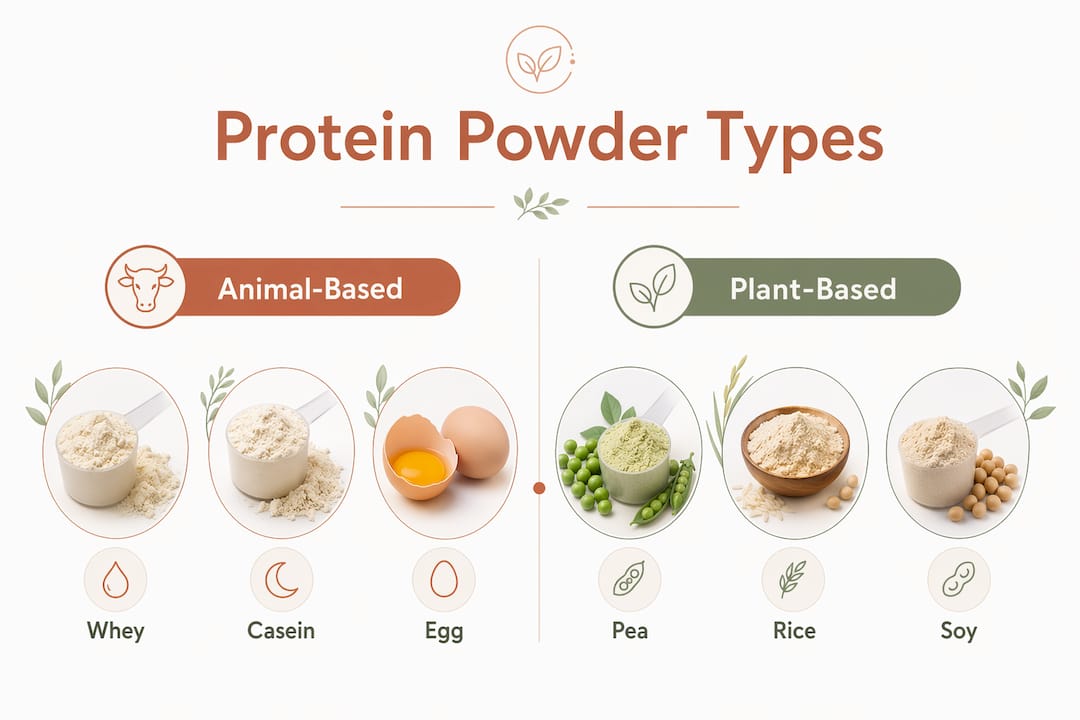
Egg white protein is a strong dairy-free animal option. It delivers a complete amino acid profile with high leucine content and digests at a moderate speed, sitting between whey and casein. It suits people who avoid dairy but still want an animal-sourced protein.
Collagen peptides are the outlier. A meta-analysis confirms collagen outperforms placebo for strength and fat-free mass gains, with meaningful effect sizes. However, collagen is not a complete protein. It lacks tryptophan and has a poor leucine profile, which limits its value as a standalone muscle-building supplement. Use collagen for joint and skin support, not as your primary protein source.
| Protein Type | Protein % | Digestion Speed | Best Use |
|---|---|---|---|
| Whey concentrate | 70–80% | Fast | General training, budget pick |
| Whey isolate | 90%+ | Fast | Lactose-sensitive, lean bulking |
| Whey hydrolysate | 90%+ | Fastest | Digestive sensitivities |
| Casein | 75–85% | Slow | Pre-sleep, sustained release |
| Egg white | 80–85% | Moderate | Dairy-free, complete amino profile |
| Collagen peptides | 85–90% | Moderate | Joints, skin, not primary muscle source |
Pro Tip: If you are lactose-sensitive but want whey, choose isolate over concentrate. The extra processing removes most of the lactose while keeping the full amino acid profile intact. Read the label for “whey protein isolate” as the first listed ingredient.
What are the different plant-based protein powder options?
Plant-based protein options have improved significantly in quality and taste. The key challenge with plant proteins is amino acid completeness. Most single-source plant proteins are incomplete, meaning they lack one or more essential amino acids in adequate amounts.
Pea protein leads the plant category. It is high in branched-chain amino acids, particularly leucine, and digests reasonably well. Pea protein is hypoallergenic, making it safe for people with dairy, soy, or gluten sensitivities.
Soy protein is the only single-source plant protein that qualifies as complete. It contains all nine essential amino acids and has a digestibility score comparable to whey. Some people avoid soy due to concerns about phytoestrogens, though current research does not support significant hormonal effects at normal serving sizes.
Brown rice protein is low in lysine but high in cysteine and methionine. On its own, it falls short for muscle building. Paired with pea protein, it fills the amino acid gaps that each source lacks individually.
Hemp protein contains omega-3 fatty acids alongside protein, which adds nutritional value beyond muscle support. Its protein content per scoop is lower than pea or soy, and its digestibility is moderate. Hemp works well as a nutritional supplement but not as a primary muscle-building protein.
Pea and rice blends are the gold standard for plant-based protein options. The combination creates a complete amino acid profile that approaches whey in muscle-building effectiveness. Most quality vegan protein powders on the market use this blend for exactly that reason.
Single-source plant proteins often lack leucine, the amino acid most directly responsible for triggering muscle protein synthesis. Leucine is the critical signal that tells your muscles to grow. A pea-rice blend addresses this gap far better than either source alone.
Pro Tip: When buying plant protein, check the amino acid profile on the label, not just the total protein grams. A blend listing both pea and rice protein as primary ingredients is a reliable indicator of a complete amino acid profile.
Plant-based protein comparisons show that taste and texture have improved enough that most people cannot distinguish a quality pea-rice blend from whey in a smoothie.
How to choose protein powder based on your goals and budget
Choosing the right protein powder comes down to four practical factors: protein content per serving, cost per gram of protein, dietary restrictions, and digestion speed.
1. Calculate cost per gram of protein, not cost per tub. A cheaper tub often delivers less protein per scoop, making it more expensive per effective gram. Cost per 30 grams of protein is the correct unit of comparison. Divide the total protein in the tub by the price to find your real cost.
2. Match digestion speed to your training schedule. Whey isolate works best immediately after training because whey digests at 98–100% efficiency. Casein works best before sleep. Plant blends fit well at any time of day but may require a slightly larger serving to match whey’s leucine delivery.
3. Account for dietary restrictions before anything else. Lactose intolerance rules out whey concentrate for many people. Dairy allergies eliminate all whey and casein options. Vegan diets require plant-based sources. Soy allergies narrow plant options to pea, rice, or hemp. Identify your restrictions first, then compare within the options that remain.
4. Check the ingredient list for additives. Many powders add thickeners, artificial sweeteners, and fillers that inflate serving weight without adding protein value. A clean label lists the protein source, a minimal sweetener, and flavoring. Anything with more than eight to ten ingredients warrants closer inspection.
5. Align protein intake with your actual daily target. Registered Dietitian Sarah Thompson advises that protein powder use is only warranted when a genuine dietary protein gap exists. Active trainers typically target around 1.6 grams of protein per kilogram of body weight daily. If whole foods already meet that target, a powder adds cost without meaningful benefit.
Pro Tip: Use a protein powder guide to map your daily protein from food before buying a supplement. You may need less than you think.
What are the hidden risks in protein powders?
Not all protein powders are created equal. Many popular products contain additives that undermine the health goals they claim to support.
Added sugar is the most common problem. Some protein powders contain up to 23 grams of added sugar per scoop. The American Heart Association recommends a maximum of 24 grams of added sugar per day for women and 36 grams for men. A single scoop of a poorly formulated powder can consume nearly your entire daily sugar budget.
Artificial flavors, colors, and thickeners like carrageenan appear frequently in budget powders. These additives do not improve protein quality. They improve taste and texture at the expense of a clean nutritional profile. Experts consistently warn that hidden sugars and additives in protein powders can add unhealthy calories and disrupt blood sugar regulation.
Overreliance on protein powders is another real risk. Whole foods deliver protein alongside fiber, vitamins, minerals, and phytonutrients that no powder replicates. A Registered Dietitian’s guidance is clear: use powders only when a protein gap exists, not as a default meal replacement.
“Protein powders are a tool, not a food group. If your diet already meets your protein needs, adding a powder adds cost and potential additives without adding health.”
To identify a quality product, look for third-party testing certifications like NSF Certified for Sport or Informed Sport. These certifications confirm that the product contains what the label claims and nothing that should not be there.
Key takeaways
The right protein powder depends on your source preference, digestion needs, dietary restrictions, and actual protein gap. Whey isolate leads for muscle building; pea-rice blends lead for plant-based nutrition; and no powder replaces a diet built on whole foods.
| Point | Details |
|---|---|
| Whey isolate is the top animal pick | It delivers 90%+ protein, high leucine, and suits lactose-sensitive people better than concentrate. |
| Pea-rice blends lead plant options | Combining pea and rice protein creates a complete amino acid profile close to whey. |
| Cost per gram matters most | Compare protein cost per 30 grams, not the tub price, to find real value. |
| Check labels for added sugar | Some powders contain up to 23 grams of sugar per scoop, near the AHA’s daily limit. |
| Powders supplement, not replace | Use protein powder only when whole foods leave a genuine gap in your daily protein target. |
What I’ve learned from years of watching people choose the wrong protein
Most people pick protein powder based on the front of the tub. They see a big number, a bold claim, and a low price, and they buy it. That approach almost always leads to disappointment.
The single most useful shift I have seen is when people start calculating cost per gram of protein instead of cost per tub. That one change eliminates most of the bad options immediately. A $25 tub with 15 grams of protein per scoop is more expensive per effective gram than a $40 tub with 25 grams per scoop.
My default recommendation for most people is whey isolate. It has the best combination of protein density, leucine content, and digestibility of any type. If dairy is off the table, a pea-rice blend is genuinely close in performance and worth the slight premium over single-source plant powders.
The advice I give most often is this: figure out how much protein you actually eat from food before buying anything. Most people are closer to their target than they think. When a gap exists, a clean, third-party tested powder from a brand like Nutribliss fills it efficiently. When no gap exists, save your money and eat more eggs. Follow #nutribliss for practical, evidence-based guidance that skips the marketing noise.
— GAURAV
Nutribliss protein options worth considering
Nutribliss carries a range of protein supplements built around the same principles covered in this article: clean labels, evidence-based formulations, and options for both whey and plant-based preferences.

Whether you need a high-density whey isolate for post-training recovery or a complete plant blend for a dairy-free diet, the Nutribliss supplements collection covers both ends of the spectrum. Every product is formulated with protein density and ingredient transparency as the starting point. The science behind Nutribliss formulations explains how each product is built to meet real nutritional needs, not just marketing benchmarks. If you are ready to match a powder to your specific goals, the collection is a practical place to start.
FAQ
What is the best type of protein powder for muscle gain?
Whey isolate is the best protein powder for muscle gain. It delivers 90%+ protein content, high leucine levels, and near-complete digestibility, making it the most effective option for muscle protein synthesis after training.
What is the difference between whey concentrate and whey isolate?
Whey concentrate contains 70–80% protein with some lactose and fat. Whey isolate contains 90%+ protein, has most lactose removed, and costs roughly 30–50% more per serving. Isolate is the better choice for lactose-sensitive people.
Are plant-based protein powders as effective as whey?
Plant-based blends, particularly pea-rice combinations, come close to whey in muscle-building effectiveness. Single-source plant proteins often lack leucine and fall short. A quality blend closes most of the gap.
How do I know if I actually need a protein powder?
You need a protein powder only if your daily diet leaves a genuine protein gap. Active trainers typically target around 1.6 grams of protein per kilogram of body weight. Track your food intake for a few days before buying a supplement.
What should I look for on a protein powder label?
Look for the protein source listed first, minimal added sugar (under 5 grams per serving), and a third-party testing certification such as NSF Certified for Sport or Informed Sport. Avoid products with more than 10 ingredients or more than 10 grams of added sugar per scoop.