

TL;DR:
- Protein powder mainly supports muscle growth and recovery by stimulating protein synthesis after exercise. It is most effective when timed around resistance training, with doses of 20 to 40 grams, and chosen based on digestibility and individual dietary needs. Using high-quality, tested powders as part of a balanced diet benefits athletes, older adults, vegans, and those managing weight.
Protein powder is a concentrated dietary supplement designed to increase protein intake, stimulate muscle protein synthesis, and fill nutritional gaps that whole foods alone may not cover. Athletes, active adults, and people managing their weight all use it for different reasons, but the core benefit is the same: protein powder delivers a fast, measurable dose of amino acids when your body needs them most. Understanding what is protein powder good for goes beyond gym culture. It is a practical nutrition tool backed by solid research from institutions like the American College of Sports Medicine and published in peer-reviewed journals.
What is protein powder good for in muscle growth and recovery?
Protein powder’s most documented benefit is muscle protein synthesis, the biological process your body uses to repair and build muscle tissue after exercise. When you train, muscle fibers break down. Protein supplies the amino acids needed to rebuild them stronger.

Research confirms that whey protein combined with resistance training significantly increases muscle mass, strength, and recovery speed. Meta-analyses show enhanced functional outcomes for trained individuals across multiple studies. That means protein powder is not just a gym trend. It is a tool with measurable, repeatable results.
Dosing matters. Post-exercise protein synthesis is most effectively stimulated by whey protein doses of 20–40g, with lower doses of 15–20g proving effective for some women. Protein synthesis peaks 1–2 hours after ingestion. That window is real, but it is not as narrow as fitness culture often suggests.
Leucine is the key driver inside that process. Whey protein contains about 26% branched-chain amino acids, with leucine activating the mTOR pathway, which is the primary molecular switch for muscle protein synthesis. No other common protein source delivers leucine at that concentration with the same digestibility.
Here is a practical breakdown of how to use protein powder for muscle growth:
- Time your intake. Consume 20–40g of protein within 1–2 hours after resistance training for peak synthesis response.
- Prioritize leucine-rich sources. Whey protein isolate delivers the highest leucine concentration per gram of any common powder.
- Stack with resistance training. Protein powder alone does not build muscle. Consistent resistance training is the trigger; protein is the raw material.
- Distribute intake across the day. Spreading protein across 3–4 meals produces better synthesis results than front-loading one large dose.
- Match dose to body weight. General guidance from sports nutrition research supports 1.6–2.2g of protein per kilogram of body weight daily for active adults.
Pro Tip: If you train in the morning before eating, a 20–25g whey shake immediately after your session prevents the muscle breakdown that fasted training can accelerate.
What types of protein powder are there, and which should you choose?
Not all protein powders are the same. The type you choose determines protein purity, digestibility, and whether it fits your dietary needs.
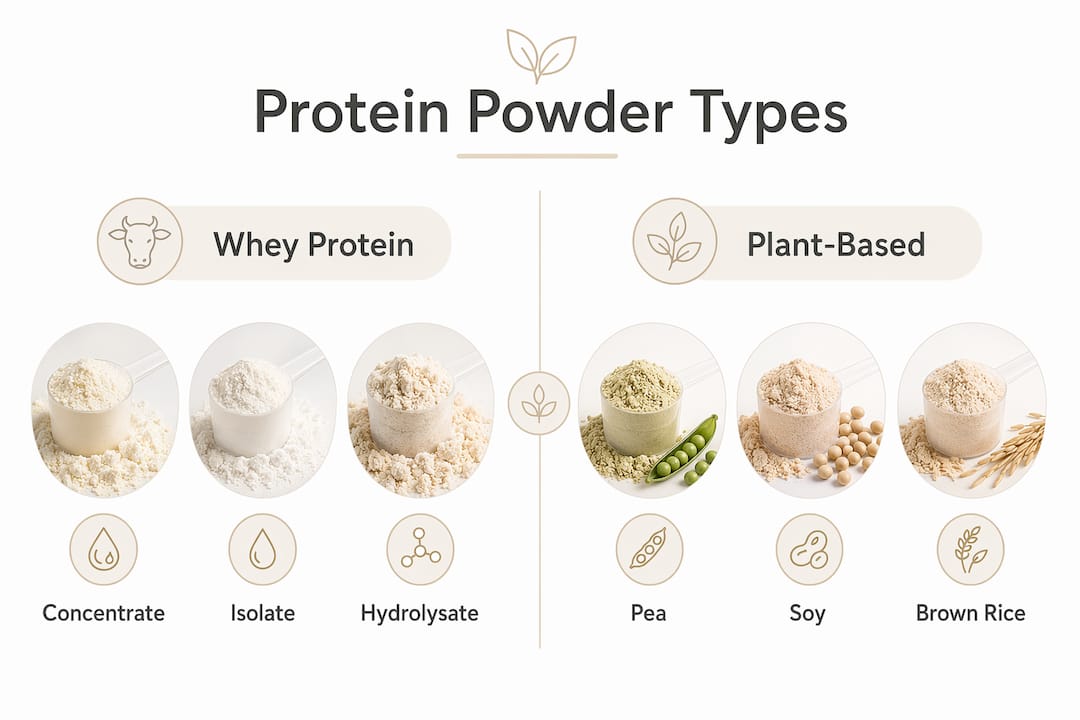
Whey concentrates contain 70–80% protein, while isolates reach over 90% purity. Whey isolate is lower in lactose, making it a better fit for people with mild dairy sensitivity. Soy isolate is a complete plant protein with 85–90% purity and digestibility of 95–98%. Pea protein, often combined with rice protein for a complete amino acid profile, reaches 83–90% digestibility. These numbers matter because higher digestibility means more usable protein per gram consumed.
| Protein Type | Protein Purity | Digestibility | Best For |
|---|---|---|---|
| Whey concentrate | 70–80% | 98–100% | General fitness, budget-conscious users |
| Whey isolate | 90%+ | 98–100% | Lactose sensitivity, lean muscle building |
| Soy isolate | 85–90% | 95–98% | Vegan, complete amino acid needs |
| Pea + rice blend | Varies | 83–90% | Plant-based, allergen-sensitive users |
| Casein | 70–80% | Slow release | Overnight recovery, sustained satiety |
| Collagen | Varies | Moderate | Joint support, skin health (not muscle building) |
Collagen protein powders are not complete proteins and serve as specialized supplements rather than primary muscle-building sources. Collagen lacks several key essential amino acids compared to whey or soy. Using collagen as your main protein source will not support muscle repair the way whey or soy does.
Key considerations when choosing a powder:
- Dairy tolerance. Whey isolate is lower in lactose than concentrate. Casein is a slow-digesting dairy protein best used before sleep.
- Vegan or vegetarian needs. Soy isolate or a pea and rice blend provides a complete amino acid profile without animal products. More detail on plant-based protein options can help you compare sources.
- Additives and sweeteners. Read ingredient labels carefully. Many powders contain artificial sweeteners, fillers, or added sugars that reduce their nutritional value.
- Protein per serving. A quality powder delivers at least 20g of protein per serving with minimal carbohydrates and fats unless you specifically want a meal-replacement formula.
How to use protein powder safely and effectively
Protein powders should supplement rather than replace whole foods, which provide micronutrients, fiber, and phytonutrients that no powder replicates. Harvard Health recommends a food-first approach, with powders making up no more than one-third of your daily protein intake. That ratio keeps your nutrition broad and prevents over-reliance on a single source.
Common mistakes people make with protein powder:
- Overusing it. Taking multiple large servings daily pushes total protein intake beyond what the body can use for muscle synthesis. Excess protein is stored as fat or excreted, not converted into extra muscle.
- Replacing meals. A protein shake is not a meal. It lacks the fiber, vitamins, and minerals that whole foods provide.
- Ignoring kidney health. Excess protein may affect kidney function in people with pre-existing kidney conditions. Healthy individuals handle high protein intake well, but anyone with kidney concerns should consult a doctor before supplementing.
- Skipping label checks. Third-party testing seals from organizations like NSF International or Informed Sport indicate that a product has been tested for contaminants and label accuracy.
Protein powder timing extends beyond post-workout. Adding a scoop to oatmeal, a smoothie, or a yogurt bowl at any meal helps bridge daily protein gaps without disrupting your eating pattern. This flexibility is one of the strongest practical arguments for using protein powder as a supplement rather than a standalone product.
Pro Tip: Mix unflavored whey or pea protein into savory foods like soups or scrambled eggs. You add 20–25g of protein without changing the flavor profile of your meal.
Who benefits most from protein powder supplementation?
Protein powder provides a convenient way for athletes, vegans, and older adults to meet daily protein needs. Each group has a distinct reason for supplementing, and the benefits differ meaningfully across them.
Active adults and athletes use protein powder to support muscle repair after training sessions and to hit daily protein targets that whole food alone makes difficult to reach consistently. A person training 5 days a week needs significantly more protein than a sedentary adult, and cooking high-protein meals for every occasion is not always practical.
Older adults face a specific challenge called sarcopenia, the gradual loss of muscle mass that accelerates after age 50. Protein supplementation helps older adults maintain muscle mass when dietary intake falls short. Resistance training combined with adequate protein intake is the most effective known strategy for slowing sarcopenia.
People with dietary restrictions benefit from plant-based protein powders that fill gaps left by eliminating animal products. Vegans and vegetarians often struggle to reach optimal leucine intake from food alone. A soy isolate or pea and rice blend addresses that gap directly.
People managing weight use protein powder because protein is the most satiating macronutrient. Higher protein intake reduces hunger hormones and supports lean mass retention during calorie restriction. That combination makes protein powder a practical tool for body composition management, not just muscle building.
Personalized protein supplementation is critical because genetic and metabolic variability means one dose does not fit every person. A 60kg woman doing yoga three times a week has very different protein needs than a 90kg man doing daily strength training. Matching your intake to your actual activity level and body composition produces better results than following generic recommendations. A personalized supplement plan accounts for these differences and prevents both under-supplementing and excess intake.
Key Takeaways
Protein powder is most effective when used to fill specific dietary gaps, timed around training, and chosen based on your protein type, digestibility needs, and health status.
| Point | Details |
|---|---|
| Core benefit | Protein powder stimulates muscle protein synthesis and supports recovery when combined with resistance training. |
| Dose and timing | 20–40g of whey protein within 1–2 hours post-exercise maximizes muscle repair and synthesis. |
| Choose by type | Whey isolate suits dairy-sensitive users; soy or pea and rice blends serve plant-based needs with complete amino acids. |
| Food first | Powders should cover no more than one-third of daily protein intake; whole foods provide micronutrients powders cannot replace. |
| Who benefits most | Athletes, older adults, vegans, and people managing weight all gain measurable advantages from targeted protein supplementation. |
The quality question nobody asks often enough
Most conversations about protein powder focus on timing, dosing, and type. The question I rarely hear is: what is actually in the product you are buying?
I spent years defaulting to whatever protein powder had the best marketing or the lowest price per serving. The results were inconsistent, and I eventually traced part of that inconsistency to product quality. Some powders I used contained fillers, artificial sweeteners, and protein sources that tested below their labeled amounts. Third-party testing changed how I shop. NSF International certification and Informed Sport seals are not marketing claims. They are independent verifications that what is on the label is actually in the container.
The second thing I learned is that more protein is not always better. There is a ceiling to how much muscle protein synthesis your body can run at once. Pushing past 40g in a single serving does not accelerate results. It just adds calories. Spreading intake across the day, prioritizing leucine-rich sources, and pairing supplementation with consistent training produces far better outcomes than chasing high daily totals.
The #nutribliss approach to supplementation aligns with what the research actually shows: quality over quantity, food first, and personalization over generic dosing. That philosophy is harder to market than “drink more protein,” but it is the one that produces lasting results.
— GAURAV
Nutribliss supplements for your fitness and recovery goals
Protein powder is one piece of a larger nutrition picture. Recovery, hydration, and sleep all influence how well your body uses the protein you consume.

Nutribliss builds its supplement line around the science of what your body actually needs at each stage of training and recovery. The science behind Nutribliss superfoods explains how each product in the collection is formulated and why the ingredients were selected. If you are building a supplement routine that goes beyond protein, the Nutribliss catalog covers electrolytes, sleep support, vitamins, and specialty formulas designed to work together. Browse the full collection at nutribliss.us to find products matched to your specific fitness and nutrition goals.
FAQ
What does protein powder actually do for your body?
Protein powder supplements muscle building, tissue repair, and body composition management by delivering a concentrated dose of amino acids. It fills protein intake gaps and supports recovery when combined with exercise.
Is whey protein better than plant-based protein?
Whey protein has higher digestibility (98–100%) and a superior leucine content, making it more effective for muscle protein synthesis. Plant-based blends like pea and rice protein provide a complete amino acid profile and are a strong alternative for vegans or people with dairy intolerance.
How much protein powder should you take per day?
20–40g per serving post-exercise is the research-supported range for stimulating muscle protein synthesis. Total daily protein intake for active adults generally falls between 1.6–2.2g per kilogram of body weight, with powder covering no more than one-third of that total.
Can protein powder replace meals?
Protein powder should not replace meals. Powders lack the micronutrients, fiber, and phytonutrients that whole foods provide. Use them to supplement meals, not substitute for them.
Is protein powder safe for long-term use?
High-protein supplementation is safe for healthy individuals but requires attention to total intake and kidney health. People with pre-existing kidney conditions should consult a doctor before adding protein powder to their routine.