

TL;DR:
- Fat contains more than twice the energy of carbohydrates per gram, making it a vital fuel reserve for endurance and body composition goals. The body processes stored triglycerides through lipolysis, beta-oxidation, and the Krebs cycle, regulated by hormones like epinephrine and insulin, to produce ATP efficiently. Enhancing metabolic flexibility through training and nutrition allows individuals to optimize fat oxidation and improve performance across various exercise intensities.
Fat contains more than twice the energy of carbohydrates per gram, yet most fitness conversations still treat carbs as the star of the show. That’s a significant oversight for anyone serious about energy, endurance, or body composition. Triglycerides yield more than twice the energy of carbs or protein, delivering 9 kcal/g compared to 4 kcal/g. Understanding how your body taps into this massive fuel reserve changes how you train, eat, and recover. This article walks you through the full science of fat metabolism, from the first molecular steps to real-world performance strategies.
Table of Contents
- What is fat metabolism? Breaking down the basics
- How your body breaks down and uses fat for energy
- The role of fat metabolism during exercise and training
- Genetics, diet, and metabolic flexibility: Why individual responses vary
- When fat metabolism fails: Obesity, lipodystrophy, and the power of adaptation
- What most experts miss about fat metabolism
- How NutriBliss supports your metabolic goals
- Frequently asked questions
Key Takeaways
| Point | Details |
|---|---|
| Fat is a dense energy source | Fat provides more than twice the energy of carbs or protein, powering long-duration efforts efficiently. |
| Exercise boosts fat burning | Training at low to moderate intensity increases your body’s ability to use fat for fuel. |
| Metabolic flexibility matters | Switching between fat and carbs as fuel is key for both endurance and peak performance. |
| Personalization is essential | Your genetics, diet, and training style determine your unique fat metabolism profile. |
| Health requires balance | Effective fat metabolism supports overall metabolic health and prevents long-term issues. |
What is fat metabolism? Breaking down the basics
To understand why fat matters for energy and performance, let’s clarify what fat metabolism actually is and how it works inside your body.
Fat metabolism, also called lipid metabolism, refers to the processes your body uses to break down, transport, and use dietary and stored fats for energy. The three key steps are lipolysis, beta-oxidation, and the Krebs cycle. Lipid metabolism involves the catabolism of triglycerides into fatty acids and glycerol through lipolysis, followed by beta-oxidation in the mitochondria to produce acetyl-CoA, which then enters the Krebs cycle for ATP generation. Each step is tightly regulated and deeply connected to your overall energy metabolism basics.
Hormones run the show here. Lipolysis is triggered by hormones like epinephrine, norepinephrine, glucagon, and growth hormone, which activate key enzymes like hormone-sensitive lipase (HSL) and adipose triglyceride lipase (ATGL). Insulin works in the opposite direction, suppressing fat breakdown when blood sugar is elevated. This hormonal tug-of-war is why meal timing, carbohydrate intake, and exercise patterns all directly affect your fat-burning capacity.
Key functions of fat metabolism include:
- Providing sustained energy during rest and low-intensity activity
- Supporting cell membrane structure and hormone production
- Protecting vital organs through adipose tissue padding
- Enabling absorption of fat-soluble vitamins (A, D, E, and K)
- Acting as a long-term energy reserve that far exceeds glycogen stores
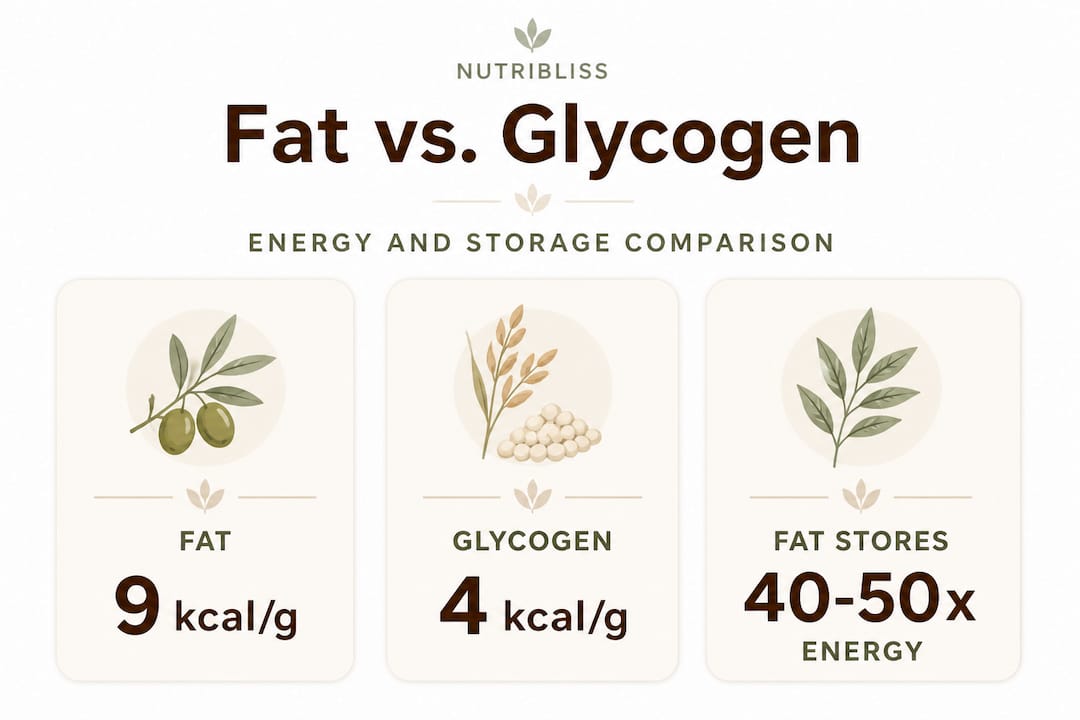
Here’s a quick look at how the three macronutrients compare in terms of energy yield:
| Macronutrient | Energy yield (kcal/g) | Primary storage form | Typical body store |
|---|---|---|---|
| Fat | 9 | Triglycerides (adipose) | 80,000-100,000 kcal |
| Carbohydrate | 4 | Glycogen (muscle/liver) | 1,500-2,000 kcal |
| Protein | 4 | Muscle tissue (not primary) | Variable |
The numbers are striking. Your fat stores hold roughly 40 to 50 times more usable energy than your glycogen stores. The question isn’t whether fat matters. It’s whether your body is efficient at accessing it.
Pro Tip: Regular aerobic training, even at moderate intensity, increases the density of mitochondria in your muscle cells, which are the actual sites where fat gets oxidized into energy. More mitochondria means a higher ceiling for fat utilization during both exercise and rest.
How your body breaks down and uses fat for energy
Now that we’ve covered the basics, let’s look at exactly how your body turns stored fat into practical energy.
The process is more sophisticated than most people realize. Here’s the stepwise breakdown:
- Lipolysis begins in adipose tissue. Hormones signal fat cells to activate HSL and ATGL, enzymes that split stored triglycerides into free fatty acids and glycerol. These components enter the bloodstream.
- Fatty acids travel to active tissues. Bound to albumin protein in the blood, free fatty acids move to muscle or other tissue that needs fuel.
- Fatty acids enter the cell. Specialized transport proteins carry fatty acids across the cell membrane and into the cytoplasm, where they’re converted to fatty acyl-CoA.
- The carnitine shuttle kicks in. Fatty acyl-CoA can’t cross the inner mitochondrial membrane on its own. Beta-oxidation requires the carnitine shuttle, specifically the enzymes CPT1, translocase, and CPT2, to ferry fatty acyl-CoA into the mitochondrial matrix.
- Beta-oxidation begins. Inside the mitochondria, the fatty acid chain is broken down two carbons at a time. Each cycle releases one molecule of acetyl-CoA plus NADH and FADH2, which feed the electron transport chain.
- Acetyl-CoA enters the Krebs cycle. This generates more NADH and FADH2, ultimately producing ATP through oxidative phosphorylation.
The total ATP yield from a single molecule of palmitate (a common 16-carbon fatty acid) is approximately 106 to 108 ATP. By comparison, a glucose molecule yields about 30 to 32 ATP. Fat wins on energy density every single time.
“Ketone bodies provide fuel for brain and muscles when glucose is scarce, offering an efficient alternative during fasting or prolonged exercise.”
When your Krebs cycle can’t keep up with the amount of acetyl-CoA being produced, such as during fasting or very low-carb intake, the liver produces ketone bodies like acetoacetate and beta-hydroxybutyrate. These serve as alternative fuel sources, particularly for the brain, which normally relies on glucose. This is the metabolic foundation of both ketogenic diets and extended endurance performance.
Developing strong metabolic flexibility means your body can transition between fat and carbohydrate oxidation fluidly, depending on what’s available and what’s needed. This flexibility is a hallmark of well-trained, metabolically healthy athletes.
The role of fat metabolism during exercise and training
Understanding the breakdown pathway sets the stage for why fat metabolism is so valuable during different types of movement and training.
Fat metabolism isn’t equally active at all exercise intensities. Fat oxidation predominates at low-to-moderate intensities, reflected by a respiratory exchange ratio (RER) near 0.7, while carbohydrate use increases as you push harder, with RER approaching 1.0. At maximum effort, fat oxidation essentially shuts down because the aerobic pathway is too slow to meet the rapid energy demand. Maximal fat oxidation (MFO) averages around 0.59 g/min in trained athletes at approximately 49% of VO2max.
Factors that influence fat metabolism during exercise:
- Exercise intensity. Lower intensities favor fat; higher intensities shift toward carbohydrate oxidation.
- Duration. As exercise extends beyond 30 to 60 minutes and glycogen depletes, fat becomes increasingly important.
- Training status. Trained athletes show significantly higher MFO rates than untrained individuals due to greater mitochondrial density and enzyme activity.
- Fasting state. Exercising with lower insulin levels from an overnight fast encourages greater fat mobilization.
- Dietary carbohydrate intake. Chronically high-carb diets can blunt fat oxidation enzymes over time, while periodized approaches may maintain better metabolic flexibility.
Endurance training enhances fat oxidation capacity through increased mitochondrial density, upregulation of fat-oxidizing enzymes, and improved metabolic flexibility. Athletes who specifically train for fat adaptation, such as those doing low-carb training blocks or fasted sessions, can push their MFO substantially higher than the average values.
Strong fat oxidation during longer, lower-intensity training allows your body to conserve glycogen for the moments in a race or game when high-intensity output matters most. This is why smart nutrition and performance strategies often emphasize building aerobic fat-burning capacity alongside peak power work.

Pro Tip: To identify your personal “FatMax” zone, try a graded exercise test with progressive intensity increases. The point where your perceived exertion and breath rate suggest moderate effort without excessive laboring is typically close to your FatMax. Training consistently in this zone builds the aerobic base that makes everything else more efficient. Certain supplements for endurance can also support sustained output in this zone.
Genetics, diet, and metabolic flexibility: Why individual responses vary
Even with solid guidelines for exercise and nutrition, fat metabolism isn’t one-size-fits-all. Let’s explore why your experience may be unique and how to work with your biology.
One of the most underappreciated facts in exercise science is just how different fat oxidation rates are between people. Individual variation in MFO is large, which is exactly why testing your own RER and FatMax can radically improve how you set training zones and dietary targets. What works brilliantly for one athlete may produce flat results for another, and that’s not a failure of willpower. It’s biology.
Genetics influence fat metabolism at multiple levels. Variations in genes that regulate HSL activity, mitochondrial biogenesis, and fatty acid transport can meaningfully change how fast and efficiently you oxidize fat. Some people are naturally efficient fat burners. Others require more deliberate dietary and training strategies to achieve similar results.
Diet plays an equally important role. Ketogenic diets reduce carbohydrate availability, which forces the body to rely more heavily on fat and ketone bodies for fuel. Periodized nutrition, where you cycle between higher and lower carbohydrate intake around training, is another approach that supports metabolic flexibility without completely eliminating carbs from your plan. The best approach depends on your training demands, performance goals, and how your body responds to different macronutrient ratios.
Practical ways to enhance your fat metabolism:
- Incorporate regular low-to-moderate intensity cardio sessions, even 30 to 45 minutes several times per week
- Try fasted morning cardio occasionally to practice fat mobilization
- Reduce refined carbohydrate intake and replace with healthy fats and fiber
- Consider periodic low-carb training blocks to stimulate fat adaptation
- Prioritize sleep and stress management, since poor sleep and high cortisol impair fat oxidation
- Track workout performance, not just body composition, to get real feedback on your metabolic state
Understanding your own metabolic health baseline is the first step. Many people assume their fat metabolism is fine until they start comparing energy levels, recovery, and endurance performance to objective benchmarks.
Pro Tip: Experiment with one or two fasted cardio sessions per week for four to six weeks, then compare how your energy and perceived effort feel at the same pace compared to fed-state workouts. This simple self-experiment often reveals more than a one-time metabolic test.
When fat metabolism fails: Obesity, lipodystrophy, and the power of adaptation
While most people want to boost fat burning, it’s crucial to understand what can go wrong when fat metabolism breaks down.
Not all fat storage and utilization problems look the same. Obesity is the most familiar consequence of excess fat accumulation paired with poor metabolic regulation. But there’s a lesser-known condition called lipodystrophy, where fat is actually absent or improperly distributed despite metabolic dysfunction. HSL deficiency can cause lipodystrophy despite an expected pattern of fat accumulation. This reveals that having adequate fat cells isn’t enough. Those cells must function correctly to support healthy metabolism.
“Dysfunctional adipocytes, whether from excess accumulation or genetic disruption, impair insulin signaling, promote systemic inflammation, and increase cardiovascular risk regardless of overall body weight.”
Both obesity and lipodystrophy lead to serious metabolic disturbances because the problem lies in the quality and function of fat tissue, not just the quantity. This is why metabolic health markers like fasting insulin, triglyceride levels, and glucose tolerance often tell a more complete story than body weight alone.
Signs of healthy versus unhealthy fat metabolism:
- Healthy: Steady energy between meals, efficient body composition changes with training, normal blood lipid panels, low fasting insulin
- Unhealthy: Energy crashes after meals, difficulty losing fat despite caloric deficit, elevated triglycerides, insulin resistance, chronic inflammation markers
Supporting the adaptive side of fat metabolism through consistent training, smart nutrition, and targeted supplement use is where metabolism support science becomes genuinely practical rather than theoretical. The goal isn’t just to burn more fat. It’s to make sure your fat tissue communicates properly with the rest of your body’s systems.
What most experts miss about fat metabolism
Here’s something worth saying directly: a lot of the conversation around fat burning gets distorted by performance marketing and oversimplified fitness advice. The narrative that you should always “maximize fat burning” misses a critical nuance. If you’re training for power output, speed, or anything requiring high-intensity effort, you actually need your carbohydrate metabolism firing on all cylinders. Sacrificing carb availability in the name of fat adaptation can tank your peak performance numbers.
The real goal is metabolic flexibility. That means your body can oxidize fat efficiently at lower intensities, conserving glycogen, and then switch cleanly to carbohydrate metabolism when intensity spikes. Most recreational athletes are stuck at one extreme or the other, either chronically carb-dependent or so adapted to fat that their high-intensity capacity suffers.
What actually separates advanced athletes from average ones isn’t which fuel they burn. It’s how smoothly and quickly they can shift between them. You build that capacity through intentional variety in training intensity, not by committing rigidly to one dietary strategy.
Tracking matters enormously here. Lab testing is valuable, but real-world performance journaling, noting energy levels during different workout types, how hunger patterns shift, recovery quality, and strength-to-endurance balance, often surfaces patterns that a single VO2max test won’t catch. Work with your own data before following generic protocols designed for someone else’s physiology. Strong nutrition for athletic performance strategies always account for this individual variation.
How NutriBliss supports your metabolic goals
Fat metabolism science is only useful if you can apply it consistently, and that’s where the right nutritional support makes a real difference.

At NutriBliss, we connect the science of metabolism to practical, high-quality solutions you can use every day. Whether you’re building an aerobic base, testing a low-carb training block, or optimizing recovery between sessions, our product range is designed to support every stage of the process. Explore the science behind superfoods to understand how targeted ingredients can enhance fat oxidation, mitochondrial function, and energy availability. From electrolytes that sustain performance during fasted training to specialized capsules that support metabolic health, you’ll find what you need in our full Nutribliss Supplements catalog. Your metabolism deserves more than guesswork.
Frequently asked questions
Why does fat yield more energy than carbohydrates or protein?
Fat provides 9 kcal per gram because its hydrocarbon chains are more chemically reduced than carbohydrates or protein, allowing significantly more ATP to be produced during oxidation in the mitochondria.
Can you increase your fat metabolism rate through exercise?
Yes. Endurance training enhances fat oxidation by increasing mitochondrial density and upregulating fat-oxidizing enzymes, while low-carb or fasted training sessions can further promote fat adaptation over time.
Is a ketogenic diet required for maximizing fat burning?
No. Ketogenic and low-carb diets can improve metabolic flexibility and fat oxidation, but high-intensity athletic performance still depends on carbohydrate availability, making periodized nutrition a more practical option for most active people.
What are ketone bodies and when does the body produce them?
Ketone bodies are alternative fuels synthesized in the liver. The liver produces ketone bodies like acetoacetate and beta-hydroxybutyrate when acetyl-CoA production exceeds Krebs cycle capacity, typically during fasting, very low carbohydrate intake, or prolonged exercise.