

TL;DR:
- Whey protein is a complete, fast-digesting supplement derived from milk, ideal for muscle gain and recovery. It comes in concentrate, isolate, and hydrolysate forms, with varying protein content, digestibility, and cost. Proper use involves consistent daily intake of 20–40g, with flexible timing focusing on total protein goals over exact schedules.
Whey protein is a complete, fast-digesting protein powder derived from milk during the cheese-making process, and it remains the most researched protein supplement available. This guide covers everything you need to know: the three main forms (concentrate, isolate, and hydrolysate), evidence-based dosing, optimal timing windows, and how to pick a product that actually delivers. Whether you train five days a week or just want to hit your daily protein targets, the information here applies directly to your goals.
What is the whey protein guide to its three main types?
Whey protein powder comes in three commercially available forms, and the differences between them matter more than most labels suggest.

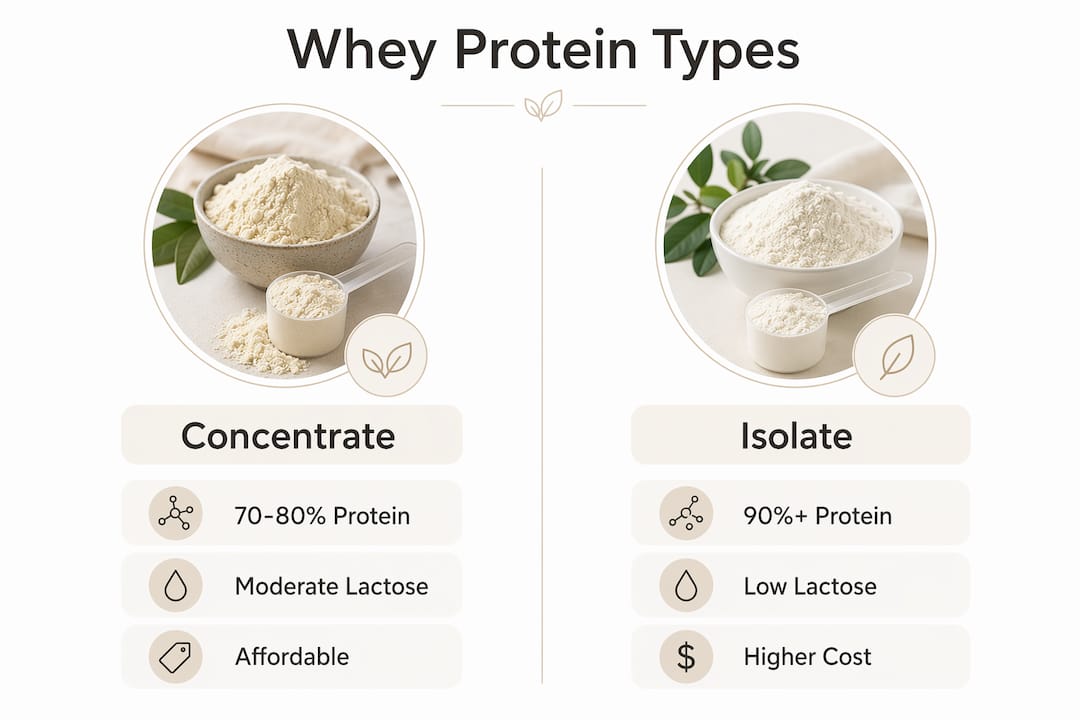
Whey Concentrate contains 70–80% protein by weight, retains some lactose, and digests in roughly 30–60 minutes. It also holds onto minor bioactive compounds that may support immune function, a benefit that isolate and hydrolysate processing removes. For most people without lactose sensitivity, concentrate is the best value option on the market.
Whey Isolate clears 90% protein content and contains minimal lactose, making it the right call for anyone who experiences bloating or discomfort with concentrate. Digestion time drops to roughly 15–30 minutes. The tradeoff is cost: isolate consistently runs higher per serving. If you want a deeper look at the tradeoffs, the whey vs. isolate breakdown from Nutribliss covers the specifics clearly.
Whey Hydrolysate is pre-digested through enzymatic processing, which makes it the fastest-absorbing form. It is also the most expensive and, for most non-elite athletes, hydrolysate is unnecessary. The speed advantage over isolate is marginal in real-world conditions.
| Form | Protein % | Lactose | Digestion Speed | Cost |
|---|---|---|---|---|
| Concentrate | 70–80% | Moderate | 30–60 min | Low |
| Isolate | 90%+ | Minimal | 15–30 min | Medium–High |
| Hydrolysate | 90%+ | Minimal | Fastest | Highest |
Pro Tip: If you are new to whey protein, start with concentrate. It delivers strong results at a lower price point, and you can switch to isolate later if digestive issues arise.
How and when should you take whey protein?
Timing matters, but not as much as the fitness industry has historically claimed. The post-workout window extends up to two hours, which means you do not need to chug a shake the second you rack the bar. Total daily protein intake drives results more than the exact minute you consume your serving.
The recommended single serving sits at 20–40g of whey protein, which delivers approximately 3g of leucine. That leucine threshold is the key trigger for muscle protein synthesis. Going below it blunts the anabolic response; going above it does not hurt, but the marginal benefit shrinks quickly.
One persistent myth is that your body can only absorb 20–30g of protein per meal. Research shows that larger doses up to 100g simply extend the duration of muscle protein synthesis rather than being wasted. Standard 20–40g servings remain efficient, but you do not need to panic if you take a larger dose.
For practical scheduling, spreading protein across the day works better than front-loading or back-loading. Aim for 20–30g servings every 3–4 hours to keep muscle protein synthesis elevated consistently. Here is a sample structure for both workout and rest days:
- Morning: 25–30g whey in a shake or mixed into oatmeal to break the overnight fast.
- Mid-morning or pre-workout: Optional 20g serving if your next meal is more than four hours away.
- Post-workout (within two hours): 25–40g whey shake, prioritizing leucine delivery to working muscles.
- Between meals on rest days: 20–25g serving to maintain steady amino acid availability without relying on a training stimulus.
- Before bed (optional): Consider casein here instead of whey, since its slower digestion rate suits overnight recovery better.
Pro Tip: On rest days, use whey between meals rather than replacing meals. It controls appetite without disrupting your overall calorie structure.
Whey protein is also useful beyond athletic contexts. Its neutral flavor and high solubility make it easy to add to baked goods, smoothies, or savory dishes, which helps general health seekers hit daily protein targets without overhauling their diet.
What should you look for when choosing a whey protein?
Product quality varies significantly across the market, and the ingredient label tells you most of what you need to know before buying.
Start with the protein percentage per serving. Divide the grams of protein by the total serving size in grams, then multiply by 100. A quality concentrate should land at 70% or above. Anything lower suggests fillers are padding the serving weight.
Watch for these red flags on the label:
- Sugar alcohols like sorbitol and xylitol frequently cause bloating and digestive distress, particularly at higher doses. Avoiding these additives reduces the risk of GI discomfort significantly.
- Proprietary blends that list protein sources without individual amounts. You cannot verify what you are actually getting.
- Excessive artificial sweeteners in multiple forms stacked together, which signals a product masking poor flavor with chemistry rather than quality ingredients.
- No third-party certification. NSF Certified for Sport and Informed Sport are the two most credible certifications in the supplement space. Third-party testing confirms purity and reduces contamination risk, which matters especially for competitive athletes subject to drug testing.
Mixability and flavor are practical concerns that affect whether you actually use the product consistently. A protein powder that clumps or tastes unpleasant gets skipped, and skipping servings defeats the purpose. If possible, buy a sample size before committing to a large container.
Grass-fed whey has grown in popularity as a quality signal. The practical impact on muscle-building outcomes is minor, but it can indicate better sourcing practices and may appeal to buyers who prioritize animal welfare or cleaner supply chains.
How does whey compare to casein and plant proteins?
Whey protein triggers muscle protein synthesis faster than casein because of its rapid digestion rate. Casein forms a gel in the stomach and releases amino acids slowly over several hours, making it better suited for overnight recovery than post-workout use. The two proteins are complementary rather than competitive.
Plant proteins present a different comparison. Most single-source plant proteins, including pea, rice, and hemp, lack a complete amino acid profile. They digest more slowly and generally deliver less leucine per gram. That said, blended plant proteins that combine pea and rice can approximate whey’s amino acid profile reasonably well. For anyone with dairy sensitivity or a vegan lifestyle, a quality blend is a workable alternative.
| Protein Type | Digestion Speed | Complete Amino Acids | Best Use Case | Cost |
|---|---|---|---|---|
| Whey Concentrate | Medium | Yes | General muscle gain | Low |
| Whey Isolate | Fast | Yes | Lactose intolerance | Medium |
| Casein | Slow | Yes | Overnight recovery | Medium |
| Plant Blend | Slow | Varies | Dairy-free diets | Medium–High |
Whey wins on speed, completeness, and cost for most users. The muscle protein synthesis support it provides is well-documented across decades of research. Plant proteins win on inclusivity for dairy-sensitive users, and casein wins specifically for the overnight window. Choosing between them is a matter of lifestyle and tolerance, not a matter of one being universally superior.
Key takeaways
Whey protein delivers the most complete, fast-acting amino acid profile of any protein supplement, making it the most practical choice for muscle gain, recovery, and daily protein targets when used consistently.
| Point | Details |
|---|---|
| Choose the right form | Concentrate suits most users; isolate fits lactose intolerance; hydrolysate rarely justifies its cost. |
| Dose 20–40g per serving | This range delivers the leucine threshold needed to trigger muscle protein synthesis effectively. |
| Timing window is flexible | Post-workout intake is effective up to two hours after training; total daily intake matters most. |
| Read the label carefully | Avoid sugar alcohols and proprietary blends; prioritize NSF Certified for Sport or Informed Sport products. |
| Consistency beats perfection | Hitting your daily protein target reliably produces better results than obsessing over exact timing. |
What i’ve learned after years of watching people use whey protein wrong
Most people overthink whey protein in exactly the wrong direction. They spend hours debating hydrolysate versus isolate, or whether to take their shake at 4:47 PM versus 5:15 PM, while completely ignoring whether they are hitting their total daily protein target. That is where the real results live.
The most common mistake I see is buying an expensive hydrolysate because the marketing implies it is what serious athletes use, then running out of budget and skipping servings to make the container last longer. A mid-range concentrate taken consistently every day beats a premium hydrolysate taken sporadically every time.
Lactose intolerance is the one area where I think people underreact rather than overreact. If you are bloating regularly after whey concentrate, do not just push through it. Switch to isolate. If isolate still causes problems, persistent symptoms may require plant proteins instead. Discomfort is not a sign of the supplement working. It is a sign of a mismatch.
My honest recommendation for anyone starting out: pick a concentrate or isolate with a short ingredient list, a third-party certification, and a flavor you actually enjoy. Use it daily. Track your total protein intake. Adjust from there. The supplement is a tool, not a solution. Pair it with real food and consistent training, and it does exactly what the research says it does. That is the #nutribliss approach to supplementation: quality ingredients, used correctly, without the noise.
— GAURAV
Build your protein stack with Nutribliss
Choosing the right whey protein is only one part of a complete fitness nutrition plan. Nutribliss carries a full range of fitness supplements designed for people who take their training and recovery seriously. Every product in the lineup is selected with ingredient quality and third-party testing standards in mind.

If you want to understand the science behind what goes into each formula, the Nutribliss science page breaks down the research supporting each product category. Whether you are building a post-workout stack or just looking for a clean daily protein source, Nutribliss makes it straightforward to find what fits your goals without sorting through misleading labels.
FAQ
What is whey protein powder made from?
Whey protein powder is derived from the liquid byproduct of cheese production. It is filtered, dried, and processed into concentrate, isolate, or hydrolysate forms depending on the level of refinement.
How much whey protein should i take per serving?
The recommended dose is 20–40g per serving, which provides approximately 3g of leucine to trigger muscle protein synthesis. Active adults generally target 1.6–2.2g of total protein per kilogram of body weight daily.
When is the best time to take whey protein?
Post-workout intake within two hours of training is effective, but total daily protein intake matters more than precise timing. Spreading 20–30g servings every 3–4 hours throughout the day produces consistent results.
Is whey protein safe if i am lactose intolerant?
Whey isolate contains minimal lactose and is well-tolerated by most people with lactose sensitivity. If isolate still causes digestive issues, a plant-based protein blend is the recommended alternative.
Does whey protein help with weight loss?
Whey protein supports appetite control and preserves lean muscle during a calorie deficit, making it useful for weight management beyond muscle building. Its high satiety effect and neutral flavor make it easy to incorporate into a reduced-calorie diet.