

TL;DR:
- Whey protein is a complete, leucine-rich supplement derived from milk that enhances endurance, muscle synthesis, and recovery in athletes. It is most effective when dosed at 20–40 grams per serving with total daily intake meeting 1.3–2.4 g/kg, prioritized over timing. Third-party tested whey isolates are recommended to ensure safety, especially for athletes subject to doping regulations.
Whey protein is a complete, leucine-rich protein derived from milk that athletes use to support muscle synthesis, endurance, and recovery. It delivers all nine essential amino acids and absorbs faster than casein or most plant-based proteins, making it the most studied protein supplement in sports nutrition. Brands like Optimum Nutrition and Klean Athlete have built entire product lines around it, and organizations like the Office of Dietary Supplements Sports (OPSS) specifically address whey protein for athletes in their guidance. If you train seriously, understanding how whey works, how much to take, and how to pick a clean product will directly affect your results.
What are the benefits of whey protein for athletes?

Whey protein’s performance benefits are clearest in endurance, not just muscle building. A randomized controlled trial on 22 adolescent soccer players found that 20 grams of whey protein twice daily for 10 weeks significantly improved estimated VO2max compared to placebo (p=0.04). That means your aerobic ceiling, the single most predictive metric of endurance performance, responds to whey supplementation even in young, already-active athletes.
The mechanism behind this comes down to leucine. Whey protein contains a high concentration of leucine, the amino acid that directly triggers muscle protein synthesis (MPS). When you consume enough leucine per meal, you flip the switch on MPS, which drives repair and adaptation after training. Whey isolate delivers this threshold faster and more reliably than casein or soy protein, both of which digest more slowly or contain lower leucine concentrations.
A 2026 meta-analysis of 35 RCTs covering 1,211 trained athletes used SUCRA scores to rank supplement effectiveness by outcome. Dietary protein ranked first for endurance performance. Creatine ranked first for strength. Omega-3 fatty acids ranked first for recovery. This means whey protein supplementation for sports is most justified when your primary goal is endurance capacity, not raw strength gains.
Key performance benefits of whey protein for athletes include:
- Improved VO2max in endurance-focused sports like soccer, running, and cycling
- Accelerated muscle protein synthesis through leucine-triggered pathways after each training session
- Faster digestion compared to casein or plant proteins, making it practical around workouts
- Complete amino acid profile that supports tissue repair without requiring food combining
“Dietary protein is the top-ranked supplement for endurance performance outcomes in trained athletes, outperforming creatine and omega-3 in that specific domain.” — Meta-analysis, 2026
How much whey protein should athletes take, and when?
Dosage matters more than timing. The IAAF consensus statement sets protein needs for endurance athletes at 1.3 to 2.4 grams per kilogram of body weight per day. A 70 kg runner, for example, needs between 91 and 168 grams of total protein daily. Whey protein supplements fill the gap when whole food sources fall short.
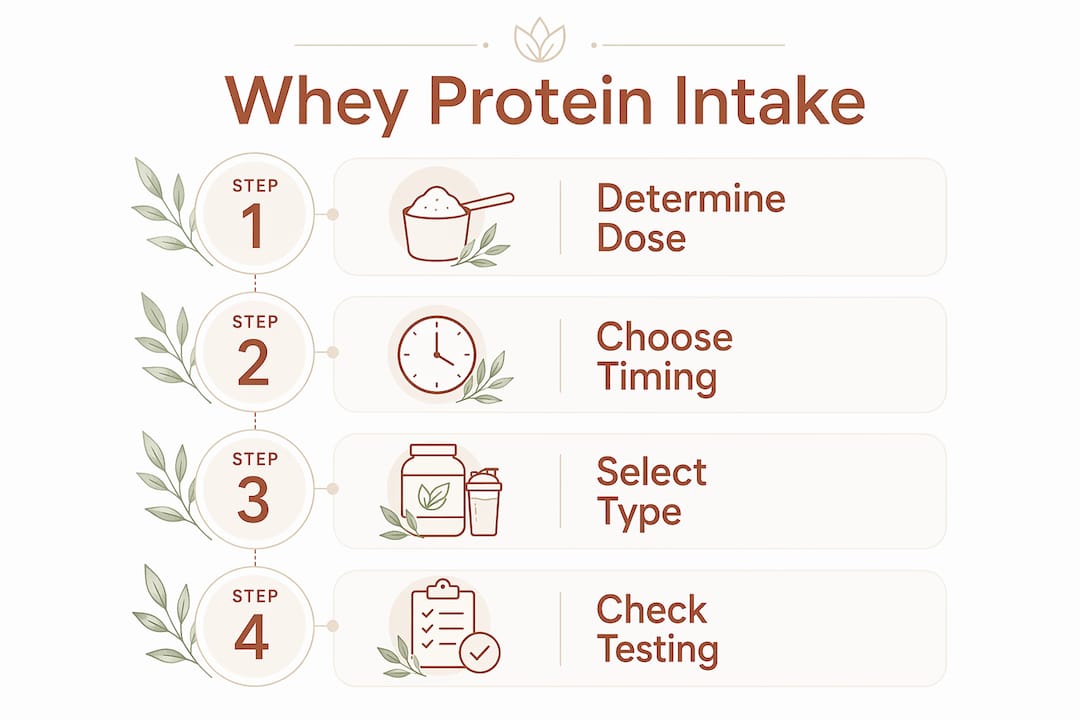
Per-meal dosing follows a specific logic. The leucine threshold for triggering MPS requires 20 to 40 grams of whey per serving. Splitting your daily intake into doses of that size, spaced every three to four hours, produces better muscle adaptation than consuming the same total amount in one or two large meals. This is the ISSN position on nutrient timing, and it shifts the focus from “when” to “how much per sitting.”
Here is a practical daily protein framework for a 75 kg athlete targeting 1.8 g/kg (135 g total):
- Breakfast: 30–35 g protein from eggs, Greek yogurt, or cottage cheese
- Mid-morning or pre-training: 25 g whey protein shake
- Lunch: 30–35 g protein from chicken, fish, or legumes
- Post-training or afternoon: 25 g whey protein shake
- Dinner: 30–35 g protein from whole food sources
The post-workout “anabolic window” is real but far shorter than most athletes believe. Muscle sensitivity to protein extends up to 24 hours after training, so missing the 30-minute window by an hour does not erase your gains. Timing becomes critical only if you train twice per day, where the gap between sessions is too short for full recovery without deliberate nutrition.
Pro Tip: If you train in the morning before eating, a 25 to 30 gram whey shake immediately after your session counts as your first meal’s protein dose. You do not need a separate pre-workout protein serving on top of it.
How to choose the best whey protein for performance
The most important factor in selecting a whey protein product is third-party testing, not flavor or price. OPSS explicitly advises drug-tested athletes to use only lot-tested, certified supplements because label inaccuracies and trace contaminants from manufacturing can trigger positive doping tests. Whey protein itself contains no banned substances, but the facility it was made in might.
Understanding the three types of whey protein
| Type | Protein Content | Lactose | Best For |
|---|---|---|---|
| Whey Concentrate | 70–80% | Moderate | Budget-conscious athletes, no lactose sensitivity |
| Whey Isolate | 90%+ | Very low | Post-workout use, lactose-sensitive athletes |
| Whey Hydrolysate | 90%+ | Very low | Fastest absorption, clinical or elite use |
Whey isolate is the most practical choice for most athletes. It delivers a high leucine dose per serving with minimal lactose, which reduces digestive discomfort during training blocks. Hydrolysate absorbs slightly faster but costs significantly more, with limited additional performance benefit for athletes training once per day.
Brands like Optimum Nutrition and Klean Athlete consistently pass third-party testing through programs like NSF Certified for Sport and Informed Sport. These certifications confirm that what is on the label is in the product, and nothing else. For competitive athletes subject to WADA or USADA testing, this is non-negotiable.
Pro Tip: Always look for a lot number and certificate of analysis (COA) on the product or manufacturer’s website. If a brand cannot provide a COA for the specific batch you purchased, do not use it in competition.
How does whey compare to other sports supplements?
Choosing the right supplement depends entirely on your training goal. The 2026 network meta-analysis provides the clearest head-to-head comparison available, ranking three major supplement categories across three performance outcomes.
| Supplement | Best Outcome | Ranked For |
|---|---|---|
| Dietary Protein (Whey) | Endurance performance | VO2max, aerobic capacity |
| Creatine | Muscle strength | Power output, 1RM gains |
| Omega-3 Fatty Acids | Recovery | Reduced soreness, faster repair |
This ranking has a direct implication for how you spend your supplement budget. A marathon runner or cyclist should prioritize protein intake above creatine, because the evidence for protein’s endurance benefit is stronger in that context. A powerlifter or sprinter focused on maximal strength output gets more from creatine monohydrate. An athlete in a heavy competition block with back-to-back events benefits most from omega-3 supplementation to accelerate recovery between sessions.
Whey protein versus plant-based proteins is a separate comparison worth addressing. Soy protein is the only plant source with a complete amino acid profile, but it still delivers less leucine per gram than whey. Pea protein and rice protein blends can approximate whey’s profile when combined, but they require larger serving sizes to hit the same leucine threshold. For athletes who tolerate dairy, whey remains the most efficient protein source per gram. You can explore how whey fits into a broader supplement strategy for athletes to see where it ranks alongside creatine, electrolytes, and other evidence-backed options.
Common myths and mistakes athletes make with whey protein
The biggest mistake athletes make is treating whey protein as a performance shortcut rather than a dietary tool. Whey supplements work because they help you hit your total daily protein target consistently. They do not work independently of your overall diet.
Common errors that reduce whey protein’s effectiveness:
- Obsessing over the 30-minute post-workout window. Muscle protein sensitivity lasts up to 24 hours after training. Missing the window by an hour does not cost you gains if your daily total is adequate.
- Replacing whole food protein with shakes. Whole foods provide micronutrients, fiber, and satiety that shakes do not. Whey should supplement your diet, not replace meals.
- Ignoring total daily intake. Athletes who time their shakes perfectly but hit only 0.8 g/kg/day total protein see minimal benefit. Total daily protein drives results, not timing precision.
- Skipping third-party testing. Contaminated supplements have ended careers. A certified product costs a few dollars more per tub. That is not a real trade-off.
Pro Tip: Track your total protein intake for one week using an app like Cronometer or MyFitnessPal before adding whey supplements. Most athletes discover they are already under-eating protein from whole foods, which means the supplement fills a real gap rather than adding redundant calories.
Key takeaways
Whey protein for athletes works best when it fills a real dietary gap, hits the leucine threshold per dose, and comes from a third-party tested source.
| Point | Details |
|---|---|
| Endurance is the primary benefit | Whey protein improves VO2max more reliably than it improves raw strength in trained athletes. |
| Dose 20–40 g per serving | Each serving must hit the leucine threshold to trigger muscle protein synthesis effectively. |
| Total daily intake beats timing | Hitting 1.3–2.4 g/kg/day consistently matters more than the post-workout window. |
| Third-party testing is non-negotiable | NSF Certified for Sport or Informed Sport certification protects drug-tested athletes from contamination. |
| Match supplement to your goal | Protein leads for endurance; creatine leads for strength; omega-3 leads for recovery. |
Why I think most athletes are using whey protein wrong
After years of working with athletes across endurance and strength sports, the pattern I see most often is not under-supplementation. It is misaligned supplementation. Athletes buy whey protein because it is the most visible supplement on the market, then use it to chase strength gains when their actual sport demands aerobic capacity. The 2026 meta-analysis data makes this mismatch concrete: protein wins for endurance, creatine wins for strength. If you are a runner or cyclist spending money on whey, you are actually using the right tool. If you are a powerlifter expecting whey to replace creatine, you are not.
The second issue I see constantly is the timing obsession. Athletes will set alarms to drink a shake within 20 minutes of finishing a session, then eat 80 grams of total protein for the rest of the day and wonder why they are not recovering. The research is clear. Distribute your intake. Hit your daily target. Use whey to fill the gaps whole food cannot cover conveniently. That is the entire strategy.
One more thing: the safety issue is real and underappreciated. I have seen athletes disqualified from competition because of contaminated supplements that had nothing to do with intentional doping. OPSS and NSF Certified for Sport exist for a reason. Spending an extra $10 on a certified product is not optional if you compete under anti-doping rules. Use #nutribliss and similar science-focused brands that publish their testing data openly.
— GAURAV
Fuel your performance with Nutribliss
Athletes who train hard need supplements that are built to the same standard they hold their training. Nutribliss formulates its products around peer-reviewed research, not marketing claims, and every product in the lineup is designed to support real performance outcomes.

Whether you are looking to close a protein gap, support endurance capacity, or recover faster between sessions, Nutribliss has options grounded in the same science this article covers. Explore the science behind Nutribliss to see how each product is developed and tested. For athletes who want a full supplement stack built around evidence, the Nutribliss supplement range covers protein, electrolytes, vitamins, and recovery support in one place.
FAQ
Is whey protein good for endurance athletes?
Whey protein is particularly effective for endurance athletes. A randomized controlled trial found that 20 grams of whey twice daily improved VO2max in adolescent soccer players over 10 weeks, and a 2026 meta-analysis ranked dietary protein as the top supplement for endurance performance outcomes.
How much whey protein should an athlete take per day?
Endurance athletes need 1.3 to 2.4 grams of protein per kilogram of body weight daily, with individual servings of 20 to 40 grams spaced every three to four hours to consistently hit the leucine threshold for muscle protein synthesis.
When is the best time to take whey protein for performance?
Total daily protein intake matters more than precise timing. Muscles remain sensitive to protein for up to 24 hours after training, so consuming whey within a few hours of your session is sufficient. Strict post-workout timing only becomes critical when you train twice per day.
What is the difference between whey isolate and whey concentrate for athletes?
Whey isolate contains 90% or more protein with very low lactose, making it the better choice for post-exercise use and athletes with lactose sensitivity. Whey concentrate contains 70 to 80% protein at a lower cost and works well for athletes without digestive concerns.
How do I know if a whey protein product is safe for competition?
Look for third-party certifications like NSF Certified for Sport or Informed Sport, which confirm the product has been lot-tested for banned substances. OPSS advises drug-tested athletes to use only certified supplements to avoid contamination risks from manufacturing.