

TL;DR:
- Whey protein accelerates muscle recovery by delivering leucine rapidly, reducing damage markers, and supporting daily protein needs. Consuming 0.4g per kilogram within two hours post-exercise and spreading intake across meals optimizes results, with product quality and whole foods playing vital roles. Proper use involves integrating whey into a balanced diet, prioritizing total daily intake, and choosing high-quality sources to enhance performance and recovery effectively.
Whey protein recovery is the process by which whey protein supplementation accelerates muscle repair, rebuilds damaged tissue, and restores strength following exercise. No other protein source matches whey’s speed of absorption or its leucine concentration, which is the amino acid that directly triggers muscle protein synthesis. Whether you train five days a week or compete at an elite level, understanding how to use whey correctly separates real results from wasted effort. This article covers the mechanisms, optimal dosing, timing, quality considerations, and how to build whey into a full recovery nutrition plan.
How does whey protein accelerate muscle recovery?
Whey protein is the gold standard for muscle protein synthesis due to its complete amino acid profile and exceptionally high leucine content. Leucine acts as the molecular switch that activates the mTOR signaling pathway, which is the primary driver of muscle repair and growth. Without enough leucine, your muscles receive a weaker signal to rebuild, regardless of total calories consumed.

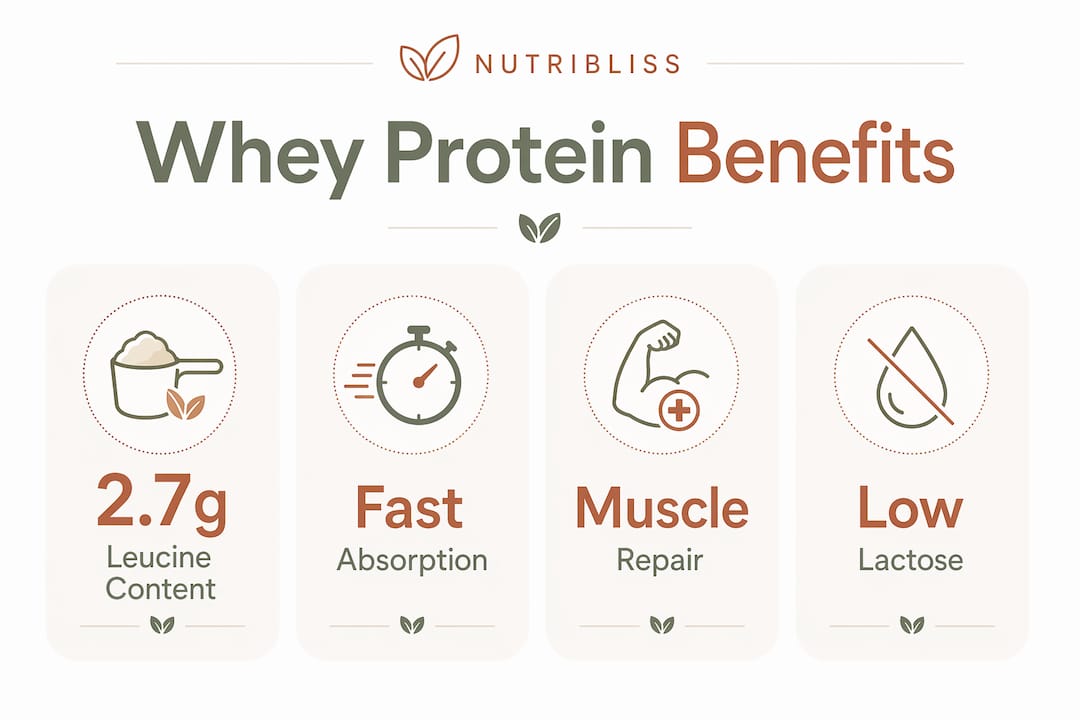
The numbers behind whey’s effectiveness are specific. Whey isolate delivers approximately 2.7g leucine per 25g serving and elevates blood leucine levels 67% faster than casein and 43% faster than soy protein. That speed matters because the faster leucine reaches your muscles post-exercise, the sooner repair begins. Whey’s DIAAS score of 1.09 also confirms it delivers more usable protein per gram than plant-based alternatives.
Whey also reduces the physical damage exercise causes at the cellular level. In a 6-day study with 36 men, the placebo group showed a 10x increase in creatine kinase, a key marker of muscle damage, while the whey group showed no comparable spike. Creatine kinase elevation correlates directly with delayed onset muscle soreness and reduced force output in subsequent training sessions. Keeping those markers low means you can train harder, more frequently.
One nuance worth knowing: whey causes only modest reductions in perceived soreness, typically single-digit percentages. The real value is in accelerating the underlying repair process, not eliminating discomfort entirely. Expecting whey to make you feel completely fine the day after heavy squats sets unrealistic expectations.
- Whey protein contains roughly 11% leucine by weight, meeting the leucine threshold required to trigger muscle protein synthesis
- It absorbs faster than casein or soy, making it the preferred choice immediately after training
- It reduces creatine kinase spikes, which directly lowers muscle damage markers after resistance training
- It provides all nine essential amino acids, which plant proteins often fail to deliver in sufficient ratios
Pro Tip: If you train twice a day or compete in multi-day events, prioritize whey isolate over concentrate for its faster absorption and lower fat content, which reduces digestive load between sessions.
What is the optimal whey protein dosage and timing for recovery?
Dosage and timing are where most athletes either overthink or undershoot. The research gives clear guidance on both. Consuming 0.4g/kg body weight within two hours post-exercise boosts muscle protein synthesis by 49%. For a 180-pound (82kg) athlete, that translates to roughly 33g of whey protein per post-workout serving, which aligns with a standard one-scoop dose of most quality products.
The bigger picture matters more than any single serving, though. Consistent daily intake of 1.6 to 2.2g/kg spread across four to five meals drives the majority of hypertrophy and recovery outcomes. A 180-pound athlete needs between 131g and 181g of total protein per day. Hitting that target consistently across meals matters far more than obsessing over the exact minute you drink your post-workout shake.
Here is a practical daily protein distribution framework:
- Morning meal: 35 to 40g protein from whole food sources like eggs, Greek yogurt, or cottage cheese
- Pre-workout snack (optional): 20 to 25g from a light whey shake or whole food source if training fasted
- Post-workout shake: 30 to 35g whey protein within two hours of finishing your session
- Lunch: 35 to 40g from lean meats, legumes, or fish
- Dinner: 35 to 40g from a protein-rich whole food meal
Timing is only critical in one specific scenario. Post-workout timing matters most when you train in a fasted state. If you ate a protein-rich meal two to three hours before training, the anabolic window is far more flexible than fitness culture suggests. The anabolic window is more flexible than most gym-goers believe, and stressing over a 30-minute window after a fed training session is unnecessary.
Pro Tip: Distribute your protein intake evenly across meals rather than front-loading or back-loading. Research consistently shows that spreading intake across four to five meals maximizes muscle protein synthesis compared to consuming the same total in one or two large servings.
How does whey protein compare to other protein sources and whole foods?
Not all protein sources perform equally for recovery. The table below compares whey protein against casein, soy, and whole food sources across the factors that matter most to athletes.
| Protein source | Absorption speed | Leucine content | Best use case | Micronutrient value |
|---|---|---|---|---|
| Whey isolate | Very fast | ~2.7g per 25g serving | Post-workout recovery | Low |
| Whey concentrate | Fast | Slightly lower than isolate | General daily use | Low |
| Casein | Slow | Moderate | Pre-sleep protein | Low |
| Soy protein | Moderate | Lower than whey | Plant-based option | Moderate |
| Chicken breast | Moderate | High | Meals, daily protein | High |
| Greek yogurt | Moderate | Moderate | Breakfast, snacks | High (calcium, probiotics) |
Whole foods provide micronutrients, fiber, and bioactive compounds that no protein powder replicates. Whole foods should provide 70 to 80% of your daily protein intake for this reason. Chicken, eggs, fish, and dairy deliver zinc, iron, B vitamins, and omega-3s that support recovery beyond muscle protein synthesis alone. Whey fills the gap where convenience and speed matter, not where nutritional completeness is the goal.
Whey isolate and concentrate differ in one practical way. Isolates are ultrafiltered, producing a product that is low in fat and carbohydrates, which makes them the better choice during a caloric deficit or for athletes with lactose sensitivity. Concentrates retain more of the natural milk fractions, including some lactose and fat, and cost less per gram of protein. For most athletes in a maintenance or surplus phase, concentrate works well. For those cutting weight or managing digestive issues, isolate is the better fit. You can read more about whey isolate’s specific benefits for muscle repair before deciding which form suits your goals.
What are the best practices for integrating whey protein in a recovery plan?
Building whey into a full recovery nutrition plan requires more than buying a tub and shaking it post-workout. The supplement works best when it fills specific gaps in your diet rather than replacing real food. Supplements are practical for precise dosing but should complement, not substitute, a food-first approach.
Effective integration looks like this in practice:
- Use whey on training days as a post-workout protein source when a whole food meal is not immediately available or practical
- Use whey on rest days if your total daily protein target is difficult to hit through food alone, particularly for athletes with lower appetites or high protein requirements
- Adjust dose by age: Adults over 60 face anabolic resistance, meaning their muscles require a higher leucine threshold to trigger synthesis. The PROVIDE trial found that adding 20 to 40g of whey to meals preserved muscle mass and function in adults over 60, making higher doses appropriate for older athletes
- Account for training intensity: On days involving heavy compound lifts or high-volume sessions, prioritize the post-workout dose. On lighter days, total daily protein matters more than timing
- Pair whey with carbohydrates post-workout to replenish glycogen alongside muscle repair. A simple protein shake recipe that works: blend 30g whey isolate, 250ml milk or oat milk, one banana, and a tablespoon of almond butter for roughly 45g protein and 60g carbohydrates
Consistency beats perfection every time. Hitting 90% of your daily protein target seven days a week outperforms hitting 100% on training days and 50% on rest days. Recovery is a 24-hour process, not a 30-minute window. You can explore nutritional supplements for recovery that pair well with whey to build a more complete plan.
Are there any safety, quality, or usage considerations with whey protein?
Whey protein is safe for healthy adults at recommended doses, but product quality varies significantly across the market. The biggest risk is not a health issue. It is a value issue. Amino acid spiking in some products inflates the listed protein content by adding cheap amino acids like taurine or glycine that do not contribute to muscle protein synthesis. The label reads 25g protein, but the usable, complete protein content is far lower.
To avoid this, check the ingredient list for free-form amino acids listed separately from the protein blend. A clean whey product lists whey protein isolate or concentrate as the first ingredient, with minimal additives. Third-party testing certifications from organizations like NSF International or Informed Sport confirm that what is on the label matches what is in the tub.
Athletes with lactose intolerance should choose whey isolate, which contains negligible lactose due to the ultrafiltration process. Whey concentrate retains more lactose and may cause bloating or digestive discomfort in sensitive individuals. Anyone with a diagnosed dairy allergy should avoid whey entirely and consider plant-based protein recovery powder alternatives instead.
Pro Tip: Search for products with a short ingredient list. If a whey protein powder lists more than five to seven ingredients, it likely contains unnecessary fillers, artificial sweeteners, or amino acid spiking agents that reduce its actual value.
Key takeaways
Whey protein drives faster muscle recovery by delivering leucine rapidly to muscle tissue, reducing damage markers, and supporting consistent daily protein targets that matter more than precise post-workout timing.
| Point | Details |
|---|---|
| Leucine drives synthesis | Whey isolate delivers 2.7g leucine per 25g serving, triggering muscle repair faster than casein or soy. |
| Dose post-workout | Consume 0.4g/kg body weight within two hours of training to boost muscle protein synthesis by 49%. |
| Total intake beats timing | Daily protein of 1.6 to 2.2g/kg spread across four to five meals matters more than the exact post-workout window. |
| Whole foods first | Whole foods should provide 70 to 80% of daily protein; whey fills the convenience and speed gap. |
| Check product quality | Avoid amino acid spiking by choosing products with third-party testing and a clean ingredient list. |
Why most people use whey wrong (and what actually works)
The most common mistake I see with whey protein recovery is treating the post-workout shake as the entire recovery strategy. Athletes buy a quality product, hit their shake within 30 minutes of training, and then eat poorly for the rest of the day. The research is clear: total daily protein intake outweighs timing by a factor of 60 to 70%. One shake does not compensate for a day of under-eating protein.
The second mistake is expecting whey to eliminate soreness. It will not. What it does is accelerate the underlying repair process so you recover faster and perform better in your next session. That is a meaningful benefit, but it is not the same as feeling fresh. Managing expectations here prevents people from abandoning a supplement that is genuinely working.
The third mistake is ignoring product quality. Not all whey is equal, and the amino acid spiking problem is more widespread than most buyers realize. Spending slightly more on a third-party tested product from a brand like Nutribliss, which prioritizes ingredient transparency, is a better investment than buying the cheapest tub available. Follow #nutribliss for science-backed supplement guidance that does not cut corners on quality.
My honest recommendation: use whey as a precision tool. Hit your daily protein target through whole foods first, use whey to close the gap post-workout or on high-demand training days, and track your total intake weekly rather than obsessing over daily perfection. That approach, more than any specific product or timing trick, is what actually moves the needle on recovery and performance.
— GAURAV
Build your recovery stack with Nutribliss

Nutribliss formulates its protein and recovery supplements with the same evidence-based standards this article describes. Every product in the Nutribliss supplement catalog is built for athletes who want clean ingredients, accurate labeling, and real performance outcomes. No amino acid spiking. No unnecessary fillers. Just protein that works the way the research says it should. If you want to understand the science behind what goes into each formulation, the science behind superfoods page breaks down the research that drives every product decision. Whether you are optimizing post-workout recovery or building a full daily nutrition plan, Nutribliss has the products to support it.
FAQ
How much whey protein should I take after a workout?
Consume approximately 0.4g per kilogram of body weight within two hours post-exercise. For a 180-pound athlete, that equals roughly 33g, which aligns with a standard single scoop of most quality whey products.
Does whey protein actually reduce muscle soreness?
Whey reduces soreness by only modest amounts, typically single-digit percentages. Its primary benefit is accelerating muscle protein repair and reducing creatine kinase spikes, which speeds recovery for your next training session rather than eliminating discomfort.
Is whey isolate better than concentrate for recovery?
Whey isolate absorbs faster, contains negligible lactose, and is lower in fat and carbohydrates, making it the better choice for post-workout recovery, caloric deficits, or athletes with lactose sensitivity. Concentrate works well for general daily use at a lower cost.
When is post-workout timing actually important?
Timing matters most when you train in a fasted state. If you consumed a protein-rich meal two to three hours before training, the anabolic window is flexible and total daily protein intake drives the majority of recovery outcomes.
Can older adults benefit from whey protein for recovery?
Yes. Adults over 60 experience anabolic resistance, requiring higher leucine doses to trigger muscle protein synthesis. The PROVIDE trial found that adding 20 to 40g of whey to meals preserved muscle mass and function in adults over 60, making it particularly valuable for older athletes.