

TL;DR:
- The anabolic window is longer and less urgent than commonly believed, lasting several hours.
- Total daily protein intake and consistency are more important than precise post-workout timing.
- Edge cases like fasted training or multiple sessions require timely nutrition, but most recreational athletes can relax.
The idea that you must sprint to your gym bag and chug a protein shake within 30 minutes of your last rep or watch your gains evaporate is one of fitness culture’s most persistent myths. The anabolic window is real, but the urgency most people attach to it is wildly overstated. Modern research paints a far more practical picture, one where your total daily protein intake and meal consistency matter far more than racing a clock. This article breaks down what the anabolic window actually is, how long it genuinely lasts, and exactly when precise timing becomes worth your attention.
Table of Contents
- What is the anabolic window?
- The science: How long is the anabolic window really?
- When timing really matters: Edge cases and special scenarios
- Practical application: Building your post-workout nutrition plan
- Our take: Why chasing the anabolic window misses the bigger picture
- Support your recovery smarter with NutriBliss
- Frequently asked questions
Key Takeaways
| Point | Details |
|---|---|
| Anabolic window defined | The anabolic window is a period after exercise when the body may be especially receptive to nutrients that support muscle recovery. |
| Timing isn’t always critical | For most, eating a protein-rich meal within a few hours before or after workouts is enough. |
| Special cases matter | Precise nutrient timing becomes important for athletes training fasted, twice daily, or in a calorie deficit. |
| Quality over urgency | Consistent nutrition and total protein intake matter more than hitting a ‘magic’ 30-minute window. |
| Practical, evidence-based tips | Follow science-backed strategies to optimize your post-workout nutrition without unnecessary stress. |
What is the anabolic window?
The anabolic window refers to the post-exercise period during which your muscles are primed to absorb nutrients and begin repair. The popular version of this idea claims you have a narrow 30 to 60 minute slot after training where muscle protein synthesis (MPS, the biological process of building new muscle tissue) is supercharged. Miss that window, the story goes, and you’ve wasted your workout.
Here’s where the nuance lives. MPS is elevated after resistance training. That part is true. But the idea that this elevation vanishes after 60 minutes is a significant oversimplification of early exercise science. Studies from the 1990s and early 2000s focused heavily on fasted subjects, which skewed conclusions toward urgency. When researchers began accounting for pre-workout meals and total daily intake, the picture shifted considerably.
The anabolic window is best understood as a period after exercise when MPS can be elevated by proper nutrition, but the length and urgency of that window depend heavily on your individual circumstances. Two key nutrients drive this process:
- Protein: Provides amino acids needed to repair and build muscle fibers damaged during training.
- Carbohydrates: Replenish muscle glycogen (stored energy) and blunt cortisol, a stress hormone that can slow recovery.
“The anabolic window is not a trap door that slams shut after 30 minutes. It’s more like a sliding door that stays open for hours, depending on what you ate before you trained.”
This reframing matters because a lot of athletes make rushed, inconvenient, or even poor nutritional choices based on a misunderstanding of urgency. Eating a low-quality protein bar in a parking lot because you’re terrified of missing a window is not better than eating a solid, balanced meal 90 minutes later. Context is everything.
The science: How long is the anabolic window really?
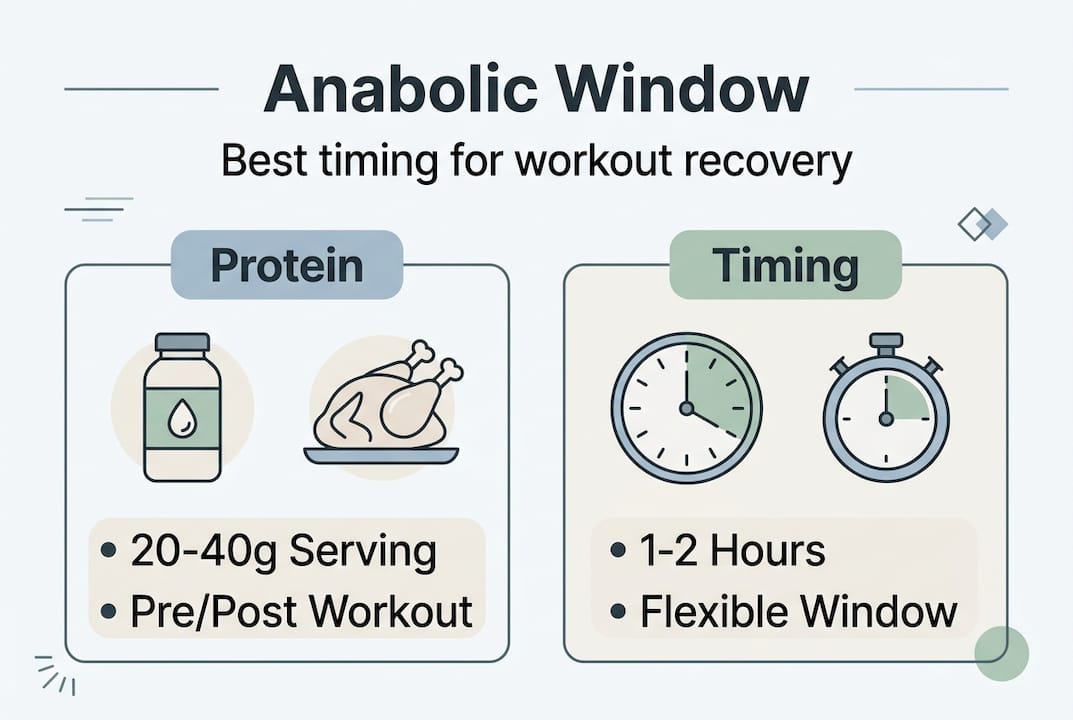
The latest research suggests the anabolic window is far wider than gym folklore implies. When you consume 20 to 40g of whey protein before or after exercise, MPS remains elevated for up to 3 to 5 hours post-workout. That’s a meaningful shift from the old “30 minutes or bust” narrative.
Here’s a practical breakdown of how meal timing affects the window:
| Scenario | Effective anabolic window | Urgency level |
|---|---|---|
| Pre-workout meal 1 to 2 hours prior | 3 to 5 hours post-exercise | Low |
| Pre-workout meal 3 to 4 hours prior | 2 to 3 hours post-exercise | Moderate |
| Fasted training (no prior meal) | Starts immediately post-exercise | High |
| Multiple sessions under 6 hours apart | Between sessions | Very high |
The key variable is whether amino acids from a prior meal are still circulating in your bloodstream. If you ate a solid, protein-rich meal within 1 to 3 hours before training, your muscles are already swimming in building blocks. The post-workout window is less urgent because nutrient timing is working in your favor before you even finish your last set.

Roughly 20 to 40g of protein per serving is the evidence-based sweet spot. Below 20g, you may not fully trigger MPS. Above 40g, the excess doesn’t meaningfully accelerate muscle building in a single dose for most people.
For those interested in slower-digesting options, casein protein for recovery is worth understanding. Casein releases amino acids gradually over 5 to 7 hours, making it a smart choice for evening meals or longer gaps between training and eating.
The bottom line from current science: timing is a tool, not a rule. Use it strategically based on your actual schedule, not out of fear.
When timing really matters: Edge cases and special scenarios
Now that we know the window is wider than advertised, let’s get specific about when it genuinely tightens. Research confirms that precise nutrient timing becomes significantly more important in four key scenarios: fasted training, multiple daily sessions, calorie deficits, and skipped pre-workout meals.
Here’s how a routine gym-goer compares to an athlete in one of these edge cases:
| Factor | Routine gym-goer | Fasted or elite athlete |
|---|---|---|
| Pre-workout meal | Eaten 1 to 2 hours prior | Skipped or 4+ hours prior |
| Training sessions per day | One | Two or more |
| Calorie intake | At or above maintenance | In a deficit |
| Post-workout urgency | Low | High |
If you fall into the edge-case category, here’s how to optimize your post-workout nutrition:
- Prepare your protein in advance. A shaker bottle with pre-measured protein powder takes 30 seconds to mix and eliminates the excuse of not having food ready.
- Aim for 20 to 40g of fast-absorbing protein within 30 to 45 minutes after training when fasted or between sessions.
- Add carbohydrates (30 to 60g) to replenish glycogen faster, especially if your next session is within 6 hours.
- Hydrate aggressively. Dehydration slows nutrient transport to muscles, blunting the effect of even perfect protein timing.
- Use functional nutrition for athletes principles to plan your full day around your training schedule, not just the post-workout meal.
Pro Tip: Keep a single-serve protein packet in your gym bag. If you’re training fasted or back-to-back, you have zero excuses for missing your window. Preparation beats willpower every time.
For most recreational lifters training once a day with a pre-workout meal in the last few hours, the urgency is low. Explore best recovery supplements to support your routine without overthinking the clock.
Practical application: Building your post-workout nutrition plan
Knowing the science is one thing. Applying it consistently is where real progress happens. Here’s how to build a post-workout nutrition approach that actually fits your life.
First, anchor your plan around protein. Consuming 20 to 40g of quality protein within a few hours of training covers the vast majority of athletes’ MPS needs. Whey is the gold standard post-workout because it digests quickly and delivers a high concentration of leucine, the amino acid most responsible for triggering MPS.
Practical post-workout nutrition options:
- Whey protein shake with a banana: Fast protein plus quick carbs. Ready in 60 seconds.
- Greek yogurt with berries and granola: Solid protein, natural sugars for glycogen, and easy to prep ahead.
- Chicken and rice meal: The classic whole-food option. Works well when you have 30 to 60 minutes post-training.
- Cottage cheese before bed: Slow-digesting casein protein that supports overnight recovery.
- Eggs and toast: Affordable, complete protein with carbohydrates for energy replenishment.
Pro Tip: Planning your meals around your workout schedule covers most athletes’ recovery needs without any obsessing over exact timing. Consistency in your overall eating pattern matters more than hitting a precise post-workout minute.
For those training twice daily, the gap between sessions becomes your nutrition window. Prioritize fast carbohydrates and protein immediately after the first session to be ready for the second. Explore key supplements for recovery and consider building a structured supplement routine for recovery that supports your training load without adding complexity.
Hydration deserves a mention here too. Muscle protein synthesis requires water. Even mild dehydration (as little as 2% body weight lost in sweat) can impair recovery. Aim for at least 16 to 24 oz of water immediately after training, then continue drinking throughout the day.
Our take: Why chasing the anabolic window misses the bigger picture
Here’s our honest opinion: the anabolic window obsession is a distraction for most people. We’ve seen athletes stress about a 10-minute delay in their protein shake while eating poorly for the other 22 hours of the day. That’s completely backwards.
The research is clear. Total daily protein intake, sleep quality, training consistency, and balanced nutrition drive the majority of your results. Timing is a fine-tuning tool, not a foundation. If your foundation is shaky, no amount of precise timing will fix it.
Elite athletes and those in genuine edge cases absolutely benefit from tighter timing protocols. But for the recreational lifter training three to five times per week with reasonable meals? Relax. Eat well, eat consistently, hit your protein targets across the day, and recover properly. The 30-minute panic timer is not your competitive advantage. Your habits are.
Support your recovery smarter with NutriBliss
Understanding the anabolic window is step one. Acting on it with the right nutrition tools is where results actually happen. At NutriBliss, we believe in science-backed supplementation that fits your real life, not marketing hype.

Explore the science behind superfoods to see how whole-food compounds can support your recovery alongside targeted supplements. Whether you’re looking for protein powders, electrolytes, or recovery capsules, browse the full range of Nutribliss supplements built for athletes who want results without the guesswork. Visit shop NutriBliss and build a recovery stack that actually matches how you train.
Frequently asked questions
Is it necessary to eat protein immediately after my workout?
No. As long as you had a protein-rich meal within a few hours before or after training, immediate post-exercise protein is not essential for most people. Your MPS window stays open far longer than the 30-minute myth suggests.
Who really needs to prioritize the anabolic window?
Athletes training fasted, running multiple daily sessions under 6 hours apart, operating in a calorie deficit, or skipping pre-workout meals benefit most from precise nutrient timing. Casual gym-goers generally do not need to stress about it.
How much protein should I consume around workouts?
Research supports consuming about 20 to 40g of high-quality protein either before or after workouts. This range reliably triggers MPS without unnecessary excess in a single dose.
Does the type of protein matter for the anabolic window?
Yes. Whey protein digests rapidly and delivers leucine quickly, making it ideal right after training. Casein digests more slowly over several hours, making it a better fit for overnight recovery or longer gaps between meals and training.