

TL;DR:
- Whole food and plant-based protein sources can fully meet daily protein needs for active people while offering additional fiber and micronutrients.
- Using high-density foods like tempeh, seitan, and legumes allows effective meal planning without relying on protein powders.
- Building meals around varied, whole-food proteins supports long-term health and reduces micronutrient gaps often caused by supplements.
A protein powder substitute is any whole food or plant-based protein source that replaces a supplement in your daily diet. Vegetarians, vegans, and health-conscious eaters often discover that real food does the job better than a scoop of powder. The International Society of Sports Nutrition recommends 1.6–2.2 grams of protein per kilogram of body weight daily for active individuals. That target is fully achievable through foods like tempeh, lentils, tofu, and seitan, without a single serving of protein powder. Whole foods also deliver fiber, micronutrients, and phytonutrients that no isolated powder can replicate.
What are the best protein powder substitutes?
The strongest protein powder alternatives are soy-based foods, legumes, and fermented plant proteins. These sources match or exceed the protein density of many powders while adding nutritional value that supplements cannot.
Soy-based foods sit at the top of the list for plant-based protein. Tofu provides 8–10g of protein per 3.5oz serving and is often fortified with calcium and iron, making it a particularly strong whey protein substitute for vegans. Tempeh outperforms tofu in raw protein density, delivering up to 20–31g per cup with a complete amino acid profile comparable to whey. That completeness matters because it means your body can use the protein efficiently without combining it with another source at the same meal.

Edamame is another standout. Edamame provides 9g of protein per half-cup serving, making it one of the most protein-dense plant foods by volume. It works as a snack, a salad topper, or a side dish, which gives it real flexibility in daily meal planning.
Seitan is the highest-protein plant food most people overlook. Made from wheat gluten, it delivers roughly 25g of protein per 3.5oz serving. It is not suitable for those with gluten sensitivity, but for everyone else, it functions as a near-perfect whey alternative in terms of protein concentration.
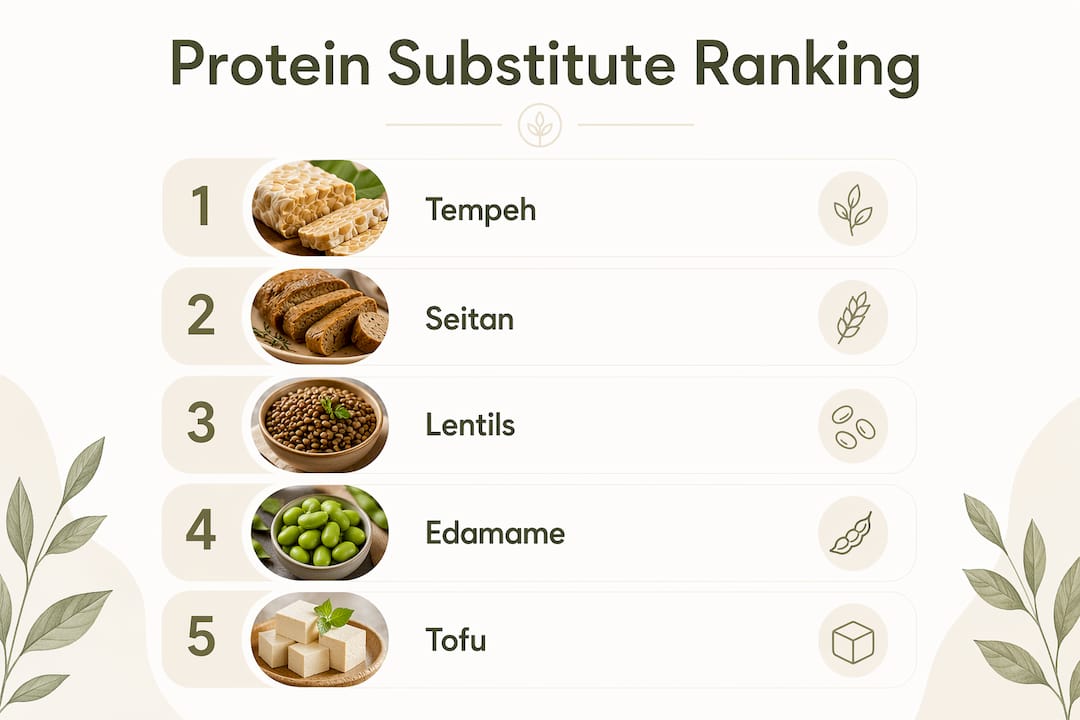
Here is a quick comparison of protein content per standard serving:
| Food | Serving Size | Protein (approx.) |
|---|---|---|
| Tempeh | 1 cup | 20–31g |
| Seitan | 3.5oz | ~25g |
| Edamame | ½ cup | 9g |
| Tofu | 3.5oz | 8–10g |
| Lentils (cooked) | 1 cup | ~18g |
| Chickpeas (cooked) | 1 cup | ~15g |
| Greek yogurt | 6oz | ~17g |
Greek yogurt serves omnivores well as a non-dairy protein option when dairy is tolerated. For strict vegans, lentils and chickpeas fill the legume category with solid protein counts and exceptional fiber content.
How to structure meals to replace protein powder effectively
Meal structure is the single biggest factor in hitting protein targets without supplements. Spreading 20–40g of protein per meal across three to four meals maximizes muscle protein synthesis throughout the day. Most people who struggle to meet their protein goals are not eating too little protein overall. They are eating it unevenly, with most of it concentrated at dinner.
The anchor protein method solves this problem directly. An anchor protein of 30+ grams per meal, combined with a supporting protein source of 10–20g, automates hitting high daily targets without any supplements. Think of the anchor as the main event and the supporting source as the backup that closes the gap.
Here is how that looks across a full day:
- Breakfast: 1 cup of tempeh scramble (anchor, ~25g) plus ½ cup edamame on the side (supporting, ~9g). Total: ~34g.
- Lunch: Large lentil soup with chickpeas (anchor, ~20g) plus a Greek yogurt (supporting, ~17g). Total: ~37g.
- Dinner: Seitan stir-fry with tofu (anchor, ~25g) plus a side of quinoa (supporting, ~8g). Total: ~33g.
- Snack: Edamame or a handful of roasted chickpeas (~9–15g).
That structure delivers well over 100g of protein daily from whole foods alone, which covers most active adults at a bodyweight of 70–80kg under the International Society of Sports Nutrition guidelines.
Pro Tip: Batch-cook your anchor proteins on Sunday. Tempeh, lentils, and seitan all store well in the refrigerator for four to five days. Having them ready removes the biggest barrier to consistent protein intake during a busy week.
Understanding muscle protein synthesis helps explain why distribution matters more than total daily grams alone.
Are whole food protein sources nutritionally better than powders?
Whole food protein sources provide a nutrient matrix that protein powders simply do not contain. Whole foods deliver fiber, micronutrients, phytonutrients, and satiety signals that powders lack entirely. That combination does more than build muscle. It regulates digestion, supports immune function, and sustains energy across the day.
Protein powders create a specific problem that most people do not anticipate. Powders often create micronutrient gaps that require additional supplementation to fill. Iron, fiber, and cofactors like magnesium and B vitamins are all present in whole food protein sources but absent in most isolated powders. Relying on powder as your primary protein source means you are solving one problem while creating several others.
Satiety is another clear advantage of whole food sources. Slow-absorbing whole food protein supports sustained muscle protein synthesis and reduces hunger spikes compared to fast-absorbing powders. A tempeh bowl keeps you full for three to four hours. A protein shake often does not.
The “complete protein” concern is also largely outdated. You do not need complete proteins in the same meal. Combining legumes, grains, nuts, and seeds across the day builds a full amino acid profile just as effectively. This removes one of the last remaining arguments for choosing a powder over real food as your primary protein source.
Here is a side-by-side look at what whole foods offer versus isolated powders:
| Nutritional Component | Whole Food Sources | Protein Powders |
|---|---|---|
| Fiber | High | Minimal to none |
| Micronutrients | Naturally present | Often absent |
| Phytonutrients | Present | Absent |
| Satiety | High | Low to moderate |
| Amino acid profile | Complete (with variety) | Complete (isolated) |
| Digestive cofactors | Present | Absent |
The role of fiber in your diet is one reason whole food protein sources consistently outperform powders for long-term health outcomes.
Common challenges when switching from protein powder to whole foods
The biggest obstacle is protein density. Plant foods require larger portions to match the protein in a single scoop of powder. A 30g protein shake takes 30 seconds to drink. Getting the same amount from lentils means eating roughly 1.5 cups of cooked legumes. That volume can feel like a lot, especially early in the transition.
The solution is combining multiple high-density plant proteins throughout the day rather than trying to hit your target with one food. Using lentils and seitan together across meals optimizes intake without requiring excessive calorie consumption. Variety is the mechanism, not volume alone.
Here are the most common challenges and how to address them:
- Low protein density per bite: Prioritize tempeh, seitan, and edamame, which offer the highest protein per calorie among plant foods.
- Meal prep time: Batch-cook legumes and grains weekly. Canned chickpeas and lentils are equally nutritious and require no prep.
- Amino acid completeness anxiety: Eat a variety of legumes, grains, and seeds across the day. Completeness over 24 hours is what matters, not per meal.
- Convenience gap: Keep roasted chickpeas, edamame, and Greek yogurt (for omnivores) as grab-and-go options. These require zero preparation.
- Calorie creep: Track portions of higher-fat plant proteins like nuts and seeds. They add protein but also significant calories.
Pro Tip: If you travel frequently or have days with no time to cook, protein powders used occasionally as a backup are perfectly reasonable. The goal is to make whole foods your default, not to eliminate every supplement forever.
Many people fail to hit protein targets not because whole food protein is insufficient, but because they have not built a consistent meal structure around it.
Key Takeaways
Whole food and plant-based protein sources meet daily protein targets for most active adults while delivering fiber, micronutrients, and satiety that protein powders cannot provide.
| Point | Details |
|---|---|
| Top substitutes | Tempeh, seitan, lentils, edamame, and tofu deliver the highest protein per serving among plant foods. |
| Daily protein target | Active individuals need 1.6–2.2g of protein per kilogram of body weight, fully achievable through whole foods. |
| Meal structure matters | Spreading 20–40g of protein across three to four meals maximizes muscle protein synthesis. |
| Whole foods beat powders nutritionally | Whole food sources provide fiber, micronutrients, and satiety signals that isolated powders lack. |
| Complete proteins across the day | You do not need complete amino acid profiles at every meal. Variety across the day is sufficient. |
Why I stopped treating protein powder as a daily staple
I spent years recommending protein powder as a default tool for anyone trying to build muscle or hit protein targets. It felt practical. It was fast. Clients liked the simplicity. Then I started tracking what happened when those same clients switched to whole food protein sources for 90 days, and the results changed how I think about supplementation entirely.
The clients who made the switch reported better digestion, more consistent energy, and less hunger between meals. None of them lost muscle. Several of them gained it. The difference was not the protein itself. It was everything that came with the protein: the fiber, the minerals, the slower absorption rate that kept their bodies in a sustained anabolic state rather than a spike-and-crash cycle.
What I tell people now is this: protein powder is a tool for specific situations, not a daily nutritional foundation. Use it when you travel, when you miss a meal, or when you genuinely cannot hit your targets through food. But build your diet around tempeh, lentils, seitan, and tofu first. Those foods do more than feed your muscles. They feed your gut, your immune system, and your long-term health in ways that no powder can replicate.
The #nutribliss philosophy aligns with this view. Supplements work best when they complement a strong whole-food foundation, not when they replace one.
— GAURAV
Nutribliss and your natural protein foundation
Whole foods should anchor your protein intake. When life gets busy, a well-chosen supplement fills the gap without replacing the foundation you have built.

Nutribliss offers a Superfoods Collection grounded in nutritional science, designed to complement whole food protein intake rather than substitute for it. The science behind each product reflects the same principle this article covers: real nutrition comes from real food, and supplements serve a supporting role. Browse the full range of vitamins and supplements at Nutribliss to find options that fit your diet without overriding it.
FAQ
What is the best protein powder substitute for vegans?
Tempeh is the strongest single option, delivering up to 31g of protein per cup with a complete amino acid profile. Seitan and lentils are close alternatives for variety.
Can I build muscle without protein powder?
Yes. Athletes meet protein targets through whole foods like tofu, tempeh, and seitan while following the 1.6–2.2g per kilogram guideline from the International Society of Sports Nutrition.
Do I need to combine proteins at every meal?
No. Amino acid completeness builds across the day, not within a single meal. Eating a variety of legumes, grains, and seeds throughout the day is sufficient.
Is Greek yogurt a good whey protein substitute?
Greek yogurt provides roughly 17g of protein per 6oz serving and works well as a non-dairy protein option for omnivores. It is not vegan but is an effective whey alternative for those who tolerate dairy.
How do I avoid protein gaps when switching from powders to whole foods?
Distribute protein across three to four meals using an anchor protein of 30+ grams per meal. Batch-cooking tempeh, lentils, and seitan weekly removes the most common barrier to consistent intake.