

You’ve invested time and money into supplements, yet they don’t deliver the results you expected. The problem isn’t the supplements themselves, it’s that one-size-fits-all plans ignore your unique biology, goals, and lifestyle. Personalized supplement strategies improve health outcomes by targeting what your body actually needs. This guide walks you through creating a tailored supplement plan that works for you, from biomarker testing to tracking measurable progress.
Table of Contents
- Introduction To Supplement Personalization
- Prerequisites: What You Need Before Starting
- Using Biomarker And Genetic Testing To Inform Your Plan
- Tailoring Supplement Selection To Your Fitness And Health Goals
- Common Mistakes And How To Troubleshoot Your Plan
- Expected Timelines And Measurable Outcomes
- Safety Considerations And Best Practices
- Alternative Approaches And Budget Considerations
- Explore Science-Backed Supplement Collections At NutriBliss
- FAQ
Key takeaways
| Point | Details |
|---|---|
| Personalization improves efficacy | Tailoring supplements to your biomarkers and goals increases effectiveness by addressing individual needs. |
| Use a systematic framework | A step-by-step approach ensures proper data collection, supplement selection, and plan adjustments. |
| Avoid common mistakes | Ignoring contraindications and failing to track progress undermines results. |
| Expect 8-12 week timelines | Measurable improvements in biomarkers and performance typically appear within this window. |
| Prioritize safety | Professional guidance reduces adverse events and ensures safe supplement combinations. |
Introduction to supplement personalization
Supplement personalization means tailoring your regimen to your unique biological factors, lifestyle, and specific health or fitness objectives. Unlike generic plans that prescribe identical doses to everyone, personalized approaches account for genetic variations, current nutrient levels, training intensity, and metabolic differences. This precision increases the likelihood that supplements address your actual deficiencies or performance gaps rather than guessing.
The benefits extend beyond simply taking vitamins. Personalized plans optimize nutrient absorption, minimize waste from unnecessary supplements, and target specific outcomes like muscle recovery, endurance gains, or immune support. Generic plans often include compounds you don’t need while missing ones you do, creating inefficiency and potential imbalances.
Several factors drive effective personalization:
- Genetics influence how you metabolize nutrients like folate, vitamin D, and omega-3 fatty acids
- Biomarker data reveals current vitamin and mineral levels, inflammation markers, and hormone status
- Fitness goals determine which supplements support muscle gain, fat loss, endurance, or recovery
- Lifestyle factors like stress, sleep quality, and dietary patterns affect supplement needs
When you align supplementation with these drivers, you enhance nutrient uptake and support athletic performance more effectively than blanket recommendations ever could. The key is using objective data to guide decisions rather than relying on marketing claims or generic advice.
Prerequisites: what you need before starting
Before personalizing your supplement plan, gather baseline information about your current health status and clearly define your objectives. Without this foundation, you’re building a plan on guesswork.

Start by obtaining biomarker data through blood panels that measure vitamin D, B vitamins, iron, magnesium, and other key nutrients. These tests establish your starting point and reveal deficiencies or imbalances that supplements should address. Many people assume they need certain supplements without verifying actual deficiencies, leading to wasted money and potential overload.
Next, set specific fitness and health goals. Are you training for endurance events, building muscle mass, improving recovery speed, or supporting general wellness? Different objectives require different supplement strategies. Vague goals like “get healthier” won’t guide effective personalization.
Consider these essential preparation steps:
- Schedule a comprehensive blood panel measuring vitamins, minerals, and metabolic markers
- Document your current fitness level, training frequency, and dietary habits
- List any medications or health conditions that might interact with supplements
- Research genetic testing options if you want deeper insights into nutrient metabolism
- Consult a healthcare professional or registered dietitian for personalized guidance
Pro Tip: Keep a food and symptom journal for two weeks before testing to identify patterns that might influence supplement needs, like energy crashes or digestive issues.
Genetic testing adds another layer but isn’t mandatory for everyone. It’s most valuable if you have family history of nutrient absorption issues or want to understand variants affecting folate metabolism, vitamin D conversion, or omega-3 utilization. At-home kits make this accessible, but professional interpretation ensures you apply results correctly.
Using biomarker and genetic testing to inform your plan
Biomarker testing provides a snapshot of your current nutritional status, making it the most direct way to identify what your body needs right now. Common tests measure vitamin D, B12, folate, iron, magnesium, and inflammation markers like C-reactive protein. These values change based on diet, stress, training load, and absorption efficiency, so testing reveals real-time needs rather than assumptions.
Genetic testing looks at inherited variations that influence how you process nutrients throughout your life. For example, MTHFR gene variants affect folate metabolism, meaning some people need methylated forms of B vitamins for optimal absorption. Similarly, vitamin D receptor variants influence how efficiently you use this nutrient, potentially requiring higher doses for the same effect.
To obtain tests, you have several options:
- Request comprehensive panels through your healthcare provider for insurance coverage and professional interpretation
- Use at-home testing kits from reputable companies that mail results with basic guidance
- Visit specialized labs that offer detailed nutritional panels without prescriptions
- Combine multiple testing methods for comprehensive data coverage
Interpreting results requires understanding reference ranges and how your values relate to performance goals. A vitamin D level of 30 ng/mL sits within “normal” range but may be suboptimal for athletes needing 40-50 ng/mL for immune function and recovery. Context matters as much as raw numbers.
Pro Tip: Time biomarker tests consistently, like first thing in the morning after fasting, to ensure comparable results across retests.
The table below compares testing approaches:
| Testing Type | Cost Range | Key Benefits | Best For |
|---|---|---|---|
| Blood Biomarkers | $100-$300 | Shows current status, identifies deficiencies | Everyone starting personalization |
| Genetic Testing | $150-$500 | Reveals lifelong metabolism patterns | Those with absorption issues or family history |
| Combined Approach | $250-$800 | Complete picture of current needs and genetic tendencies | Athletes and serious optimizers |
Goal-aligned personalized supplement plans based on biomarker and genetic data deliver significantly better health and performance outcomes than generic approaches. This evidence supports investing in proper testing before selecting supplements.
Tailoring supplement selection to your fitness and health goals
Once you understand your biomarker status and genetic factors, match specific supplements to your objectives using a strategic framework. Different goals demand different nutritional support, and timing matters as much as selection.
For muscle gain, prioritize protein powders with complete amino acid profiles, creatine for strength and power output, and branched-chain amino acids for recovery. Take protein within two hours post-workout when muscle protein synthesis peaks. Creatine works with consistent daily dosing regardless of workout timing.
Endurance athletes benefit from beta-alanine to buffer lactic acid, electrolyte blends for hydration, and omega-3s to reduce exercise-induced inflammation. Electrolytes matter most during and immediately after long training sessions. Omega-3s work through daily supplementation over weeks.
Recovery-focused plans include magnesium for muscle relaxation and sleep quality, vitamin D for immune function, and adaptogens like ashwagandha for stress management. Take magnesium in the evening and vitamin D with morning meals containing fat for better absorption.
Follow this selection framework:
- Identify your primary goal and the physiological processes it requires
- Cross-reference those processes with biomarkers showing deficiencies or suboptimal levels
- Select supplements with clinical evidence supporting your specific objective
- Determine optimal dosing based on body weight, training intensity, and baseline levels
- Plan timing around workouts, meals, and circadian rhythms for maximum absorption
Pro Tip: Start with one or two core supplements and add others gradually every two weeks to isolate which ones actually benefit you.
Research shows personalized supplement plans improve performance outcomes by up to 25% compared to non-personalized use. This substantial difference justifies the effort of proper customization. Track measurable metrics like workout performance, recovery time, and energy levels weekly to assess what’s working. Adjust doses or timing based on these observations every month.
For comprehensive guidance on building effective routines, explore this supplement planning guide. When ready to implement timing strategies, learn how to create a supplement schedule. Starting with clear objectives helps, so review tips on setting supplement goals before finalizing your plan.
Common mistakes and how to troubleshoot your plan
Even well-intentioned personalization efforts fail when you overlook key safety factors or implementation details. Recognizing these errors early prevents wasted time and potential health risks.
Ignoring contraindications tops the list. Some supplements interact with medications or exacerbate health conditions. St. John’s Wort interferes with birth control and antidepressants. High-dose vitamin K conflicts with blood thinners. Always verify compatibility before adding new supplements, especially if you take prescription medications.
Failing to track progress systematically undermines the entire personalization concept. Without regular biomarker retests or performance metrics, you can’t determine if your plan works. Many people take supplements for months without measuring whether they’ve corrected deficiencies or improved performance markers.
Dosing errors create problems on both ends. Under-dosing means you won’t reach therapeutic thresholds needed for benefits. Over-dosing risks toxicity with fat-soluble vitamins like A, D, E, and K, or adverse effects from stimulants and adaptogens. Respect evidence-based dosing ranges and adjust based on body weight and measured responses.
Inconsistent timing reduces effectiveness for supplements that require specific absorption conditions or consistent blood levels. Taking magnesium with calcium-rich foods blocks absorption. Skipping days with creatine prevents saturation that drives its benefits.
Key troubleshooting steps:
- Review all supplement-medication interactions using reliable databases or pharmacist consultation
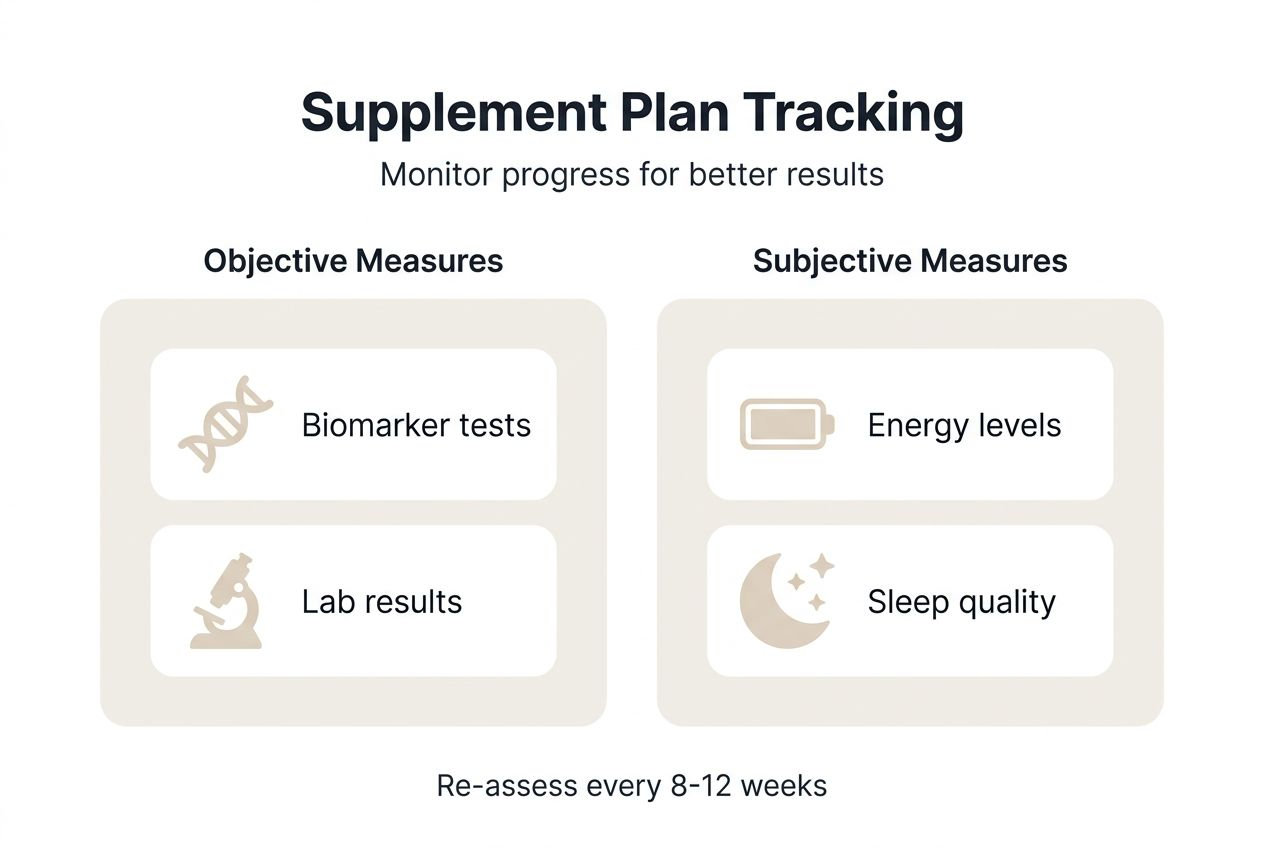
- Schedule biomarker retests every 8-12 weeks and track subjective measures weekly
- Calculate proper doses using body weight, training volume, and baseline biomarker levels
- Set daily reminders and link supplement timing to existing habits like meals or workouts
- Document any new symptoms and correlate them with recent supplement changes
When supplements don’t produce expected results, first verify you’re taking effective forms. Magnesium oxide has poor absorption compared to magnesium glycinate. Synthetic folic acid works differently than methylfolate for people with MTHFR variants. The compound form matters as much as the dose. For detailed guidance on combination safety, review strategies to mix supplements safely.
Expected timelines and measurable outcomes
Understanding realistic timelines prevents premature plan abandonment and helps you identify when adjustments are necessary. Different supplements and goals follow distinct timelines for measurable benefits.
Personalized supplement plans typically require 8-12 weeks to show measurable health and performance benefits. This window allows time for nutrient stores to replenish, cellular processes to adapt, and performance adaptations to manifest. Expecting results in days or weeks often leads to disappointment and unnecessary plan changes.
Biomarker improvements serve as objective progress indicators. Vitamin D levels increase within 8 weeks of consistent supplementation at appropriate doses. Iron stores, measured by ferritin, take longer, often 12-16 weeks to normalize. B vitamin markers respond faster, showing changes within 4-6 weeks. Retest on these timelines to verify progress.
Fitness outcomes follow their own schedules:
- Creatine saturation for strength gains occurs within 4-6 weeks of daily loading
- Protein supplementation supports muscle growth visible in 8-12 weeks with proper training
- Omega-3s reduce inflammation markers in 6-8 weeks but may take longer for joint pain relief
- Adaptogen effects on stress and recovery typically emerge after 6-8 weeks of consistent use
Balance patience with active monitoring. If you see zero progress after the expected timeline, something needs adjustment. Either the supplement selection doesn’t match your actual needs, dosing is off, or an absorption issue exists that requires medical attention.
The following table outlines typical timelines:
| Supplement Category | Expected Timeline | Key Outcome Measures |
|---|---|---|
| Vitamin D | 8-10 weeks | Blood levels, immune function |
| Protein/BCAAs | 8-12 weeks | Muscle mass, strength gains |
| Omega-3 Fatty Acids | 6-8 weeks | Inflammation markers, recovery time |
| Creatine | 4-6 weeks | Power output, training volume |
| Adaptogens | 6-8 weeks | Stress markers, sleep quality |
Track both objective measures like biomarkers and subjective ones like energy levels, sleep quality, and workout performance. When objective and subjective measures align showing improvement, your plan is working. Misalignment suggests the need for troubleshooting.
Safety considerations and best practices
Personalized supplementation carries risks when implemented without proper knowledge or professional oversight. Safety must guide every decision to prevent adverse effects that undermine health goals.
Excessive supplementation creates toxicity risk, particularly with fat-soluble vitamins that accumulate in tissues. Vitamin A toxicity causes liver damage and bone problems. Too much vitamin D leads to calcium buildup in blood vessels and kidneys. Iron overload damages organs over time. More isn’t better; optimal dosing based on measured deficiencies is the goal.
Supplement interactions pose serious concerns. Calcium blocks iron absorption when taken together. Zinc competes with copper, potentially creating deficiency if high-dose zinc continues long-term. Some herbal supplements affect liver enzyme activity, changing how your body processes medications. These interactions aren’t always obvious without professional knowledge.
Key safety practices:
- Never exceed upper tolerable limits for any nutrient without medical supervision
- Space supplements that compete for absorption by at least 2 hours
- Inform all healthcare providers about every supplement you take, including seemingly harmless vitamins
- Monitor for new symptoms like digestive issues, headaches, or changes in mood after starting supplements
- Choose third-party tested products to ensure purity and accurate labeling
Pro Tip: Bring a complete list of your supplements with doses to every doctor appointment, including specialists who might prescribe new medications.
Professional guidance is essential for safe supplement personalization. Healthcare providers or registered dietitians help identify contraindications, prevent harmful interactions, and interpret test results accurately. Don’t rely solely on internet research for medical decisions.
Research confirms that professional consultation reduces supplement-related adverse events by 30%. This significant risk reduction justifies consulting qualified professionals, especially when dealing with multiple supplements, existing health conditions, or medications. The small investment in professional guidance prevents costly mistakes and protects your health while optimizing results.
Even with professional support, stay vigilant about your body’s responses. You’re the best observer of subtle changes that might signal problems before they become serious. Trust your instincts and seek help promptly when something feels off.
Alternative approaches and budget considerations
Not everyone can afford comprehensive genetic testing and unlimited supplement budgets. Fortunately, effective personalization exists across different investment levels, and technology offers new options.
AI-driven apps now analyze dietary intake, lifestyle factors, and basic health information to suggest personalized supplement plans without expensive lab work. These tools use algorithms based on nutritional science and population data to estimate likely deficiencies and needs. While less precise than biomarker testing, they provide reasonable starting points for budget-conscious users.
The comparison below shows different approaches:
| Approach | Cost | Precision Level | Best Use Case |
|---|---|---|---|
| Biomarker Testing | $200-$500 initially, $100-$200 for retests | High - measures actual levels | Those with health concerns or serious athletes |
| Genetic Testing | $150-$300 one-time | Medium - shows tendencies, not current status | People with family history of absorption issues |
| AI Apps | $10-$30 monthly | Low to Medium - estimates based on inputs | Budget-conscious beginners testing personalization |
When working with limited budgets, prioritize supplements addressing confirmed deficiencies or supporting your primary goal. If blood work shows low vitamin D and your goal is immune support, vitamin D takes priority over other supplements that might be nice but aren’t essential. Focus spending where objective data shows the greatest need.
Cost-saving strategies:
- Start with one blood panel testing the most common deficiencies rather than comprehensive testing
- Buy supplements with multiple benefits, like omega-3s supporting both inflammation and brain health
- Use high-quality multivitamins to cover bases before adding specialized individual supplements
- Purchase larger quantities when you’ve confirmed a supplement works to reduce per-dose cost
- Cycle specialized supplements based on training phases rather than year-round use
Athletes competing at high levels justify premium approaches combining genetic testing, frequent biomarker monitoring, and comprehensive supplement stacks. The performance edge and health protection warrant higher investment. Recreational fitness enthusiasts get excellent results with biomarker testing every 6 months and focused supplement selection based on those results and clear goals.
The right approach balances your budget, health status, and goals. Perfect personalization isn’t necessary to gain substantial benefits over generic plans. Even modest personalization based on known deficiencies and specific objectives beats one-size-fits-all supplementation.
Explore science-backed supplement collections at NutriBliss
Building a personalized supplement plan works best when you start with quality products grounded in scientific research. NutriBliss offers carefully formulated supplements designed for health-conscious individuals and athletes seeking real results.

Their collections include protein powders, electrolytes, vitamins, and specialty compounds selected for efficacy and purity. Every product undergoes testing to ensure you’re getting what the label promises. When you’ve identified your personalized needs through biomarker testing and goal setting, explore NutriBliss vitamins and supplements to find options that match your plan. The science behind superfoods page explains how their natural ingredients support various health and fitness objectives, helping you make informed choices aligned with your personalized approach.
FAQ
How often should I retest biomarkers when personalizing supplements?
Retest biomarkers every 8-12 weeks when actively adjusting your supplement plan. This timeline aligns with how long most supplements take to produce measurable changes in nutrient levels. Once your plan stabilizes and biomarkers normalize, extend retesting to every 6 months unless you change goals or experience new symptoms.
Are genetic tests necessary for everyone personalizing supplements?
Genetic testing enhances precision but isn’t mandatory for effective personalization. Most people achieve excellent results using biomarker testing and clear goal alignment. Consider genetic testing if you have family history of absorption issues, haven’t responded to standard supplementation, or want to optimize at the highest level.
What are signs that my supplement plan isn’t working?
Lack of improvement in biomarker levels or fitness goals after 8-12 weeks suggests your plan needs adjustment. New symptoms like digestive problems, headaches, or worsening fatigue indicate possible adverse reactions or interactions. Declining performance despite supplementation signals either wrong supplement selection or an underlying issue requiring medical attention.
Can I safely combine multiple supplements in my personalized plan?
Yes, combining supplements is safe when you verify no harmful interactions and follow proper dosing guidelines. Space competing nutrients like calcium and iron by at least 2 hours. Consult healthcare professionals when adding new supplements to existing regimens, especially with medications. Track your response carefully and learn to mix supplements safely using evidence-based strategies.