

You’ve probably heard countless times that you need to eat a balanced diet, but what does that actually mean? Many people focus on calories alone, ignoring the specific types of nutrients their bodies need to function optimally. This oversight can sabotage fitness goals and overall health. Macronutrients are the foundation of every meal you eat, providing the energy and building blocks your body requires. Understanding what macronutrients are, how they work, and how to balance them can transform your nutrition strategy, enhance athletic performance, and support long-term wellness. This guide breaks down everything you need to know about macronutrients in 2026.
Table of Contents
- Understanding Macronutrients: The Building Blocks Of Nutrition
- Comparing Macronutrients: Energy, Roles, And Sources
- How To Balance Macronutrients For Optimal Health And Performance
- Common Misconceptions And FAQs About Macronutrients
- Explore NutriBliss Solutions For Balanced Nutrition
- Frequently Asked Questions About Macronutrients
Key takeaways
| Point | Details |
|---|---|
| Macronutrients provide energy | Carbohydrates, proteins, and fats supply the calories your body needs for daily functions and exercise. |
| Each macro serves unique roles | Carbs fuel activity, protein repairs tissue, and fats support hormones and cell structure. |
| Balance varies by goals | Optimal macro ratios differ for weight loss, muscle gain, endurance training, and general health. |
| Tracking improves results | Monitoring macronutrient intake helps you adjust your diet based on performance and body composition changes. |
| Myths hinder progress | Common misconceptions about fats and carbs can prevent you from achieving balanced nutrition. |
Understanding macronutrients: the building blocks of nutrition
Macronutrients are the three key nutrient categories that provide energy and structural components essential for bodily functions. Unlike micronutrients (vitamins and minerals), which you need in small amounts, macronutrients are required in large quantities to sustain life and support physical activity. The three major macronutrients are carbohydrates, proteins, and fats. Each plays a distinct role in keeping your body running efficiently.
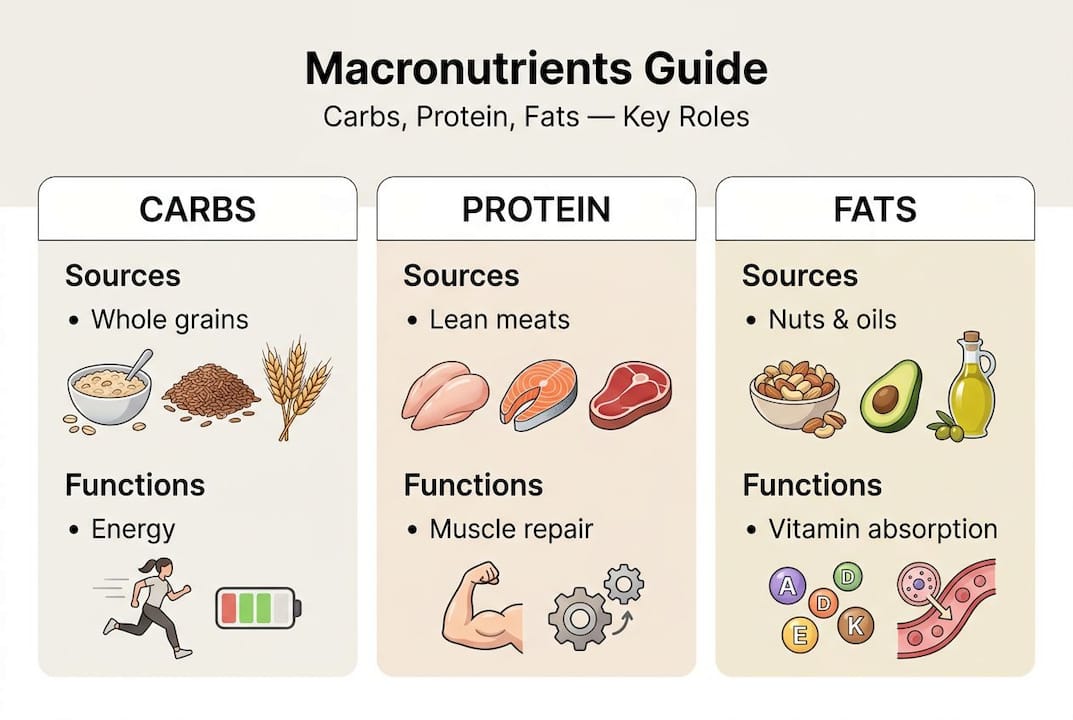
Carbohydrates serve as your body’s primary fuel source, especially during high-intensity exercise. They break down into glucose, which powers your brain, muscles, and organs. Proteins are the building blocks of muscle tissue, enzymes, and hormones. When you exercise, proteins repair damaged muscle fibers and support recovery. Fats provide concentrated energy, protect vital organs, and enable the absorption of fat-soluble vitamins. They also play a crucial role in hormone production and cell membrane structure.
While alcohol contains 7 calories per gram, it’s not classified as a macronutrient because it doesn’t provide essential nutrients or support bodily functions. Your body prioritizes metabolizing alcohol over other nutrients, which can disrupt normal energy processing.
Pro Tip: Each macronutrient provides different energy values per gram. Carbohydrates and proteins each deliver 4 calories per gram, while fats provide 9 calories per gram. Understanding these values helps you estimate portion sizes and manage total calorie intake effectively.
Knowing the basic functions of each macronutrient sets the foundation for making informed dietary choices. When you understand how carbs, proteins, and fats work individually, you can better appreciate why balance matters. Your body doesn’t operate on a single fuel source. It requires all three macronutrients working together to optimize health and performance.
Comparing macronutrients: energy, roles, and sources
Each macronutrient provides different energy per gram and serves distinct physiological roles vital to health and athletic performance. Let’s break down how these three nutrients compare across key dimensions.
| Macronutrient | Energy (kcal/g) | Primary Roles | Common Food Sources |
|---|---|---|---|
| Carbohydrates | 4 | Quick energy, brain fuel, glycogen storage | Grains, fruits, vegetables, legumes, dairy |
| Proteins | 4 | Muscle repair, enzyme production, immune function | Meat, fish, eggs, dairy, beans, nuts |
| Fats | 9 | Long-term energy, hormone synthesis, nutrient absorption | Oils, nuts, seeds, avocados, fatty fish |
Carbohydrates are your body’s preferred energy source during moderate to high-intensity activities. Your muscles store carbohydrates as glycogen, which fuels workouts and daily movement. Simple carbs (sugars) digest quickly, providing immediate energy, while complex carbs (starches and fiber) offer sustained fuel. Your brain relies almost exclusively on glucose derived from carbohydrates, consuming about 120 grams daily.
Proteins consist of amino acids, nine of which are essential because your body cannot produce them. Beyond muscle building and repair, proteins form antibodies that fight infections, enzymes that catalyze chemical reactions, and hormones that regulate body processes. During prolonged exercise or calorie restriction, your body can convert protein into energy, though this is not its primary function.

Fats serve as your body’s most concentrated energy source. They’re essential for absorbing vitamins A, D, E, and K. Fats also insulate your body, cushion organs, and maintain cell membrane integrity. Different types of fats (saturated, monounsaturated, polyunsaturated, and trans fats) affect health differently. Omega-3 and omega-6 fatty acids are essential fats that support brain function and reduce inflammation.
Pro Tip: Athletes benefit from strategic macronutrient timing. Consuming carbs before and after training maximizes glycogen stores and recovery. Protein intake within two hours post-workout enhances muscle repair. Fats provide sustained energy for endurance activities and should be included throughout the day.
The energy density of fats explains why small portions of nuts, oils, or avocados contribute significant calories. This concentration makes fats valuable for endurance athletes who need sustained energy without consuming large food volumes. Conversely, carbohydrates and proteins offer more volume per calorie, which can help you feel fuller when managing weight.
How to balance macronutrients for optimal health and performance
A balanced macronutrient intake adapted to individual goals supports wellness, weight management, and optimized athletic outcomes. Your ideal macro ratio depends on your objectives, activity level, and metabolic needs. Here’s how to determine and adjust your macronutrient balance.
Step 1: Calculate your total daily energy expenditure (TDEE) by factoring in your basal metabolic rate and activity level. Online calculators provide estimates, but tracking your intake and weight changes over two weeks gives more accurate results.
Step 2: Define your primary goal. Weight loss typically requires a calorie deficit with higher protein to preserve muscle. Muscle gain needs a surplus with adequate protein for tissue building. Endurance training demands sufficient carbohydrates for sustained energy.
Step 3: Set your protein target first. Most active individuals benefit from 0.7 to 1.0 grams per pound of body weight. Athletes engaged in strength training may need up to 1.2 grams per pound during muscle-building phases.
Step 4: Allocate carbohydrates based on activity intensity and duration. High-intensity training requires more carbs (45-65% of calories), while lower-intensity activities can function with moderate carb intake (25-45%).
Step 5: Fill remaining calories with fats, ensuring you meet minimum requirements (20-35% of total calories) for hormone production and nutrient absorption.
| Goal | Carbohydrates | Protein | Fats |
|---|---|---|---|
| Weight Loss | 30-40% | 30-40% | 25-35% |
| Muscle Gain | 40-50% | 25-35% | 20-30% |
| Endurance Training | 50-60% | 15-25% | 20-30% |
| General Health | 45-55% | 20-30% | 25-30% |
Nutrient timing throughout the day influences performance and recovery. Distributing protein across three to five meals optimizes muscle protein synthesis. Consuming carbohydrates around workouts maximizes glycogen replenishment. Including fats in meals slows digestion, promoting satiety and stable energy levels.
Track your intake using apps or food journals for at least two weeks. Monitor how you feel, perform, and progress toward goals. Adjust macros in small increments (5% shifts) based on results. If energy lags during workouts, increase carbs slightly. If recovery suffers, boost protein. If hunger persists, add healthy fats.
Your macronutrient needs aren’t static. They change with training cycles, age, stress levels, and health status. Reassess every few months or when your goals shift. Flexibility and responsiveness to your body’s signals matter more than rigid adherence to any single ratio.
Common misconceptions and FAQs about macronutrients
Misconceptions about macronutrients such as fears about fat can hinder balanced nutrition. Let’s address the most prevalent myths that confuse health-conscious individuals and athletes.
-
Myth: Eating fat makes you fat. Dietary fat doesn’t directly convert to body fat. Weight gain occurs when total calorie intake exceeds expenditure, regardless of macronutrient source. Fats are essential for hormone production, nutrient absorption, and cellular function. Eliminating fats can disrupt these processes and harm health.
-
Myth: Carbohydrates are bad and cause weight gain. Carbs are your body’s preferred fuel, especially for brain function and high-intensity exercise. Weight gain from carbs typically results from overconsumption of refined, processed carbohydrates combined with excess calories. Whole food carb sources like vegetables, fruits, and whole grains provide fiber, vitamins, and sustained energy.
-
Myth: High protein intake damages kidneys. Research shows that healthy individuals can safely consume high protein diets. Kidney concerns apply primarily to people with pre-existing kidney disease. For active individuals, adequate protein supports muscle repair, immune function, and satiety without harming kidney function.
-
Myth: You can eliminate a macronutrient group entirely. Extremely low-fat or zero-carb diets may work short-term but often prove unsustainable and potentially harmful. Your body requires all three macronutrients for optimal function. Severe restriction can lead to nutrient deficiencies, hormonal imbalances, and impaired athletic performance.
-
Myth: All calories are equal regardless of source. While calories determine energy balance, macronutrient composition affects satiety, muscle preservation, metabolic rate, and overall health. 200 calories from salmon provides protein and omega-3s, while 200 calories from candy offers only quick-burning sugar. Quality matters as much as quantity.
Insufficient macronutrient intake impairs both athletic and general health. Inadequate carbohydrates lead to depleted glycogen stores, causing fatigue and reduced performance. Insufficient protein compromises muscle repair and immune function. Too little fat disrupts hormone production and vitamin absorption. Understanding micronutrient needs complements macronutrient awareness for complete nutrition.
Balanced macronutrient intake doesn’t mean equal portions of each. It means meeting your individual needs based on goals, activity, and health status. Avoid extreme approaches that demonize entire nutrient categories. Focus instead on whole food sources, appropriate portions, and consistency over time. Your body thrives on variety and balance, not restriction and elimination.
Explore NutriBliss solutions for balanced nutrition
Now that you understand how macronutrients fuel your body and support fitness goals, consider how NutriBliss can help you optimize your nutrition strategy. We offer science-backed supplements designed to complement your macronutrient intake and enhance athletic performance.

Our comprehensive supplement collection includes high-quality protein powders that support muscle repair and growth, making it easier to meet your daily protein targets. We also provide electrolyte formulas that optimize hydration during training, vitamins that fill potential micronutrient gaps, and specialty products that support recovery and sleep. Each product undergoes rigorous testing to ensure purity and effectiveness.
Whether you’re pursuing weight loss, muscle gain, or enhanced endurance, NutriBliss offers tailored solutions that work alongside your macronutrient strategy. Explore our resources and product recommendations to build a complete nutrition plan that supports your health and fitness journey.
Frequently asked questions about macronutrients
What are the three main macronutrients and how do they differ?
The three main macronutrients are carbohydrates, proteins, and fats. Carbohydrates provide quick energy and fuel for your brain and muscles, delivering 4 calories per gram. Proteins build and repair tissues, produce enzymes and hormones, and also provide 4 calories per gram. Fats offer concentrated energy at 9 calories per gram, support hormone production, and enable absorption of certain vitamins.
How do macronutrients affect energy and athletic performance?
Carbohydrates serve as your primary fuel during moderate to high-intensity exercise by providing readily available glucose and glycogen stores. Protein supports muscle recovery and adaptation to training stress, preventing breakdown during prolonged activity. Fats provide sustained energy for endurance activities and low-intensity exercise. Balancing all three optimizes performance, recovery, and body composition changes.
What is an ideal macronutrient ratio for general health and fitness?
For general health and moderate fitness activity, aim for approximately 45-55% carbohydrates, 20-30% protein, and 25-30% fats. This balanced approach supports daily energy needs, maintains muscle mass, and provides essential fatty acids. Individual needs vary based on activity level, goals, age, and metabolic factors. Athletes and those with specific goals should adjust ratios accordingly.
Can macronutrient needs change with age or activity level?
Yes, macronutrient requirements shift throughout life and with changing activity patterns. Older adults often benefit from higher protein intake (1.0-1.2 grams per pound) to counteract age-related muscle loss. Performance nutrition demands change with training intensity and volume. Sedentary individuals need fewer carbohydrates than athletes. Reassess your macros when goals, activity, or life circumstances change.
How can I track and adjust my macronutrients effectively?
Use food tracking apps like MyFitnessPal or Cronometer to log meals and monitor macro intake for at least two weeks. Weigh portions initially to improve accuracy, then estimate once familiar with serving sizes. Track performance, energy levels, hunger, and body composition changes. Adjust macros in small increments (5% shifts) based on results, allowing two to three weeks to assess each change before making further modifications.