

Over 25,000 unique phytonutrients exist in the plant kingdom, yet most people remain unaware of these powerful bioactive compounds. These natural plant chemicals offer distinct health benefits through antioxidant and anti-inflammatory mechanisms that support disease prevention and overall wellness. Understanding what phytonutrients are, how they work, and practical ways to incorporate them into your daily routine can transform your approach to nutrition and health optimization.
Table of Contents
- What Are Phytonutrients? Definition And Classification
- How Phytonutrients Work: Antioxidant And Anti-Inflammatory Mechanisms
- Health Benefits Of Phytonutrients: Disease Prevention And Wellness
- Common Misconceptions About Phytonutrients
- Food Sources Vs Supplements: What Works Best?
- How To Incorporate Phytonutrients Into Your Diet And Supplement Routine
- Explore NutriBliss Supplements To Boost Your Health
- Frequently Asked Questions
Key takeaways
| Point | Details |
|---|---|
| Definition | Phytonutrients are plant-derived bioactive compounds that provide health benefits beyond basic nutrition through antioxidant and anti-inflammatory effects. |
| Major classes | Carotenoids, flavonoids, polyphenols, glucosinolates, and organosulfur compounds each offer unique protective mechanisms. |
| Health benefits | Regular intake reduces cardiovascular disease risk, protects eye health, and decreases inflammation markers by 20-40%. |
| Whole foods vs supplements | Whole plant foods provide synergistic nutrient combinations superior to isolated supplement forms for measurable health outcomes. |
| Practical application | Daily consumption of berries, leafy greens, and nuts increases antioxidant capacity by 15-20% within four weeks. |
What are phytonutrients? Definition and classification
Phytonutrients are bioactive compounds produced by plants as defense mechanisms against environmental stressors like ultraviolet radiation, pests, and disease. Unlike essential vitamins and minerals, your body does not require these compounds for basic survival. However, when consumed through diet, they trigger beneficial biological responses that protect against chronic diseases and support optimal health.
Scientists have identified more than 10 major subclasses within primary phytonutrient groups, each linked to various health pathways. This classification system helps researchers understand their distinct chemical structures and therapeutic potential.
The major classes include:
-
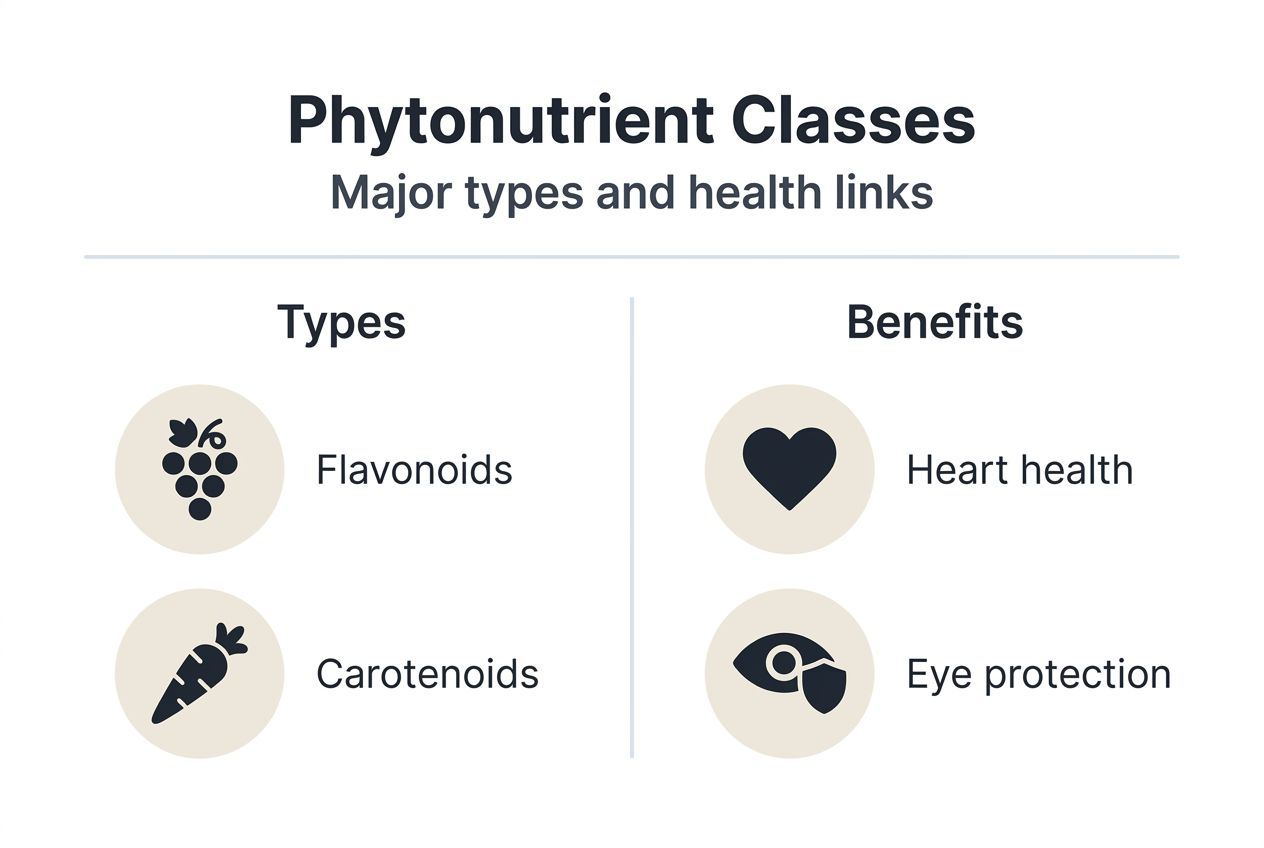
Carotenoids: Fat-soluble pigments like beta-carotene, lycopene, and lutein found in orange, red, and yellow produce. These compounds support eye health and immune function.
-
Flavonoids: Water-soluble polyphenols abundant in berries, citrus fruits, and tea. They improve cardiovascular health and reduce oxidative stress.
-
Polyphenols: Diverse compounds including resveratrol in grapes and curcumin in turmeric. These substances modulate inflammation and cellular signaling.
-
Glucosinolates: Sulfur-containing compounds in cruciferous vegetables like broccoli and kale. They activate detoxification enzymes and may protect against certain cancers.
-
Organosulfur compounds: Found in garlic, onions, and other allium vegetables. These compounds support cardiovascular health and immune function through unique sulfur-based mechanisms.
Each class contains dozens to hundreds of individual compounds with overlapping yet distinct biological activities. Understanding this diversity helps you make informed dietary choices to maximize health benefits across multiple systems.
How phytonutrients work: antioxidant and anti-inflammatory mechanisms
Phytonutrients protect your health through two primary biological pathways: neutralizing harmful free radicals and modulating inflammatory responses. These mechanisms work synergistically to prevent cellular damage and reduce chronic disease risk.
Free radicals are unstable molecules generated during normal metabolism and increased by environmental factors like pollution and stress. When unchecked, they cause oxidative damage to DNA, proteins, and cell membranes. Antioxidant properties of phytonutrients neutralize free radicals and reduce oxidative stress implicated in aging, cancer, and cardiovascular disease.
The anti-inflammatory effects are equally important. Chronic low-grade inflammation drives many modern health conditions, from heart disease to metabolic syndrome. Polyphenols downregulate pro-inflammatory cytokines, reducing inflammation markers like C-reactive protein by measurable amounts.
Key protective mechanisms include:
-
Direct antioxidant activity: Phytonutrients donate electrons to stabilize free radicals without becoming reactive themselves.
-
Enzyme activation: Many compounds trigger production of endogenous antioxidant enzymes like superoxide dismutase and glutathione peroxidase.
-
Gene expression modulation: Certain phytonutrients activate Nrf2 pathways that upregulate protective genes and downregulate inflammatory ones.
-
Cellular signaling: These compounds influence multiple biochemical pathways that control cell survival, proliferation, and programmed death.
These mechanisms align closely with principles explored in nutritional science, demonstrating how plant compounds interact with human physiology at molecular levels. The combined effect creates a protective shield against age-related decline and chronic disease development.
Pro Tip: Different phytonutrients peak in activity at different times, so consuming a variety throughout the day maintains consistent antioxidant protection.
Health benefits of phytonutrients: disease prevention and wellness
Research demonstrates specific, measurable health improvements linked to regular phytonutrient consumption across multiple body systems. These benefits extend beyond general wellness to documented disease risk reduction and biomarker improvements.

Cardiovascular health receives substantial support from flavonoid-rich foods. Studies show flavonoids improve cardiovascular health by lowering blood pressure through improved endothelial function and arterial flexibility. Regular intake correlates with reduced stroke and heart attack risk.
Eye health protection represents another validated benefit. Carotenoid-rich diets reduce macular degeneration risk by about 25% through protective effects on retinal tissue. Lutein and zeaxanthin accumulate in the macula, filtering harmful blue light and neutralizing oxidative damage.
Inflammation reduction shows particularly impressive results. Research indicates polyphenols reduce inflammation markers like CRP by 20-40% within eight weeks of consistent intake. Lower inflammation levels correlate with reduced chronic disease risk across multiple conditions.
| Phytonutrient Class | Primary Benefit | Measurable Outcome |
|---|---|---|
| Flavonoids | Cardiovascular support | 10-15% blood pressure reduction |
| Carotenoids | Eye health | 25% lower macular degeneration risk |
| Polyphenols | Anti-inflammatory | 20-40% CRP reduction |
| Glucosinolates | Detoxification | Enhanced phase II enzyme activity |
| Organosulfur | Immune function | Improved natural killer cell activity |
The superfoods science behind these benefits reveals how concentrated phytonutrient sources deliver therapeutic doses through regular dietary intake. This approach provides sustainable health improvements without pharmaceutical intervention.
Pro Tip: Combine different colored fruits and vegetables daily to ensure diverse phytonutrient intake across all major classes.
Common misconceptions about phytonutrients
Several persistent myths about phytonutrients lead to ineffective or potentially harmful practices. Clearing up these misunderstandings helps you make safer, more effective nutritional decisions.
Many people confuse phytonutrients with essential vitamins, assuming they serve identical functions. While both support health, vitamins are biochemically necessary for survival, whereas phytonutrients provide optional protective benefits. Your body cannot synthesize most vitamins and requires dietary intake to prevent deficiency diseases. Phytonutrients, however, offer supplementary protection beyond basic nutritional needs.
Another common error involves excessive supplement use without considering potential downsides. High doses of isolated phytonutrients can paradoxically act as pro-oxidants, generating free radicals rather than neutralizing them. This effect occurs particularly with beta-carotene supplements in smokers and high-dose vitamin E in certain populations.
The whole food synergy myth also deserves correction. While whole foods do offer multiple beneficial compounds working together, this does not mean supplements provide zero value. Quality supplements can effectively address specific deficiencies or therapeutic needs when used appropriately.
Key misconceptions to avoid:
-
More is always better: Excessive intake of isolated compounds may cause harm rather than additional benefit.
-
Supplements replace food: No supplement can replicate the complete nutritional matrix of whole plant foods.
-
All phytonutrients are safe: Some compounds interact with medications or cause adverse effects at high doses.
-
Cooking destroys all benefits: While heat reduces some phytonutrients, it enhances bioavailability of others like lycopene.
Pro Tip: Focus on dietary diversity first, using supplements strategically to address specific gaps rather than as primary phytonutrient sources.
Food sources vs supplements: what works best?
Choosing between whole foods and supplements for phytonutrient intake requires understanding the distinct advantages and limitations of each approach. Evidence increasingly favors whole food consumption for most people while recognizing legitimate supplement applications.
Whole plant foods deliver phytonutrients within a complex matrix of fiber, water, vitamins, minerals, and other bioactive compounds. This natural packaging enhances absorption, slows nutrient release, and provides synergistic effects impossible to replicate in isolated supplements. The fiber content alone offers crucial benefits for gut health, satiety, and metabolic function.
Supplements offer convenience and concentrated doses useful for addressing specific deficiencies or therapeutic goals. They allow precise dosing and year-round access to compounds that might be seasonal in food form. However, supplement quality varies dramatically between manufacturers, with bioavailability and purity concerns affecting effectiveness.
| Aspect | Whole Foods | Supplements |
|---|---|---|
| Nutrient synergy | Multiple compounds work together naturally | Isolated compounds may lack cofactors |
| Bioavailability | Generally high with natural absorption enhancers | Varies by formulation and individual factors |
| Fiber content | Provides essential dietary fiber | Usually absent |
| Cost efficiency | Often less expensive per nutrient dose | Can be costly for quality products |
| Convenience | Requires preparation and planning | Quick and portable |
| Quality control | Minimal processing concerns | Varies widely between brands |
Research consistently shows whole food diets improve health biomarkers more effectively than supplement-focused approaches. The vegan multivitamins guide explores how even well-formulated supplements work best alongside robust dietary foundations.
For optimal results, prioritize whole plant foods as your primary phytonutrient source. Consider plant-based supplements to fill specific gaps identified through dietary analysis or health goals. This balanced approach maximizes benefits while minimizing risks associated with either extreme.
How to incorporate phytonutrients into your diet and supplement routine
Implementing a phytonutrient-rich lifestyle requires strategic food choices and, when appropriate, careful supplement selection. These practical steps help you maximize intake safely and effectively.
Start with dietary modifications before adding supplements:
-
Eat the rainbow daily: Include red tomatoes, orange carrots, yellow squash, green kale, blue blueberries, and purple cabbage throughout the week.
-
Prioritize whole foods: Choose minimally processed options that retain natural phytonutrient content.
-
Vary your choices: Rotate different fruits, vegetables, nuts, and whole grains to access diverse compound profiles.
-
Include herbs and spices: Turmeric, ginger, cinnamon, and oregano pack concentrated phytonutrients into small servings.
-
Consider preparation methods: Some phytonutrients increase with light cooking while others remain highest in raw foods.
Research confirms incorporating berries, leafy greens, and nuts increases antioxidant capacity by 15-20% after four weeks of consistent intake. This measurable improvement demonstrates the power of simple dietary adjustments.
When selecting supplements, apply these criteria:
-
Choose products with third-party testing verification from organizations like NSF or USP.
-
Look for transparent labeling that lists specific compound amounts, not just proprietary blends.
-
Start with lower doses and increase gradually while monitoring effects.
-
Avoid mega-doses of isolated phytonutrients unless supervised by qualified healthcare providers.
-
Consider whole food extracts rather than synthetic isolates when possible.
The guide on how to manage supplement intake naturally provides frameworks for integrating supplements without overwhelming your system. Learning how to combine supplements safely prevents adverse interactions.
Review examples of dietary supplements for better health to understand which formulations align with your specific wellness goals. The comprehensive nutritional supplements guide offers additional context for making informed decisions.
Pro Tip: Track your phytonutrient intake for one week using a food journal to identify gaps, then address those specific areas with targeted food additions before considering supplements.
Explore NutriBliss supplements to boost your health
Now that you understand how phytonutrients support wellness, NutriBliss offers science-backed supplements featuring phytonutrient-rich superfoods to complement your healthy diet. Our products undergo rigorous quality testing to ensure purity and potency.

Explore our complete supplements collection to discover options aligned with your nutrition goals. Each product builds on the science behind superfoods, delivering concentrated plant compounds in convenient forms. Our commitment to scientific research ensures you receive supplements grounded in evidence-based formulations designed to support your overall wellness journey.
Frequently asked questions
What are phytonutrients and why do they matter?
Phytonutrients are natural compounds plants produce for self-protection that provide health benefits when consumed by humans. They matter because they reduce disease risk through antioxidant and anti-inflammatory mechanisms not available from essential nutrients alone.
Can I get all necessary phytonutrients from supplements alone?
No, supplements cannot fully replace whole food sources because they lack the fiber, water, and synergistic nutrient combinations that enhance absorption and effectiveness. Supplements work best as targeted additions to a foundation of diverse plant foods.
How do phytonutrients support exercise recovery?
Phytonutrients reduce oxidative stress and inflammation generated by intense physical activity, helping muscles recover faster. This effect can decrease soreness duration and improve training adaptation when combined with proper nutrition and rest.
What are some common foods rich in phytonutrients?
Berries, leafy greens like spinach and kale, nuts, colorful vegetables, and herbs provide concentrated phytonutrient sources. Including these foods regularly ensures diverse compound intake across all major classes.
Are there risks to taking phytonutrient supplements?
Yes, high doses of isolated phytonutrients can act as pro-oxidants causing cellular damage rather than protection. Choose quality supplements carefully, avoid excessive intake, and prioritize whole food sources as your primary phytonutrient strategy.