

TL;DR:
- Tart cherry exists in various forms with differing bioactive compound levels, affecting efficacy. Its recovery benefits are supported by mixed evidence, mainly in strength and inflammation markers, depending on standardized dosing. Effective use requires selecting products with disclosed anthocyanin content and following consistent, multi-day protocols tailored to individual goals.
Tart cherry is one of those supplements that gets tossed around constantly in fitness circles, yet most people couldn’t tell you the difference between a tart cherry juice, a tart cherry concentrate, and a tart cherry capsule. That gap matters, because those aren’t interchangeable products. The fruit of Prunus cerasus, most famously the Montmorency variety, shows up in wildly different forms with wildly different potencies, and what you take directly shapes what you get. If you’ve wondered whether the hype is real or just clever marketing, this breakdown cuts through the noise and tells you exactly what the science says.
Table of Contents
- What is tart cherry? The fruit, forms, and science
- What makes tart cherry special? Nutrients and bioactive compounds
- How tart cherry works for exercise recovery: What the evidence shows
- Beyond recovery: Tart cherry for general wellness and the bigger picture
- The real deal: Why tart cherry benefits aren’t one-size-fits-all
- Ready to add tart cherry to your wellness routine?
- Frequently asked questions
Key Takeaways
| Point | Details |
|---|---|
| Tart cherry defined | Tart cherry refers to Prunus cerasus and is commonly consumed as juice, dried fruit, concentrate, or supplement. |
| Potency depends on form | Bioactive content like polyphenols can vary widely depending on whether you choose juice, powder, or whole fruit. |
| Supported recovery benefits | Strongest evidence is for neuromuscular recovery and some inflammation markers, not for every outcome. |
| General wellness effects mixed | Current studies show mixed results for broader wellness benefits and underscore the importance of product standardization. |
| Personal response varies | Different people may experience different results based on product choice, use, and individual factors. |
What is tart cherry? The fruit, forms, and science
Tart cherry comes from Prunus cerasus, a species distinctly different from the sweet cherries you’d find in a fruit bowl. The Montmorency variety is the most studied and most commercially available type in the United States. It’s smaller, brighter red, and sharply acidic compared to sweet cherries, which makes it nearly inedible fresh but excellent for juice, concentrate, and supplemental forms.
The form tart cherry takes when it reaches you matters far more than most product labels suggest. A bottle labeled “tart cherry” could be diluted juice, freeze-dried powder, liquid concentrate, or whole dried fruit. Each of those products carries a different load of the bioactive compounds that actually do the work. Polyphenol content, including anthocyanins, can differ substantially across product types, which means two products with the same name could have dramatically different biological effects.
Here’s a breakdown of the common forms you’ll encounter:
| Form | Typical use | Bioactive concentration notes |
|---|---|---|
| Fresh/frozen fruit | Culinary, smoothies | Moderate anthocyanins, variable |
| Juice | Daily drink, pre/post workout | Often diluted; lower potency per serving |
| Juice concentrate | Athletic recovery protocols | Higher potency, but sugar content is notable |
| Freeze-dried powder/capsule | Convenience, travel, precise dosing | Can retain high polyphenol density if processed well |
| Dried fruit | Snacking | Significant anthocyanin loss from heat drying |
That variance is why reading the label for standardized content, not just the word “cherry,” makes a real difference. You also need to understand what the antioxidant science explained here actually means before assuming any tart cherry product works the same way.
When comparing your options against other supplements, a wellness supplement comparison can help put tart cherry’s profile into context alongside other commonly used recovery and wellness products.
Key points to understand about tart cherry forms:
- Juice concentrate typically delivers the most anthocyanins per volume but also the most sugar
- Freeze-dried capsules can preserve polyphenol content effectively if manufacturing is done right
- Generic “cherry extract” labels often skip disclosing anthocyanin content, which is the most important marker
- Processing temperature and method directly affect how much of the bioactive content survives to the final product
What makes tart cherry special? Nutrients and bioactive compounds
What separates tart cherry from other fruits isn’t just one compound. It’s a layered nutritional profile built on several bioactives that work together, and tart cherries contain polyphenols, especially anthocyanins, plus melatonin, flavonoids, and other compounds proposed to drive antioxidant and anti-inflammatory effects.
Here’s what those compounds actually are and why they show up in recovery research:
- Anthocyanins: The red and purple pigments in tart cherry. These are the primary antioxidant compounds and the ones most directly tied to inflammation modulation in research. Tart cherries contain significantly more anthocyanins than sweet cherries.
- Melatonin: Tart cherry is one of the few food sources with measurable melatonin content. This is why it shows up in sleep research, not just recovery research.
- Quercetin: A flavonoid with studied anti-inflammatory and antioxidant properties. Found naturally in tart cherry alongside anthocyanins.
- Chlorogenic acid: A polyphenol also found in coffee that contributes to the overall antioxidant load of tart cherry.
- Cyanidin-3-glucoside and cyanidin-3-rutinoside: The two dominant anthocyanin forms in Montmorency tart cherry. Researchers track these specifically when measuring potency.
Statistically, Montmorency tart cherries contain measurably higher anthocyanin concentrations than most common fruits, including blueberries in some analyses. That’s a meaningful point because anthocyanin content is what most recovery-focused studies are actually measuring and linking to outcomes.
Pro Tip: Don’t assume a product with “standardized extract” on the label has high potency without checking what it’s standardized to. The best tart cherry supplements specify the percentage of anthocyanins per serving. If that number isn’t disclosed, you’re buying blind.
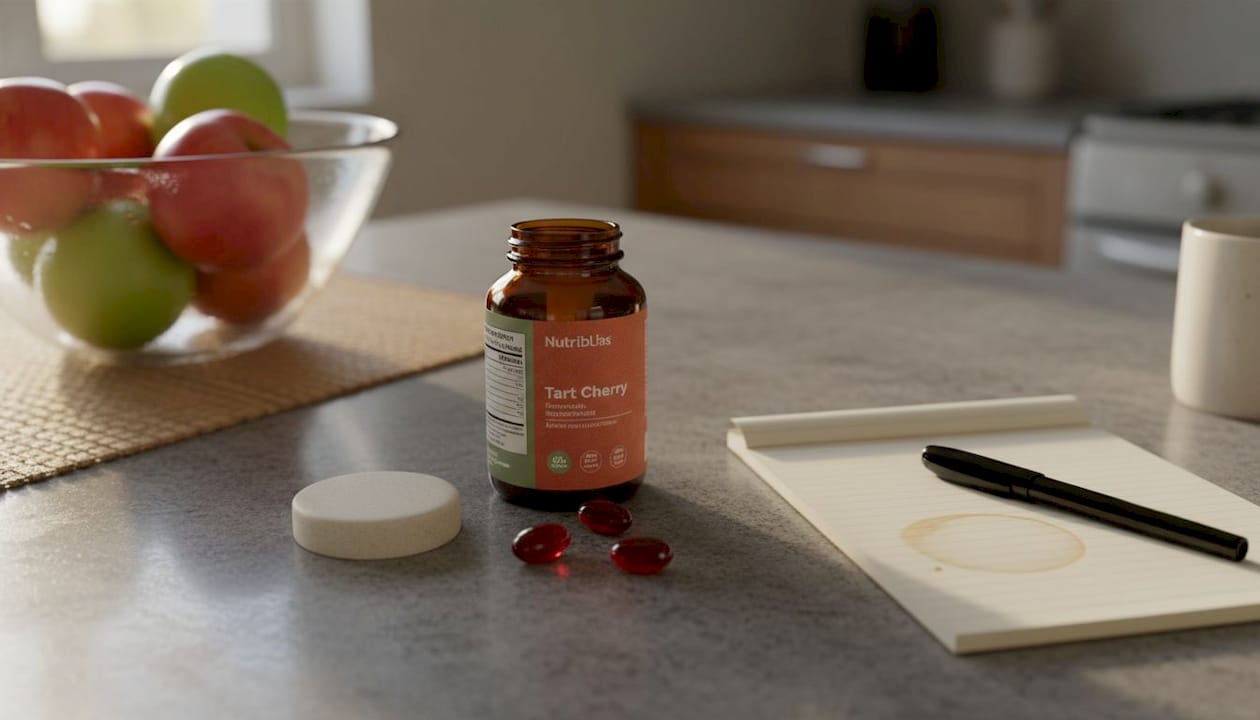
Finding trusted supplement brands that disclose their standardization data is the most reliable way to get consistent results from tart cherry supplementation.
How tart cherry works for exercise recovery: What the evidence shows
This is where the conversation gets more nuanced, and it needs to. Recent systematic review evidence shows tart cherry juice can improve some neuromuscular recovery outcomes, such as maximal voluntary contraction, and reduce certain inflammatory markers, notably C-reactive protein (CRP). But results vary significantly, and the certainty of evidence ranges from very low to moderate depending on the outcome measured.
That’s not a dismissal of tart cherry. It’s an honest reading of where the science actually stands.
The key distinction in the research is between which markers improved and which didn’t. Major meta-analyses show a split picture:
| Recovery marker | Evidence direction | Notes |
|---|---|---|
| Maximal voluntary contraction (strength) | Improved | Moderate certainty in some reviews |
| C-reactive protein (CRP) | Reduced | Meaningful inflammatory marker improvement |
| Muscle soreness (perceived) | Mixed/unclear | High variability across studies |
| Creatine kinase (CK) | Inconsistent | Some studies show reduction, others don’t |
| IL-6 and TNF-alpha | Neutral or minimal | Limited evidence for effect |
One reason for the disagreement across studies comes down to heterogeneity. I² values in major reviews have been reported as high as 69 to 93 percent, meaning the variability between studies is substantial. That’s reflected in the caution researchers attach to their conclusions.
“Certainty of evidence ranges from very low to moderate across recovery outcomes, and high heterogeneity between studies means individual results may differ significantly based on the product used, timing, training status, and outcome measured.”
For practical application, here’s how athletes typically use tart cherry for recovery based on study protocols:
- Start supplementation before intense training. Most protocols begin tart cherry supplementation five to seven days before a hard event or training block, not just after.
- Double up around training days. Studies commonly use two doses per day, one in the morning and one in the evening, rather than a single large dose.
- Use standardized products. Choose a product with disclosed anthocyanin content so you know what dose you’re actually working with.
- Be consistent. Short-term, one-dose experiments often show weak results. The more compelling data comes from multi-day protocols.
- Combine with good recovery fundamentals. Tart cherry works alongside sleep, hydration, and protein intake. It doesn’t replace them.
For readers interested in comparing tart cherry to similar natural options, turmeric and recovery offers a useful parallel look at another polyphenol-rich supplement with a similar evidence debate. A broader review of science-backed recovery supplements and essential supplements for recovery can also help you understand where tart cherry fits in a full recovery protocol.
Beyond recovery: Tart cherry for general wellness and the bigger picture
Tart cherry’s appeal extends beyond post-workout recovery, though the evidence here is more diffuse. Research on general wellness benefits beyond exercise recovery is mixed, with results that depend heavily on the population studied, the outcome measured, the dose, and the product used.
That complexity is worth taking seriously before you assume a tart cherry supplement will solve any wellness concern you bring to it.
Areas actively studied for general wellness include:
- Sleep quality: Tart cherry’s melatonin content has prompted studies in older adults and individuals with insomnia. Some trials show modest improvements in sleep duration and efficiency, though effects appear small.
- Cardiovascular markers: Limited research suggests potential benefits on blood pressure and LDL cholesterol in specific populations, but study sizes are small and replication is lacking.
- General inflammation: Chronic low-grade inflammation is a relevant target for many wellness-focused individuals. Tart cherry’s anthocyanins are plausible anti-inflammatory agents, but human data in non-athletic populations is thin.
- Uric acid levels: Emerging research has explored tart cherry’s potential role in reducing uric acid, relevant to gout management. Results are promising but not yet definitive.
- Cognitive function: Very early research, not yet at a level that justifies firm claims.
A significant challenge across all of these areas is that researchers keep flagging the need for better bioavailability data. How much of the anthocyanin content in a given product actually makes it into circulation and reaches target tissues is still not fully understood. Degradation during digestion, individual gut microbiome differences, and food matrix effects all influence absorption.
Pro Tip: For general wellness purposes, choose tart cherry products with standardized anthocyanin content and a clear third-party testing record. Bioactive content that doesn’t survive processing or digestion can’t do anything useful in your body.
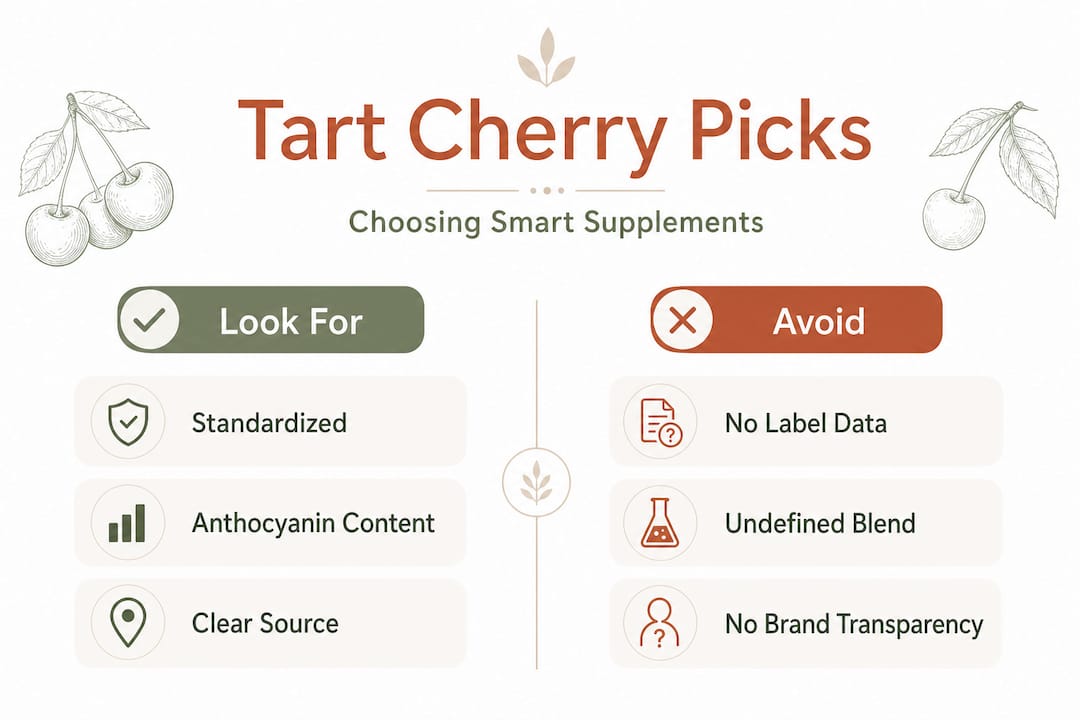
Exploring herbal supplement benefits alongside tart cherry gives you a better picture of the full toolkit available. You might also find useful overlap with supplements for stamina and stay current with fitness supplement trends to understand where tart cherry sits in the broader landscape right now.
The real deal: Why tart cherry benefits aren’t one-size-fits-all
Here’s an uncomfortable truth that most tart cherry content skips entirely: the label “tart cherry” covers an enormous range of products, and many of them simply won’t deliver what the research-backed protocols used. A capsule with a cherry on the label and a well-characterized, anthocyanin-standardized tart cherry extract are not the same thing, even if they’re priced similarly.
We think the real issue isn’t whether tart cherry works. The question is whether the product you’re holding actually delivers enough of the right compounds at a sufficient dose to replicate the conditions studied in research. Reviews consistently call for better standardization and more rigorous bioavailability data, meaning even the researchers aren’t done asking that question.
When tart cherry is likely to help you:
- You’re a trained athlete doing regular high-intensity training with a defined recovery goal
- You choose a product with disclosed and standardized anthocyanin content
- You follow a multi-day supplementation protocol, not a single-dose approach
- You’re managing specific markers like CRP or strength recovery, not vague “wellness”
When it might disappoint:
- You buy the cheapest option without checking for standardization
- You take it occasionally and expect consistent results
- You’re targeting markers like muscle soreness or IL-6, where evidence is weakest
- You’re using it as a replacement for sleep, nutrition, and consistent training
“Tart cherry’s benefits are real in some contexts for some outcomes with some products. That’s genuinely useful information. But it’s not a magic fix, and treating it like one means most people end up disappointed by a problem that was never about the cherry itself.”
Transparency matters here. Look for brands that show their work, disclose their polyphenol content per serving, and don’t promise outcomes the research hasn’t demonstrated. The role of antioxidants in recovery and wellness is real, but it’s also frequently overstated by brands selling on hype rather than evidence.
Ready to add tart cherry to your wellness routine?
If this article has shifted how you think about tart cherry, the next move is finding a supplement that actually delivers what the research describes.

At NutriBliss, we believe every ingredient should earn its place on the label. Our ingredient science section walks you through what makes a supplement genuinely effective, and our deep look at the science behind superfoods gives you the context to shop smart. Whether you’re focused on recovery, sleep, or broader wellness goals, explore our full range of tart cherry and wellness supplements to find options built around transparency, standardization, and real results.
Frequently asked questions
What is the difference between tart and sweet cherry?
Tart cherry (Prunus cerasus) is more acidic and less sweet than sweet cherry, and is primarily used for supplements and juice due to its significantly higher antioxidant and anthocyanin content compared to sweet varieties.
Does tart cherry help with muscle soreness?
Current systematic review evidence shows tart cherry may support strength recovery and reduce CRP levels, but the evidence for reducing perceived muscle soreness specifically is inconsistent and not yet firmly established.
How should I choose a tart cherry supplement?
Look for products with standardized anthocyanin content clearly stated on the label, since polyphenol levels can differ enormously between product types and brands, directly affecting what you actually get per dose.
Are tart cherry supplements safe for daily use?
Tart cherry supplements are generally considered safe for healthy adults when used as directed, though expert reviews continue to note that long-term safety data and standardized dosing guidance are still areas needing more research.
What’s the best time to take tart cherry for recovery?
Most study protocols use tart cherry both before and after training, often starting several days prior to an intense session, though optimal timing likely depends on your individual training load, goals, and the specific product you’re using.