

TL;DR:
- Glucosamine supports cartilage health and may relieve mild to moderate knee osteoarthritis pain.
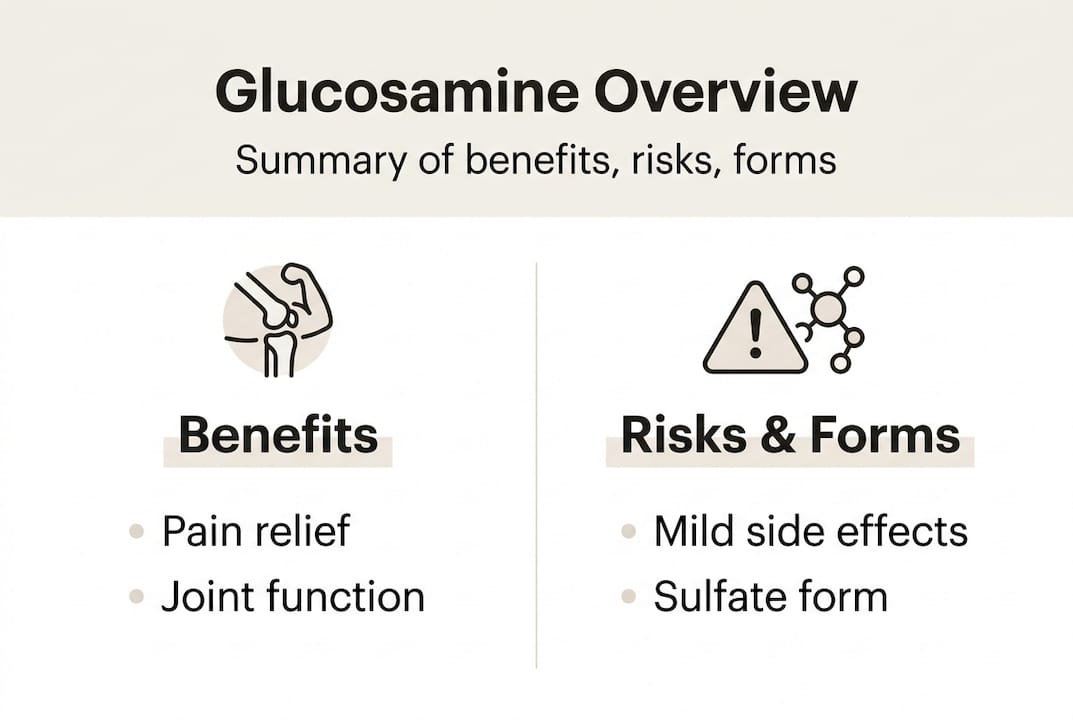
- The sulfate form of glucosamine has stronger evidence and is preferred over hydrochloride.
- It is generally safe long-term but should be used cautiously by those with shellfish allergies or on blood thinners.
Not all joint supplements are created equal, and glucosamine is a perfect example of why that matters. While the supplement aisle is packed with promises, glucosamine has decades of clinical research behind it, some of it encouraging and some of it genuinely surprising. If you’re over 40 and dealing with stiff knees, achy hips, or that grinding sensation that shows up after a morning walk, you’ve probably heard glucosamine mentioned. But what exactly is it, and does it actually work? This guide cuts through the noise to explain what glucosamine is, how it functions in your body, what the evidence really shows, and how to use it safely and smartly.
Table of Contents
- What is glucosamine and how does it work?
- Proven benefits and what the science says
- Risks, side effects, and safety considerations
- Making sense of guidelines, forms, and practical use
- Why glucosamine’s effectiveness sparks debate: Our take
- Discover smarter ways to support joint health
- Frequently asked questions
Key Takeaways
| Point | Details |
|---|---|
| What glucosamine is | Glucosamine is a natural cartilage compound sold as a dietary supplement, mostly in sulfate or hydrochloride form. |
| Efficacy is mixed | Some studies show pain relief in osteoarthritis while large trials and guidelines remain cautious. |
| Safety profile | Most adults tolerate glucosamine well, but it should be avoided with shellfish allergy or certain medications. |
| Best use cases | Sulfate form and combination with chondroitin may offer benefits for specific cases over weeks or months. |
| No universal recommendation | Major arthritis organizations do not routinely endorse glucosamine, underscoring the need for an individualized approach. |
What is glucosamine and how does it work?
Glucosamine sounds like a technical term, but the concept is straightforward. It’s a naturally occurring compound your body already makes, and it plays a central role in building and maintaining the cartilage that cushions your joints. As a naturally occurring amino sugar found in cartilage, glucosamine is extracted from shellfish chitin or produced synthetically for use in supplements.
When you take glucosamine as a supplement, you’re essentially giving your body more raw material to work with. Think of cartilage like a sponge that absorbs shock between your bones. Over time, that sponge thins out, especially after 40. Glucosamine helps support the structural proteins that keep that sponge intact.
There are two main forms you’ll encounter on store shelves:
- Glucosamine sulfate: The most researched form, often linked to better outcomes in clinical trials. This is the form used in most European prescription products.
- Glucosamine hydrochloride: Contains more glucosamine by weight but lacks the sulfate component, which some researchers believe contributes to the anti-inflammatory effect.
The mechanism goes deeper than just building cartilage. As a precursor for glycosaminoglycans and proteoglycans, glucosamine supports the structural matrix of cartilage while also potentially inhibiting enzymes that break cartilage down and reducing inflammation at the joint level.
The standard dose used in most clinical studies is 1,500 mg per day, often taken as a single dose or split across meals. Some people take it with food to reduce stomach discomfort, which is a smart habit regardless.
You can find glucosamine as part of broader joint and bone supplements that combine it with chondroitin, MSM, or collagen for a more complete approach to joint support.
Pro Tip: If you’re new to glucosamine, start with the sulfate form. It has the most research behind it and is the version most often used in studies showing positive results.
One more thing worth knowing: synthetic glucosamine is a solid option if you have shellfish concerns. The compound itself is the same whether it comes from crab shells or a lab. When evaluating supplement quality, always check for third-party testing to confirm purity and potency.
Proven benefits and what the science says
Here’s where things get genuinely interesting, and a little complicated. Glucosamine has been studied more than almost any other joint supplement, and the results are not a simple yes or no.
The most consistent evidence supports glucosamine for mild to moderate knee osteoarthritis, particularly for pain relief over periods of six months or longer. Some studies report up to 10 to 22% improvement in pain scores compared to placebo. That’s modest, but for someone who can barely walk down stairs without wincing, even modest relief matters.

However, not all glucosamine is equal in the research. Studies using the Rotta formulation of glucosamine sulfate show the most consistent benefits for pain and potentially slowing cartilage breakdown. Studies using generic glucosamine hydrochloride or lower-quality products tend to show weaker results.
The landmark GAIT trial, one of the largest independent studies ever done on glucosamine, found no overall benefit versus placebo. But here’s the nuance most people miss: a subgroup of participants with moderate to severe pain did show meaningful improvement. That finding gets buried in the headline.
Here’s a quick look at what the evidence supports:
| Condition | Evidence level | Notes |
|---|---|---|
| Mild to moderate knee OA | Moderate | Best results with glucosamine sulfate |
| Severe knee OA | Weak | Some subgroup benefit in GAIT trial |
| Hip OA | Limited | Less studied than knee |
| Cartilage protection | Inconclusive | Some structural data, not definitive |
The Cochrane review on glucosamine for osteoarthritis found mixed evidence, with industry-funded studies more likely to show positive results than independent trials. That’s an important flag, not a reason to dismiss glucosamine entirely, but a reason to stay realistic.
Combining glucosamine with chondroitin appears to offer more benefit than either alone. If you’re exploring collagen for joint support alongside glucosamine, there’s a growing body of evidence suggesting these compounds may work well together.
Key takeaways from the research:
- Glucosamine sulfate outperforms glucosamine hydrochloride in most studies.
- Benefits, when they occur, take weeks to months to appear.
- Combination with chondroitin may improve outcomes.
- Large independent trials show mixed results, but specific subgroups do benefit.
- Glucosamine is not a cure. It’s a support tool.
Risks, side effects, and safety considerations
One of glucosamine’s strongest selling points is its safety profile. For most healthy adults, it’s well tolerated and the side effects are mild.
Common side effects include:
- Nausea or mild stomach upset, especially on an empty stomach
- Diarrhea or loose stools in some users
- Abdominal discomfort, usually temporary
Importantly, in most clinical trials, glucosamine side effects are mild and similar in frequency to placebo. That’s a strong indicator that most people tolerate it well over time.
That said, there are specific situations where caution is warranted:
- Shellfish allergy: Most glucosamine supplements are derived from shellfish shells. If you have a severe shellfish allergy, look for synthetic glucosamine or consult your doctor first.
- Warfarin users: Glucosamine may enhance the blood-thinning effect of warfarin, increasing bleeding risk. If you’re on this medication, talk to your doctor before starting.
- Liver disease: There are some concerns about glucosamine’s effect on liver function in people with pre-existing liver conditions. Caution is advised.
- Diabetes: Despite early concerns, research has not shown that glucosamine increases blood sugar levels in people with diabetes. That’s reassuring for a large portion of the over-40 population.
Pro Tip: Always review your full supplement and medication list before adding glucosamine. A quick check with your pharmacist takes five minutes and could prevent a serious interaction.
Long-term safety is well established in the research. Studies running two to three years have not found significant adverse effects in healthy adults. That’s meaningful for anyone considering glucosamine as part of an ongoing joint health routine.
For a broader look at what to watch for, the supplement safety checklist is a practical resource. And if you’re stacking multiple products, learning about combining supplements safely will help you build a routine that works without unnecessary risk.
Making sense of guidelines, forms, and practical use
Here’s where the picture gets a little more complicated depending on where you live and who you ask.
In the United States, major organizations like the American College of Rheumatology (ACR) and the American Academy of Orthopaedic Surgeons (AAOS) do not endorse glucosamine for osteoarthritis, citing insufficient evidence of benefit. That’s a strong stance, and it reflects the results of large independent trials.
In Europe, the picture is different. Organizations like EULAR (European League Against Rheumatism) and ESCEO (European Society for Clinical and Economic Aspects of Osteoporosis) are more favorable toward prescription-grade glucosamine sulfate, particularly the Rotta formulation. This regulatory and guideline gap between the US and Europe is real and worth understanding.
Here’s a practical comparison of the two main forms:
| Feature | Glucosamine sulfate | Glucosamine hydrochloride |
|---|---|---|
| Research depth | Extensive | Moderate |
| Clinical outcomes | More positive | Less consistent |
| Sulfate component | Yes | No |
| Common in Europe | Yes (prescription) | Less common |
| Combination synergy | Strong with chondroitin | Moderate |
Practical steps if you decide to try glucosamine:
- Choose glucosamine sulfate over hydrochloride when possible.
- Look for products combining glucosamine with chondroitin for added support.
- Set a realistic timeline. Give it at least eight to twelve weeks before evaluating results.
- Take it consistently, ideally at the same time each day.
- Consult your healthcare provider, especially if you have existing conditions or take medications.
The supplement safety guidelines offer a solid framework for making these decisions confidently. And remember, the synergy between glucosamine and chondroitin is one of the better-supported combination strategies in joint supplement research.
Why glucosamine’s effectiveness sparks debate: Our take
We’ve spent a lot of time looking at joint health research, and glucosamine is one of the most polarizing topics in the supplement world. Here’s our honest take.
The discrepancy between industry-funded studies and independent trials is real, and it’s a problem. When the company that makes a product funds the research, positive results are more likely to be published. That’s not unique to glucosamine, but it does mean you should weigh the evidence carefully.
That said, dismissing glucosamine entirely feels like overcorrection. Millions of people report genuine relief, and some of that is likely more than placebo. The challenge is that joint health is deeply personal. Your weight, activity level, the severity of your arthritis, and even your genetics all influence whether glucosamine will help you specifically.
We also think the regulatory gap between the US and Europe tells a story. When European doctors can prescribe pharmaceutical-grade glucosamine sulfate and see results worth endorsing, that’s not nothing. It suggests the form and quality of the product matter enormously, and that the US supplement market’s inconsistency may be muddying the data.
Exploring herbal supplement benefits alongside glucosamine can also open up a more personalized approach to joint care that goes beyond any single ingredient.
Discover smarter ways to support joint health
Now that you understand the nuance behind glucosamine, the next step is making a smart, informed choice about what goes into your body. At Nutribliss, we believe joint health is worth investing in, but only with products that are backed by real science and made with quality you can trust.

Browse our full range of joint and bone supplements to find options that fit your goals and lifestyle. Want to understand the science driving our formulations? Visit the science behind superfoods page for a deeper look. Or explore our complete lineup of all supplements to build a routine that supports your whole health picture, not just one joint at a time.
Frequently asked questions
Is it safe to take glucosamine long-term?
Glucosamine is generally safe long-term for most healthy adults, with side effects occurring at rates similar to placebo in clinical studies. Always check with your doctor if you have underlying health conditions.
Which form of glucosamine is best for joint health?
Glucosamine sulfate is the most studied form and shows more consistent results than glucosamine hydrochloride. The sulfate form outperforms hydrochloride in most head-to-head comparisons, particularly the Rotta formulation used in European research.
Who should avoid glucosamine supplements?
People with severe shellfish allergies, those taking warfarin, or anyone with liver disease should avoid glucosamine or speak with their doctor first. The shellfish allergy and warfarin caution is the most commonly cited safety concern.
How soon will I notice results from glucosamine?
Don’t expect overnight results. Benefits may take weeks to months to appear, which is why consistency over at least eight to twelve weeks is essential before drawing conclusions.
Can glucosamine be taken with other supplements?
Yes, and combining it with chondroitin is one of the best-supported combinations in joint health research. Always consult your healthcare provider before stacking multiple supplements, especially if you take prescription medications.