

TL;DR:
- Ashwagandha is a well-studied adaptogen known for reducing stress, anxiety, and improving sleep.
- It supports energy, physical performance, and hormone balance through its active compounds, especially withanolides.
- Use standardized root extract at proper doses for safety and effectiveness, avoiding non-standardized supplements.
Not every herbal supplement earns its reputation. Many adaptogens get lumped together as if they’re interchangeable, but the research tells a different story. Ashwagandha stands apart because it has been studied in randomized controlled trials, meta-analyses, and clinical settings in ways that most herbal supplements simply haven’t been. If you’ve been curious about whether ashwagandha can genuinely help with stress, low energy, or poor sleep, you’re in the right place. This guide walks you through the science, the real benefits, how to use it safely, and what most people get wrong about this ancient herb.
Table of Contents
- What is ashwagandha? A science-backed overview
- How does ashwagandha work in the body?
- Key benefits of ashwagandha for stress, sleep, energy, and fitness
- Safety, dosing, and practical tips for using ashwagandha
- Why most people misunderstand ashwagandha’s real value
- Explore science-backed supplements and take the next step
- Frequently asked questions
Key Takeaways
| Point | Details |
|---|---|
| Evidence-backed adaptogen | Ashwagandha is one of few herbal supplements with strong clinical support for stress and energy. |
| Real-life benefits | Reduces anxiety and stress, improves sleep, and boosts physical performance with safe use. |
| Root extract is best | Choose standardized root extracts for the safest, most effective results. |
| Safe dosing matters | Stick with 250-500mg of root extract daily and consult your doctor for specific health conditions. |
What is ashwagandha? A science-backed overview
Ashwagandha is not a new wellness trend. It has been used for thousands of years, and modern science is finally catching up to what traditional medicine practitioners already knew. Understanding its origins and chemistry helps you appreciate why it works the way it does.
Ashwagandha is an evergreen shrub (Withania somnifera) native to India, Africa, and the Middle East, used in Ayurvedic medicine for centuries as a Rasayana, which means a rejuvenating tonic. In Ayurveda, Rasayanas are substances believed to promote longevity, vitality, and resilience. Ashwagandha fits that description well, and modern pharmacology is starting to explain exactly why.
The plant’s active compounds are what make it so interesting. Key compounds include withanolides, alkaloids, and saponins, which work together to produce anti-inflammatory, adaptogenic, and neuroprotective effects. Withanolides, in particular, are steroidal lactones unique to this plant, and they’re the primary reason standardized ashwagandha extracts are considered more reliable than raw or non-standardized forms.
Today, ashwagandha is available in several forms:
- Root extract capsules: The most studied and recommended form
- Powders: Versatile but harder to dose precisely
- Gummies: Convenient but often lower in standardized withanolide content
- Teas and tonics: Traditional but less consistent in potency
- Berry extracts: Less commonly used and less researched than root
If you’re new to adaptogens, understanding adaptogen basics is a helpful starting point before diving into any specific herb.
Pro Tip: Always choose ashwagandha root extract over leaf-based products. The root contains higher concentrations of withanolides and has a stronger safety record. Leaf extracts have shown some liver-related concerns in preliminary research, making root the safer, better-studied choice.
| Form | Standardized? | Ease of use | Research support |
|---|---|---|---|
| Root extract capsule | Yes | High | Strong |
| Root powder | Varies | Medium | Moderate |
| Gummies | Rarely | High | Limited |
| Leaf extract | Rarely | Medium | Weak |
Now that we’ve set the stage for what makes ashwagandha unique, let’s explore what it actually does inside the body.
How does ashwagandha work in the body?
With an understanding of what ashwagandha is, we can break down how it supports your body’s stress response and why it’s so effective according to research.

Think of your stress response like a car alarm that won’t shut off. Your hypothalamic-pituitary-adrenal (HPA) axis is the system that triggers that alarm when you’re under pressure. When it’s chronically activated, cortisol (your primary stress hormone) stays elevated, which disrupts sleep, tanks energy, and wears down your immune system. Ashwagandha essentially helps reset the alarm.
Ashwagandha acts as an adaptogen modulating the HPA axis, reducing cortisol, increasing GABA and serotonin activity, and improving sleep quality. GABA is your brain’s main calming neurotransmitter, and serotonin plays a key role in mood regulation. By supporting both, ashwagandha creates a two-pronged effect: less physiological stress and better emotional balance.
Here’s how the process works step by step:
- Withanolides bind to stress-response receptors in the brain and adrenal glands
- HPA axis activity is modulated, reducing the cortisol surge triggered by stressors
- GABA receptor activity increases, producing a calming effect without sedation
- Serotonin pathways are supported, improving mood and emotional resilience
- Sleep quality improves as the nervous system shifts out of chronic fight-or-flight mode
The numbers behind these effects are worth noting. Studies report an 11 to 32 percent drop in cortisol levels with consistent ashwagandha use. Meta-analyses show significant reductions in anxiety, stress, and depression, along with improvements in sleep quality with a standardized mean difference (SMD) of negative 1.35, which is considered a large effect in clinical research.
| Adaptogen | Cortisol reduction | Sleep improvement | Energy support | Research depth |
|---|---|---|---|---|
| Ashwagandha | Strong (11-32%) | Strong (SMD -1.35) | Moderate to strong | High |
| Rhodiola | Moderate | Moderate | Strong | Moderate |
| Holy basil | Mild | Mild | Mild | Low |
| Ginseng | Moderate | Mild | Strong | Moderate |
For a deeper look at how adaptogens work at the cellular level, or if you’re specifically interested in ashwagandha for anxiety and sleep, those resources break things down further.
Key benefits of ashwagandha for stress, sleep, energy, and fitness
Understanding the science is useful, but what does that mean for real-life benefits? Here’s what ashwagandha can do for your day-to-day wellness.
The clinical evidence for ashwagandha is broader than most people realize. It’s not just a stress herb. Research supports its role across multiple wellness categories, and the effect sizes are meaningful, not marginal.
Stress and anxiety reduction is where the evidence is strongest. Across multiple randomized controlled trials involving over 1,000 patients, ashwagandha reduced anxiety with an SMD ranging from negative 1.13 to negative 1.62. That’s a clinically significant reduction, not a placebo-level effect.
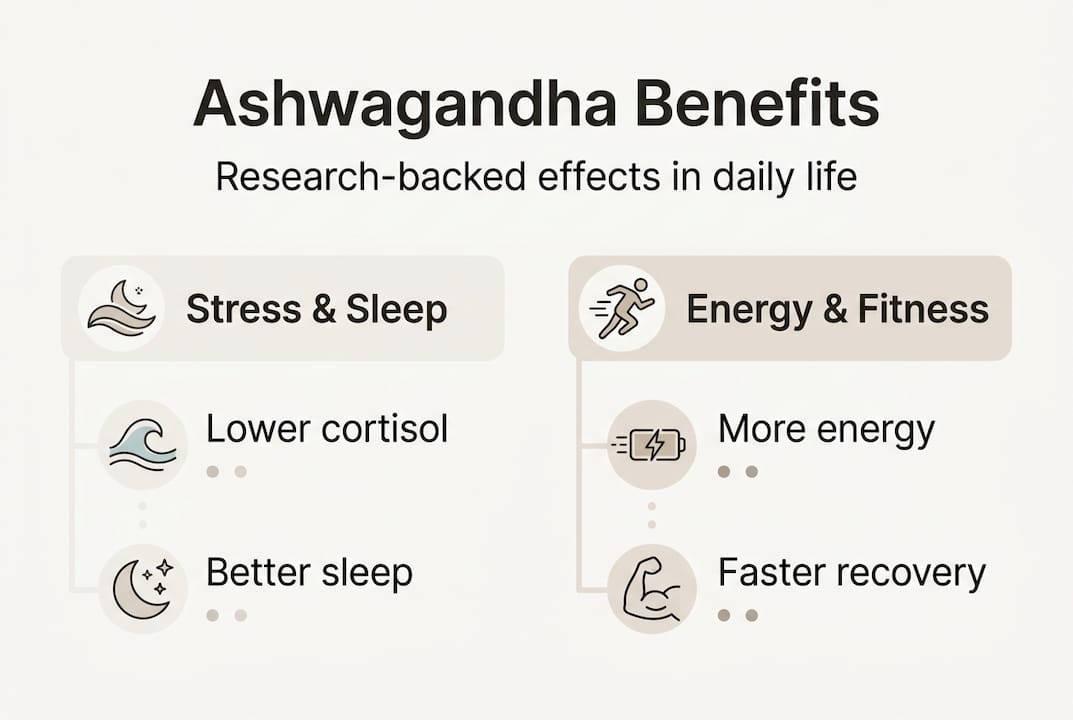
Sleep quality and duration improve meaningfully after eight or more weeks of consistent use. The SMD of negative 1.35 mentioned earlier translates to real-world improvements: falling asleep faster, staying asleep longer, and waking up feeling more rested.
Physical energy and performance are where ashwagandha surprises people. Ashwagandha enhances energy, physical performance, testosterone, and aids fertility, making it relevant not just for stress management but for anyone focused on athletic output. VO2max (your body’s maximum oxygen uptake capacity) has been shown to increase in trained athletes using ashwagandha consistently.
Here’s a quick summary of the top research-backed benefits:
- Reduces cortisol by 11 to 32 percent in stressed adults
- Lowers anxiety scores significantly across multiple trials
- Improves sleep onset and duration after 8 or more weeks
- Increases muscle strength and recovery in resistance-trained individuals
- Supports testosterone levels in men with low baseline levels
- Boosts VO2max in both sedentary and active individuals
- May improve thyroid hormone levels in subclinical hypothyroidism
For those focused on athletic goals, the connection between ashwagandha and performance outcomes is worth exploring in more detail.
“The evidence for ashwagandha’s effect on stress, sleep, and physical performance is among the strongest of any adaptogen currently studied in clinical settings.”
Pro Tip: If you’re using ashwagandha primarily for energy and performance, pair it with consistent sleep hygiene. The herb’s biggest energy benefit often comes indirectly through better sleep and lower cortisol, not a direct stimulant effect like caffeine.
Safety, dosing, and practical tips for using ashwagandha
While the benefits are impressive, using ashwagandha safely and wisely is essential. Here’s how to make it work for you.
Ashwagandha is generally safe short-term for 3 to 6 months at doses of 250 to 600mg per day of root extract, with most clinical trials using 300 to 500mg daily. Beyond that window, long-term safety data is still limited, so cycling off periodically is a reasonable approach.
Not everyone should use it, though. Here’s who should avoid ashwagandha:
- Pregnant or breastfeeding women (may stimulate uterine contractions)
- People with hyperthyroidism (ashwagandha can increase thyroid hormone activity)
- Those with hormone-sensitive prostate cancer
- Individuals on immunosuppressant medications
- People with autoimmune conditions like lupus or rheumatoid arthritis
Hepatotoxicity is rare but worth monitoring, especially with high doses or non-standardized products. If you have thyroid, autoimmune, or hormone-sensitive conditions, consult a physician before starting.
Here are practical guidelines for safe, effective use:
- Start with 300mg of standardized root extract daily for the first two weeks
- Increase to 500mg daily if well tolerated and needed
- Take it with food to reduce the chance of digestive upset
- Use consistently for at least 8 weeks to assess full benefits
- Take a break of 4 to 6 weeks after every 3 to 4 months of use
- Avoid combining with sedatives or thyroid medications without medical guidance
For product guidance, the NutriBliss ashwagandha and black pepper supplement uses standardized root extract, which aligns with these safety recommendations. Black pepper extract (piperine) also improves absorption, which is a meaningful addition. If you’re managing multiple supplements, reviewing how to approach combining supplements safely and following a clear dosage workflow can help you avoid common mistakes.
Pro Tip: First-time users should look for products labeled “KSM-66” or “Sensoril,” which are trademarked, clinically tested root extract forms with documented withanolide percentages. These are your best guarantee of getting what the label promises.
Why most people misunderstand ashwagandha’s real value
Stepping back from the details, there’s a broader truth about ashwagandha and how it’s used today. Most people buy it based on social media buzz or a friend’s recommendation, without knowing whether they’re getting root or leaf extract, or whether the product is standardized at all. That distinction matters more than most realize.
Standardized root extracts are preferred, and long-term data is still needed for gummies or leaf-based forms. Quality matters most. A trendy ashwagandha gummy with 50mg of unstandardized extract is not the same thing as a 500mg KSM-66 capsule, even if both labels say “ashwagandha.”
The wellness industry has a habit of taking a well-researched ingredient and diluting it into a form that’s more marketable than effective. Ashwagandha is a prime example. The research that supports its benefits was done on root extracts at specific doses, not on low-dose gummies or leaf-based tinctures. When you buy a non-standardized product and don’t feel results, the herb isn’t failing you. The product is.
Our take: treat ashwagandha like a pharmaceutical-grade ingredient, because that’s how the research treats it. Dose it correctly, use a standardized form, and give it time. If you’re curious about ashwagandha gummies explained and whether they’re worth it, that resource gives an honest breakdown.
Explore science-backed supplements and take the next step
If you’re ready to bring evidence-based wellness into your routine, reputable products and resources can help you get there without the guesswork.
At NutriBliss, we take the science seriously. Our ashwagandha and black pepper supplement is built around standardized root extract, the form with the strongest clinical backing for stress relief, sleep, and performance. If you want to understand the full picture of what goes into our formulas, the science behind superfoods page walks you through our ingredient philosophy. Whether you’re just starting out or refining an existing routine, we’re here to help you make informed, confident choices about what you put in your body.
Frequently asked questions
Can ashwagandha reduce stress and anxiety?
Yes. Meta-analyses show significant reductions in anxiety and stress with ashwagandha root extract, typically within 4 to 8 weeks of consistent use.
What is the safest dose of ashwagandha?
The safe range is 250 to 500mg per day of standardized root extract, used for up to 3 to 6 months at a time before taking a break.
Are there any side effects or safety concerns?
Mild digestive upset or drowsiness may occur in some users. Avoid ashwagandha if pregnant, hyperthyroid, or managing hormone-sensitive cancers, and consult your doctor if you take thyroid or immunosuppressant medications.
Does ashwagandha improve energy and fitness?
Yes. Research shows ashwagandha can improve energy, strength, and VO2max in both trained and untrained individuals, making it a useful addition to athletic and active lifestyles.
Recommended
- The Comprehensive Guide to Ashwagandha Gummies: Unlocking Stress Relie
- What is an adaptogen? Your science-backed guide to benefits
- Unlock benefits of herbal supplements for fitness
- Plant-Based Supplements: Benefits for Wellness Seekers
- Herbal blends for wellness: benefits, science, and use – LongevityBotanicals